
Translated material
Not a spy, but sincerely mistaken
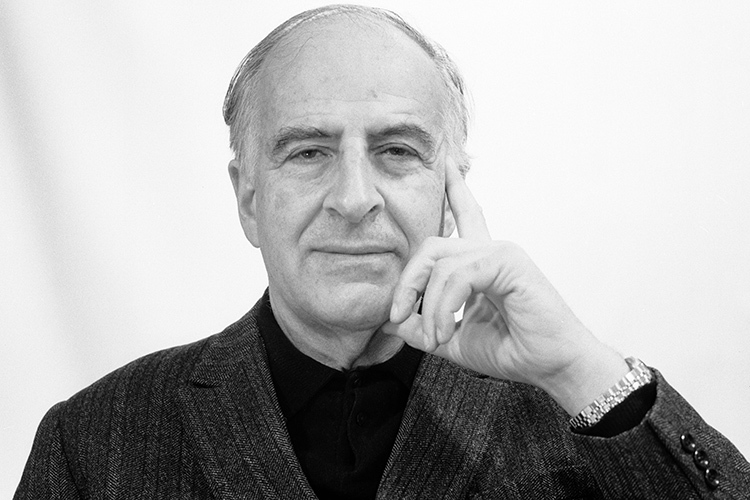
In 1964, Vysotsky wrote his “Marsh of Physics”: “Let you not catch the neutrino by the beard / and you won’t put it in the test tube - / it would be great to Pontecorvo / take it stronger by the scruff!” . Although then, at the peak of the Soviet atomic project, it was from whom to choose from, it so coincided that Academician Bruno Pontecorvo, which was mentioned for the sake of intentionally inaccurate rhyme, is the only name in the text. Probably because the surname itself sounds like “neutrino” or “meson” - in a word, the thickening of exotic, the music of the plutonium spheres. The Italian nuclear physicist, a British subject and a secret communist fled to the USSR in 1950. More precisely, he left with his family on the holidays, and on the way home disappeared in broad daylight - and only five years later he discovered in the Soviet Union. With the rank of laureate of the Stalin Prize. Without the right to independently leave the nuclear science of the Dubnu. In Dubna, he died an 80-year-old old man from Parkinson's disease in 1993. “And with this plasma you will reach the insanity - and this is quite honorable”, if you continue to quote Vysotsky.
After 22 years, in February 2015, the biography of Pontecorvo was released, written by the Oxford professor of theoretical physics Frank Klowez-a specialist in the most elementary particles of neutrino, about which Vysotsky sang. Amazon Immediately included the book in the list of “Hot New Releases Non-Fiction ”, and Wall Street Journal instantly rejected : “The book has a taste of Roman Le Carre” - that is, a spy novel - “with the advantage that everything stated in it is true.”
The day before the capture of Paris, the Germans Pontecorvo will persuade several friends and younger brother to flee the city on bicycles. Jillo, Bruno's brother, barely crushes with the Nazis tanks, strokeing with his girlfriend a tandem pedal, designed for trips on picnics. In 1969, one of the participants in this saving trip, Salvador Luria , will be awarded the Nobel Prize in Physiology and Medicine, and the other, Jillo, will receive the Golden Leo for directing in Venice.
Pontecorvo, like Forrest Gampu, from birth is lucky to find himself exactly where they make history. At 20, with a little, he is hired in the laboratory to Enriko Fermi, the future Nobel laureate. At 23 he moves to Paris to work under the leadership of Iren Zholio-Kuri and her husband Frederick Zholio. He joins the French Communist Party on August 23, 1939, on the day of the signing of the Molotov -Ribbentrop Pact. In the late 1940s, he works in Haruella side by side with Claus Fuchs-physicist and spy, which for years passed the materials of the American and British projects for the creation of atomic weapons for years.
The day before the capture of Paris, the Germans Pontecorvo will persuade several friends and younger brother to flee the city on bicycles.
And, of course, in Borrestkhapovsky runs at any opportunity: he is not only a professional physicist, but also a professional emigrant. The son of an Italian Jewish-industrialist, Pontecorvo left Italy to France in 1936-shortly before Mussolini forbade Jews to work at universities. He sailed from France to the United States in 1940-it was America that was the end point of the bicycle flight. Here he encountered sudden hostility - he saw a representative of the country with whom America is fighting. He moved from the USA to Canada in 1943, from there in 1949 to the UK-and, finally, departed from Abingdon, the county of Oxfordshire, to the same “vacation with the family” in 1950.
Close carefully collects all evidence of the departure reaction, without disdaining the most insignificant. For weeks, the milkman left another bottle of milk on the porch of the Pontecorvo house. The previous ones stood untouched, the milk sour and spread around itself - and in the end, the milkman stopped bringing new ones. And when he finally read the newspapers, he sent an account for milk to the Soviet embassy - but, of course, he did not receive money.
And from this moment the story of the kolobok begins, which left everyone - but from the fox failed.
Upon arrival in the USSR, Pontecorvo literally turned into the same way for five years in the one-lick-call: in Dubna he was just a “professor”, without a name and surname, and his children were listed in school magazines as Gilles, Tito and Antonio Ivanova. Outside the laboratory, the professor was constantly accompanied by two guards - first of all, as the author of the book suggests in order to prevent conversations with other Dubnians. This continued until the “exit from the cabinet” in 1955: the Academy of Sciences organized a press conference, and in Pravda and Izvestia several articles signed by Pontecorvo were printed-the texts accused the West of preparing for atomic aggression and explained the emigration with a desire to fight for peace with the USSR.
The milkman, when he read Pontecorvo in the newspapers about the flight, sent an account for milk to the Soviet embassy - but, of course, did not receive money.
The mechanics of the transformation of a non -Soviet person into Soviet is a thing no less than a neutrino than a neutrino. In Dubna, Soviet newspapers became the only source of information about life outside. Say, in January 1953, they wrote about the “case of doctors”-and Pontecorvo did not doubt that the Jewish doctors plotry to kill Stalin. Close quotes an interview with 1990: “It may seem inexplicable now, but I believed in everything.” In 1954, Pontecorvo joined the CPSU - and, although by that time he had been listed for 12 years as a French communist, party combination, according to the same interview of 1990, became the first great shock for him: in Paris they were tense debates about politics, in Dubna - a analysis of cases of drunkenness or marital treason among members of the cell.
In 1958, Pontecorvo was not allowed to go to Italy for the funeral of his mother, and in 1975-for his father’s funeral, although he had long been elected an academician and allowed the whole set of nomenclature goods. Departure from the country was not one of them.
It is assumed that the “secret academician” in return for the lost freedom, in addition, has at least access to better scientific equipment - but this was not true. For the first five years, Pontecorvo could not put a single experiment regarding the neutrino - because he, as a foreigner, was not allowed close to nuclear reactors. To resolve the issue, according to rumors, was not able to even Kurchatov, the head of the Soviet atomic project.
 © Wikimedia Commons
Why, in general, the Soviet-end physicist was needed by the Soviet power, who cannot be experimented? Close is inclined to the idea that Pontecorvo was a Soviet agent and left Great Britain as necessary-in the end, Mi 5 exposed Klaus Fuchs in the same 1950.
Chekist Pavel Sudoplatov in memoirs writes that the exploration of the USSR received a lot of useful information about the bomb from Pontecorvo, while he was still in the West, but together with Pontecoro calls the names of Fermi and Niels Bor, whom you can’t suspect in intentional spying. The defector Oleg Gordievsky (he was taken out of the USSR in the trunk of a car with dipnomers in 1985) more concern: he was allegedly told by colleagues that Pontecorvo was precisely a recruited spy-and, possibly, the most valuable in the history of the bomb.
If others conveyed only papers or materials, then Pontecorvo eventually brought with him a living witness of how things were being conducted in the nuclear industry in the UK. In the British Haruel and in the Canadian Montreal, he participated in the creation of the first atomic reactors - and this experience, and not at all pioneer works about the neutrino, could only be the true reason for interest in it.
The first five years in the USSR, Pontecorvo could not put a single one of his own experiment regarding the neutrino - because he, as a foreigner, was not close to nuclear reactors.
There is no direct evidence, there are only indirect ones. Say, the second sample of weapons uranium hit the USSR from Canada, as well as drawings of the Canadian reactor, where Uranus was enriched. All this was delivered by the intelligence officer of Lon Cohen after a meeting with the connected on the border of Canada and the USA, near the Niagarsky waterfall. According to coincidence, in 1944-1948, Pontecorvo regularly visited - according to his own explanations, this was necessary so that his application for American citizenship would not be removed from consideration.
Pontecorvo himself even refused to admit that he was involved in at least some espionage stories, and commented on his own pro-Soviet beliefs in an interview with 1992 with the words “I was a nerd”. True, the clouz immediately finds a more expressive statement, which he was informed in a private letter. When the academician was already lying in the hospital, he was offered to tell about the transfer of secrets in the 1940s, he refused-and the formulation of this refusal Close leads in the original: “Ya khochu umeret 'kak veliki fizik, and ne kak vash je *** yi shpion.”
There is a temptation to read the book as an investigation, the “Case number” with the defendant and recognition. To reinforce the belief that the Soviet physics of the heyday is just a strong engineering school that can qualitatively copy someone else's and create rockets or bombs for the obtained reconnaissance drawings. But in the process of reading, science themselves begin to appear in a new light. Physics in Europe of the 30s and 40s-the last refuge for cosmopolitans, ready to juggle passports, speak in five languages and in the intervals between bombardments of samples with slow neutrons to conduct Marxist debates. If you are in this situation and sell secrets, for the disclosure of which you can get into an electric chair, then this is just another way to spend your free time.