
Translated material
Iran at the gate
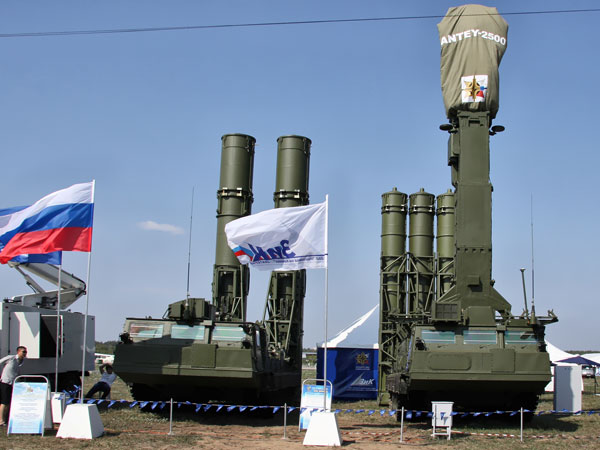
The Rostec State Corporation said that Russia was ready to put Iran with an Antey-2500 air defense system instead of the S-300PMU-1, the sale of which was blocked by Dmitry Medvedev when he was his president. In return, Russia expects Iran that the multi -billion dollar lawsuit, which was filed in the arbitration court of Geneva.
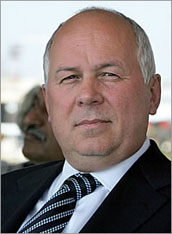 Sergey Chemezov
Rostec General Director Sergei Chemezov at the IDEX-2015 weapons exhibition in Abu Dhabi told Kommersant that Russia a few months ago offered the Iranian Ministry of Defense to put several Antey-2500 systems, which also have the S-300VM index. According to the publication, if the Antey-2500 complexes are not arranged, then Moscow will consider the issue of the sale of the latest S-400 Triumph systems.
The problems began after the conclusion in 2007 on the supply of five S-300PMU-1 air defense systems between Rosoboronexport and the Iranian Ministry of Defense, the total value of the agreement amounted to $ 800 million. After Moscow received an advance in the amount of 167 million, Almaz-Antey began assembling the ordered systems.
However, in 2010, the UN Security Council with its resolution was banned by the supply of the most modern weapons systems to Iran, then President Dmitry Medvedev signed a decree on measures to implement the UN Security Council resolution, which introduced even more stringent sanctions against Iran, as a result of the supply of complexes, it was blocked.
After the president signing the decree, Moscow returned Tegran the entire advance, and the already collected parts of the complexes were dismantled for spare parts. However, Tehran filed a lawsuit against Rosoboronexport in the Udean Court of Geneva by almost $ 4 billion.
Moscow invited Tehran to go to the world in return for the supply of anti-M1E anti-aircraft missile systems, however, Iran refused to accept these installations, he already has 29 similar complexes in service.
Antei-2500 systems do not formally fall under the ban, which was installed by Dmitry Medvedev, so it was precisely about their supply instead of the S-300PMU-1 that they had been talked for a long time. However, it was in a conversation with Kommersant correspondents that Sergei Chemezov confirmed this theory officially.
According to the head of Rostec, Russia proposed to deliver Antei-2500 due to the fact that Iran wanted to have a S-300 system in service. However, the confidence that Iran will agree so far.
If Iran refuses the Antey-2500 system and insist on the supply of the S-400 Triumph, then Russia may have problems with the assembly period. The fact is that the available capacities of the Almaz Antey concern for the production of Triumph systems are already loaded with orders of the Russian defense department: by 2020 it is planned to put up 56 regimental sets. In addition, in September, a deal was signed to buy China for $ 1.9 billion of four Triumph divisions. The new plants for the production of air defense systems in Nizhny Novgorod and Kirov are planned to be launched no earlier than 2016.
Information that Russia is ready to put Iran with modern air defense complexes almost simultaneously with the news that Tehran once again threatens to interrupt negotiations with the “six”, which includes the UK, Germany, China, Russia, the USA and France.
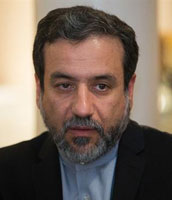 Abbas Arakchi
The main Iranian negotiator, the deputy head of the Foreign Ministry of the country, Abbas Arakchi, made the corresponding statement after a meeting with the Six, which took place on February 23 in Geneva. Arakchi called the negotiations “constructive and useful”, but noted that he would not allow the Islamic Republic to impose his will. He advised to make efforts to "achieve a decision that will suit all participants in negotiations." “If this does not happen, and one of the parties will try to impose his will in negotiations with the help of other means than negotiations, then we will certainly leave the negotiating table without any remorse,” said Arakchi.
Thus, Arakchi reacted to the performance of the United States of John Kerry: at a press conference in London, he said that Barack Obama has no “no tendency” to go to extend the terms of negotiations with Iran beyond the established ones.
The date of the next negotiations, apparently, is not yet clear. Initially, it was planned to hold a new meeting on March 2 in Lausanne. However, the head of the Chinese delegation at the negotiations of Van Zyong, as reports bythe Sinhua agency, said that the parties agreed to hold the next round of negotiations in late February.
“The negotiations were informative and passed in a good atmosphere ... The participants agreed to hold the next round of negotiations at the end of this month, the place and date will be determined later,” Van Cyun said after the next round of negotiations on Sunday.
The negotiations of the “six” with Iran have been going on for a very long time, but only in November 2013 it was possible to agree on the need to develop an agreement, which guarantees an exclusively peaceful nature of Tehran’s nuclear program, and in exchange, Europe and the USA will ensure the lifting of sanctions. Over the year, the final text of the agreement could not be developed, they say that there is only an “intermediate plan of action”. It was decided to extend negotiations until June 2015. Further extension may no longer happen.
A group of American senators has developed a bill that will tighten the sanctions against Iran if it is not possible to reach an agreement by the end of June. The probability of the appearance of modern air defense systems in Tehran will clearly not add the United States to wait infinity.