
Translated material
The Ministry of Defense aimed at the Arctic
The Russian leadership admits the likelihood that the national interests in the Arctic will have to defend with "means of armed struggle." This, according to RIA Novosti, at a meeting of the board of his department on Wednesday, was stated by Minister of Defense Sergey Shoigu.
Shoigu told the audience that in recent years, Russia began to actively master the northern territories, to extract hydrocarbon raw materials there, as well as to develop the infrastructure of the Northern Sea Route, which "is increasingly becoming an alternative to traditional routes from Europe to Asia."
“Developed countries are striving for the Arctic that do not have a direct exit to the subpolar regions that are taking certain political and military-economic steps in this direction,” Shoigu said at a meeting of the College of the Ministry of Defense.
States, which have a direct access to the waters of the Arctic, strive to expand national territories due to the continental shelf and the islands of the Arctic Ocean.
The Minister of Defense said that for Russia a permanent military presence in the Arctic and the possibility of protecting state interests by means of armed struggle "is considered as an integral part of the general policy of ensuring national security."
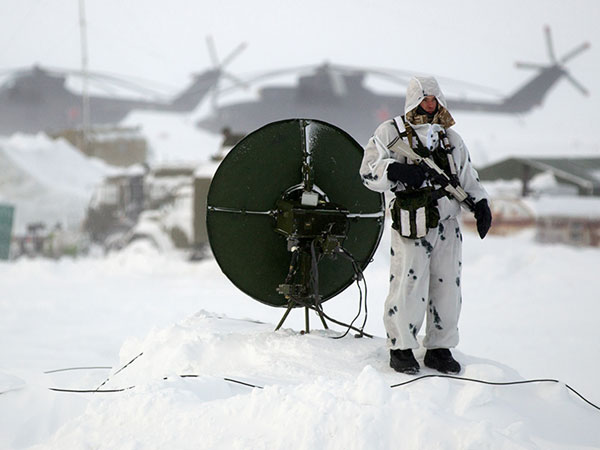 Photo: mil.ru
“It's no secret that the Arctic is gradually turning into one of the world centers of hydrocarbons and a powerful unit of international transport communications,” the minister added.
According to Shoigu, to manage the activities of troops and coordinating their actions in December 2014, an interspecific united strategic command of the Northern Fleet was formed. “On individual islands, they were deployed on an ongoing basis and began to carry out the combat duty of the unit, ensuring the control of the situation and the air defense,” the minister added.
The country's leadership set the task to strengthen the position in the Arctic for a long time. It is planned to expand the military group in the Arctic zone. In April 2014, President Vladimir Putin instructed to create a unified system for basing surface ships and submarines of a new generation in the Arctic, to strengthen the border. In the Murmansk region, on the islands of the land of Alexander I (the Franz-Joseph archipelago), the new land, the island of Wrangel and Cape Schmidt will be deployed by radar posts and aviation guidance points. It is planned to strengthen the border troops of the FSB. By October 2015, work on the restoration of air defense infrastructure should be completed on the Arctic Islands.
 Dmitry Rogozin
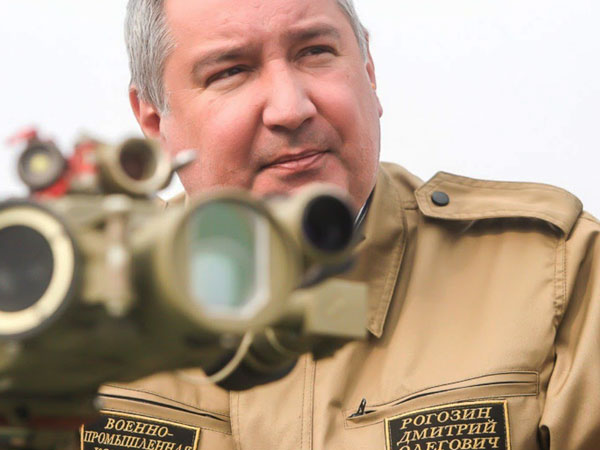
Dmitry Rogozin, as the main military-industrial complex, declared the readiness of the domestic defense industry in the necessary volumes to supply equipment and weapons to the army for work in the Arctic conditions.
At the beginning of 2014, Rogozin said that industry “not only in an Arctic color creates the necessary equipment”, but provides it “those characteristics that allow you to work in these aggressive environments”.
The Deputy Prime Minister then stated that the Fund for promising research, the head of the trusteeship of which it is, does not exclude the possible increase in tension in the Arctic as part of the struggle for resources. According to Rogozin, such a probability is attributed to the number of four threats that are taken into account.
In early February, information even appeared, so far, however, not officially confirmed that Dmitry Rogozin will head the special government commission, which will coordinate the work on the development of the Russian part of the Arctic.
 Philip Bridlav
It so happened that the main Arctic states, except Russia, the United States, Canada, Denmark and Norway, are members of the NATO block, which adds confidence that the northern borders must be strengthened.
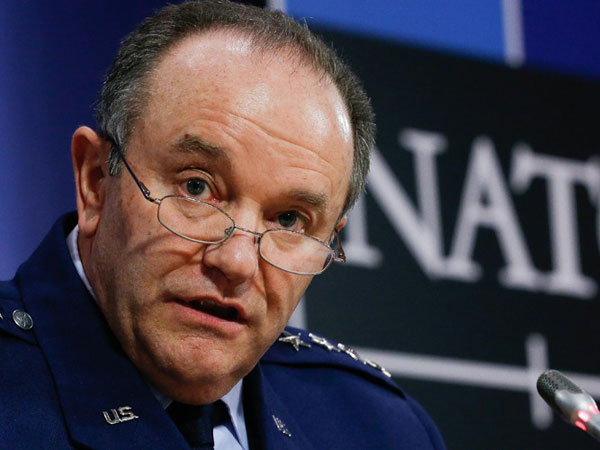
The Commander -in -Chief of the United Armed Forces of NATO in Europe, Philip Bridlav on Wednesday, during a hearing in the House of US representatives, said that Washington and Moscow could cooperate in the Arctic, but Moscow’s activities in the region are concerned with the United States.
The increased activity of Moscow has already caused the concern of the closest Arctic neighbor of Russia - Norway. The Minister of Defense of the country, INU Eriksen Sureide, said that the Armed Forces of Norway will be reorganized in order to withstand the “Russian threat”.
 INU Ericksen Sureide
Sieride explained that they were worried about the fact that Russia is again opening military bases in the Far North, deploying new brigades and command structures there, and the aircraft of the Russian Air Force often began to be noticed by the borders of Norway.
“Russia is not invading our airspace, but its aircraft increase the range and number of flights,” the minister said.
Canada also does not stand aside. Since 2008, Ottawa has been constantly conducting military exercises in the Arctic with the participation of other states. In February 2014, 2350 servicemen of the Canadian army participated in the exercises along with representatives of the Armed Forces of the United States and Poland within two months .
The head of the US State Department, John Kerry, called the Arctic in 2014 the last “border” in the world, which, in addition, affects the national interests of the United States. He even promised to appoint a special representative of the State Department in the Arctic, but so far nothing has been reported about who will be responsible for American policy in the region.