
Translated material
Sometimes they return
Despite the presidency: "Are you crazy?" - The question with the abolition of suburban electric trains in a number of plots in the regions is by no means closed: new offers are preparing new offers on this score. Meanwhile, for many Russians, the train has already become the only type of connection with the "large land". How Russia, which is not shown on TV, lives and moves, - the correspondent of The New Times went to the Tver region for an answer 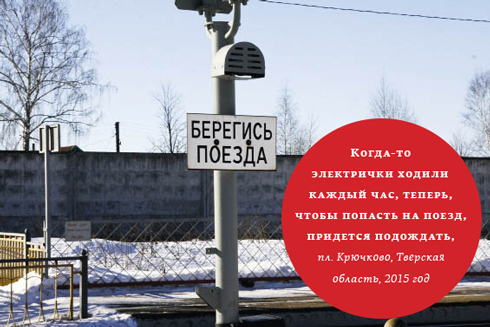
Outside the access zone from Moscow to Tver, 168 km to the north-west, to Likhoslavl is about 30 more. Thus, from the capital that rose from the knees of the country to the village of Ilyinskoye-about two hundred kilometers.
About five hundred people live in Ilyinsky, there is a kindergarten, an elementary school. Previously, it was a state farm, but it finally went bankrupt back in 2004, after which there was no work in the village. Old people live in gardens and pensions, everyone else is forced to go to work in Torzhok, Likhoslavl or Tver. Of the local attractions, the main thing is the church of the mid -19th century with blue domes and the subject of special pride - a tractor, presented personally by the governor "for the highest appearance in the elections." There were no traces of political agitation from the last Duma elections. However, it is not necessary to explain to the Ilyin residents once again for whom it is necessary to vote: “United Russia” here won almost the largest percentage of the region. The main thing is to collect quorum.
The central street is called "Youth", but the young people are rapidly leaving the village. Buses to Ilyinskoye do not go. The only regular transport on which you can get into the village is an electric train. Therefore, when from February 1, railway workers in 22 regions were partially, and in some places and completely, they stopped the movement of suburban trains, Ilyinskoye for a whole week was almost cut off from the “large land”.
After the presidential shout: "Are you crazy?!" - Trains returned: four - towards Tver, four - to Torzhok. Otherwise, the inhabitants of Ilyinsky would have continued to remain in complete confusion: without trains their village is the end.
Recently, for schoolchildren and teachers, the local authorities were able to launch a minibus to Likhoslavl (most high school students study in the city). There is a fare 50 rubles one way. Flights only twice a day, in the morning and afternoon: “The Commerce refused to appoint a route, they are sorry for the off -road buses, but the private trader agreed, says how they would build a normal route - I’ll buy a new car, but when this highway will be,” says the head of the local administration Vladimir Yakovlev, an elderly man in a shabby gray jacket. The building in which we talk is more like an ordinary hut: one -story, in the corner of a bleached stove, a little further a couple of cabinets and a room for negotiations - with an oval table, a portrait of the president and the state flag. In the hallway, nothing but faded posters on fire safety.

The road on paper was never a normal road to Ilyinsky: “We have been fighting for it for 30 years, but in Soviet times the asphalt was put first of all where we were going to let the bus. And we had trains. Now they were reduced, but they never built the road, ”Yakovlev carefully puts a thick folder on the table with complaints to the center. Here are letters to the governor, deputies of the regional assembly, transporters and even to the prosecutor's office. Over the past 15 years, the inhabitants of Ilyinsky have written a lot. Responsible departments “took into account”, “promised to figure it out”, but the case never moved off the ground.
The local grocery assortment does not differ from Tver: bread, sausages, canned food, beer, fruits - bananas and tangerines, vegetables from everyone from their garden. And the prices are generally comparable to the Tver. But if the products to the only rural store can be taken on a truck, which even in the fall is able to pass by off-road, or, in extreme cases, on the same suburban train (by the way, they are taken to some villages), then in case of trouble to local residents, due to the lack of normal access roads, it remains only to rely on their own forces: “The most terrible is the ambulance. Five years ago, due to the fact that they forgot to clean the road, the doctors did not have time for snowy rubble, the person died without waiting for help, ”says the elderly villager Maria Gennadievna. “We almost stopped holding cattle because of the transport, because you will not sit with the cow in the train.”
A broken dirt road in Ilyinsky formally refers to the regional road fund. This means that the village authorities cannot put asphalt on their own: any expenses on such modernization by law will turn out to be inaccurate expenditure of funds. Moreover, the necessary amount - and according to approximate estimates, the construction of the road to all GOSTs with congresses and lighting will cost about 100 million rubles. - There is simply nowhere to take the local budget. The road project has long been ready, but it does not fit into the crisis estimate: there is no such article in the regional budget for 2015.
The end of the Ilyinskoye path by regional standards is not unique. Piston, Kulitsky moss - there is also no normal road there. And not even to get to Trubino on the ground - only on a suburban train, so many houses there have long bought summer residents there, and only the old people live in winter. Things are no better in larger settlements. One of them is the village of Kryuchkovo (the locals pronounce the name with the stress to the first syllable) settled in the way of following the Torzhok -Tver train. Only 10 km of primer separates it from civilization. They began to build a new road last year, by 2016 they promise to finish.
Compared to Ilyinsky, Kryuchkovo is not only larger in size, but also noticeably richer: on the facades of two- and four-story brick houses- satellite television plates. Opposite the Boomer disco club-a brand new playground made of colored plastic, three stores (with a standard set of products) and one supermarket: prices are higher than in network supermarkets in Tver. In some places new cars are parked, mainly foreign cars. A hundred meters from the main street - a school for a hundred students and a kindergarten.
In narrow corridors of the school building, it smells of paint. Tulle on windows, pots with flowers, white doors of class rooms. “We have decent cars because everyone who can only work in Tver,” Elena Anatolyevna, a woman of about thirty in a strict suit, is in a hurry to clarify. And he adds: “When the electric trains were canceled, many said that they were going to sell houses and leave the village.”
Previously, there were swamps in the place of Kryuchkovo, in the seventies they were drained, but the fields have long been abandoned, neither the farm nor the collective farm remained. Most of the teachers are visitors. Every morning they get to work in Kryuchkovo from Tver. Including the school principal, who got here on distribution 27 years ago. The bus in Kryuchkovo, as in Ilyinskoye, does not go, and if the electric trains are canceled again, then the village, teachers agree, will remain not only without work, but also without school.
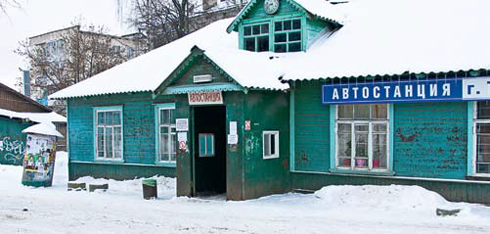
It’s easier to get to Tver from a bus station in Torzhka, but more expensive: 175 rubles. Against 150 rubles. For the train, Torzhok, Tver region, 2015 was made for checkmarks if in the morning and evening the trains go to Tver mostly hard workers and students, then in the afternoon most passengers are women who go from villages to the city for purchases. The seller in the Kryuchkovsky prodmag enters something into a thick checkered notebook and is reluctant to talk, but he answers quite definitely to the question about food provision: “In Kruchkovo, the prices of products are above urban on average per ruble-two. But if ours can buy everything they need in place, then there are simply no stores in Trubino and Kulitsky moss. There, people, to buy bread, have to sit in the train. ”
On the Torzhok -Rzhev section - and this branch is considered the most haggard - there are even more such ones. Previously, the train from Rzhev arrived in Torzhok and went back twice a day. Now there are only two trains left: one - early in the morning and one more - late in the evening. However, it can be called a train with a stretch - only one car remained from the entire composition, which comes to Torzhok at 8:53 and goes back at 20:10. “See a detected sedentary car? This is the Rzhevsky train, ”the duty officer at the Torzhoksky station shows the long journey entered by snow. It got dark, in the compartment of the conductor in the Rzhevsky train, someone lit the light. After a couple of hours, the wagon will be placed to the locomotive and sent along the route.

Due to the changes in the schedule, the crawls and part of the station employees living in the villages towards Rzhev, now they cannot get home in time after the shift. It remains either to wait until the evening of the train, or take a hundred rubles from each for four taxis. For a month, depending on the working schedule, it runs up to 2 thousand rubles. In total, more than 50 people work at the Torzhok station, a salary of 18 to 25 thousand, by local standards this is good money. To pensioners who go to the Torzhok for shopping on the same train, a taxi can’t afford: “They are sitting here all day with their bags,” says the duty officer.
The next morning at 9.39, a day train from Torzhok to Tver is sent half empty. She will go back to Tver at half -past in the evening - and also half -empty. When asked about the number of passengers, a controller in a blue vest named Sergey admits: “When they restored the movement, they didn’t think about people at all, they did it for a box. Departure from Tver at half past four in the evening, and people have not yet had time to return from work! And the next train departs only nine hours, and passengers are forced to wave at the station after work. ”
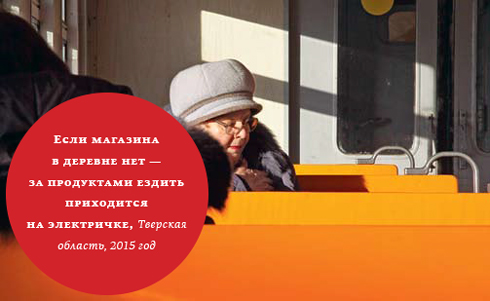
Our morning train Torzhok - tastes. Outside the window, seedy villages for a dozen yards, a liquid coniferous forest and either fields, or swamps covered with snow, swim. Several people come out on each platform. However, after a couple of stops, the wagon is still almost full. “We have a small shop in the village, but there is too expensive,” a lady in a blue jacket and beret with sparkles, sitting on a red -haired plastic seat, shows four products stuffed to the top. The cancellation of Lyuba trains is the name of the lady, ”says a disaster. But what if the electric trains were canceled before Tver forever? “Then we would definitely die out,” says Lyuba, already about to leave the carriage. “Without them, we are here like on the edge of the world.”
Photo: Dmitry Rebrov