
Translated material
Fear unites
The struggle against the Islamic state prohibited in the Russian Federation (“IG”) can bring Russia and the West closer.
One of the key topics of the negotiations of Vladimir Putin with the Prime Minister of Italy Matteo Renzi in Moscow is the aggravation of the Civil War in Libya, where the IGA enhances positions as in Syria and Iraq. Home Danger: Libya is too close to Europe, and especially to Italy 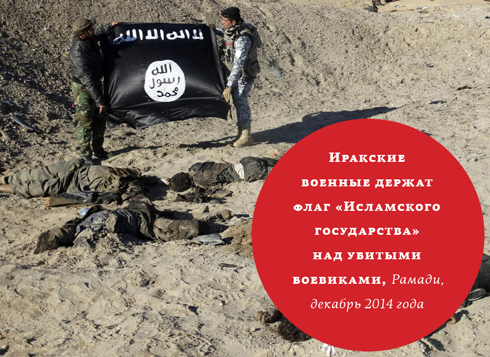
Putin’s trump cards is also concerned about the Holy See: the leader of the IG, the self-proclaimed caliph of Abu Bacr al-Baghdadi promised to get to the Vatican. In turn, the Chechens fighting for the IG threatening to get to Russia: in the video released at the end of last year, the Islamists turn to Vladimir Putin as an ally of the Syrian President Bashar al -Assad, the enemy “IG”. The danger of the spread of terrorism can bring to some extent Rome and Moscow. “I am going to Russia to show: the UN key role in the Libyan game should play,” Renzi says. - The crisis in Libya is not only an Italian and European problem. It is international, and if the UN makes a decision, we are ready to act. ”
Now Italy and Russia do not have such close relations between leaders as in the days of Berlusconi: from Italian politicians, only the head of the Ultra -right League of the North maintains constant connection with Moscow. Renzi emphasizes that he approves the policy of the Russian president not in everything: “Putin must leave Ukraine, then we can all calm down,” he said in an interview. But no one from the environment of the Italian prime minister will dare to repeat this in Moscow: after the United States weakened its military presence in the Middle East, the Italians consider Putin the only one who can turn the situation in the region.
So far, bloody chaos, former partners of the country in Italy and in Russia endure losses in Libya. In 2011, Russian Railways published a financial report: due to a broken contract for the construction of the Sirt-Bengazi railway line, the company lost more than 15 billion rubles. (The total losses of Russian companies in Libya are estimated at $ 10 billion - NT dated 03/14/2011 ). They lost their investments in Libya Tatneft and Gazprom, although the latter compensated for the losses, increasing export to Italy, where Libyan gas stopped entering. The Italian Energigant ENI also loses millions of euros daily due to the attacks of the Islamists on their oil facilities, which are still functioning in Libya.
In addition to economic losses, both Russia and Italy are disturbed by the flows of their own citizens who are rushing to fight for the “Islamic state”. The group has launched the largest mobilization of Muslims in the world since 1945: according to the International Institute for the Study of radicalization and political violence in London, about 20 % of IG fighters are foreigners. Türkiye has become a transshipment point for foreign neophytes. According to the Aydinlik newspaper, in the Ankara, the Islamists have something like an office where they check the recruits and decide who to accept in their ranks.
The preachers of the IG are not limited to the male audience: on the Internet, instructions for women are widespread about how important the role of Muslim sisters, instructions on how to raise a child according to the laws of Sharia are important in the caliphate and grow it with a real Mujahidean. On one of the propaganda videos of Islamists, the child is taught to cut off the head of a doll dressed in an orange robe.

The course for amplification? Libya became a particularly attractive place for terrorists after the overthrow and murder of Muammar Gaddafi in 2011. Now there are a civil war in the country and two parallel governments are operating: in Tobruka in the east, the elected parliament and the transition government led by Prime Minister Abdalla Ausa are sitting, and in the former capital of Tripoli, the emergency National Congress under the direction of Omar al-Hasi.
In mid -February, the IG militants executed a group of Egyptian Christians who ended up in Libya - only 21 people. Immediately after this, the Egyptian Air Force bombed the Islamists in Skin, forced to leave the city, and the IG responded with terrorist attacks in El Cubbe: on February 20, three explosions thundered in the city, more than 40 people died. Egyptian Foreign Minister Sameh Shukri proposed introducing the international sea blockade of Libya to block the delivery of weapons to the militants. On February 19, the Permanent Representative of Russia at the UN Vitaly Churkin suggested that Russia could take part in the blockade.
In mid -February, three Russian military vessels were already included in the Mediterranean Sea: it is the Lada guard ship, the large landing ship of the Yamal of the Black Sea Fleet and the large landing ship of Alexander Shabalin, the Navy said. We can talk here either about the “planned rotation”, or about the strengthening of the permanent interflot group of the Russian Navy posted in the Mediterranean Sea since March 2013.
However, the military observer Alexander Golts believes that the joint Russian-European patrol off the coast of Libya, most likely, would not, because NATO completely stopped military cooperation with Russia. Applications of Russian diplomats are nothing more than attempts to show that Russia is not in isolation, the expert says. If Europeans and the USA will cooperate with Russia in the Middle East, then only in terms of negotiations.
In the opinion of the interlocutor NT , and the Russian capabilities of military patrol in the Mediterranean Sea are doubtful: the Russian military fleet is elementary. In Soviet times, there was a constant squadron, which was formed from the ships of the Black Sea Fleet, with coordination, worked out for years. “Now the formation of a group of ships in the Mediterranean Sea is in a rather exotic way: ships of all four fleets are sent there, and each time different ships are allocated because they are not enough,” explains Alexander Golts. “On a really constant basis, only the headquarters of the group operates.”
Photo: Stringer/Reuters