
Translated material
Yurovsky defended the Tangaiser defense
Yurovsky defended the Tangaiser defense
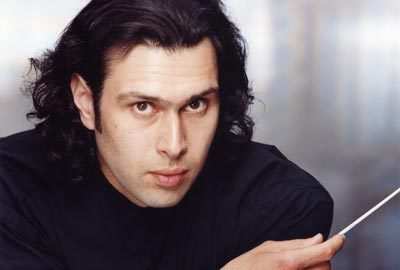 © Sheila Rock / IMG Artists
Colta.ru publishes an open letter to the conductor Vladimir Yurovsky.
I’ll make a reservation right away: I have not seen the performance of the Novosibirsk Opera and Ballet Theater of the opera and ballet, so I can’t talk about the performance itself, although I can fully assume that the performance is interesting and controversial, which means it is already noteworthy.
This is not about the performance itself or its creators - we are talking about the principle. And the principle is that the theater is not a temple and the same laws are not applicable to it as to church worship. People who come to the theater performance deliberately go to a meeting with art, and art is primarily a search and dialogue, including a critical dialogue. In the case of the production of a classic opera, this is and the dialogue of us today with the cultural and historical layer of the past, and it is impossible without conscious rethinking and reassessment of the original author's idea. The theater, like any other living art, cannot live a dogma, especially a religious dogma.
Any theatrical performance, and therefore its authors, can be criticized, including public ones. Any viewer, outraged by the performance, has every right to get up and leave the theater without waiting for the end of the performance. The viewer also has the right to publicly express his indignation through the press and any other media available to him. This is a civilized form of expression of their disagreement with one or another fact of cultural life.
But write a denunciation to the prosecutor for the performance that was outraged by the viewer? To give the director for court for the theater performance and demand his imprisonment, “so that it was different with another” ?? !! .. to establish censorship norms for cultural institutions and the system of supervision over them? .. Well then, let's forbid the “Fairy Tale of his Balde” Pushkin, “Wiy” Gogol and “Sunday” Tolstoy as Pasquevils as priests and “Masters and Margarita” Bulgakova as a Pasquilus for the Holy Scriptures! Shakespeare’s “Venetian merchant”, Pushkin’s “stingy knight”, as well as the good half of Dostoevsky’s works for anti -Semitism, and the “Salome” by R. Strauss and “Tristan and Isolde” by Wagner is banned as pornography. Wagner then generally will have to be banned entirely - for the propaganda of murmur ideas, etc. ...
We will not forget that from this kind of measures, not far from to the “medieval court of the Holy Inquisition”, public burning of books in the squares or sad memory of “Party and Government Decisions on the fight against cosmopolitanism and formalism in art”, and even, God forbid the militants of the “Islamic state” !!!
"The Russian Federation is a secular state and no religion can be established as the main or mandatory." This is a quote from the Constitution of the Russian Federation, Article 14.1. The same article of the same source says: "Religious associations are separated from the state and are equal before the law." And in another article there is the following statement: "Everyone is guaranteed freedom of thought and word." Each religion, of course, must be respected. Any sacred cult is an integral part of the cultural tradition of any country. But people living in a secular state cannot be imposed on a system of thinking and behavior inherent in a particular religion.
Unfortunately, recently, the atmosphere in the country has become increasingly aggressive and intolerant of any manifestations of “inability” and “dissent”, and persecution, unleashed around the play “tanneser” and its creators, is one of the sad manifestations of this trend.
I urge the investigating authorities of the Novosibirsk region to stop the deeds and ballet theater, who was excited against director T. Kulyabin and the Novosibirsk Theater, and people who are indignant on the areas of the country and on the Internet by the opera performance, which they did not see, urge to calm down, return to the civilized dialogue and thereby help all of us to restore the atmosphere of humanity, confidence and pretense mutual understanding.
Vladimir Yurovsky,
conductor