
Translated material
Freedom tree
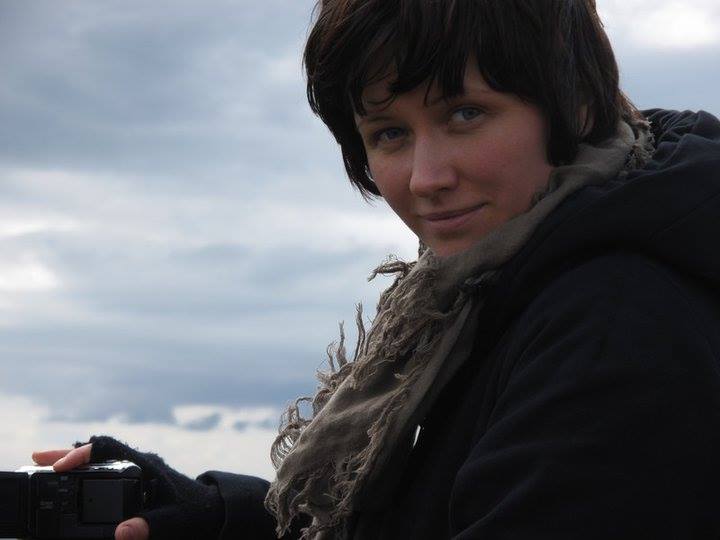
King of Denmark Christian X is most often remembered in connection with a promise to put on a yellow star in the event that the Nazi invaders rejection of the Jews to do this. Christian X was an unusually progressive leader of the country. It was during the years of his reign - of course, thanks to the serious pressure of left -wing parties and civil activists - social reforms were carried out to protect citizens from unemployment and poverty, free medicine appeared, the country got rid of the colonies and took a step towards gender equality.
On June 5, 1915, twenty thousand elegant Danes took to the streets of Copenhagen to thank Christian X for the approval of a new constitution, assigning women the right to vote. And the next morning, trees, the so -called female oaks, oaks of the constitution or oak of freedom were planted throughout Denmark . The ceremonies were held in a very solemn atmosphere, in the presence of thousands of people.
Maybe the feminists wanted to plant fruit trees, but other seedlings bought by distraction? Shovels, watering can, clods of land - did these fighters be stuck for the rights to dirty gloves in the ground? It is interesting to talk about why the suffrarges decided to celebrate their first serious victory in such a strange way.
We can recall that at a time when the forests were natural sanctuaries, any tree was perceived as a powerful phenomenon shrouded in a cloud of beliefs. The oak was a symbol of the active masculine principle, the tree of the northern Supreme Heavenly ruler - the god of thunder and storm, known among different peoples under the names of Zeus, Jupiter, Perun, Torah or Donar. But sacredness is not the only and even far from the first reason why religion ( see the Mamvrian oak ), social movements or authorities that affirm themselves in the possessions of the Northern Grumer God, from ancient times and still diligently weave oak leaves into their wreath. Even a formal familiarization with an ancient oak tradition automatically increases the capital of the legitimacy of any undertaking.
There are plenty of historical trees on Earth, among them there are many oaks. The Nordovian forest on the Danish Island of Zealand is known for its old oaks, the most ancient of which (1500-1900 years) is called royal. The Danes were planted in honor of the abolition of serfdom (1788) and in memory of the Danish-Prussian war of 1848-1850.
The trees were "intermediaries" in the achievement or perpetuating of public and personal events in many cultures. What did the commander Vardan Mamikonyans do on May 26, 451 before the most significant battle in the history of Armenia? He ... planted an oak. The remains of this oldest European oak can be observed today, in the Tavush region in Armenia. Vardan died, and the uprising was suppressed, but the Sassanids suffered huge losses and could not forcibly convert Armenians to the Zoroastrian faith. We have no reason to say that the oak helped Vardan Mamikonyan to defeat enemies. But to say that the oak did not help, would mean contradicting what really happened, did it?
Following St. Vardan, Holy Boniface was walking, who also could not do without oaks, but preferred not to plant them, but to chop them. Under the ax, Boniface in the VIII century, in order to strengthen the foundation of the Christian faith, collapsed the German Holy Oak in the north of Hesse, near the Haismar. For the same purpose, in the XIV century, the great master of the Teutonic Order of Vinrich von Bookdrode dealt with the Prussian sacred oak in Romov. The tradition in one way or another to use the strength and/or the symbolism of the tree was replicated despite the activity of religious lumberjacks. The courts of the King of Louis - also, by the way, the saint - were arranged precisely under the oak, under the oak of justice (XIII century).
In the XX century, the patriarchal gods "submitted" to the women of the new time
At first, the peoples rebellious against the established order protruded the symbols of the supreme power, and then they began to use them in their favor. The sign was changing - the trees grew. During the French Revolution (XVIII century), oaks turned into monuments, symbols of continuity, freedom and hope. Under them they made oaths, burned and signed documents. In 1861, American abolitionists founded a school for liberated slaves under an oak tree. Two years later, teachers and students gathered under the school tree to listen to the Lincolnovskaya "proclamation on the liberation of slaves." So in Hampton (Virginia) appeared an oak of liberation. In the 19th century, many imperial oaks were planted in Germany, and one of them, the Kaiser oak in the Berlin district of Friedenau, four years after planting was disfigured by protesting socialists (1883) and replaced by a new plant.
Thus, the use of the Danish feminists of seedlings was only part of the continuous and understandable to people of the former eras of the tradition, including the affirmation of the truth of the adopted law, and the praise of the earthly ruler, and self -embezzlement, and the formation of democratic ideals of the New Age. So in the 20th century, the patriarchal gods "submitted" to the women of the New Age and "agreed" to ensure the success of a new undertaking.
The tree of freedom Yutta Baisen-Muller, the chairman of the female Society of Denmark, was planted taking into account the best traditions of sacred groves-on one of the highest Danish hills called Himmelberg. The tree stands on the hill and now. On the stones of the fence it is written "June 5, 1915, Danish women, oak of the Constitution."
But what preceded this festive event? The history of Danish suffrazhism is told by the anniversary exhibition "Pioneers of the female movement of Denmark: 21 Portrait", which is held at the Center for Gender Research Kvinfo In connection with the upcoming centenary of receipt by women, the rights of voting right.
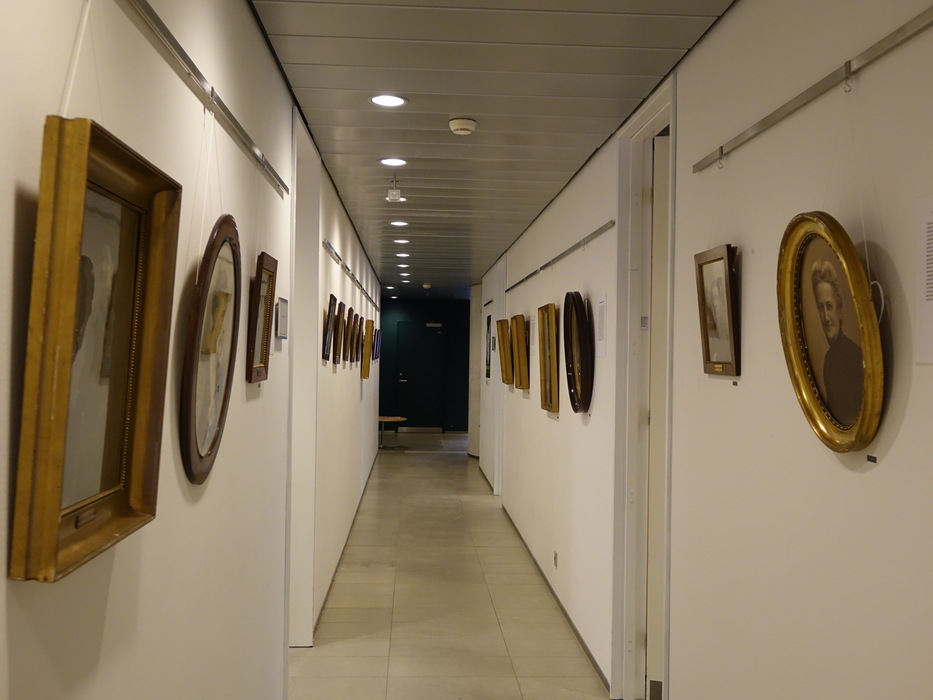
KVINFO is a reduction from Kutch Viden Information Forskning, which would sound in Russian as “gender-knowledge, information, research”, and in a way we also contain a game of words, kvinde (woman), kvinfo (information about women). Readers who consider the feminism of social deviation will be interesting to know: the KVINFO center has national status, is in the Royal Library building, has a large collection of thematic literature and occupies one of the leading positions in the global movement for gender equality.
Black and white portraits of the first feminists were brought to Kvinfo from the Orchus Women's Museum (yes, there is such a museum). I studied the materials related to the exhibition to find answers to three questions: who? How? Why? I was interested in knowing who exactly represented the many thousands of Danish suffrazhists at the celebration of the centenary of the movement, what methods they used and how the variety of areas of activity, as well as the personal giftedness of each activist contributed to public progress, as a personal life situation influenced the political priorities of activists.
Who? How? Why? - 21 history, 21 portrait
1. Yutta Baisen-Muller (1837-1927)
Yutta Baisen-Muller (1837-1927)-the same thing that planted one of thirty feminist oaks was ... the wife of a rural pastor. After the death of her husband, the 55-year-old mother of eleven children decided to apply her life experience to solve global problems. She took up social problems, considering the key to changes universal education. In a very important period, during the struggle for suffrage, Baysen-Muller became the chairman of the female society, the leader of the movement and an unsurpassed agitator. For the first 23 years of its existence, female society attracted a thousand people, and by the end of the sixteen -year chairman, the number of activists increased to 7 thousand. Other popular women's organizations appeared - Danish Women's Council and others.
Baisen-Muller was guided by the motto “If you cannot win, join”, and this led to a conflict with more radical activists and to the loss of the chairman. However, Yutta Baisen-Muller to this day is more than all other chairman of the female society, she lasted the most important female organization of Denmark in the leadership position. During the celebration of the 80th anniversary of Yutta, an educational grant for students was founded. Apparently, then the Danes realized that they were very hurrying with the honor of the "mother of the yutta" and after another 8 years they handed her a state award - the gold medal "for merits" to the country.
2. The telegraph operator Matilda Fibiger (1830-1872) is often called the first feminist Denmark, since it was she who became the creator of the first novel about gender inequality. “Twelve letters” were printed in 1851 under the pseudonym Clara Rafael. This is a story about a young governess who conflicts with provincial inhabitants and decided to devote life to the movement for the liberation of women. The literary talent of Matilda/Clara was appreciated by merits, but the radical ideas of "twelve letters" were attacked by critics. Twenty years have been a young writer, twenty years have passed since the publication of the book before the creation of an organized female movement. In 1970, Denmark established the Matilda Award - for the fight against gender inequality.
3. The first woman agitator, traveling with lectures on history, literature and the female question, was the writer, poetess, teacher Paulina Frederickka Worm (1825-1883). Paulina grew up in an unusual family: her father-priest conducted active public work, published radical political texts of patriotic content, advocated the freedom of print and was persecuted by censors. The nine-year-old Paulina, brought up in the spirit of free thought, demanded from her uncle-deputy to speak for universal suffrage. In literary works, Paulin developed the ideas of the suffrazhists. After the release of Roman Matilda Fibiger "Twelve Letters" Worm criticized this work. Paulina believed that the path to emancipation was not through spiritual liberation, but through training, education, work and financial independence. Time showed that both the Worm and the Fibiger were right: you can’t fly with one wing, you can’t free a person from the outside internally not free. Paulina Worm for forty years worked as a teacher, was a co -founder of many educational and public institutions, spoke about the importance of learning in her native language.
4-5. The Danish Women's Society was founded in 1871 as a branch of the International Women's Association International des Femmes . Elizabeth Ouhterloni, Tagi Johanen, Carolina Testman and Matilda Bayer (1840-1934) are considered the founders. It is impossible to tell the story of Matilda Bayer, not mentioning her husband and like -minded Frederick Bayer. The personal and political union of Matilda and Frederick was unusually fruitful. They raised six children and worked on to create a fair society for their children. The writer Frederick Bayer (1837-1922) was one of the founders of the pacifist movement, chairman of the International Bureau of the World. For resolving the issue of the Swedish-Norwegian union in 1908, Frederick received the Nobel Prize of the World. Showing a rare ability to recognize other people's merits, Bayer believed that his Nobel Prize was a reward for his joint work with Matilda. Frederick Bayer was awarded a place in the Danish feminist pantheon for help in the development of ideas for the liberation of women and for practical assistance in creating a female society, the first chairman of which was Matilda.
6. Only two men were honored to be called the pioneers of the feminist movement of Denmark. The second, after Frederick Bayer, was a journalist, writer and librarian Rudolf Emil Elberling (1835-1927), which was part of the Women's Society Council and worked with the first documents of the organization.
7. The love union of the two artists changed the views of the Danes to the place of a woman in art. The revolutionaries from painting were called Maria Lupyuu (1848-1925) and Emilia Mund (1842-1922), they were inseparable all their lives, but only Maria, the author of the very famous group portrait of the suffrazhists Fra Kvindevalgretskampens fuffe dage , got into the Gallery. Lupyua grew up in the family of priest Daniel Karl Erhad and the suffrazhist Lina Lyuphuu, was known not only as an artist, but also as a journalist. Maria received an additional dose of free thought during a trip to the emancipated Munich. For formal reasons (a ban on drawing a naked model for women) Maria and Emilia were denied admission to the Royal Art Academy. The couple traveled a lot, waged a struggle for civil rights, the possibility of education, the availability of scholarships and participation in creative associations for women.
8. In 1888, the Art Academy surrendered and canceled gender restrictions for students. Only seven years later the first women's exhibition was held, at which 4,500 exhibits were presented. Reflecting the idea of World's Fair in Chicago (1893), European women demonstrated their achievements in the field of sports, education, careers and art. In addition to feminists, the organizing committee included the aristocrats and the wife of businessmen, which created certain ideological difficulties during the preparatory work. Nevertheless, the event was successful and brought significant income. The money was spent on creating the existing and still Copenhagen Women's House. The soul of the female exhibition was a wealthy educated feminist, the hostess of the salon for intellectuals, the popular writer and playwright Emma Gad (1852-1921). She worked in many women's societies, created trade unions, was the editor of the radical magazine, received the gold medal "For Merit" in 1905. The most famous book of Emma Gad is about etiquette.
9. Artist Christian Konstantin-Hensen (1848-1925) also made a lot of efforts for the women's exhibition. Christiana grew up in a well -known creative family and considered education the best way to free women. She created the feminist fashion and participated in an important project to restore the tapestries of the Royal Palace Fredericksborg. For three years, Christian Konstantin-Hensen was a member of the Council of Danish Women's Society and worked in a team for two years, which launched a wonderful project "Coffee cart" as part of the struggle for sobriety.
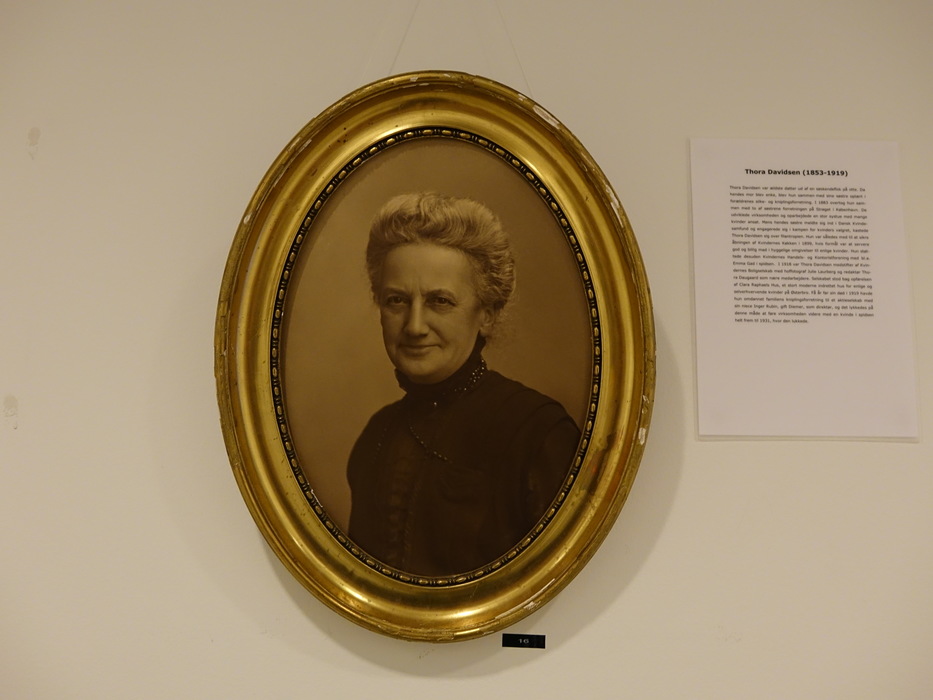
10-11. The saleswoman Krugov, businesswoman, philanthropist and many children of Tour Davidsen (1853-1919) devoted her life to the struggle for female suffrage. She was one of the first to abandon the patriarchal model of relationships in the team, created jobs for women and even organized dinners for her employees. The tour was tirelessly engaged in the organization of labor and life of women as part of different public organizations, participated in the opening of women's cuisine for the low -income. At the end of her life, Davidsen turned her business into a joint -stock company and appointed the director a niece. Another successful businesswoman, the philanthropist and political figure Wilhelmin Rayrupe (1860-1933) worked at key posts in mutual assistance organizations to the workers and in the city council, ran for the conservative right-hand party. Before her death, Wilhelmin founded the fund for financial assistance to the maids and the animal protection fund.
12. Enlightener Charlotte Klein (1834-1915) has been supported by feminist ideas from the age of 12. She spent her childhood in the province and knew well what information isolation was. Charlotte worked in women's society since its founding, became the first chairman of the Women's Association of Reading. Now it’s hard to believe in it, but there were times when there was no public libraries and reading was one of the male privileges. The time will come when the requirements of modern feminists will be perceived as natural rights. People who rest on the laurels of someone else's victory will say: "What is the meaning of the movement for equality? After all, no one infringes anyone! What are you saying? There was a time when people did not receive money for reproductive work? Yes, it cannot be like that!"
13-17. Most of the activists who are honored in the year of the centenary of the movement worked with the word professionally. The writer and stenographer Elizabeth Gruntwig (1856-1945) was the editor of the magazine "Woman and Society" and translated the books of the Swedish feminists of the Selma Laherlef to the Danish. Literature historian and teacher Ida Felbe-Hensen (1849-1922) worked in a female reading society and became the first female magist of Scandinavian philology at the University of Copenhagen. The writer Guthe Limke (1866-1945) wrote ideological texts, touched on the topics of female sexuality, emancipation, taboos, ideological contradictions in her books. Giete wrote the history of the Danish female society to the forty-year anniversary and founded the local historical-topographic society. Peru Astrid Istanmpe Fedodersen (1852-1930) owns the texts of the “female question” and “can the female issue and issues of morality be divided?” Astrid was also the President of Women's Society, and after the adoption of the law on universal voting, she was engaged in the marriage law. In the field of interests, Feddersen was a fair solution to property and children's issues. Journalist Karolina Sofia Tesman (1839-1919) was a co-founder, treasurer and chairman of the female society. Отец запрещал Каролине учиться, она особенно остро относилась к теме всеобщего образования, основывала школы и боролась за право на профессиональное обучение для женщин. Перед смертью Каролине Софие Тэстмен учредила фонд помощи студенткам.
18. Большинство пионеров датского фемдвижения были весьма состоятельными и уважаемыми в обществе людьми, осознающими важность социального инвестирования. Андреа Северине Сессе (1805-1898) была дочерью "самого ученого священника в Дании", женой министра юстиции и матерью семерых детей. А также активисткой Женского общества, Женской ассоциации чтения, борцом за юридическое равноправие и первым подписчиком журнала "Женщина и общество". Андреа – как и многие другие активисты с выставочных портретов – опровергла теорию о том, что стрессы сокращают продолжительность жизни, и в 90 лет удостоилась звания почетного члена Женского общества.
19. Мария Йельмер (1869-1937) работала для создания Национальной лиги за женское избирательное право, основала и возглавила местное отделение “Интернациональной женской лиги за мир и свободу”, занималась законом о равной оплате труда в госсекторе, законом о супружеском равноправии в отношении детей и имущества, законом о регулировании детского труда.
20. Больше всего армия просветителей нуждалась в учителях, воплощавших на практике идею о всеобщем образовании. Сколько было их – безымянных передовых женщин, забывающих о себе, работающих для идеи, для лучшего общества. Учительница Анне Брун (1853-1934) боролась за образование для женщин, за равные с мужчинами условия труда и заработную плату. Была активисткой датского Женского общества и Общества защиты нравственности и морали.
21. Представьте себе: до 1921 года образованием руководили только мужчины! Первой женщиной на посту директора школы стала Элиза Петерсен (1876-1932), политик и феминистка из Орхуса. На посту директора Элиза продержалась 8 лет, и на самом деле это было финалом ее общественной карьеры. Начинала же Элиза Петерсен с организации бесплатных столовых во время войны, учреждения регионального Женского общества, устройства детских садов, с требований о государственном финансировании школ.
Из XXI века работа активистов прошлого кажется титаническим трудом. Верили ли они в свою победу или просто не могли жить иначе? Солидарная борьба первопроходцев, бескорыстность и финансовая независимость многих лидеров привели к тому, что – по сравнению с 1880 годом – человечество значительно продвинулось в понимании равенства прав.
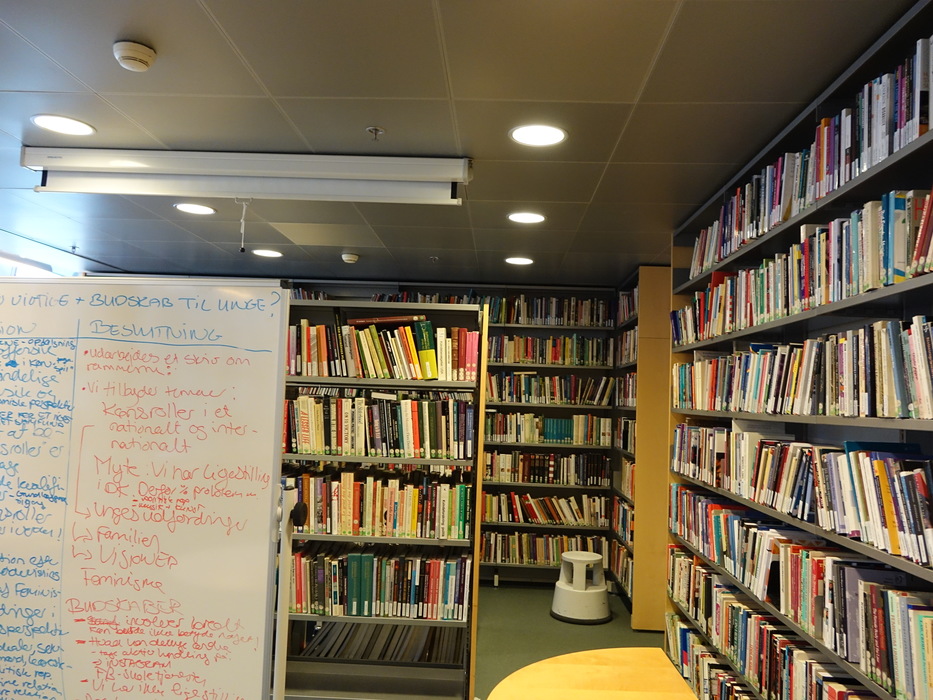
Выставка "Пионеры женского движения Дании: 21 портрет" располагалась в коридоре гендерной библиотеки. Читальные залы я тоже посетила, и если вы хотите взглянуть на полки с книгами, то вам следует начать с первого стеллажа и двигаться мимо обложек до тех пор, пока ваши силы и терпение не иссякнут. А еще вы можете скачать продолжение истории, книгу о столетнем победном шествии феминизма по Датскому королевству. Книга называется "99 розовых слонов". Между прочим, слон – это тоже очень важный символ для датчан. Но из соображений гуманности сегодня про слонов я рассказывать не буду. Хватит с вас и дубов.
Lyubava Malysheva-a civil activist, a photographer-documentary, lives in the Norwegian city of Bergen
Автор благодарит Лену Грунтову и Йело Вёрмина за помощь в написании текста