
Translated material
To the typology of atypical
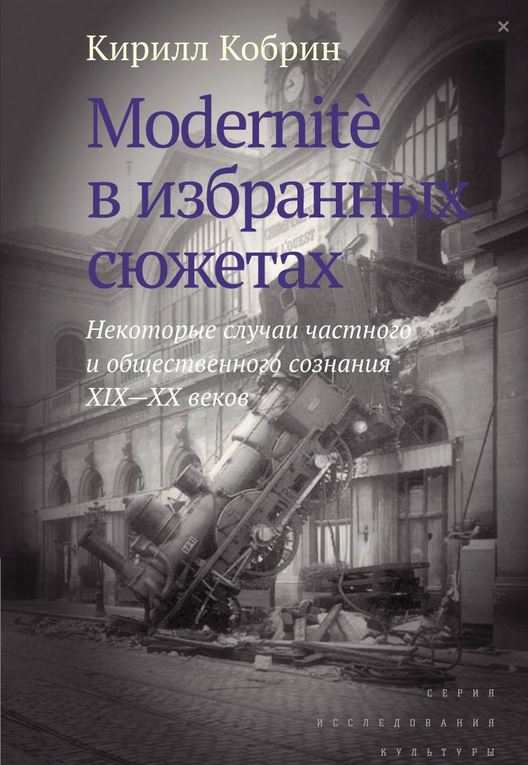
Kirill Kobrin. Modernité in chosen subjects : some cases of private and public consciousness of the XIX-XX centuries. - M.: Ed. House of Higher School of Economics, 2015. - 240 p. (Cultural research)
No, the point here is not at all in "modernity" - whatever it is. And this becomes clear from the very beginning. We should not mislead us by the Marxist vocabulary of the first of those entering the collection of the essay, nor the definition of modernity in it as almost primarily a "method of political thinking." This is not about politics - and not even about history. This is about anthropology.
The book opens a section, the name of which, apparently, draws the reader's attention to the great story: "Class struggle, nationalism, war, private man." So: the first three points of this summary enumeration are important only in that they lead, as their result, to the point of the most important - the fourth.
“Modernity”, according to Kobrin, is “a simply different name for the final triumph of bourgeois consciousness” with his thirst for universality and final answers to all conceivable questions. On the wrong side of the “bourgeois” traction to universality, such a look is made out for which details, private cases, “chosen stories” are more eloquent and more interesting - and more truthful - any whole, any generalizations. Therefore, "modernity" is the era of the appearance and strengthening of the semantic niche of a private person.
The emergence of this exotic for the previous times of the human variety is the flip side of the processes of the great integration of Western cultural and historical processes. Homo Privatus starts in cracks and faults between large historical matrices, settles in their internal folds - and, no matter how much it is involved in these processes biographically, always looks at them from the outside. He is an embodied counterweight to universality as the ideal of "bourgeois consciousness." He is always to one degree or another, a stranger and inappropriate. He is a form of objection to the integration and his own direct, inevitable investigation.
Kobrinsky "modernity" is a space for the cultivation of loneliness (as a cultural form, if you like). A factory of loneliness that produces it with the help of well -established mechanisms, which acts on this time.
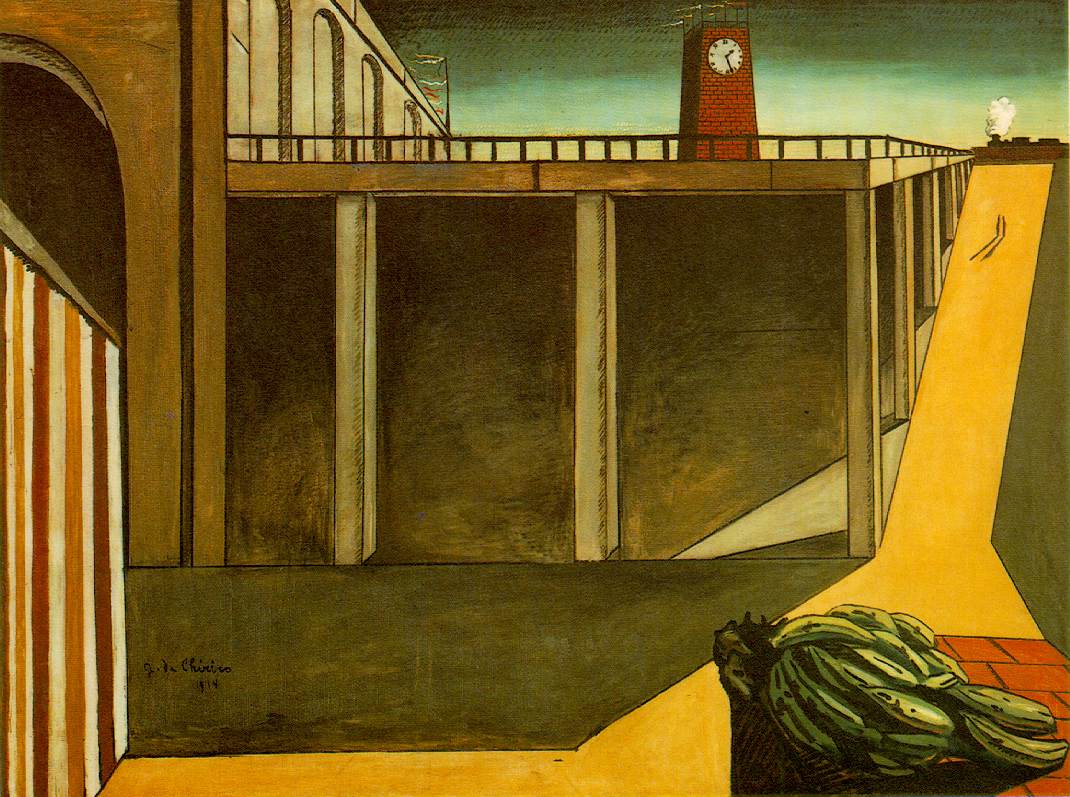
In the Montparnas station de Kiriko, created in the year of the First World War, the author sees the “portrait - if not entirely” the Western civilization of the Modernity era, then certainly a way of its thinking ”:“ Everything depicted here has a separate being, nothing is in no way reinstated with the nearby, ”“ pure, distilled void, echoing, melancholy ”.
In the book, as if dedicated to modernity and the “technological mechanisms on which this factory and this production are based”, Kobrins - on the material of living specific cases - traces the ways of a person of this kind.
Those who are in the first essay written in the fields of the eighteenth Brumer Louis Bonaparte, Kobrin calls “Bohemia” after Marx, is just an option of a private person, his maximum case; this is a private person who is brought to extreme consequences. Being modern, Homo Privatus is the one who makes modernity himself. existence constantly reproduces it.
“<...> Bohemia,” writes Kobrin, <...> despises the established cultural hierarchies and offers a direct statement on top (or to the side of) a sociocultural order mediated by these hierarchies and relevant institutions. " It is such people - the subject of his attention in the book: sources of direct statements on top and sideways from social orders and institutions.
In general, it stubbornly imagines, as if in this book the author is engaged in a refined type of self -reporting - it seems that without pronouncing the first -person pronoun. Not too masking his plan for the visible fragmentation of "chosen plots", he explores his own intellectual genealogy - and perhaps existential - in the sense of existence; positions in being. It traces the roots of what, it would seem, carefully - and quite successfully - avoids all rooting. What is problematized and tries to overcome all kinds of soil.
This is self -analysis without the slightest elements of confession - carried out exclusively through the analysis of the time and its peculiar inhabitants.
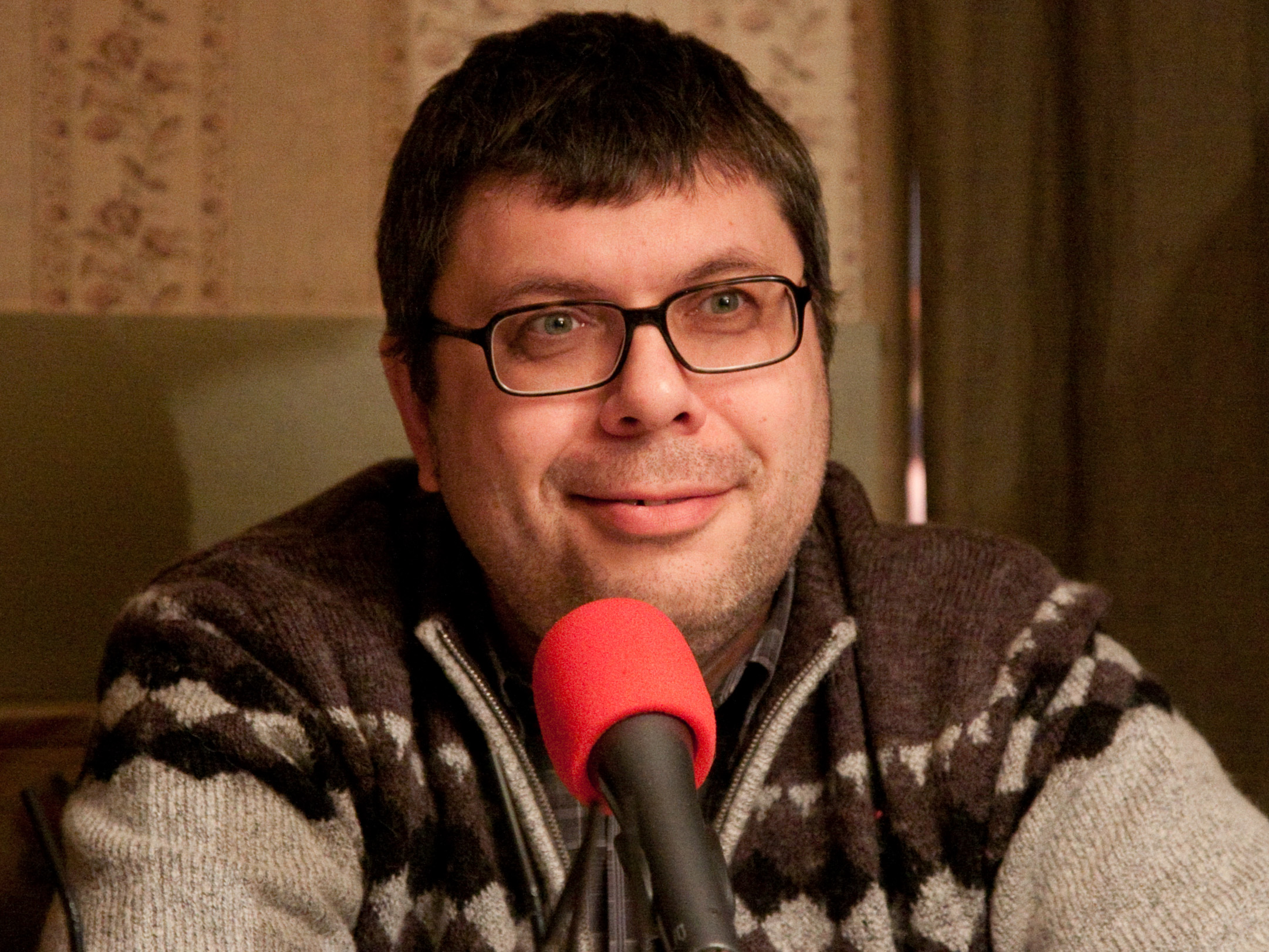
Actually, who is Kirill Kobrin? Wishing to find out-to catch the usual coordinates that are not very per sovereign by the author-will easily gain such coordinates using a simple Internet post: historian, essayist, editor of the "Unpressed Reserve" ... Definitions are as fair and formal. And in essence, who? It has long been the most accurate definition of Kobrin’s position in cultural and extracurricular being seems to be a “private thinker”. And even so, strengthening the motive of the particular, stiffness, fundamentally incomplete and elusive identity: a thinking private person. Such, you see, is a private person who clearly realizes - it is better to use the Kobrin word "reflex" - the structure of his particular.
So, in the texts that compiled a book, the author is occupied by the types of existence and cultural participation - and the meanings of such existence and participation. Types of atypical. Genealogy of non -profit.
All the heroes of Kobrin studies are such that they do not follow from each other in any way. Everyone is told separately from others: writer Franz Kafka, artists Georgio de Kiriko and Kurt Shviters (no, they are not united by a single aesthetic line: only the type of existence itself is related), historian Ernst Kantorovich, literary critic Lydia Ginzburg. It is clear that this is not an exhaustive row, that the author does not set any exhaustion to himself: it is precisely the injection of consumption that is important to him, entering its nervous node. But you can find the logic of inclusion in this narrative of his heroes. Here anyone will take - a continuous disagreement of the models proposed by the cultural environment.
Such is Kafka with his obviously unsuccessful "search for national identity in Eastern Europe": a German-speaking writer of Jewish origin, who lived in the German-Czech Prague, born of a subject of the Austro-Hungarian monarchy and, not moving anywhere, who died a citizen of the Czechoslovak republic-neither a German, nor a Jew, or, moreover, a Czech-but who then? "The Prague situation of multilingualism, multi -laying, multiculturalism was unbearable for Franz Kafka <...> Kafka was doomed to the nightmare process of a every second -class reduction of himself in relation to Jewry, to the Germans, to the Czechs. This process was the only possible identity." He would be glad to fit in any of the prepared niches, sometimes even honestly tried (to become, for example, a Jew)-no, it didn’t work out. Such is Georgio de Kiriko, the author of the emblematic picture for the Modernity, the picture about the metaphysical division of everything that, at one time, has become one of those whom the surrealists prayed for, and even tried to recruit him into the avant -garde battalion under the command of Major Breton, but the Italian sharply changed his style, worldview, everything that was like. A completely different painting, to surrealist teams responded with irritated disobedience, calling the members of the movement in every possible way, after which he completely fell out of their clips ... "This is Ernst Kantorovich, who was born in Poland a German nationalist of Jewish origin (!), Forced with the advent of the Nazis to the authorities to escape from the Fatherland, the author of the huge English -speaking study" two bodies of the king ", which, with the near Consideration is not at all a study, but "something that rejects the very idea of communication both with an academic community and an educated reader in general." Such is Lydia Ginzburg - the "man of the twenties", doomed to the Soviet government on professional and intellectual loneliness, which has written the most significant texts for many years. Such is Kurt Shvitterc, the “master of the collage and assembly”, recognized in fascist Germany “degenerative artist” and ending his life in exile, known only to specialists: “He divorced the Dadaists in the early years, did not join the surrealists, missing the chance of noisy success” - “He selects Life Farrows,“ Problem of Tremmer The life of a European citizen-<...> tickets, scraps of posters, torn pieces of advertisements, fragments of old newspapers, black and white reproductions of academic and romantic painting and so on, so on "-" and folds it in such a way that art turns out. " In such a “manic concentration of a person who selected, stored, combined, combined in the collage,” Kobrin categorically refuses to see “escapism”. No, he claims, this is “serious competition of collective history”, and even declares completely radical: “The individualism of the 20th century can only consist of garbage of collective life; everything else is vulgarity and meaningless show -off.”
Evasion from the pillar roads of its (imposed time) culture, according to Kobrin, is a kind of special, stubborn honesty.
All these people are correlated not only in the inner world of the author, for which each of them is important. There is a deep community between them, incompatible.
All this is people of one degree or another. People are out of order. Heroes of Kobrin can influence the very fact of their non -stipulate existence on the arrangement of the mind and fate (however, on everyone else) - in fact, only they do this. However, they do not fit into one, whole line. At least this line is intermittent and can be told exclusively "in the chosen plots." More precisely, a bunch of semantic lines that go in different directions stick out from each such case. But in general, everyone is a type without continuation.
And all of them are the creatures of Modernity, "a characteristic relationship of" words and things "; everything made and written by them was made" in the same factory, only, when mastering, not on the conveyor, but somewhere in a secluded corner, without using cars, in free time from the main conveyor activity. "
Written here by Kobrin - chapters to the story of self -extracting themselves from history or, like Lydia Ginzburg, forcibly from it seized. However, in each of the cases, this seizure - invariably traumatic - occurs so that its gesture is completely woven from historical matters - and becomes a fact of history.
As for the "modernity" - what happened in all of us as a result of the collapse of traditional societies and lasts a minute - even though this is not directly directly about it, it is certainly important here. She is the large environment that generally made a type of private, not fit into human templates, firstly, possible, and secondly, which is even more important, culturally significant. She turned each of the people of this problematic mental and mental warehouse into indispensable points of intensive generation of meanings - pressing for the present, key to her.
"Modernity" is a place where all the most important is done and all the most accurate is said - around the edges. Where is the "center", general trends are given then to start from them.
That is why the author, speaking of such important objects so important for themselves (and for appropriately configured readers), and does not utter the words "I". It is not necessary here. Each "I", if you look around well, is a special case, the chosen plot. Which is good because it can be told in other chosen subjects.