
Translated material
The Russian Orthodox Church will notify the Council of Europe on violations of the rights of Orthodox Christians
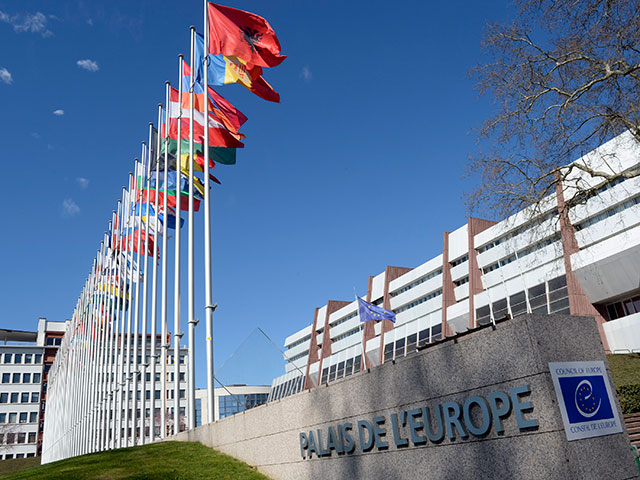
The representative office of the Russian Orthodox Church under the Council of Europe has opened up the Center for the study of cases of violation of the rights of Orthodox Christians in European countries. The site of the Center for the Monitoring of the Rights and Freedoms of Orthodox Christians will quickly collect information from various sources about the situation in 47 countries of the continent, analyze them and regularly notify the institutions of the Council of Europe on the situation in compliance with the rights of the Orthodox.
"At the Institutes of the Council of Europe, where the Russian Orthodox Church is present as a public organization, they know little about the situation of Orthodox Christians. Separate reports of violations of the rights of believers appear in the press, but these data are not systematized," TASS explained by the phone from Strasbourg the head of the representative office of the Russian Orthodox Church under the Segumen Philip (Ryabykh).
We are talking about the desecration of shrines, about the oppression of priests, about abuse of religious symbols, about blasphemous performances. "According to 2014, violations of the rights of the Orthodox take place in Russia, Ukraine, in Serbia (as well as in Kosovo and Metokhia), in Croatia, in Cyprus, in Greece," the abbot said.
According to him, Catholic organizations regularly engage in such monitoring. But their attention is paid mainly to Catholics and Protestants. In addition, the Vatican as a state has the status of an observer under CE.
The site has already published two reports for 2014 in Europe and on the situation in Ukraine. "This is still preliminary data. We hope to prepare a full review for 2015," said Abbot Philip.
The representative office of the Russian Orthodox Church in Strasbourg actively participated in the discussion of two cases in the International Court of Human Rights regarding the use of Christian symbols - crucifixion at a school in Italy and wearing an alloy cross with a stewardess in the UK. Thanks to the attraction of lawyers and interaction with other Christian structures, it was possible to defend the right of Christians to the public use of their symbols.