
Translated material
Holy Pi Day
Medusa found out from mathematicians why they study the number of pi
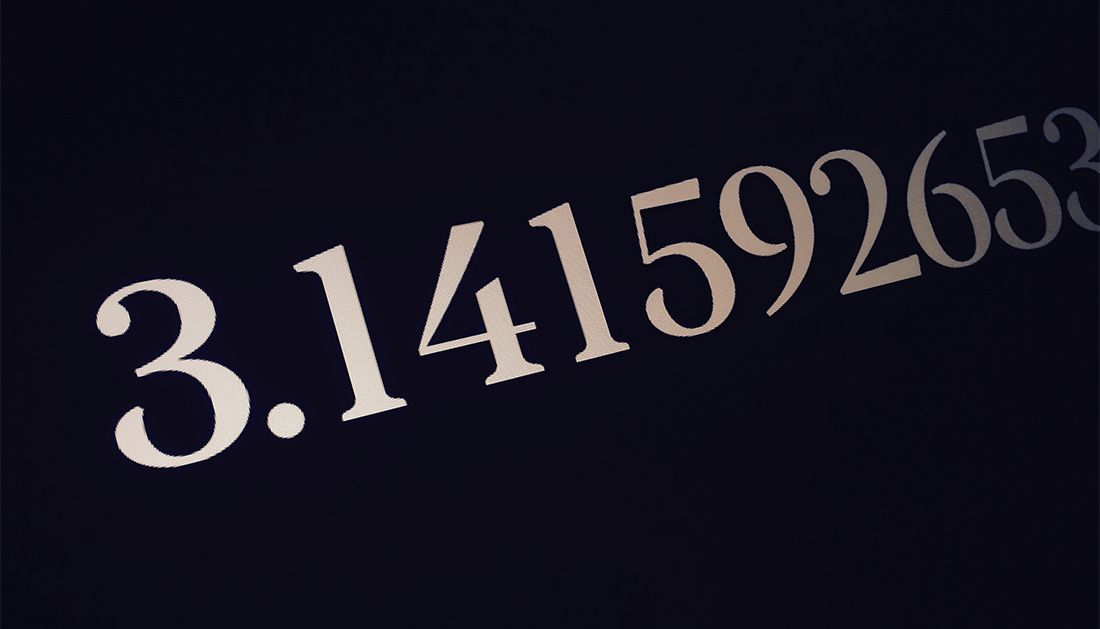
March 14 (3/14 in the traditional way to record the date for many countries) all over the world is celebrated the day of the number of pi , the most famous mathematical constant, the decimal recording of which begins with numbers 3.14. On 2015, Pi (π) is a special holiday: the first number of the number of records of the number of the number-3.1415 coincide with the date. And you can also look at the following signs of the constants and mark the second of Pi - it came at 9 hours 26 minutes 53 seconds; This happens once a century. On the eve of Pi's Day, Medusa recalled the story of the study of a mathematical constant and found out from researchers who achieved amazing results in calculating the pi, why they needed it.
Record race
The number of PI is the ratio of the length of the circumference to its diameter, the most famous and ancient mathematical constant. It is not only necessary for geometers and engineers - Pi arises in almost all mathematical and physical theories; Just because the circle (many points equidistant to this) inevitably pops up even in the scientific areas far from the geometry - in a complex analysis, probability theory, and theory of numbers. It is not easy, for example, to see what the circle has to do with the famous identity of Euler, connecting Constant Euler E, Pi and the root of the minus of the unit, I:

In most cases, it is enough for scientists to know that Pi is a positive number, and which one is not so important. Much more interesting for mathematicians are some amazing properties of this number. For example, the fact that Pi is an irrational number, that is, it cannot be represented in the form of a fraction, and from this it follows that in the decimal recording of the number of pi there are an infinite number of numbers, and there are no periodic repetitions.
Oddly enough, besides the fact that the decimal recording of the PI is endless and unopagled, we can still say little about it. Often you can hear that in the record of the number of pi on some rather distant place, any specified final number will meet in advance. In fact, it is not known whether it is or not. Moreover, we do not even know whether any figure is repeated in the Pi recording an infinite number of times: it is possible that, starting from some very distant position, only zeros and units will remain in the recording of Pi.
Most mathematicians are sure that the number of pi is “normal”, that is, in its decimal record, any number is found on average as often as in a random set of numbers: unambiguous - for example, the number 4 is on average once every 10 characters, two -digit - as 42 - once every 100 characters, three -digit - once a thousand. And so on. If pi is normal, then any in advance the specified final number can really be found in its record, and even an infinite number of times. But there is no evidence of the normality of the pi, and no one can even imagine how to approach it.
Obviously, it is impossible to test this hypothesis experimentally: having spent a lot of time, you can calculate as many signs of the number of pi, but the calculation of an infinite number of signs would take an endless time. People are engaged in calculating pi with almost manic enthusiasm for two millennia, and there is no special sense in this lesson for a long time. To calculate the length of the circle of the visible universe with an accuracy to the size of the proton, only 39 signs of the number of pi will have enough knowledge:
3.1415926535 8979323846 2643383279 50288419 -
And they were known back in the middle of the XVII century. For any applied or physical calculations (given the technical level of modern devices), it is not required to know more than a couple of hundred signs of the number of pi - while the first 500 of them received humanity already in 1895. It can be assumed that from this moment the calculation of Pi turned into a sport, a record race, deprived of practical value.
How to calculate the pi? In ancient times, for this, the perimeter length of the polygons inscribed in the circle was calculated. Using this method, Archimedes correctly found the first three signs of constants - 3.14. However, from about the 15th century, people began to use a much more effective way - the presentation of the pi in the form of an infinite row, the addition of an increasing number of the first members of which gives an increasingly accurate value of Pi. Perhaps the simplest of these rows is a Libelian series:

However, it “slowly converges” - to calculate the next sign, you need to add more and more members. Over the past centuries, many others have been invented - much faster than converging ranks, allowing you to find the approximate value of the pi and calculate its next signs; The Pi calculation record race eventually turned into many respects into the race of the invention of new formulas, and since the 1950s-also into the computing power of computers.
The last record was registered in October 2014: an anonymous enthusiast with the nickname Houkouonchi found on an ordinary personal computer with a capacity of 2.6 gigaigerz 13,300,000,000 (13.3 trillion) PI signs. The calculation itself took 208 days, for checking the result - another 182 hours. Houkouonchi used to calculate the Y-Cruncher algorithm, invented by the American mathematician Alexander Yi. In general, with the help of this program, all three records were set; Nothing was required of their owners, except for the readiness to sacrifice several months of continuous work of the home computer.
It is curious that since the end of 2009, records were set precisely on ordinary personnel. On the one hand, this is a consequence of an increase in their power. On the other hand, in a world where a laptop considers faster than a 20-year-old supercomputer, the excitement for calculating the Pi has significantly established. The first record holder of the Pi calculation era on ordinary computers was the French programmer Fabrice Bellar, its result - 2,699,99,990,000 decimal signs - received on a computer worth less than three thousand dollars.
And the peak of rivalry fell on the 1980s-1990s: over two decades, the PI calculation record has grown from two million signs to 200 billion. The main competitors were the Japanese Jasumas Canada and American mathematicians, the Brothers David and Grigory Chudnovsky. At the same time, the Professor of Tokyo University of Canada used the Hitachi SR8000 industrial supercomputer, while the Chudnovsky brothers who were born in Kyiv and later emigrated in the United States made calculations on a home -made computer M Zero. The car was created for the money of their wives, one of whom worked as a lawyer, and the second - an official at the UN. The supercomputer occupied a whole room, cooled 25 household fans, cost about 70 thousand dollars and worked faster than many industrial supercomputers, which cost tens of millions of dollars.
However, the Chudnovsky relied not only on a supercomputer, they also invented an extremely effective formula, which was called the Chudnovsky algorithm and was later used to set the first record on a personal computer by Fabrice Bellar. The formula of the Chudnovsky does not look at all as simple as a row of Leibniz, but he considers much faster:

* * *
On the eve of Pi's Day, Medusa contacted the main participants in the record race - the Chudnovsky brothers, Yasumasa Canada, Fabrice Bellar and the author of the most effective calculation algorithm of Pi Alexander Yi.
David and Grigory Chudnovsky

- Why do you need to calculate more and more pi decimal signs?
- The calculation of Pi and other classic constants has several meanings.
The first is theoretical, it is associated with the so -called diophante approximation . The second is a test of hypotheses. We still do not know how “random” the record of the main constants in decimal and binary form ( we are talking about the issue of “normality” pi - approx. Medusa ). Third - computer applications. The decimal recording of numbers such as Pi is a wonderful source of random numbers sets, in many ways the best than the standard methods for generating pseudo-performance numbers. Finally, the calculation of Pi is an extremely successful and used method of testing computing devices, their internal stability and ability to continuously perform complex calculations for a very long time.
- Is the process or result important?
- If you apply the calculation of pi in connection with diophante approximation or to check hypotheses, the result is important. And if the process is important for testing processors.
- Why did you stop calculating the pi?
-Once it was fun to come up with an algorithm and launch it on a rather imperfect computer. But today we sometimes use the calculation of pi to test new processors.
Alexander Yi

- Why do you need to calculate more and more pi decimal signs?
-Actually, it is down. Calculation of the signs of Pi and other constants to a greater extent sport than a useful activity.
- Is the process or result important?
- For me this is a process. I generally worry little pi. But I am interested in algorithms and mathematical tools that are used in its calculation.
- Do you continue to improve your program to calculate the signs of PI?
- My program is completed, there is nowhere to improve it. No significant improvements from version 0.6.2, released in June 2013, have not been made - now we are talking about correcting small mistakes.
Fabrice Bellar
- Why do you need to calculate more and more pi decimal signs?
- This is an interesting challenge in terms of programming.
- Is the process or result important?
- The process, in itself, the signs of the pi really bother me, but the construction of a multipercius arithmetic algorithm is an interesting (and sometimes useful) work.
- Why did you stop calculating the pi?
- I am busy with other, more interesting projects. In addition, I was engaged in the calculation of Pi several times, to do it would again be boring.
Yasumas Canada
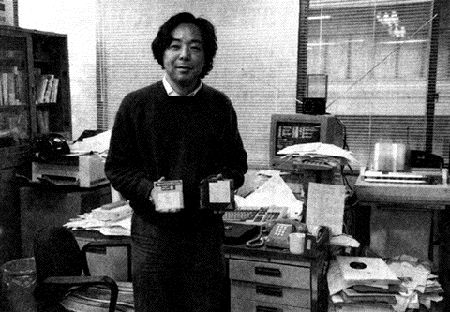
- Why do you need to calculate more and more pi decimal signs?
- I am interested in checking the computing power of the computer using such a complex calculation. Speaking products of such a calculation is a check of the stability of the system and the correct calculation. By the way, it is not necessary to calculate the pi, it can be other constants, like a root of two or constant Euler E.
- Is the process or result important?
- Result.
- Why did you stop calculating the pi?
- I have not had access to powerful computers recently. If I had it, I am sure that I could compete in the number of pi signs found along with the rest.
Sergey Nemalevich
Denis Dmitriev