
Translated material
Business emigration
Money flees from the country - only last year, a record $ 150 billion was withdrawn from Russia.
When the warriors rattle weapons - not to commerce. The prospect of financial blockade, trade embargo, mutual nationalization of investments, freezing assets and other things make the level of risks unacceptable. Many entrepreneurs who cannot boast of personal friendship with the country's political leadership thought about the transfer of part of their activity to places more favorable for business. How did the Alfa Group shareholders succeeded in-analyzed The New Times 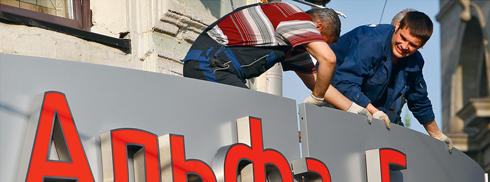
The context is even worse, no one will be entrusted with the fact that the bottom has been achieved. Forecasts are balanced from moderately negative to sharply negative ones, and you will not find a “positive” day with fire, unless, of course, cut off the promises of analysts affiliated with the authorities. The uncertainty, the main enemy of investment increased sharply. Firstly, the uncertainty is internal: now the responsible forecast for the tomorrow's level of taxation, the availability of loans, etc. is impossible. In general, it is not known what will embrace the authorities in the head tomorrow. Will they control the prices of Venezuela, will they ban the import of all countries that have imposed against Russia, will not limit foreign currencies in Russia?
Secondly, external uncertainty has grown. The country that sees in the neighbors a purely zone of its national interests, and their neighbors, and “for people do not count,” can easily encounter a variety of clicks on the nose from the outside world. For example, with a trade embargo, with a ban on mutual financial calculations, a serious tightening of visa policy. And just with a deterioration in the relations of citizens of other countries to the inhabitants of this country who does not comply with the rules of the world hostel. And for doing business you need trust. And sometimes sympathy: the buyer, ceteris paribus, chooses a product produced by a pretty company, and a tourist goes to a country inhabited by people, whom he is at least not afraid of. Unless, of course, we are not talking about "military tourism."
In a country that is rapidly rolling to a total confrontation with the Western world and choosing a model of development between Venezuela, Iran and North Korea, the prospects of conducting business AS usual (
as usual. - English.) No. They will appear only when the country refuses this choice and moves in the opposite direction - to cooperation with the rest of the world, recognizing their mistakes and the right to their own selection of neighbors, to follow the basics of world order. Of course, entrepreneurs and investors in such a situation give their manager to “sell” Russian assets and think about foreign purchases.
Thank you, it would not seem that the time for sales is not the worst. Russian assets are very cheap. The ratio of capitalization to annual profit (P/E) for companies included in the MSCI Russia index is now 6.95. And for developing markets on average (included in the MSCI Emering Markets index) - 13.88, exactly twice as much. At the end of January, this gap was completely large: 3.4 versus 12.1. Now the Russian business is evaluated with a 50 percent discount to the price of a similar Turkish, Brazilian, Vietnamese, etc. Business. Even more Russian companies and developing markets as a whole gap between the attitude of capitalization to the expected (future) profit. It reaches 2.76 (4.13 in MSCI Russia versus 11.4).
With such a cheapness of Russian business, buyers should have been in bulk, as in the early 2000s but there were no fools. Everyone understands how much and why risks and uncertainty have grown. In such a situation, only those who have no other choice can afford investments within the country, 2) who knows that he can cope with these risks or 3) who are fundamentally not afraid. Therefore, now it is extremely difficult for entrepreneurs who want to sell their Russian assets (or part of them). It is not easy to buy/create an attractive business abroad: the attitude towards the Russians has spoiled greatly. All the more interesting are the success of Alfa Groups.
The alignment in the spring of 2013 TNK-BP owners successfully left the oil business, selling it to the state "Rosneft" with an almost 50 percent prize to a market price. Over its quarter on TNK-BP capital, Mikhail Friedman and his Alfa Group partners received $ 13.9 billion. The company was sold at the peak of oil prices and its cost. Because of this transaction, Rosneft got into debt and was forced to lay the Chinese part of the income from future oil sales. The acquisition of the currency by the state-owned company to return these debts played, according to numerous analysts, a large role in the history of the collapse of the ruble exchange rate in December 2014. But at the time of the Sovereign’s transaction, people were very pleased with the ex-owners of TNK-BP: they lost to the state a strategically important business.
We do not know all the details of this deal and is unlikely to recognize them soon. Usually in Russia, as the Business Case of Roman Abramovich shows, the state is quite by those oligarchs who agree to get out of a strategically important business voluntarily. The issue of price for sovereign people is not important: money is only miserable pieces of paper, real assets are important. Problems begin with those who do not want to give the business right to the state (Vladimir Yevtushenkov). As the patient’s awareness grows, these “want/do not want” the problem ends (Yevtushenkov again).
The state of TNK-BP is quite enough for ex-owners, although they squeezed out the maximum from the oil asset. In early February, Igor Sechin said that he was proud of this deal and has no complaints about sellers: “They are very decent people.” And the chairman of the board of directors of Alfa-Bank, Peter Aven Sechin,, by his own admission, even said that he had missed him. However, remembering who is missing, these words can be perceived in two ways, that is, equally with a plus and a minus. But the fact is a fact: “alpha” for the state is a predictable and understandable partner-she does not try to conduct business with officials, clearly pursues her business centers, does not climb into politics and does not cling to the asset that has been needed by the state.
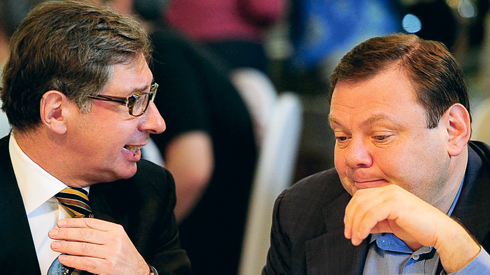
The head of the Board of Directors of Alfa-Bank, Petr Aven and the head of the Board of Directors of Alfa-Group Mikhail Friedman at a literary dinner in GUM, *Moscow, 2013. *The choice of the goal at the end of 2012 Vladimir Putin expressed a modest hope that the money received by Russian businessmen from the sale of TNK-BP will remain in the country. Friedman said in April 2013 that it will be so:
"Russia is the most understandable country for us." But then Putin did everything so that there was nothing to do in the country, that the country ceases to be clear.
In the summer of 2013, Alfa Group announced the creation of the Gibraltar company Letterone (translated into Russian-the same Alfa)-Mikhail Friedman, German Khan and Alexei Kuzmichev contributed to it from the sale of TNK-BP and other assets (in particular, the ALTIMO telecommunication holding owning VIMPELCOMO Ltd, and Turkcell shares). At the beginning of 2014, the Letterone consolidated 100 % Altimo, redeeming the shares from the minoritarians.
The shareholders of Alfa-Group thought about the global business diversification in the early 2000s. But it did not work for a long time. Traces of these thoughts are foreign telecommunication possessions and a problem partnership with BP in the 2000s. The current round of diversification may be more successful. Everyone became wiser. Alfa-group shareholders now hardly occurred to set up the FMS and other parts of the Russian repressive car on a European partner. And the BP ceased to interfere with the foreign expansion of Alpha shareholders: in the last decade, this was one of the main causes of the conflict, which eventually did not allow the owners to preserve the TNK-BP holding. Then the BP was sure that there was nothing to do outside Russia, and Russian shareholders did not like that BP was striving to work in Russia not only with them, but also with Rosneft.
Back in June 2013, Alfa Group decided to spend about $ 10 billion on oil and gas projects, and John Brown, ex-head of BP, attracted the ex-head of the BP. Brown was the general director of BP at the time of the creation of TNK-BP and survived a difficult disappointment from a joint project with Russian partners.
The first new object of interest for the Letterone was Dea, the German RW oil business, purchased for € 5 billion, operating in 13 countries. But this is only the beginning. DEA, together with BP (approximately in a 1/2 proportion), invest $ 12 billion in gas production and gas condensate in Egypt. The Egyptian project, together with BP, is about what Alpha shareholders wanted to do a decade ago.
However, on the way of Alfa there is again Britain, which accounts for about 1/5 of Deaa production. The British regulators have not approved a deal for the purchase of Dea for a year, fearing that in the case of sanctions on the company or its shareholders, it will not be able to maintain prey at the British deposits. And in principle, British officials do not like that Russian business buys oil assets in the North Sea.
But the rest of the situation completely rolled over. The Lord Brown, a decade ago, opposed the global expansion of Alpha, now works for it as the head of the energy unit of Letterone and publicly waste compliments to Friedman - they say, he is a guy, of course, tough and acts solely according to those rules that he considers acceptable for himself, but he has a strategic vision, and this is expensive. And even Robert Dudley, the ex-head of TNK-BP, who controlled it in the interests of BP and survived a humiliating conflict with Alfa, who then resorted to non-trivial (in the sense of the Russian style) methods of struggle, heads BP. But now he sees the benefit of working with “these strange Russians” outside Russia.
Not only Lord Brown, but also investments outside the heap, will help improve the image in Britain. So, Letterone is negotiating on the acquisition of a network of student dormitories in London for $ 800 million.
The Office of Letterone transferred assets of $ 29 billion. This is a serious application for business abroad. And, it seems, the shareholders of Alpha understood how to lead it. The rules of the game in the developed world are very different from Russian. But Alfa shareholders, having set such a goal, can well adapt to new conditions for themselves. A certificate of this is the recent article by Mikhail Friedman in the Financial Times, in which the author quite frankly spoke about the vices of authoritarian regimes and the advantages of liberal democracies. Of course, this is not a complete business emigration: in Russia, the owners of Alfa still have a lot of assets. But the bridgehead for “retreat” in case it becomes completely impossible to do business in the Fatherland, they are ready. Many Russian businessmen would now dream to be at least in the middle of the path traveled by the Alfa Group shareholders.
Photo: Sergei Karpukhin/Reuters, Zurab Javahadze/ITAR-TASS