
Translated material
Dialogs on Broadway
How to become a super-Dirier. "Soviet ballet" at the American Academy
Alexander Genis: On the air - our heading “Dialogue on Broadway”, which Solomon Volkov and I lead to the Broadway studio Radio Liberty.
Solomon, what is they talking about Broadway?
Solomon Volkov: Broadway lively discussing large changes that are coming in the conductor's world. I must say that with conductors on a modern musical stage it is especially difficult. A lot of wonderful pianists, a huge number, one another better, a lot of magnificent violinists. Much less, but the main roles are provided, although problems already arise there, with vocalists, with voices worse. For some reason there is a big incessation with conductors.
Alexander Genis: I don’t understand why the conductor became the hero of our culture, even a super -hero. In the Encyclopedia of Brockhaus and Efron, exactly four lines are allocated to the concept of “conductor”, it is written - a dropmer, that's all that was a conductor in the 19th century. But in the 21st century, the conductor is a hero and mass culture, he is also known to those who do not go to concerts. The conductor has charisma today as a football player.
Solomon Volkov: I completely agree with you. But at the same time I want to say that the construction in the modern culture of the conductor to such an inaccessible pedestal causes their acute lack. Each time in a large, respected, worldwide recognized orchestra decides that it is time to start a new conductor, there is no panic, because there is no one to choose from. There is a literal number of names, and they hang out all the time.
Alexander Genis: That is why often conductors work in different orchestras, even on different continents.
Solomon Volkov: in two or three, sometimes even in four orchestras. This is not from a good life. Orchestras are forced to go to such conditions, because there are no qualified personalities who could lead such even the most-most large and highly paid orchestras, but at least even the orchestra of the second or third row. There is always a terrible competition.
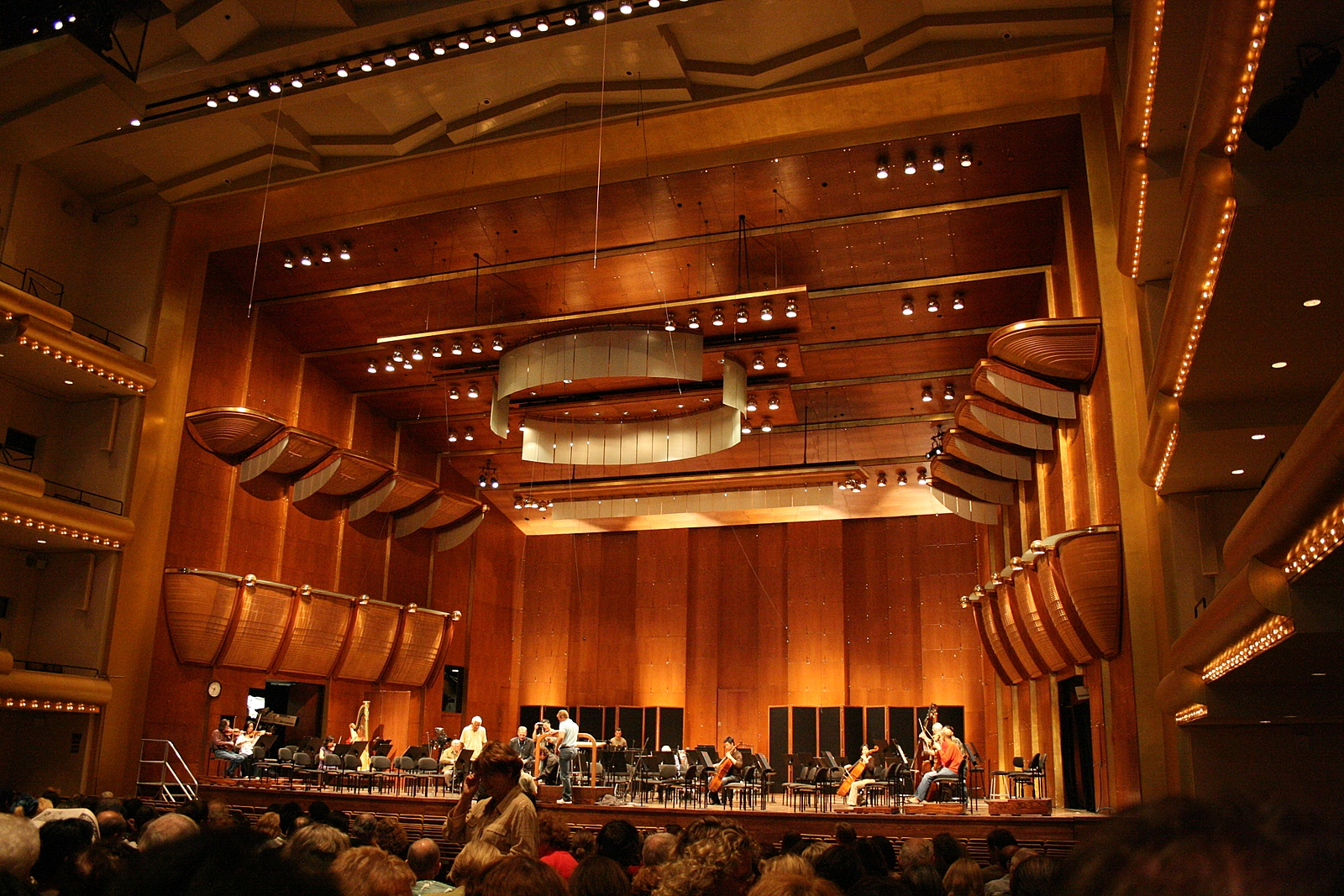
Alexander Genis: But now this excitement is due to the fact that the New York Philharmonic has already begun to look for a new leader.
Solomon Volkov : It was announced that in 2017 Alan Gilbert was leaving, who in New York led the Philharmonic Orchestra since 2009. According to my ideas, he was too holding on too much, I would not even extend his contract even for the first time.
Alexander Genis: Why didn't he please you?
Solomon Volkov: It would be more difficult to say what he pleased me. This is a passing figure. In general, the New York Philharmonic, how much I have been living here, almost 40 years, somehow unlucky with conductors. When I arrived here, Bernstein was no longer as a conductor in the New York Philharmonic, and this, as we now understand, was, of course, the peak of the orchestra. Despite the fact that when he conducted, Harold Schonberg, the main musical critic of New York Times, the legislator, an referee at the time of the musical scene.
Alexander Genis: Yes, he still remained like that. Shonberg's book about music is my working instrument.
Solomon Volkov: It was a wonderful author in many ways, I deeply respect him and are proud that we were in a very good relationship. But as for Bernstine, he reproached him. Every Sunday, Bernstein turned the newspaper and watched his Harold Schonberg in the Sunday newspaper again carried. Not to mention reviews after concerts. Only when Bernstine left did Shonberg reluctantly admitted that, probably, it was still good years.
When I arrived in New York, it was already the era of Boulez, who was hated here together. I myself just treated Boulez with great respect. But what began after Boulez was already in any gate to climb for such an orchestra as New York. Zubin met, who has his fans, some people consider him an outstanding conductor. But, for example, a very influential critic of that time Andrew Porter, who wrote in the journal Newyocker. He was an Englishman who moved to New York and released several books compiled from the reviews, which also occupy an honorable place on my book shelf. I consider him one of the outstanding critics of our time. So, he simply wrote that he no longer goes to concerts of the New York Philharmonic and does not review meta concerts.
Alexander Genis: What did Zubin Met do such?
Solomon Volkov: He, in my opinion, simply laid out the orchestra. The high -quality team began to play as a balalai orchestra, it was really impossible to listen. The impudent hack went just.
Meta is a person, of course, possessing different talents, but such a disciplined, gathered, strict game in the style of Boulez - maybe I have a weakness that I like the style of Boulez, but after Boulez it was simply impossible to listen to the meta: complete rash on all fronts. I really understood the Andrew Porter, who ceased to review the concerts of the New York Philharmonic. Then Kurt Mazur came, who drowned this mechanism a little, but he was not such a deep conductor, and he was such a German bandmaster.
Alexander Genis: Kurt Mazur was very respected, he was a very reliable conductor. This had its own charm - everything was always at the proper level. And he was very well conducted by Beethoven, he loved his Germans.
Solomon Volkov: by the way, Mazur also loved Shostakovich, unlike Boulez.
Alexander Genis: Do you remember that Kurt Mazuru was offered at some point to become the President of the GDR?
Solomon Volkov: So, according to his rumors, because of this, they took him to the New York Philharmonic. This was a very important factor when choosing a mazur - the trustees of the Philharmonic, flattered that their conductor was such a prominent political figure.
Alexander Genis: But he still chose the New York Philharmonic instead of becoming the president of the GDR, which, of course, was the right move.
Solomon Volkov: Then there was Mazel, as we know, also an outstanding conducting figure, but they were all people who did not raise the orchestra of the New York Philharmonic to the proper height. However, what happened after Mazel, when we decided that we would have enough of these old people, we will now take a young conductor, and even in addition to the New York, and Gilbert the son of two violinist, his father violinist, the mother of the violinist, and they both played in the New York Philharmonic. Gilbert also played on Alt. Everyone was so terribly proud that the child of the New York Philharmonic conducted it. As if it can provide new artistic heights in itself. Gilbert is a good technician, he is more of modern music, in which not everyone understands, but Beethoven, Brahms, that bread with oil of symphonic concerts, the main food, potatoes with herring, I don’t know how to characterize all this, what should be prepared at the highest level every day - Gilbert did not work out.
Alexander Genis: It’s even difficult for us to immediately explain to the residents of New York the importance of this figure - the person who heads the Philharmonic. He is in the same row as the mayor of the city, or the director of the Metropolitan Museum.
Solomon Volkov: In this sense, Gilbert was absolutely no one.
Alexander Genis: Let's talk hypothetically: who would you like to see in this post?
Solomon Volkov: The last such conductor, of course, was Bernstein. A bright figure, an American who was equally succeeded in new music, and he was a supporter of emotional music, he did not like far -fetched modernism and technicalism. Perfectly conducted Tchaikovsky, Beethoven, and Maler. He generally pulled Malera after he was devoted to oblivion for many years, he re -showed Malera to the world. A charismatic person who explained remarkably to the audience of new works, and classics too. He was the personification of what the head of the New York Philharmonic should be.
Alexander Genis: Once you told me a phrase that I can’t forget: the person who leads the orchestra is constantly in a state of hysteria, because under his leadership there are one hundred people experiencing the most acute inferiority complex. After all, every orchestra dreamed to become a soloist. That is, it is a collection of losers. They get well, they work in a magnificent orchestra, everything is fine, but they are all morally wounded.
Solomon Volkov: I will tell you about the orchestrant's favorite lesson. Suppose they have a soloist who plays the Tchaikovsky concert. Before the soloist is played before the concert behind the scene, some kind of orchestra is definitely approaching him and begins to show on his violin how he is by chance aside, how he plays this concert of Tchaikovsky. Of course, much better than this soloist, the soloist does not deserve this at all, just the advertising car worked, but they had to change so that the soloist was sitting in the orchestra, and the orchestra would go to the stage and this concert of Tchaikovsky as it should.
Alexander Genis: Solomon, so what in this dramatic situation should the conductor have a character?
Solomon Volkov: He should have a character like Beria Lavrenty Pavlovich - so that he is ready to kill everyone.
Alexander Genis: This reminds me of the film “The Rehearsal of the Orchestra” by Fellini, where it is remarkably shown how the conductor out of love for culture, out of love for music, is slowly becoming more and more a beast, until it is in the role of a sort of gesto chief.
Solomon Volkov: Or a dictator in boots and fascist form. Yes, the conductor should be a dictator. Moreover, the orchestrants do not like the same when the conductor is the dictator and when the conductor, as Harms said, Mayf. Any conductor, any power is hated by them. It is over, the conductor is in a state of constant war, he quarrels or put up.
Now they will look for a new conductor. And you know who I would really like to see at the head of the New York Philharmonic? Marisa Jansons, our Rigaine with you, we are both with you from Riga.
Alexander Genis: Countryman.
Solomon Volkov: Yes, our fellow countryman, who currently leads two of the best world orchestras, is the “Consetgebau” in Amsterdam and the Bavarian radio orchestra in Munich. But Jansons has already announced that he was breaking up with Consetgebau, and a scandalous story had just occurred with Munich. Jansons was led by the nose for 15 years, promising him to build a concert hall in Munich, because the former concert hall is not good, they promised to build a new wonderful one with good acoustics. And suddenly, without any consultation with him, they suddenly announced the city authorities that they would not build this hall. It was Jansons with a blow under the breath, as the entire cultural public of Munich, because this hall was very expected. In this regard, Jansons said that he was very disappointed with this, they immediately began to rumor about the fact that maybe he would leave Munich. In Berlin, now, still an element of intrigue, they also announced that Sir Simon Ratl, a long -term leader of the Berlin Philharmonic, would also leave. In Berlin, they are looking for a new conductor and will solve it in May of this year. As some observant critics notice, right before this, several concerts in the Berlin Philharmonic gives Jansons. Everyone suggests that Jansons has a good chance to lead the Berlin Philharmonic and this, of course, is the dream of any conductor.
Alexander Genis: Berlin Philharmonic - number one.
Solomon Volkov: There is no greater reward in the conducting world than to lead the orchestra of the Berlin Philharmonic. Because the next orchestra is the orchestra of the Vienna Philharmonic, still number two. So we will see how this intrigue will be resolved in May. Because, of course, you and I really would like to have Marisa Jansons with a conductor of the New York Philharmonic.
Alexander Genis: Still, his person who grew up in our musical culture, in the New York Philharmonic, can be dreamed of.
Solomon Volkov: Therefore, I will show here how Janson conducts - what I said: bread with symphonic music oil, Brahms Symphony number three.
(Music)
Alexander Genis: What else are they talking about on Broadway?
Solomon Volkov: At Broadway, they discuss the conference that took place with great interest, which was held at the University of Colombian.
Alexander Genis: who is also on Broadway.
Solomon Volkov: Yes, of course. At the Harriman Institute, which specializes, as we know, in research in the field of Russistic and Slavicism.
Alexander Genis: I played there more than once - this is a very important institution where the knowledgeable audience is going.
Solomon Volkov: They had a conference under the name "Russian culture of the movement of the 1920s and 1930s." Such a slightly strange academic title. In fact, it is deciphered as follows: mainly there is a talk about ballet, but also about things such as physical education and its role in 1920-30. “Physical education and the construction of a new Soviet man” - this, for example, was the theme of one of the reports. In another report, the movement was discussed as a form of building musicals Grigory Alexandrov, also curious, in my opinion. In one of the reports, the history of “Red Mac”, half -forgotten in our time, the ballet Galier, which was a very influential production in the history of Soviet ballet, was scheduled.
I must tell you that recently I have been observing the growth of interest in the Soviet ballet of the 1920-30s. It’s time to be called. Like in general, interest in what happened in Soviet culture during these years. Because interest in America, which I can judge to a much greater extent than about Europe, he was always concentrated on works that had a certain dissidential aura, if you like, the same “Doctor Zhivago” or “Master and Margarita”, which did not go out during the lifetime of the authors, were not published, as in the case of Bulgakov or published abroad, as in the case of Pasternak. Oberiuts were forbidden, these people were repressed - and they were studied in America.
But about what made up a certain mainstream of Soviet culture, much less attention was paid. This was often skeptical. For example, what was called is preserved in scientific American usage - a dramat, a Soviet dramat. They always laughed at this: “Oh, yes, this is a ballet about how the guy fell in love with the girl, and the girl fell in love with the tractor, and about how this conflict is developing.” In fact, everything is more complicated. We talked about the fact that I recently came to Mmerik Mikhailovsky Theater, and I completely saw one of these dramas - “Flame of Paris”, Bainonen’s ballet, and this turned out to be a very interesting sight. And even more interesting, if you place it in the context of the Stalin era and see what role - ideological, artistic, educational, aesthetic - such works played. All these were works of a very good technical level, performed at a high level of skill. And it means that already worthy of study, regardless of their ideological vector.
Alexander Genis: I was interested in the program, how can I unite the 1920s since the 1930s? You remember, of course, Papernaya, the book “Culture-2”. The 1920s is culture-1, it is an avant-garde, it is a revolution, the 1930s is a classic, it is guardianship, it is conservatism. That is, in the 1920s, Isadora Duncan came to Russia to teach young people to teach his rhythmic dances how to worship paganism, and the 1930s, as Shklovsky said, “the column returned” and the aesthetic revolution ended. How to combine these two currents?
Solomon Volkov: I really appreciate this book of Papernaya. It has a lot of things formulated correctly, huge factual material, in general it is a brilliant work and it is rightfully classical. But this book is built on one thesis, and as any book built on one thesis, somewhat simplifies the situation. It contrasts, as we remember, culture-1 culture-2. That is, one culture is avant -garde, revolutionary, the other static, marble, if you like, the culture of the Moscow metro, so to speak. In fact, everything was much more complicated and the situation was much more fluid. These were not two crops opposed to each other, these were crops that were and moved, interacted, and fought with each other in one vessel.
Unfortunately, a book, which, as Brodsky said, was still not written, “if I were more free to both externally and internally,” it would be worth writing - this is the story of the struggle of the vanguard and realism. Moreover, this story would not have to be compared as a purely political history, in which the struggle of these two currents was decided exclusively by resolutions of the party of the Political Bureau, this was not at all so. These were really two real artistic trends - on the one hand, what we call realism, on the other hand, what we call the avant -garde that denied each other. But this was not a struggle, relatively speaking, crooks with masters, no matter what you consider to be a master in this situation, and who is a crook. Because there are also directly opposite interpretations, there are books that interpret realists as crooks, and there are books that interpret the vanguard as crooks.
Alexander Genis: This reminds me of Dovlatov’s statement, who spoke to his bohemian friends: “Do you complain that you are not allowed into literature? But you wouldn’t let them into the tram. ”
Solomon, how was it in ballet? Who represented the “avant -garde”, who is “realism”?
Соломон Волков: Это тоже решалось чрезвычайно флюидно, потому что один и тот же человек мог быть и авангардистом, и реалистом, хотя у каждого было свое амплуа. Скажем, драмбалеты ставили такие мастера как Захаров и Лавровский, а балеты авангардного направления ставили такие мастера как Лопухов и Касьян Голейзовский. Мне повезло общаться с двумя великими хореографами, которые оба принадлежали к стану авангардистов — это Федор Лопухов и Леонид Якобсон.
Александр Генис: Интересно, что вы вспомнили о последнем, потому что буквально на днях вышла книга американской исследовательницы, целиком посвященная творчеству Якобсона, первая в Америке, конечно.
Соломон Волков: Ее зовут Джанет Роуз. В переводе название звучит так «Как взорвавшаяся бомба. Леонид Якобсон и балет как сопротивление в советской России». Должен сказать, что тут заголовок сразу вас информирует о содержании книги, прочтя заголовок, уже можно было бы, наверное, и книгу не читать.
Александр Генис: Но я бы сказал, что главный тезис книги не этот. Самое интересное, как определили критики, вопрос: был ли Якобсон соперником Баланчину. Мог бы он стать Баланчиным, если бы попал на Запад и не остался в Советском Союзе?
Соломон Волков: Вы знаете, мне довелось разговаривать с Якобсоном о Баланчине и с Баланчиным о Якобсоне.
Александр Генис: Редкая, надо сказать, удача.
Соломон Волков: Я вспоминаю в таких случаях, как Ростропович любил говорить: «Мне Стравинский любил говорить нечто о Шостаковиче, а Шостакович нечто о Стравинском, но я не расскажу вам».
Александр Генис: А нам все-таки расскажите.
Соломон Волков: Якобсон, конечно же, употребить это слово может быть жестоко, но он завидовал карьере Баланчина.
Александр Генис: Ну кто бы не завидовал Баланчину?!Баланчин — ведь величайший балетмейстер.
Соломон Волков: Якобсон всякий раз примерял свою судьбу на то, как бы он сумел развернуться на месте Баланчина в Америке. Баланчин в свою очередь, когда мы с ним беседовали, говорил: «Вот в России цари поддерживали всегда балет». Он сравнивал Жаклин Кеннеди с Екатериной Второй. А тут, жаловался он, эти спонсоры проклятые, приходишь на какую-нибудь парти и нужно с этими спонсорами разговаривать, непонятно, кто из них богаче, кто из них беднее, с кем нужно говорить получше, с кем можно говорить похуже. Вот он так к этому вопросу подходил.
Александр Генис: А Якобсон причем тут?
Соломон Волков: Якобсона он помнил, но уже в Америке он не считал его своим потенциальным соперником.
Александр Генис: А как вы считаете? Ведь вы видели балеты и того, и другого.
Соломон Волков: Мне хочется сказать о Якобсоне все самое лучшее, что я могу. Я для него написал либретто балета, который Якобсон так никогда и не поставил, под названием «Василий Теркин». Композитором должен был быть Гена Банщиков, мой приятель, композитор, который написал музыку, Якобсону очень понравившуюся, для номера под названием «Вестрис» о французском балетмейстере.
Александр Генис: Это же тот балет, в котором впервые блеснул юный Барышников.
Соломон Волков: И я сидел на репетициях этого балета и наблюдал, как это все происходило.
Александр Генис: Очень интересно, расскажите: репетиции Якобсона и репетиции Баланчина, кто может еще сравнить такие вещи, как не вы.
Соломон Волков: Якобсон был более темпераментным, чаще взрывался и предъявлял суровые претензии к танцовщикам. Баланчин был очень сдержанным человеком и говорил тихо.
Александр Генис: Несмотря на грузинский темперамент.
Соломон Волков: У меня есть для него такое определение: “финский грузин”. Он был очень сдержанным, говорил тихо, хотя мог сказать иногда и ужасные вещи. Опять-таки с Якобсоном: мы привыкли его воспринимать как авангардиста, а потом вдруг вспоминаем, что за балет «Шурале», который он поставил в 1950-м году, Якобсон получил Сталинскую премию. В книге Джанет Роуз этот вопрос совершенно обходится стороной, то есть она его представляет как смелого борца за авангардизм в балете. Но он тоже прилаживался к обстоятельствам.
Александр Генис: Когда я увидел Якобсона — это уже были 1960-е годы, он считался диссидентом, и, конечно, был в стороне от мейнстрима, он тогда точно был радикалом.
Соломон Волков: Он был радикалом, который, тем не менее, работал балетмейстером в Кировском театре. Он был радикалом, который говорил мне, что он меньше, чем 10 тысяч рублей в месяц заработывать не может, потому что надо содержать то, то и то. Но это был и мастер, который, конечно же, испытывал колоссальные трудности, человек гениального дарования. Он мне говорил: балет, конечно же, это эротика, все понятно, широко расставленные ноги, мы должны в балете подчеркивать эротизм. За это его преследовали страшным образом. Он создал знаменитый ансамбль хореографических миниатюр и там центральной тема была эротическая всегда тема.
Александр Генис: Ну, я бы сказал, что в той или иной форме это - центральная тема любого балета.
Соломон Волков: У Якобсона это производило особьо яркое впечатление на фоне такой ханжеской целомудренности, царившей в советском искусстве того времени, когда даже уже и с балетом старались расправиться. Есть знаменитый фельетон, написанный Ильфом и Петровым, о том, как Касьян Голейзовский, один из авангардистов, ставил «30 герлз» в мюзик-холле московском. И вдруг зрители, которые пришли на очередное представление мюзик-холла, увидели вместо обещанных «30 герлз» 30 замордованных существ в огромных штанах, которые должны были скрывать волшебную линию ноги, - как написали Ильф с Петровым. И добавили, что московский мюзик-холл был взят кавалерийской атакой.
Александр Генис: Соломон, подводем итог нашему разговору. Как вы считаете, вспышка интереса к советскому балету, не к классическому, который так хорошо знают, это ведь не «Лебединое озеро», это что-то новое, с чем он связан? И какие последствия этот феномен может иметь для нью-йоркской сцены?
Соломон Волков: Мне представляется, что это часть расширяющегося интереса к искусству советской эпохи, в частности, к искусству сталинской эпохи, которая игнорировалась очень долго на Западе и которая до сих пор в каком-то смысле, парадоксально, но это факт, продолжает игнорироваться в самой России. К этому отношение как к какой-то спорной контроверзной проблеме, в которой должны идти какие-то баталии, неизбежно перерастающие из области эстетики в область политики, чего быть не должно. Моя последовательная точка зрения, которая все еще, к сожалению величайшему, не встречает всеобщего понимания, заключается в том, что мы должны изучать этот период так же, как мы изучаем Древнюю Грецию или искусство Возрождения. Это определенный исторический период, в нем создавалось некое искусство, некая культура, эта культура заслуживает и требует беспристрастного (по возможности, не бывает беспристрастного изучения ничего) изучения.
И я спешу добавить, что этим должны заниматься люди, которые, выросли на этой культуре, которые могут вспомнить и описать реакцию, впечатление, которое производила на них эта культура, впечатление, которое производили вещи типа «Повести о настоящем человеке» или романа Ажаева «Далеко от Москвы», который я до сих пор помню. И сюжет, и персонажей, и как шутил парторг Беридзе. Я помню, как я ехал в поезде из Рима в Милан, и в купе сидели две молодые балерины, которые принимали участие в гастролях. Они кроссворд решали из русской газеты. Читают: автор романа «Алитет уходит в горы».
Александр Генис: Семушкин.
Соломон Волков: До, но они долго друг на друга смотрели. Я промолвил: Тихон Семушкин. И они на меня так посмотрели, как будто динозавр вылез из норы.
Александр Генис: Я, Соломон, не могу с вами согласиться, и горячо ни ни надеюсь, что молодое поколение никогда не узнает про книгу Ажаева «Далеко от Москвы», про книгу Семушкина «Алитет уходит в горы». Другое дело - про советский балет 1920-30-х годов, про советский авангард и про советский реализм того времени, я думаю, что об этом говорить стоит. В то время в Советском Союзе еще существовало интересное искусство. Я всегда считал, что Серебряный век не закончился с революцией, он продолжался и в 1920-е, и в 1930-е годы, пока Сталин окончательно не раздавил это искусство. Так что не зря американцы заинтересовались этим периодом.
Соломон Волков: Сейчас, как мне представляется, пришло время для изучение советской культуры, советского искусства не только 1920-30-х, но и 1940-х, и 1950-х годов. В этом отношении здесь в Америке, мне представляется, этим можно сейчас заняться с должны уровнем беспристрастности, который все-таки в данный момент в России еще отсутствует. И как не раз и не два уже бывало в истории русской культуры, то, что начинается на Западе, потом пускает какие-то ростки и в самой России, там может быть тоже научатся беспристрастно и по возможности объективно относиться к изучению этой эпохи.
А в качестве музыкальной иллюстрации я хочу показать забавную музыку, которую написал молодой Шостакович, который начинал как автор, как мы знаем, балетной музыки. Он сочинил несколько балетов, которые по разным причинам, к сожалению, на сцене не удержались, он перестал писать балеты, но музыка, по-моему, прекрасная осталась.
(Music)