
Translated material
Merlin, Gandalf, Dumbledore?
Once David Allen arrived in England, rented a room in the city of Lidden and two weeks later he played a jazz trio with a sixteen -year -old son of his lessor (his son was called Robert Wyatt).
Once David Allen read poetry under the door of the Parisian club, and Terry Riley accompanied him with the help of a motorcycle engine - they were not allowed into the club, until even Baker was entrusted with a certain Baker.
Once David Allen with his Gong group gave a concert in the Montserrat monastery: about how many Catalan aunts after that they believed in the existence of a flying kettle in heaven.
Once David Allen presented a plush bear to a policeman - it was during student unrest in France in 1968.
Once during the Gong concert there was information that a bomb was laid under the stage; Allen completely refused to evacuate, believing that this one of all ways to go into another world is far from the worst.
In fact, he had to go into another world differently. Once David Allen learned that he had cancer, and realized that several difficult operations with an unobvious outcome were just a bad way to spend the last years of his life. He died in a dream on March 13, 2015 at the age of 77.
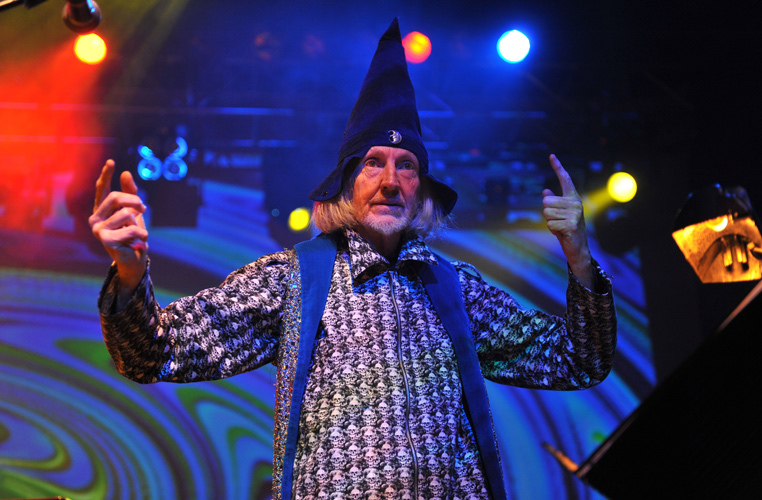
If the full story of Allen and Gong Group is ever written (his own two-volume- “ Gong Dreaming ” is not counting: it is more likely a memoir than an objective chronicle of events), then it is obliged to start with the word“ one day ” - as it is in a fabulous genre. Allen and outwardly resembled a storyteller, especially graying in the declining years: a longing figure, an eternal smile with a “cunning”, long white patles, often knocking out from under some kind of outlandish wide-brimmed hat, colorful mantles and other strange robes in which he frontied at Gong concerts-Merlin, Gandalf, Dumbor? Music is also like from a fairy tale: endless stories about aliens from the planet Gong, “ Pothead Pixies” , drinking electric kamamber tea from a flying kettle under the light of a banana moon. The main elf, of course, was Allen himself - and here it is impossible not to remember that Pot in English is not only a pot, but also “grass”. Of course, Gong mythology had a hallucinogenic origin, which none of the musicians had ever hidden; Moreover, David remained a lawyer of mild drugs until his death. “This is a strange feeling when a 75-year-old man advises you to try mushrooms,” wrote young commentators of his fresh online interview. A rare case: the question “What did the author smoked?”, For some time for some time, often surfacing when discussing any non -shared work of art, in this case, apparently, has a very specific - and quite expanded - the answer.
He really was a fool for 77 years in a row!
Nevertheless, it would be incorrect to explain the outstanding Allenian creativity extremely addiction to psychedelics. The intellectual, from his youth, who enters the battle circles (Allen was personally familiar, in particular, with another Allen - Ginzberg), he subjected an impressive theoretical base under his outlandish fantasies: so, the image of a flying kettle found on the key records of Gong was borrowed from the philosophy of Bertrand Russell. Russell used it in reasoning about the deliberate unproven religion. “Many believers believe,” he wrote in 1952, “that it is not their business to justify the established religious dogmas: let, on the contrary, skeptics try to refute them. But this, of course, is a big mistake. If I suppose that a porcelain kettle rotates between the Earth and Mars around the Sun, no one can refute this statement - especially if I make a reservation that this kettle is too small to get into the field of view of the most powerful telescopes. But if I say further that on this basis anyone who questions the existence of a teapot commits a crime against common sense, then everyone will fairly consider that I say nonsense. Now imagine that the kettle is mentioned in ancient books, and information about it is harassed by schoolchildren as sacred truth every Sunday! ”
David Allen certainly did not doubt the existence of a teapot - moreover, having pushed away from the dawn image, he constructed a whole creed, which had his own mythology and cosmogony: according to her, the world came from a certain divine cage, which was saved seven sounds, consisting of seven octaves (hence octave doctors, periodically encountered in periodically found in songs Gong ). How did it happen since ancient times, where there are gods - there should be heroes: this is how the figure of Zero arose The Hero , Hero-Nule, one of the main inhabitants of the planet Gong. At the same time, the psychedelic fairy-tale world of Allena, as usual, did not go back to any one mythological tradition-antiquity was intertwined here with Christianity in its most non-canonical samples, with Gnosticism (the Divine Cage seemed to have acquired fluorescent rays of aoons), as well as with eastern beliefs. The nickname of the main Allen comrade -in -arms Gilly Smith, who was responsible for the vocals and “cosmic whisper” in Gong - Shakti Yoni - clearly has Indian origin.
The most difficult question: did David Allen seriously believed in all this confusion instead of mysticism? Difficult - because rhetorical: in the Allen world, the very formulation of the question simply makes no sense. Its main merit is just in erasing the boundaries between serious and funny, important and unimportant: it is no coincidence that Gong discography starts with a seizure of hysterical laughter (in the song “ Mystic Sister / Magick Brother ” , opening the first album of the ensemble). On the one hand, the other Gong musicians by the mid-1970s, according to rumors, expressed dissatisfaction with the fact that Allen attaches too much importance to his fairy tales to the detriment of music itself-this ultimately entailed the separation of David and Gilly Smith with the group. On the other hand, when, at a performance on the occasion of the 25th anniversary of Gong, the candies thanked Allen for “a quarter of a century pleased us with his ingenious fooling”, he was not at all offended -the presenter’s commentary safely entered the cd version of the concert. And that is true: what is there to be offended? He really was a fool for 77 years in a row! And simultaneously, I came up with a wonderful new world, in which anyone could get without a visa and customs inspection - it was enough to tune in to the frequency of the gnome radio. Almost according to Timothy Liri: Turn on , Tune in , drop out ...
Friend and ally of the Betniki writers, Allen is accustomed to living on the Road, not clipping to the "native aspen".
This is the most radio radio GNOME is one of the most powerful images in the “Gongov” universe: a radio wave broadcasting the thoughts of others (Victor Pelevin in his recent “love for three Tsuckerbrins” involuntarily used a similar motive). David Allen himself was obviously configured to her all his life - otherwise how do you explain that a variety of people stretched all the way to him, including, by the way, outstanding musicians of his era? This is the 16-year-old Wyatt, with whom they start the first great group in the Allenian resume- Soft Machine . This is also countless instrumentalists who have passed the Gong school - magnificent guitarist Steve Hilled, the oven dide Mlerb, the electrician Tim Blake and others. This is the famous native of know-Weiva, a bassist, composer and producer Bill Laswell, with whom Allen will put together a short-lived project for New York Gong in the early 1980s. This is finally the Japanese psychedelic guru Kawabata Makoto, who will come up with his cult group Acid Mothers Temple under the obvious influence of Gong - and then fulfill a long -standing dream and will come together with Allen in ACID co -products Mothers Gong . Intuitively discovering talented musicians David even managed at Mallorca, where he left away from the worldly fuss in the second half of the 1970s (and where he recorded an album with the speaking name “ Now IS The Happiest Time of Your Life " ). In 1978, he lent his four-track tape recorder to the local Can Am Des Puig , which recorded with its help the psychofole masterpiece “ The Book of Am ” : Now it is one of the most valuable, inaccessible and expensive records of its time.
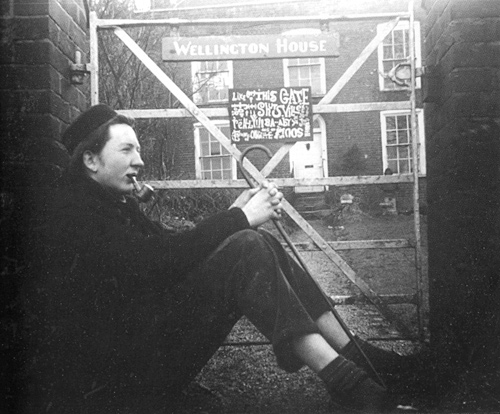
Majorka was far from the first habitat for Allen: he was born in Melbourne, he moved to coastal England at 20, then ended up in Kenterbury and fifth played a role in the formation of a local musical scene (the so -called Canterbury Sound ). During the years of student performances, he came to Paris - and by oversight he expired a British visa, but was not at all upset and for many years a donkey on the continent, where he created Gong . The musician was philosophical to the change in the place of residence (as well as the way of life, because in the 1980s he was not always attracted to him), he returned to his native Australia and calmly got a taxi driver there. It is understandable: a friend and comrade-in-arms of the Betniki writers-moreover, a person who formally connected the battle generation with the Hippie generation inherited-Allen is used to living on The Road , not clipping to the "native aspen." An indicative detail: in the iconic photograph of the young David from the beginning of the 1960s, it is depicted with a pipe and a cane against the backdrop of "Wellington House", the House of the Wyatt family, but not in the personal plot, but outside, behind the fence. An indicative detail number two: being the founder of at least two great groups ( Gong and Soft Machine ), at the first hint of “creative disagreements” he left both independently, instead of expelling the disagreements by right of the elder. Finally, the most indicative detail (number three)-both of these groups shortly after Allen's departure turned into professional, high-quality jazz rok ensembles without the slightest “highlight”. With Gong, this happened almost instantly, with Soft Machine - after a few years.
The thing is that for good musicians collected in these projects, the music was a set of notes and sounds, and for David Allen, it - like life itself, was a trip: through styles, directions, images, moods and meanings. Gong was played by jazz-rock, sleeping-rin, hard rock, forecast, folk rock, and in our time, on the album “2032”, also a trance with hip-hop to a heap, albeit in homeopathic doses. Like his Hero-Nulu, who got to the planet a gong on a flying kettle, Allen landed on the music map of the world in the early 1960s, more than half a century ago-and since then he did that he experienced one exciting adventure after another. In this context, his death seems just another adventure. Moreover, Allen himself sang once, back in 1971: “ You can Kill My Body , Baby , - but You can ' t Kill me " .
Five David Allen records that would be nice to listen
1. Soft Machine
Jet Propelled Photographs (1967 , for the first time I went out in 1972 under The name "Faces and Places Vol. 7 ")
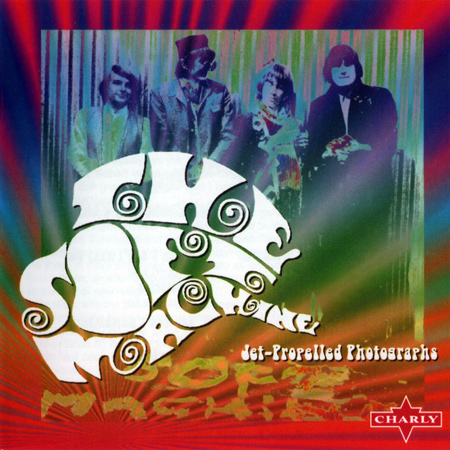
From the Soft group Machine David Allen left before she managed to release at least one album - but nevertheless played an important role in her history. Firstly, he enlisted the official consent of his friend, the writer-bonnet, William Burrose, to name the ensemble in honor of his novel “Soft Machine”. And secondly, he developed together with Robert Wyatt, Hugh Hopper and Kevin Eyers that sound that will distinguish the group at an early stage-and after it and other representatives of the so-called Canterbury stage. The released post -factual collection of "Allenovsky" period Soft Machine " Jet Propelled Photographs ” is a wonderful set of concise, at the same time sad and funny, very British songs, freely existing in the space of several musical genres at once - from jazz to folk and psychedelic rock.
2. Gong
" Flying TeaPot "(1971)
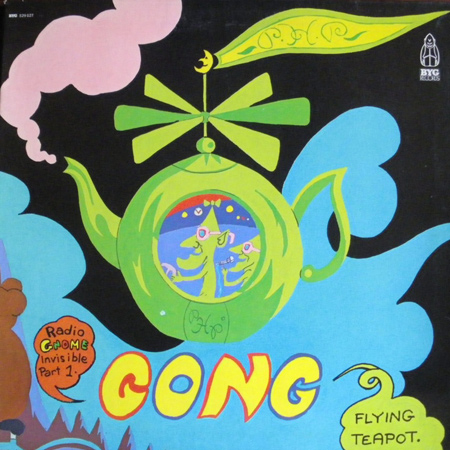
The first album from the Gong classical trilogy about Hero-Nule, octave doctors and other residents of the planet Gong-one might say, “lion, sorceress and wardrobe” David Allen. From subsequent records about the same heroes in the same landscape - this is “ Angel ' S EGG ” and “ You ” -is distinguished by the most accurately designed balance between, conditionally,“ fooling ”and, again conditionally,“ serious music ”: approximately half of the album-“ cosmic ”instruments, the other is the delightful Gon of Allen and Gilly Smith. There will be some roll at the first on the first , on “ Angel ' S EGG ” - in the second; The most successful proportion has been found here.
3. Dashiell HeDayat
" Obsolete " (1971)
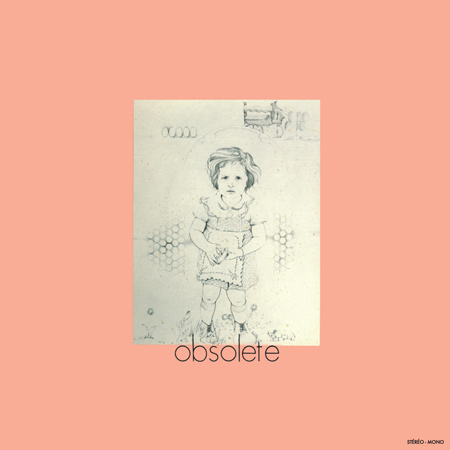
The little-known artifact of the beginning of the 1970s: Gong in full force is accompanied by the French hostel poet Daniel Teron (uniting in his pseudonym the name of the American detective Dashil Hammet and the surname of the Iranian writer Sadeg Hedayat). The result is a brilliant free-thinking psycho without a king in the head, which is extremely passionate monologues in French; A record, stylistically referring not only to the work of Allen and Gong , but also, for example, to the records that went in the same years on the legendary Parisian avant -garde label Futura Red .
4. New York Gong
" ABOUT Time "(1980)
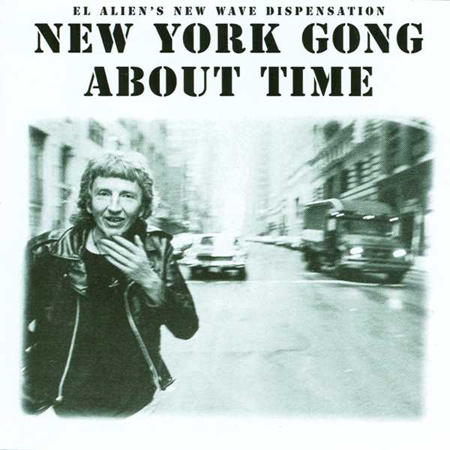
The sudden-and, unfortunately, the only one of his kind is the cooperation of David Allen with the New York punk avant-garde: the Material group under the direction of Bill Laswell. It resembles Gong much more than relaxed semi-acoustic soloists who came out of Allen in the second half of the 1970s during his life on Mallorca-but not ordinary Gong , but as if “pumped” in accordance with the changed requests of the era. " ABOUT Time ” -the usual Allenian poetic freestyle, who, however, mainly in a hard postpank key, with buzzing guitars and straight-line rhythmic patterns; A unique and very vivid record in the discography of the maestro.
5. Gong
" I See You "(2014)
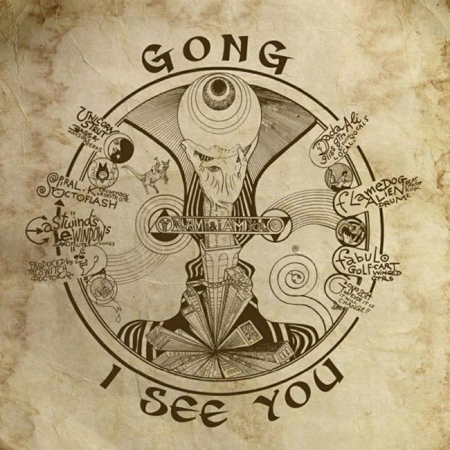
The latter, as it turned out, is the Gong and David Allen record - and quite unexpectedly almost outstanding, sounding as a missed head of the classical trilogy about flying teapots and the gnome of radio. In fact, it would be easy to imagine these songs composed and published in 1975, immediately after the “ You , ” Allen and in the eighth ten did not lose either his works of an eccentric approach to melodies, nor craving for expanded instrumental “jams”. It seems that the guitarist of the classic composition, Steve Hillled, who returned to the project in the 2000s, is again absent here, but Kavus Torabi, known for the Guapo and Cardiacs groups, copes with his responsibilities perfectly.