
Translated material
From the caves and debris of the State Film Fund
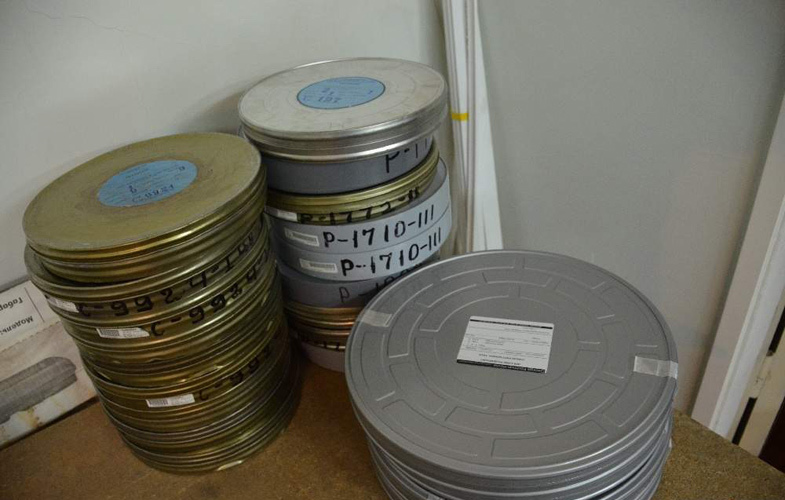
They feed three times a day. In the morning to choose from: porridge or meat. Sandwich. Coffee, flakes and tea with lemon without restrictions. For lunch: salad, soup, second and compote. For those who wish - horseradish and Bavarian mustard. For dinner, too, a salad, hot, a bun and fruits. Ryazhenka or tea - without restrictions. The rooms are double. Very comfortable.
In front of the rest house there are deer from cobbled garlands. In the evening they burn, make a strange impression during the day. Birches grow around. Birds sang loudly over the monument to the Pas. Life flows somehow especially slowly. The same can be said about time. Sometimes it seems that for a long gap between the morning porridge and the compote for lunch in the “big world” can pass for years or even centuries.
In the absence of external incidents, you begin to carefully look at the little things. An unsuccessful neighbor at breakfast becomes an event that you can talk about all day. Dimension of life often exacerbates oddities. Starting to look at others, you feel like a part of a rather eccentric multi -figure composition, in which each of the characters claims to be the main character. And now it seems that I got into the film of Oltman. Not at Nashville, but rather in Health .
You also catch yourself thinking that the entourage of the “pillars” is incredibly suitable for a classic detective with sudden murder or abduction. You imagine an investigation during the conversations about early Pyryev and the late L'Erbier, as well as the boarding house, which was suddenly brought by snow, as it could have been from Agatha Christie.
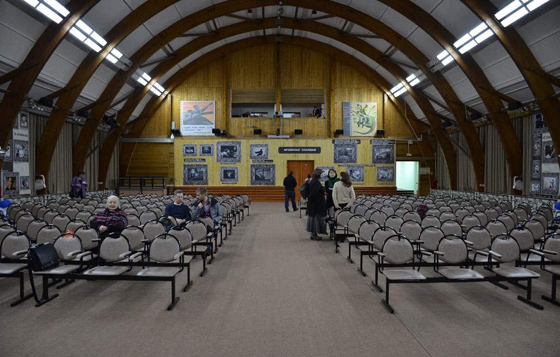 © White Pillars
On Wednesday, Shrovetide is celebrated, although for a week it has been going on a great post. On the trays are pancakes and sandwiches with fat. Very good mulled wine, however, is most praised by local moonshine. A sad harmonist in a rooster in a scouring goes between the guests of the festival and the local inhabitants. In the distance, someone suits contests, but no one is going into the essence of them. The famous NN theorist specially came from Moscow to visit the walk.
- What cinema, what kind of movie, when is it? He says to the companion, smiling kindly.
And he is right. It’s fun here, and there, in the cinema, the restored “Alrauna” Henrik Galein ends endlessly - the paintings of cold and soulless, like her main character. And before that, the next scenes from Gomunkulus were shown, a film that cinema historians love for neat return points. But what to watch the return points is - it is better to have fun on Shrovetide, or walk among birches, or brother with ironic students from St. Petersburg.
I would like to believe that this world is completely pulled out of context, hidden from external worries. But this is not so. A patriotic poster with Milosevich hangs in the lobby of the rest house, to whom someone draws a mustache and horns every night. On the first day of the festival, some solid gentleman shows the dynastic medal, which the empress personally handed him in the exile of Maria Vladimirovna. The other, Mr. W , having drunk, assures that he went to the rally twice. And on the opening day of the scene, bravura speeches rush. Some of the dignity reads the "slanderers of Russia" by Pushkin with the kind, as if expelling demons. They say that INION has burned down, but the State Film Fund is not yet, as well as all the necessary words about the severity of the moment, the nation and fraternal peoples. From the back rows, sometimes ironically grunts.
No. Not that. This is all not true.
Rather, however, but it does not reflect the essence. And Shrovetide, and birch, and somewhat obsessive jokes about badges with a tricolor are only a background, context, and a flavor. Listing the details, I miss the main thing all the time. It seems that in the middle of my story a huge hole is gaping. But this is not a hole. This is a black screen stain. As soon as the screen lights up, everything else is insignificant. In his light, everything seems different. The world, full of stamps and labels, again becomes mysterious, just like in the “so I came” Miklos Yangcho.
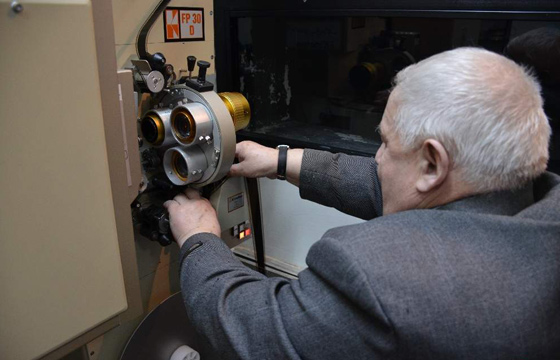 © White Pillars
***
In the programs, it seems, there is nothing special. "Archive finds." "Restoration." "Forgotten names." This year showed “Return from the War” and “Artificial Man”. You can go to the festival website and get acquainted with the list of films. Unknown names. But you can’t review all the films. And there are not so many in Russia lovers of archival cinema. They say now that the language of the movie is obsolete, and something new comes to replace him.
But this is not that.
Streams of images pour from the screen. Every day. From 10 in the morning almost in the morning. The images are alive, they cry, laugh, fall in love and die. They amaze and tire. They make them think. This is not a calm trip to the museum, where among the skulls and fragments you can sweetly sink about past times. There is too much passion in the surrounding. A visit to the "white pillars" wounds the eye and makes the soul work.
Here is the Soviet animation of the 20s. "Window-shpintik" Vladislav Twardowski (1927). Under the vigorous poems of Agnivtsev, a frightening, unprecedented sight unfolds in front of us. The flip side of modernism: on Leningrad there are revived machines. Despite the fun music, their procession is terrifying. Each machine is more like a nightmare, a monster from the picture of Bosch or Grunewald. But at the same time, in the behavior of mechanisms there is something deeply human, something that does not, for example, have the heroes of the cartoon “Look at both”, created by Daniil Cherkes in 1934. Here, the collective farm a parasite is turned into an abstraction, a structure from curves with a head and an accordion, and a fist (which a pioneer armed with a huge sword will take somewhere in the final into a two-faced creature.
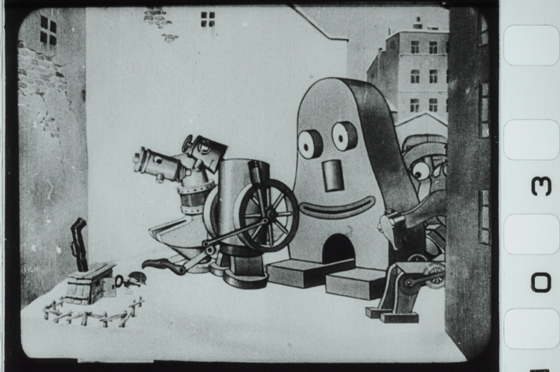 Frame from the animated film "Windows-spinch"
The mechanisms rise to the position of people, and people are reduced to the state of the character, conventions, the necessary plot element. But these are all the features of the era, the measurement of time. But Vyacheslav Lewandovsky - a half -forgotten classic of Soviet animation - is a real genius without discounts for a while. It is unlikely that most surviving work can be judged by changes in ideology or public prejudices. They have a lot of something very much, not like anything, even marginal. But the discarded stone is a cornerstone stone, bypassed by contemporaries, Lewandovsky becomes a client of eternity. When you look at his picture “In a puppet country” (1940), you involuntarily catch yourself thinking that this fairy tale about a riot of toys who decided to escape from negligent children to a magical country was ahead of the development of animation for many years. Even now, the story he hesitated seems more modern than the numerous “toy stories”.
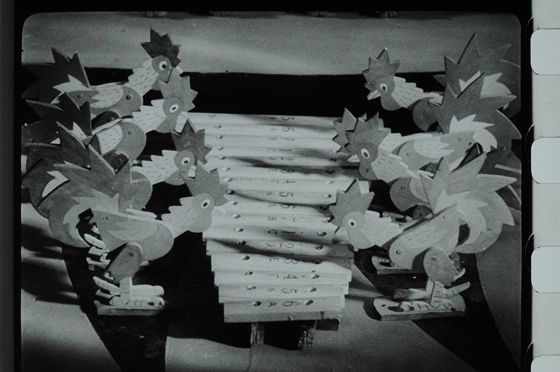 Frame from the animated film "In a puppet country"
Among the finds are the comedy of Alexander Levshin “PROPOLOVA” and Western Victor Fleming “to the last person”. Both films, although we are talking about silent ribbons, are devoid of archival patina.
Alexander Levshin-one of Eisenstein's favorite students-shot a charming comedy about the seedy peasant Zakhara, who is sent "to the Kulort", to the Livadian Palace, where a sanatorium for peasants was organized in the 20s. And again, the discarded stone is a cornerstone stone. In the peasants, with the whole world, collecting Zakhar “to the pendant”, in his fighting wife, in a blacksmith and dandy, Ponomar is much more human warmth than in the heroes of the “old and new”. A great paradox is seen in all this: often only a movie that is too much seeking to be cinema, reproducing all the necessary conventions too much. Films defeat the time, which instead of conventions show a real, living person and at the same time rooted in their era. Films devoid of empty abstraction. Communication with their native era endows them with a special gift of prophecy, about which their creators were unlikely to guess. This movie seems to foresee future changes. And when who decided to suffer for the world and go to the unknown “cook” Zakhar lies under the images, you involuntarily recall the paintings of the collectivization era. Also in the “woman” of Dzigan under the images lies a fist, which it was decided to evict a resolution of the village council from the house.
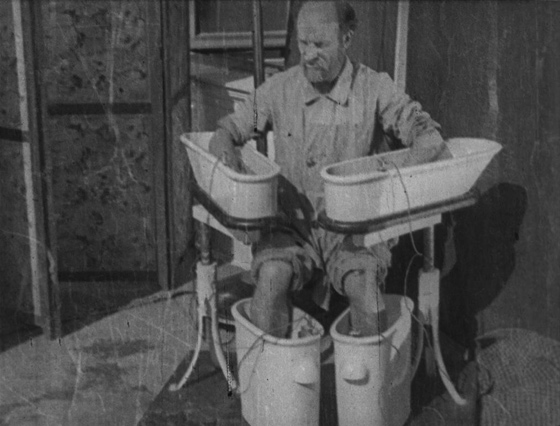 Frame from the movie "PROPOLOCH"
Great cinema usually operates on the simplest things. It does not seek to sell them more expensive, does not seek to disguise with a trick or make part of a certain thoughtful system (the results of such attempts usually come out rather stray). Here is “to the last person” of Fleming, the next version of Romeo and Juliet, transferred to the United States. But simplicity and naturalness give stories almost epic greatness, which is especially intensifying because the entire effect of the picture unfolds against the background of nature. Nature gives the plot an additional dimension. Looking at the mountains and forests, you believe in the innocence and simplicity of the heroine who does not know whether she can accept a gift from the son of the enemy of her father. The shootout alternates with the shots of the sky, along which a flock of birds flies - these are the vultures gathered for a feast. Moving with specific details taken from reality, the standard (both love line, and shootings, and fights in salons - all these are typical for any scene western) becomes reliable, very alive.
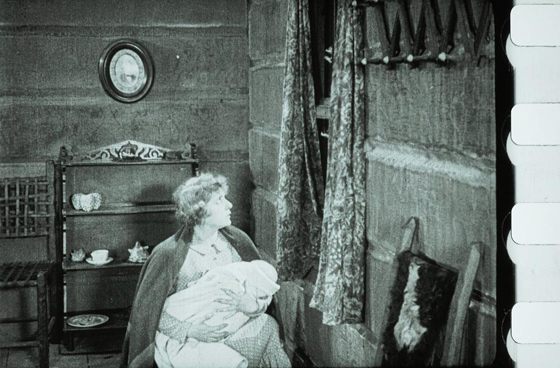 Frame from the film "To the last person"
Another example of the triumph of life over the abstraction is several paintings with Baby Paggie (the only, now, now a living star of silent cinema). Comedies with her often look outdated, the manner of playing actors and tricks are somewhat archaic, and sometimes tedious. But how lively and not subject to the time against the backdrop of all these dilapidated entertainments the Baby Paggi herself looks. She is one funny, she is one talented, this is enough to atone for everything else. How she squints her eyes, how she laughs. The feeling that you experience when watching films with her participation, far from a standard feeling of tenderness of pranks of a lovely child. No, this is rather the joy of recognizing another living person, in every fragment of the film of the winning time.
The same victory over time is in Khutsiev’s “Infinity”, an important picture, perhaps one of the most important in our cinema. Shown as part of the retrospective of Khutsiev “Unauthorized. Unfinished. Underestimated, ”she makes a strong impression. Her hero is either sleeping, or traveling to the city of youth, but somewhere by the middle of the film a trip in space is slowly turning into a trip in time. Most of all, the hero of “Infinity” resembles the adopted hero of the “Ilyich outposts”, who suddenly found that in addition to his father who died in the war and his grandfather’s revolution, he still has a long series of ancestors, which goes somewhere at the very beginning of time. Yes, and he himself is only a link in the chain of already dead and not yet born.
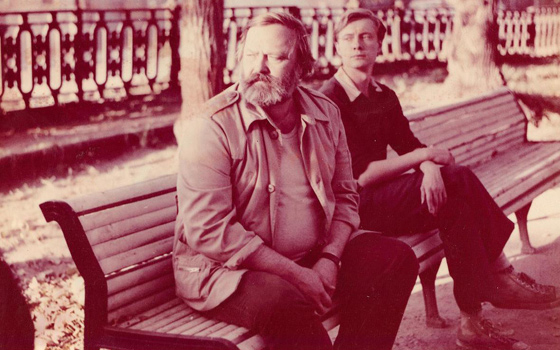 Frame from the movie "Infinity"
It seems that the plot paradox also perfectly illustrates the paradox of the phenomenon of archival cinema festivals. In Khutisiev, the hero of the film gains power over time, only recognizing his limb. Recognition of mortality defeats death.
Having made a reservation that the shown paintings belong to the past, archives and cinematics, we simultaneously recognize their timeless character. The trick is outdated, but Baby Paghi’s smile cannot become obsolete.
***
Separately, about the program “Return from the War”. The organizers of the festival decided to show paintings that talk about a variety of scenarios of this return - from real to desired.
“So I came” Miklosh Yangcho draws a sudden silence, which suddenly sank to the ground immediately after the end of the war. The old has already ended, but the new has not yet come. And it seems that on the screen there is a strange and mysterious dream, almost ancient fantasy with the obese herds of Gerion, with the smiling statues of goddesses in the garden, with endless fields under the endless sky. But reality is breaking into this sweet sloppy. Death is not defeated, and the story moved to it after a brief break resumes its current.
Not that “real end of the Great War” by Jerzy Kavalerovich. There is a lot of painful, everything is built on injuries of the past, on the impossibility of returning to what was before. The architect husband returned crippled from the concentration camp. He cannot speak and periodically plunges into painful memories of the camp past, which always ends with seizures. The injury of war is stronger than a thirst for life. His wife recalls how good it was before the war, she wants to stay with the hero, but the current state of her husband is too unbearable. It is much easier to grieve about the dead than to live next to an uncomfortable alive.
Against the background of these complex paintings, they somehow stand out “at six o’clock in the evening after the war” by Ivan Pyryev and “three meetings”-the collective work of Ptushko, Pudovkin and Yutkevich. These paintings strive to lay reality, show what you want, not what is.
“Three meetings” - a film blinding with its technicalistical splendor. All shades of red, blue and green captivate the eyes, make the surrounding elegant. Heroes are real epic heroes, “heroes” in the full sense of the word. An engineer who strives for his wife, but cannot meet with her: he in his hometown lifts the collapsed blast furnace, and she, having left for evacuation, went to work at the plant, became a shock and now cannot abandon production. The joy of labor is higher than the joy of sex.
About the same thing - and in the family of the collective farm chairman who returned from the front, whose wife headed the economy during the absence of her spouse. Now the chairman is called the neighboring lagging collective farm, and he begins an endless competition with his wife. And around the unprecedented bright flowers bloom in human height, and gold wheat is victorious against the backdrop of an unprecedented blue sky.
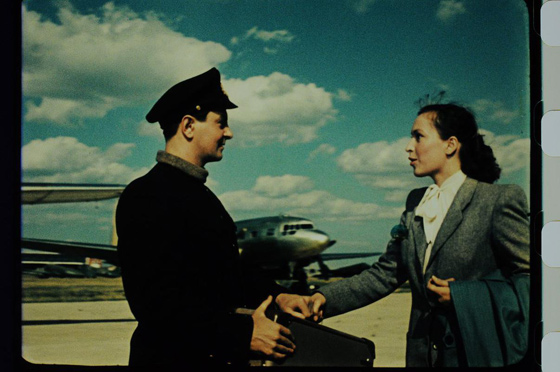 Frame from the film "Three Meetings"
A geologist who is looking for valuable ore in the foothills of the Pamir, and her lover, is a meteorologist examining the polar radiance, will not meet. Separated by many hundreds of kilometers, they are pissed off by the ABC Morse (not even themselves, through radio operators). Both her and him are in danger. She falls under the collapse, he is in a blizzard, but the benefit of the Soviet state seems to them the main goal for which it is not a pity to put life.
In the frame, the Volga fish crafts, logging in the north, oil production in the Caspian and much more are replaced by each other. From all this it blows wealth and wealth. Nothing reminds of the past war. Having finished with military exploits, the characters strive for labor exploits, which the camera removes with genuine enthusiasm. The delight with which the characters are shown is “epic delight”, and “three meetings” are a real epic. Doubts of this completely disappear when the chairman of the collective farm travels on the field in some almost ancient chariot, reminding the Amazon Pentesilee more than a simple Soviet woman.
“At six o’clock in the evening after the war” (the festival shows the restored version, in which all the bills of the 60s are restored), the picture is very popular, now it makes an extremely unusual impression. It seems that part of the filming is almost documentary, we have realistic military scenes, but Moscow, where heroes periodically find themselves, frankly cardboard, shot in the pavilion. It seems that tragic events occur on the screen, but suddenly the action is interrupted, and a cheerful operetta begins. Heroes talk about possible death, but do it in verses.
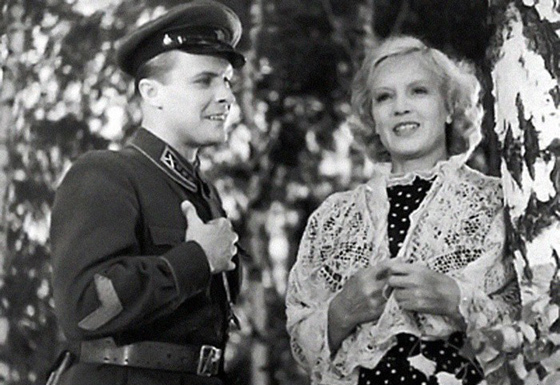 Frame from the movie "At six in the evening after the war"
If you look at the plot, then there are more oddities. Pyryev in every possible way hints that the main character died, but he survives, although he loses his leg. The heroine dies absolutely for sure, but suddenly he is in Moscow, where he meets with the main character. The pavilion of this Moscow only emphasizes the conjecture that we are talking about a dying vision (it is worth noting that in one of the scenario the action was unfolded in the fading consciousness of the mortally wounded fighter). But they are trying in every possible way to drown out this hunch with songs, dancing and harmonies. The war here quickly turns into a myth, into a legend, into something that happens in a different plane and is almost not related to reality.
You can write off everything on Stalin's propaganda. A person within a totalitarian society lives in the space of myths and rituals, each real event within the framework of this mythological system should give their “theological” explanation, and therefore war and victory very quickly acquire some legendary character. But is it really so?
Even during the war, quite realistic films are shot, not striving to shut up all the horror of what is happening. It is enough to recall the "Rainbow" of Mark Donskoy. But these films are for the needs of the rear.
The time of bright, elegant and implausible paintings comes after the war, when soldiers are returning from the front who do not need to remind of how it was there. Perhaps the ceremonial portrait of reality, replacing the terrible and harsh truth, is caused not only by some special maliciousness of the leader, but also by the changed needs of the viewer. Cinema generally often takes on the role of collective therapy, and a conscious rejection of reflection, an attempt to hide the horrors of war for songs and decorations are easily explained by the desire of society to a little to heal their injuries, to catch their breath after a difficult test.
The time to comprehend military experience comes only in the 50s, when the wounds inflicted on the war were delayed. В тяжелые времена ты открываешь для себя всю прелесть счастливых финалов, а рефлексия и вся сложность картины мира — это роскошь, для которой все-таки требуется определенный уровень сытости.
***
В автобусе до станции метро «Домодедовская» все с увлечением обсуждают кино. Я молчу и пытаюсь не забыть, сохранить это странное, появившееся на фестивале ощущение, словно что-то живое внезапно вырвалось из груды старых архивных пленок и посмотрело мне прямо в глаза. Этот взгляд человеческих глаз кажется мне очень важным. И я устал. Новости реального мира меня почти не интересуют.
Пятница, вечер, 27 февраля 2015 года