
Translated material
Extraordinary elections to the Knesset started in Israel: Netanyahu prophesies the resignation or loss of influence
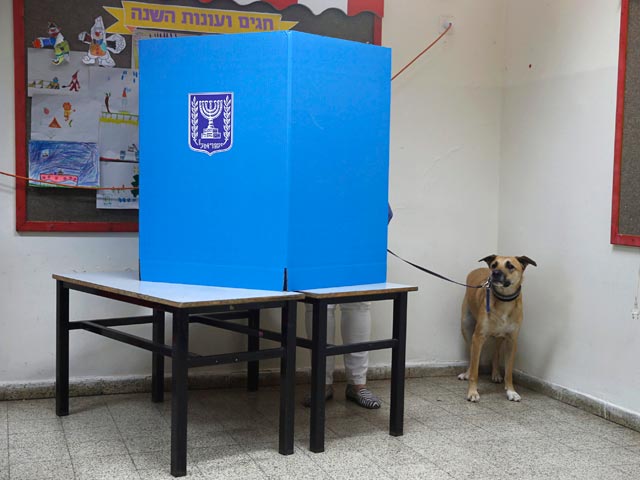
In Israel, early elections are held on Tuesday, according to the results of which the composition of the Knesset (Parliament) of the 20th convocation will be determined. In order for everyone to vote, on March 17, he was declared an official weekend in the country. According to the CEC, at present the number of citizens who have reached the age of 18 who have the right to vote is 5.8 million people. Preliminary voting results will become known early in the morning on Wednesday, Newsru Israel reports.
Political scientists and the press noted that in these elections the issue of trust in the prime minister of the country Benjamin Netanyahu should be resolved, but in any case, losses are inevitable for him - he can either part with the chair of the head of government, or lose influence by entering the coalition. According to public opinion polls, the ruling Likud party, led by Netanyahu, loses the opposition to the left -centric block "Zionist camp". However, it is possible that Netanyahu can ultimately get a more serious resource for the formation of the government than its rivals. This means that the prime minister has a chance to stay in his post, but at the same time it will be necessary to conclude an agreement on a wide coalition and make serious concessions to partners, the newspaper Kommersant writes.
To participate in the elections, 25 blocks and parties are registered. The A-Roshima A-Arahit party refused to participate in the elections, but its name appears on the website of the Central Election Commission. The electoral barrier in the current elections is 3.25% after it was increased by the Knesset of the 19th convocation. According to sociological studies, only 11 parties can count on its overcoming.
Thus, the main contender for the victory is the Left-Center Bloc "Zionist Camp", led by the Yitzhak Duke (Party "Avoda") and Tsipi Livni (the "Ha-Tnua" party), which can receive 25 deputy mandates. The block opens against the receipt of nuclear weapons, for the settlement of the Palestinian-Israeli conflict according to the formula "two states for two peoples", but without returning to the borders of 1967, and also offers a number of measures to solve an acute housing problem.
The problem for the bloc is that potential allies for the formation of the government at the Duke, claiming the post of prime minister, is a little, Kommersant notes. Theoretically, he can count on the support of the Merets left party and, under certain conditions, the centrist "esh atide". Most - 61 mandates - in the case of coalition, they still do not gain.
The Likud party can take 21 armchairs in parliament. The party focuses on the problems of the national security of Israel, and also takes a tough position on key issues of Middle Eastern settlement. In particular, on the eve of the Netanyahu elections, in an interview with NRG.co.il , he opposed the creation of the Palestinian state and the section of Jerusalem, as provided for by the concept of "two states for two peoples."
The prime minister can count on an alliance with the right -religious "Jewish house", which is subject to 11 mandates, and the "Our House is Israel" by the head of the Foreign Ministry of Avigdor Lieberman (5 seats). Potential partners of Netanyahu can be called three ultra -orthodox parties - Shas (7 mandates), "Jaatyat Aoor" (6) and "Yahad" (5). If the Kulan party, which the polls promise 10 seats, will also join the right camp, then the required number of mandates will be received.
But one way or another, according to experts, in the negotiations on the formation of the coalition, the Lida partners will put forward high requirements - primarily related to the distribution of portfolios. At the Netanyahu, who voted in the morning on Tuesday morning, disturbing expectations did not affect in any way - he looked satisfied and smiled when he lowered the ballot into the urn, follows from the video laid out by the agency of AR .
The third place is subject to the Union of Arab Parties - the "United Arab List", which can count on 13 mandates. If he manages to achieve such a significant result, this will become a precedent in Israeli politics, TASS notes.
The fourth place in polls is occupied by the Center Party of Esh Atid, former Minister of Finance Yair Lapid, who can count on 12 seats. Parties of Russian -speaking Israelis "Our House - Israel" of Avigdor Lieberman can leave five places in parliament.
Since none of the parties, most likely, will receive 61 out of 120 seats in parliament, the future prime minister will determine in the process of negotiations of the leaders of parties included in the Knesset. By law, the President of Israel will instruct the government to form a deputy who can provide a coalition that controls 61th place.
Experts call the current referendum elections about the attitude to Prime Minister Netanyahu. The decrease in the popularity of the head of government is mainly associated with the fatigue of the electorate from the security topic operated by the prime minister - to the detriment of the socio -economic program. The left, in contrast to the "Likuda", promise to activate the Palestinian-Israeli peace process and to establish relations with the United States that have recently spoiled.
Political scientists do not exclude the option of "large coalition" and the rotation of the prime ministers without Benyamin Netanyahu. It is also assumed an option in which the prime minister will resign after losing in the elections, and the Likud will enter the ruling coalition without it.
On December 8, 2014, the Knesset adopted a self -dissolution law after a week before Netanyahu fired the yair Lapid and Minister of Justice Tsipi Livni from the government, accusing them of the sabotage of the decisions made by him. On the same day, deputies approved the date of the extraordinary parliamentary elections.