
Translated material
The world of Brockhaus and Efron
125 years ago, the first four volumes of the legendary encyclopedic dictionary* came out in Russia*
An unconscious dog is a dog greedy to excitement. ” One of the shortest articles in the 5th half of the Encyclopedic Dictionary of Brockhaus and Efron made an unexpected impression on readers. Connoisseurs of dog hunting immediately remembered the ancient hunting expression. But the majority believed the rumor that the students who once again did not pay the fee for transfers, decided to make fun of the forgetful head of the office. Each time, in response to complaints, the offices, hitting himself on the forehead, repeated: "Ah, I forgot - the dog is unconscious."
An opinion appeared - in vain the famous Brockhaus company contacted Efron, it will not work, since at the very beginning they save on a penny. However, history dispelled all the fears.
It’s great to the Germans, and by the end of the 19th century, the vocabulary was already flourished around the 19th century, the national encyclopedias were not only in many European countries, but also in the USA and Australia. In Russia, the first encyclopedic dictionaries appeared at the end of the XVIII century, in the 19th century there were several attempts to create universal and thematic encyclopedias, but almost no large edition was completed. The hour struck in 1889, when the joint-stock company F. A. Brockhaus and I. A. Efron was formed in St. Petersburg.
The German book trade and publishing company Friedrich Arnold Brockhaus has existed since 1805, including since 1814 under the name of its owner-“F.A. Brockhaus ”, and by the end of the century it had already had world fame. The 7th edition of Brockhaus formed the basis of the American Encyclopedia-the first significant American dictionary; In the image of the German edition, the Dutch and Swedish encyclopedias were built. The branches of the publishing house worked in Berlin and Vienna, the departments in Paris and London. The market expansion was the strategic policy of the company.

The owner of the book warehouse and titalography in the laundry of St. Petersburg Ilya Abramovich Efron was not a famous person in the capital. Why did the famous company choose him in business partners? Maybe, in addition to the reputation, companions attracted the fact of Efron's personal biography? He was a great -grandson of Vilnius Gaon, the famous Talmudist scientist Eliyahu Ben Shlomo Zalman. One way or another, but no one miscalculated. The case began without delay. One of the most popular professors in the Russian Empire Ivan Andreevsky was invited to the post of editor. Lawyer, historian, archivist, rector of the St. Petersburg Imperial University, author of the concept of police law as law governing the activities of all members of the company. The scientist adhered to liberal views, advocated for the freedom of personality and public self -government.
Andreevsky began to be enthusiastically. It was supposed to take as a basis the 13th, the latter, the publication of Brockhaus and not violate traditions that have developed over a hundred years. Articles that did not require changes were translated from the German dictionary. The basis for others were to be the British encyclopedia, the French encyclopedia of Laruss and dictionaries, previously produced in Russia, in particular, the explanatory dictionary of the Living Great Russian Language of Vladimir Dal. But soon it became clear that he would have to retreat from the plan.
“All articles relating to Russia,” wrote Andreevsky, “are placed in the dictionary completely independently and represent an extensive and fresh material, original and completely re -processed by respectable Russian scientists who took part in the compilation of this dictionary.”
For preliminary work: the selection of authors, the settlement of the plan and the layout of the publication - it took less than two years. For the dictionary, they made a special thin durable paper, cast a special font - compact, but convenient for reading.
Intellectual stock
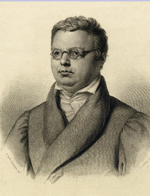 |
| Friedrich Arnold Brockhaus issued an encyclopedia in Germany, which served as the basis for the encyclopedic dictionary of Brockhaus and Efron |
In 1890, the first four volumes of the Encyclopedic Dictionary were printed in the Semenov Tolitography of St. Petersburg. The names of publishers were marked on the title sheet: F. A. Brockhaus (Leipzig)-I. A. Efron (S.-Petersburg). Each volume intertwined in two separate books. The next year, the subscribers had already eight volumes of Esbe.
In 1891, Andreevsky unexpectedly dies, and since the fall of 1891, the post of editor of the encyclopedic dictionary was divided by two people-a public and zemstvo figure, a great authority in the Russian advocacy, writer Konstantin Arsenyev and the first chairman of the Russian physical (later physicochemical) society, inventor, one of the first authors of the course of electromagnetism, honored professor Fedor Petrushevsky.
In addition to the general leadership, Petrushevsky was engaged in the department of exact and natural sciences. Other departments were headed by people no less worthy. Chemist Dmitry Mendeleev, who has already discovered the periodic system, but better known as an economist, who has substantiated the main directions of the economic development of Russia and the author of great work on the issues of the population “to the knowledge of Russia”. A brilliant historian and a world -famous sociologist Nikolai Kareev, whose labors were highly appreciated by George Plekhanov and studied the classics of communism. Eduard Brandt is a professor of zoology and comparative anatomy, the famous researcher of the nervous system of insects. Geographer, traveler, climatologist, creator of agricultural meteorology Alexander Voeikov, author of more than 200 books, including the famous "climate of the globe". The most original and deep Russian thinker of the late 19th century Vladimir Solovyov is the spiritual teacher N. Berdyaev and S. Bulgakov, A. Belo and A. Blok, the author of the idea of all -unity and God -manism, the apologist for the idea of good.
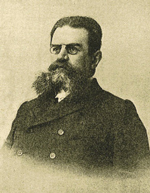 |
| This portrait of Ilya Efron was published in the Efron Encyclopedic Dictionary, period 1890–1907 |
Outstanding intellectuals of his time were involved in the work: Vladimir Vernadsky, Semyon Vengerov, Andrei Beketov, Ivan Yanzhul, Andrei Somov, Nikolai Solovyov, Vladimir Gerje, Grigory Grum-Grzhimailo, Pavel Milyukov, George Nadson, Vasily Nechaev, Peter Jewel, Ernest Radlov-almost one hundred famous surnames.
The 9th volume of the encyclopedic dictionary was opened by the editorial article, where the new employees assured that the case for which they took up would be brought to the end. The new strategy of the publication was published: taking into account a significant difference between the situation of German and Russian readers, the editors announced the intention to retreat from the Brockhaus sample and give preference to independent articles, especially in all objects related to Russia. In the Russian Encyclopedic Dictionary, it was supposed to collect as many Russian and concerning Russia as possible. At the same time, everything is foreign-any important, wonderful or necessary for certificates-the dictionary had to save.
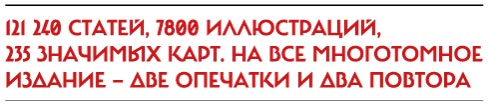
The portrait of the country is a larger amount of publication was justified by the needs of a Russian educated society. The work stretched for 17 years, from 1890 to 1907. Although not all authors saw the last volume, the huge work was completed. Subscribers received 82 main volumes and 4 additional. The circulation is 30 thousand. A small part of the circulation was printed in 41 main and 2 additional volumes. 121 240 articles, 7800 illustrations, 235 significant cards. For the entire multi -volume edition - two typos and two repetitions.
The dictionary contained extensive information on the history of civilization and culture, articles on the latest achievements in all areas of science and technology, unique facts, statistics, geographical details. Taking the best from the rich centenary of Brockhaus and collecting all modern knowledge, Esbe became truly an encyclopedic assembly, indispensable for every educated Russian person. It was a voluminous portrait of the country - who we are, where we are going. Like the Encyclopedia of Didro, the Russian “Brockhaus” demonstrated the power of reason and contributed to the liberation of minds, and, according to many, prepared the Russian revolutions, sowing freedom -loving ideas in the minds.
The dictionary was not inferior not only by the German “parent”, but also by the French Great Encyclopedia Laruss and the English “British”. And thanks to the magnificent style of the story, he also became a monument of fiction.
Even in Soviet times, when the BSE reigned, the venerable Brockhaus remained authority. Scientists of all industries more trusted in the pre -revolutionary publication - and not without reason. It is known that back in the 1920s, when the first edition of the BSE, Grigory Grum-Grzhimaylo, a geographer, the famous researcher of Western China and Central Asia, one of the authors of Esbe, wrote to the scientific editor of the Great Soviet Encyclopedia about the gross errors and ignorance of literature among many authors of China, Tibetet, Manchuria.
But true knowledge in Soviet times was not considered the main ones. Brockhaus in the largest libraries could be obtained only by special permission, the main circulation was “exiled” to the factory and rural libraries. It is not surprising that in the early 1990s it was worth releasing a reprint of the encyclopedic dictionary of Brockhaus and Efron (“Russia”) with a circulation of 100 thousand copies, the book diverged instantly. The same thing happened with the "biographies", where more than 40 thousand biographical certificates were published. For comparison: in the 3rd edition of the BSE there were only 25 thousand of them.
Many articles of Russian Wikipedia are based on ESB. The huge amount of natural-scientific and humanitarian knowledge, without political tendency and propaganda, remains in demand, useful and cited.
The discovery of the world dare to say that much in the pre -revolutionary Russian culture cannot be understood without Brockhaus and Efron. We are looking for an article about heliotrope-a flower whose smell is heard in the entire Russian literature of the 19th century, but we come across an article about another heliotrope marked by the Greek letter of the delta, which noted his publications of Mendelees, and learn about the artificial organic paint, its chemical composition and the ability to color cotton tissue in the soap and fuel color.
Or, it would seem, well -known: Alexander Sergeevich Pushkin - “The Greatest Russian Poet was born on May 26, 1799, on Thursday, on the day of the Ascension of the Lord, in Moscow, on German Street.” And then a few pages of the fascinating text, and not a word of excess, because "Pushkin’s poetry is so true that it is impossible to get a clear concept of her without learning him as a person."
And you can withdraw with no less interest to be carried away by the main results of operation far from poetry in 1896 along state and private railways. Or the study of the decoration of the church altar, even a pattern of hairless insects, in which Brandt discovered the nervous system.
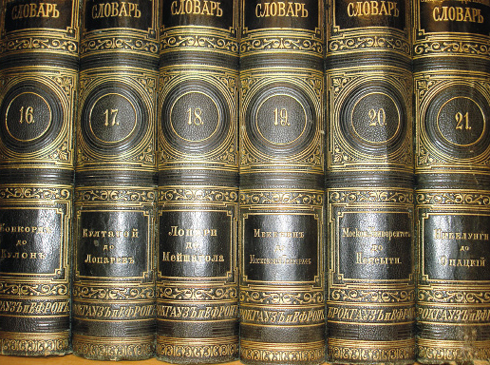
Heavy brown folios with gold embossing, which is already 125 years old, still reveal to us the world, Russia and the true meaning of the ideal of good and public self-awareness.
* All historical certificates are taken from Esbe. Photo: Chelantik.ru, wikipedia.org