
Translated material
War to the budget end?
The United Royal Institute of Defense Studies in London (RUSI) issued a detailed report on the Russian troops in Ukraine.
The content is impressive: the list of regular Russian units participating in the hostilities in the Donbass, the approximate number of Russian soldiers and even the details of the February battles around Debaltseve. The New Times studied the report and talked with its author 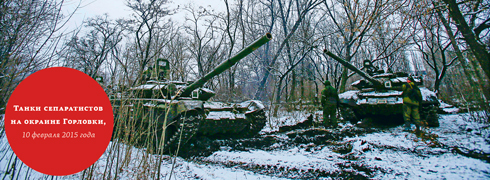
* * In June 2010, ten Russian citizens accused of espionage in favor of Russia were detained in the United States, Anna Chapman was most famous for them. In July of the same year, the US authorities issued them to Russia in exchange for the pardon of Igor Sutyagin, Sergei Skripal, Gennady Vasilenko and Alexander Zaporizhzhya, who were sitting in Russian pronounces for sentences for state treason. On May 3, 2011, the ECHR made a decision on the complaint of Igor Sutyagin, establishing that the trial in the Russian court was not independent and impartial. . An expert, now living in London on a working visa and has preserved Russian citizenship, insists: his study is completely based on open sources confirming each other. By the way, the same argument is plus the absence of access to GOSTANIAN - SUTYAN and his lawyer Anna Stavitskaya cited Russian investigators after the expert’s arrest in 1999 on charges of Goseman: he allegedly transmitted secret information about the Russian submarines to the British company Alternate Futures. But the arguments of the defense did not take action: the scientist was sentenced to 15 years in a maximum security colony, and Amnesty International recognized him as a political prisoner.
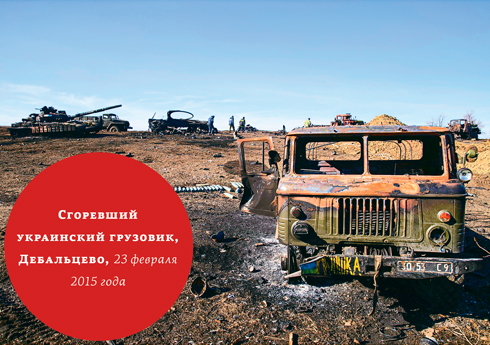
Fights without truce Russian intelligence and special forces have been present in Ukraine from at least July 14, 2014, Igor Sutyan notes in his report, but the first large -scale invasion began on August 11, when the battles for Ilovaisk were going on - they brought the first major defeat to Kiev. In August, 16 Russian units operated in Ukraine, in February 2015 this number increased to 56: under Lugansk, Donetsk and Mariopol, Russian infantry, special forces, the Ministry of Internal Affairs, missile and tank units fought (
see table ). The peak of the Russian invasion fell in mid -December, when up to 10 thousand Russian soldiers fought in Ukraine, Sutyan believes. At the same time, about 42 thousand more concentrated on the Russian-Ukrainian border, from where they fired along the Ukrainian territory or crossed the border and entered into battles. By the way, these calculations approximately coincide with those that the commander of the US Ground Forces in Europe voiced on March 3: Lieutenant General Ben Hodges: 12 thousand soldiers-directly on Ukrainian territory and 50 thousand-deployed by the border.
Regular Russian military units, whose units participate in the war in Ukraine, according to Igor Sutyagin (for February 2015)
| Type | Near Donetsk, Lugansk and Debaltseve | Under Mariupol |
| Motor rifle troops | 2 Guards Taman Motor Rifle Division (Moscow Region), 8 Guards motorized rifle brigade (Borzo, Chechnya), 18 Guards Motor Rifle Brigade (Hankala, Chechnya), 19 motorized rifle brigade (Vladikavkaz), 20 Guards motorized rifle brigade (Volgograd), 23 guard motorized rifle brigade brigade brigade brigade brigade brigade brigade brigade. (Samara), 27 Guards Motor Rifle -Rifle Sevastopol Brigade (Moscow Region), 28 motorized rifle Simferopol brigade (Yekaterinburg), 32 motorized rifle brigade (Novosibirsk Region), 33 motorized rifle (mountain) brigade (Dagestan), 37 Guards Motorized Rifle Brigade (Buryatia), 136, 136 Separate guards motorized rifle brigade (Buinaksk, Dagestan) | 2 Taman motorized rifle division (Moscow region), 9 motorized rifle brigade (Nizhny Novgorod), 138 guards motorized rifle brigade (Leningrad region) |
| Airborne troops | 31 Airborne Forces Airborne Cross (Ulyanovsk), 104 Airborne School Regiment (Pskov Region), 217 Guards Parachute-Passenger Regiment (Ivanovo), 137 Guards Parachute-Passenger Regiment (Ryazan) | 11 Guards Airborne Brigade (Ulan-Ude) |
| Tank troops | 5 Guards Tank Brigade, 6 Tank Brigade (Nizhny Novgorod Region), 13 Guards Tank Regiment (Moscow Region) | 12 Guards Tank Regiment (Moscow Region) |
| Artillery | 1 Guards Rocket Brigade (Krasnodar), 79 Guards Ractive Artillery Brigade (Cherepovets), 232 reactive artillery brigade (Irkutsk region), 288 artillery brigade (Nizhny Novgorod region), 291 artillery brigade (Ingushetia), 385 artillery brigade (Orenburg Region), 10655555555 Guards Artillery Regiment 98 Guards Airborne Division (Kostroma), 573 intelligence artillery division (Adygea), 67 anti-aircraft missile brigade (Vladikavkaz) | 200 artillery brigade (Trans-Baikal Territory), 268 Guards Artillery Brigade (Leningrad Region), 1140 Guards Artillery Regiment 76 Guards Airborne Countrix Division (Pskov) |
| Special forces | 10 Brigade of GRU Special Forces (Krasnodar), 346 Brigade of the GRU special forces (Kabardino-Balkaria), 25 regiment of the GRU special forces (Stavropol), the Vimpel detachment of the FSB special purpose center | 45 Guards Special Forces Regiment (Moscow Region), 561 Marines (Kaliningrad Region), 54 Center for the training of intelligence units (Vladikavkaz) |
| Troops of the Ministry of Internal Affairs | Separate division of special purpose named after Dzerzhinsky (Moscow), 107 Operational Brigade (Vladivostok), mixed battalion of the Ministry of Internal Affairs of Chechnya | Separate division of special purpose named after Dzerzhinsky (Moscow) |
| Parts of combat support | 78 Brigade of Material and Technical Support (Kabardino-Balkaria), 7015 Storage and repair of weapons and equipment (Nizhny Novgorod region), 7016 Base of storage and repair of weapons and equipment (Adygea), 282 arms repair base (Voronezh region), 29 railway brigade (Bryansk), 74 separate half of the special purpose-a separate half of the special purpose Radio intelligence (Vladikavkaz) | 59 Communications Brigade (Yekaterinburg Region), 95 Brigade of Communications (Leningrad Region), 31 engineering-sapper regiment (Kabardino-Balkaria) |
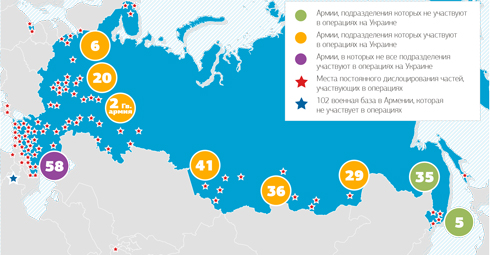
According to Sutyagin, all Russian formations sent their personnel of different numbers to Ukraine, except for the 35th and 5th red-digit combined arms armies deployed in the Far East (
See card ).
To increase the Russian analyst restores the details of some important battles in early 2015. For example, according to Sutyagin, on February 1-2, the 8th and 18th Guards Motor Rifle Brigades, as well as the 25th GRU special-purpose regiment and the 232nd reactive artillery brigade, participated in the battles near Debaltseve. And in order to close the “boiler” here, in which the Ukrainian troops found themselves, on February 14, the 27th Guards Motor Rifle Brigade and the 217th Guards Parachute-Passenger Regiment moved to Logvinovo. By that time, significant losses had suffered under Logvinovo and were forced to retreat another motorized rifle brigade and a special forces regiment.

In addition, according to Sityagin, there were at least five situations on the Donbass Front in which parts of the division of the Ministry of Internal Affairs of the Russian Federation named after Dzerzhinsky: They were located behind the positions of other Russian units and militias and applied “punishment measures” to those who tried to retreat or give up positions without a fight.
Even after the signing of the Minsk agreements on February 12, the Russian military continued to arrive at the Donbass: the units of the 2nd Guards Taman Motor Rifle Division were seen in the battles near Mariupol 2 days after the signing of the ceasefire-they replaced the 138th motorized rifle brigade, which suffered significant losses over the previous three weeks, the report said.
Now the active movement of Russian soldiers and weapons to Ukraine is not observed, Sutyan admits in conversation NT , thereby confirming the OSCE data. But back in early February, every day, three trains with shells went across the border. At the same time, Russian troops concentrated around Mariupol. “It cannot be excluded that active combat operations will begin again, this may well happen in the next two to three months,” Sutyan predicts. On the other hand, the war requires exceptionally large costs, and the Russian economy is now not in the best form - and it will only be worse. Already, the Russian army is not enough resources for conducting hostilities in Ukraine, and some units have to be reorganized on the spot. In May, the spring appeal will begin, but demobilization will pass with it, which means that conscripts who have already learned something will be replaced by newcomers, and with combat-ready personnel it will become even worse. “If you don’t move now (into battle), there may not be enough strength in the near future,” the analyst summarizes.
Some military experts in the Russian Federation admit that the calculations of Igor Sutyagin may well correspond to reality. “The fighting in Ukraine is already going on for a year, and if you are waging a long war, you have to collect troops throughout the country,” Military analyst Alexander Golts noted in a conversation with NT . The observations of Sutyagin regarding the lack of personnel are fair.
But Igor Korotchenko, the editor -in -chief of the National Defense magazine, considers it differently: to hide the number of military personnel as the South -Wagon's report is impossible from modern intelligence: “The Americans would take a picture of all this from the cosmos. When there was a Caribbean crisis, Khrushchev denied the presence of Soviet missiles in Cuba. Then Kennedy made a demonstration of photographs of these missiles from a satellite. In such matters, intelligence data, confirmed by satellite images, radio interception data, are always needed. ”
According to Korotchenko, there is no reason to trust the report: "Sutyan is offended by Russia, and therefore makes unreasonable statements."
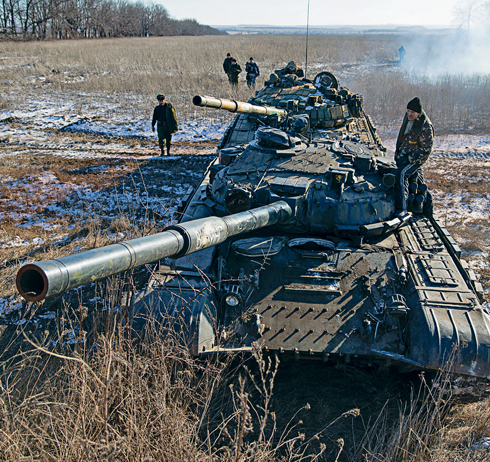
Tankers of an unrecognized DPR on the road from Uglegorsk to Debaltseve, February 18, 2015 from where the information was assured by Igor Sutyan in a conversation with NT , all the information that is in his report can be obtained using exceptionally open sources: media, publications on social networks and other Internet sites. “You just need to work as a vacuum cleaner: come in the morning and read all possible newspapers, decryptions of radio and television programs, blogs, social networks, as I did throughout the year,” the expert explains. Working in this way, it is quite possible to gain a critical mass of confirming each other in order to build a picture of events: “Suppose when they tried to close the Debaltsev“ boiler ”, between February 12 and 17, the Lifenews TV channel issues a reporting report: the journalist travels on the tank and shoots. You can even determine what type of tank it is-T-72B3, it is very noticeable. And a few months before, the Ministry of Defense of the Russian Federation reported the transfer of such tanks to certain military units. Continuing the monitoring of the media, you can find out which parts can be located in the Debaltsevo area and which of them have such tanks. In this case, it was about the tank battalion of the 37th motorized rifle brigade, ”Sutyan summarizes.
The information received in this way is quite reliable, the expert is sure: “In early February, the Ukrainian military said that on their channels they receive similar data.”
Sutyan also emphasized that “deliberately used open information”, moreover, he simply could not have “unofficial communication channels” with the military in the Russian Federation: “I strongly doubt that the Russian military after 11-year brainwashing in my case would agree to give me any information.” Yes, in the past, Sutyagin had contacts among the military, "but they have long quit." But even if they had survived, he would in no case make them calls from London, especially now, when a campaign of the fight against “stateizmen” is unfolding in Russia: “The prison teaches that it is not necessary to help put others in prison. I am well aware of how calls from the UK on such a topic can perceive today in Russia. ”
Under the RUSI cap, a year after leaving for the UK, in 2010, Igor Sutyan got a senior researcher at the United Royal Defense Studies Institute (RUSI) - an expert center created in 1831 by the Duke of Arthur Wellington and considered the analytical cuisine of the British special services. According to Sityagin, as soon as he was hired, they called the Russian embassy in RUSI and threatened to stop cooperation with the institute if the Russian scientist was not fired. “Our leadership did not go to this,” Sutyan says. “Yes, and the embassy to break off relations with the institute, which hold serious international conferences and where you can chat with the head of the Foreign office without enrolled in the reception.” The incident ended in nothing.
By the way, it was in RUSI that the head of the Foreign office Philip Hammond spoke the other day with a sharp criticism of the foreign policy of the Russian leadership, calling Russia one of the “main threats of Britain’s security” and putting it on a par with the “Islamic state”. At the same time, Hammond did not Ikli that Britain will publicize “data on financial schemes”, which representatives of Vladimir Putin resort to.
So, quite possibly, in the near future, a new portion of high -profile revelations will follow from London.
Photo: Maxim Shemetov/Reuters, BAZ RATner/Reuters