
Translated material
The score went on the days
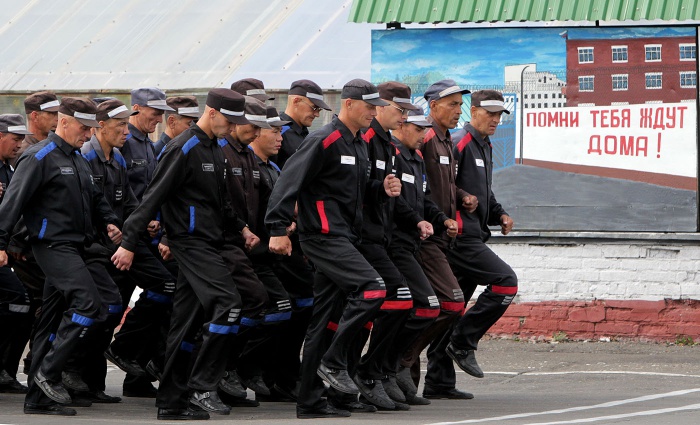
In anticipation of the possible adoption of the law on the test of one day in a pre -trial detention center for a half in a general regime colony in the FSIN, they are preparing to recount the terms of imprisonment. So far, the bill is adopted only in the first reading, but in the colonies they are already preparing for its execution.
“Preliminary work is carried out with employees, but no recounting the terms of imprisonment is underway, of course. It was just that the colonies were notified that the bill was adopted in the first reading, and is being prepared in the second. In addition to colonies, this information was brought to those services that, in the case of the adoption of the law, will be engaged in this work, recount. Those local employees who will engage in this work if this bill is adopted, ”the head of the press service of the Federal Penitentiary Service of Buryatia Larisa Myasishcheva told Mediazone.
The information that the instructions were received is confirmed by the deputy chief of one of the colonies in Central Russia, who asked not to name his name. “There really is an order to explain to the personnel on the recount and those employees who will deal with it. So we are preparing, we were told about the Victory Day to prepare everything, ”said the prison department.
The fact that information on the preparative recalculation of the terms of detention of prisoners, taking into account the time spent in the pre -trial detention center, also told two other sources of the “mediazons”, close to the Federal Penitentiary Service, was brought to the leadership of the colonies.
In the second reading, the bill will be considered in the coming weeks.
“Now we are collecting amendments on the regulations and as soon as the deadlines are completed, we will submit the second reading of the bill to consideration of the State Duma. Most likely, this will happen in early April, ”the initiator of the bill, chairman of the State Duma committee under the law, Pavel Krasheninnikov, told Mediazone. According to him, at the moment only four amendments have been made; There are a lot of them, the deputy notes, cannot - only one article of the Criminal Code is proposed to change.
Krasheninnikov explained that there will be no restrictions on articles for the violation of the convicts - "this is not an amnesty." He suggested that the bill can be adopted at the end of the session.
The history of the bill
The bill No. 73983-5 “On Amendments to Article 72 of the Criminal Code of the Russian Federation (“ Calculation of the terms of punishment and offset of punishment ”)” has been in the database of the State Duma documents for more than six years. In 2008, the draft law was registered and sent to the relevant State Duma Committee on civil, criminal, arbitration and procedural legislation at the initiative of its head Pavel Krasheninnikov. Three years later, Tatyana Moskalkova, a deputy from Fair Russia, joined the initiators of the bill, three more years later - the former head of the Ministry of Internal Affairs, the Communist Party deputy Anatoly Kulikov and United Russia Alexander Khinshtein.
Until recently, for some reason, the document remained without movement: all the necessary procedures, such as consideration by the State Duma with the State Duma and the recommendation from the relevant committee, the bill passed another year of its registration, and stopped on this. According to the lawyer Vadim Kluvant, such a slowness could be associated with the consideration of the “second case of Yukos” - the sentence to Mikhail Khodorkovsky and Plato Lebedev in this case was issued on December 30, 2010, while they spent a little more than three years more than ten years more than three years. Thus, in case of recalculation of days in jail, they could be released almost immediately after the sentence is announced. However, it has not yet been possible to officially confirm or refute this conspiracyological version.
Last May, the collection of votes began on the website of the Russian Public Initiative for considering the bill Krasheninnikov, at the same time, a working group, headed by Vladimir Osechkin, joined its resuscitation in places of compulsory content under the State Duma. In February 2015, the bill began to move: it was recommended for adoption in the first reading the profile committee of the State Duma, and the Supreme Court and the Government made up positive reviews. According to the source of Vedomosti, the movement began, since the third -party departments stopped reating, and Ella Pamfilova, the new human rights authority, spoke out for the adoption of the document. The State Duma adopted the bill in the first reading on February 18, 2015.
“We propose to count the term of location in the investigative insulator, the temporary detention center of those who are sentenced to serving a sentence in a general regime colony, in the test colony at the rate of 1 to 1.5. In the colony-settlement, we propose to count the term of 1 to 2, ”said one of the authors of the bill of United Russia Alexander Khinshtein.
In other words, spent in the investigative insulator, that is, before the sentence, the month will be counted as a month and a half in a colony of general regime or two months in a colony-settlement. It was not a question of the spread of the bill on convicts to serve punishment in a maximum regime colonies until recently.
Implementation and amendments
So far, there are problems with the direct implementation of the law in case of adoption, the Mediazone was told by the deputy from the LDPR Kirill Cherkasov. He is one of the authors of the amendment, according to which the law should apply to prisoners serving a sentence in a maximum regime colonies.
“Conceptually, the bill is supporting. But when we begin to talk with the prosecutor’s office, with the Federal Penitentiary Service, with judicial organs, they immediately begin to set us clarifying regulations, and each time it turns out that everything needs to be processed. When we say: “Colleagues, we offer you the legislative concept, and you will help us implement it, including using specific intra -system knowledge that you own”, there is, let's say, inconsistency, ”Cherkasov explains.
At the same time, the deputy adds, the security forces call the idea of the bill interesting, but they are in no hurry to help with its implementation. “The FSIN says:“ We would have counted, it’s not difficult for us, but give us a court decision, we know how they are released by UDO, let us give us the same fully prepared spelled algorithm, and we will execute it, ”the deputy says. He puts it up that recalculation should be widespread on a maximum security colony.
The founder of the Gulag.net social network, Vladimir Osechkin, who participated in the development of this amendment, argued his position in more detail. “The colonies of the general regime and colony of maximum regime are actually identical. They are arranged according to the same type: convicts live in detachments, in dormitories per hundred people, in hut buildings, three -story, as a rule, where on each floor there are one detachment, the so -called local sectors. Accordingly, the difference between the strict and the general regime only in the number of permitted grocery gear and the number of long dates per year. On strict mode, these are six programs and three dates, on general it is six long -term dates per year and 12 programs, ”he says. It is also proposed to calculate the time for the stage as a stay in a pre -trial detention center. “There is still a practice when convicted for two three months later, after half the country, they go through transit in hellish conditions to the place of serving the punishment, without contact with relatives, without grocery programs, on the balance, constant stress, dog, a convoy, so it would be strange not to include this reference process,” Osechkin said. In addition, the authors of the amendments insist on transferring the re -registration functions from the Ministry of Justice to the Supreme Court. “Since it is the court at the place of serving the punishment that will apply this norm, not the FSIN,” the founder of Gulag.NU emphasized.
Osechkin added that the FSIN is preparing for recalculation. “According to our information, in the colonies of the special units and special departments interview prisoners and collect certificates for the territorial departments of the FSIN for the number of days in the pre -trial detention center, that is, a serious preparatory work is already going on inside the FSIN,” he said.
The author of Krasheninnikov refused to comment on the changes proposed by deputies from the LDPR, noting only that "in this, pure form, the amendments would not be accepted."
Causes and consequences
The head of the Human Rights Association, Pavel Chikov, in a conversation with the Mediazona, admitted that the reasons for the adoption of the bill were political.
“Nadia Tolokonnikova last year asked me how real it is that they would accept the law“ day for one and a half ”. I answered her that this would never happen, since this would mean the release of tens of thousands and systemic changes in the investigation of prisoners. Against the background of the three -year permanent growth of the population of the pre -trial detention center, the active use of the arrest by investigators of all four departments (SK, FSB, the Ministry of Internal Affairs and the FSKN) in order to blackmail and intimidation, given the previous intentionally no spot amnesties, which would suddenly decide on such steps, ”says Chikov. He recalls that the idea of recalculation arose before, but perhaps because of Mikhail Khodorkovsky they did not dare to realize it.
“Repeated deception with amnesty, gigantic problems with the sick and mercilessly exploited prison population, and most importantly, the upcoming grandiose 70th anniversary of victory in the conditions of the fortress besieged by enemies requires demonstrating a wide gesture of mercy. Knowing that in the Kremlin decisions are made primarily under the influence of the momentary situation, I would explain the adoption of the law that way. His strategic goals are still unclear, it is possible that they have not been calculated. But the influence of the law, of course, will go far beyond the borders of May 9, 2015, ”the head of Agora suggests.
According to him, the law will affect almost all the prisoners of the colonies of the general regime and colonies-settlements (and in the case of the adoption of the amendment of Osechkin-LDPR, and colonies of a maximum regime). “Those who are arrested in the courtroom are a meager percentage. That is, there will be up to 500 thousand revised deadlines, of which 100 thousand can be released, ”the number of those falling under a new bill estimates. According to him, in this case, the number of appeals for parole will increase sharply, which means that the load on the judges will increase sharply. “Maybe in the end they will change their minds and the consequences will be calculated,” Chikov fears.
The human rights activist also notes the possible negative consequences of the adoption of the bill. “Given that the level of relapse of the sitting is about 35%, as well as the lack of a resocialization system, it can be assumed that the released in the next year will commit at least 35,000 serious and especially serious crimes. Almost half is sitting for killing and sales of drugs. These people will go out of the threshold of institutions and there they will be met by the environment from which they were extracted by the police, ”the head of Agora predicts.
“The lack of large -scale amnesties and such general laws is that they fall on the chronic law enforcement system that works inefficiently even in cases of committed crimes, not to mention the absence of prevention and resocialization as such,” Chikov summarizes.