
Translated material
The illegal Crimea is forever
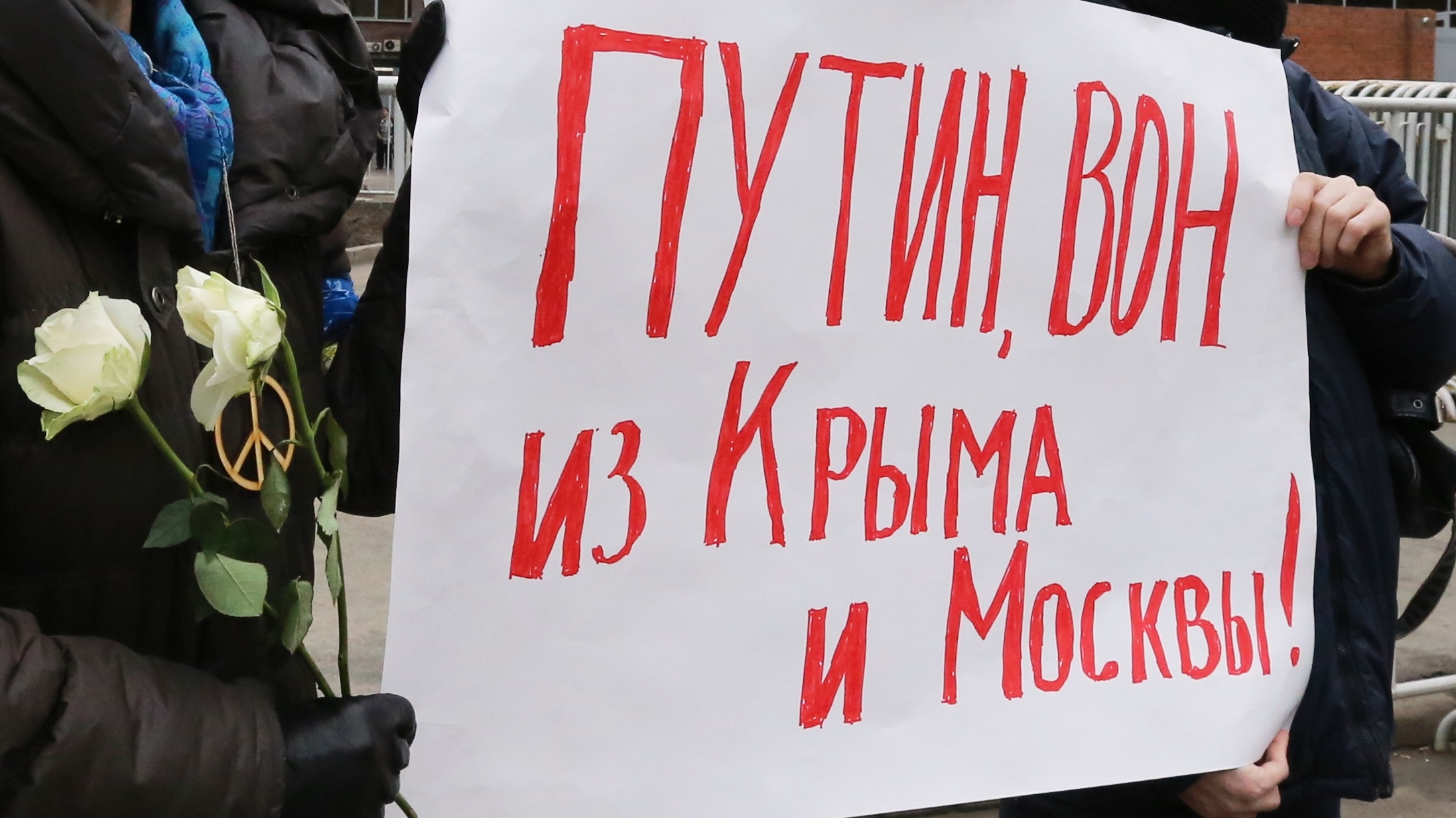
The annexation of Crimea will not be recognized by other countries, but is it possible to return the peninsula to Ukraine?
Will the annexation of Crimea be under pressure from non -recognition by the Western capitals? What are the scenarios of returning control over the Crimea of Ukraine? Can the annexation of Crimea become the fatal mistake of the Kremlin?
We are discussing these and other issues with Stephen Paifer , the former US ambassador to Ukraine, David Cremer , former Deputy State Secretary, Andrew Vais , Vice President of the Carnegie Foundation, David Satter , American publicist, and Dmitry Shlyapentokh , historian, professor at the University of Indiana.
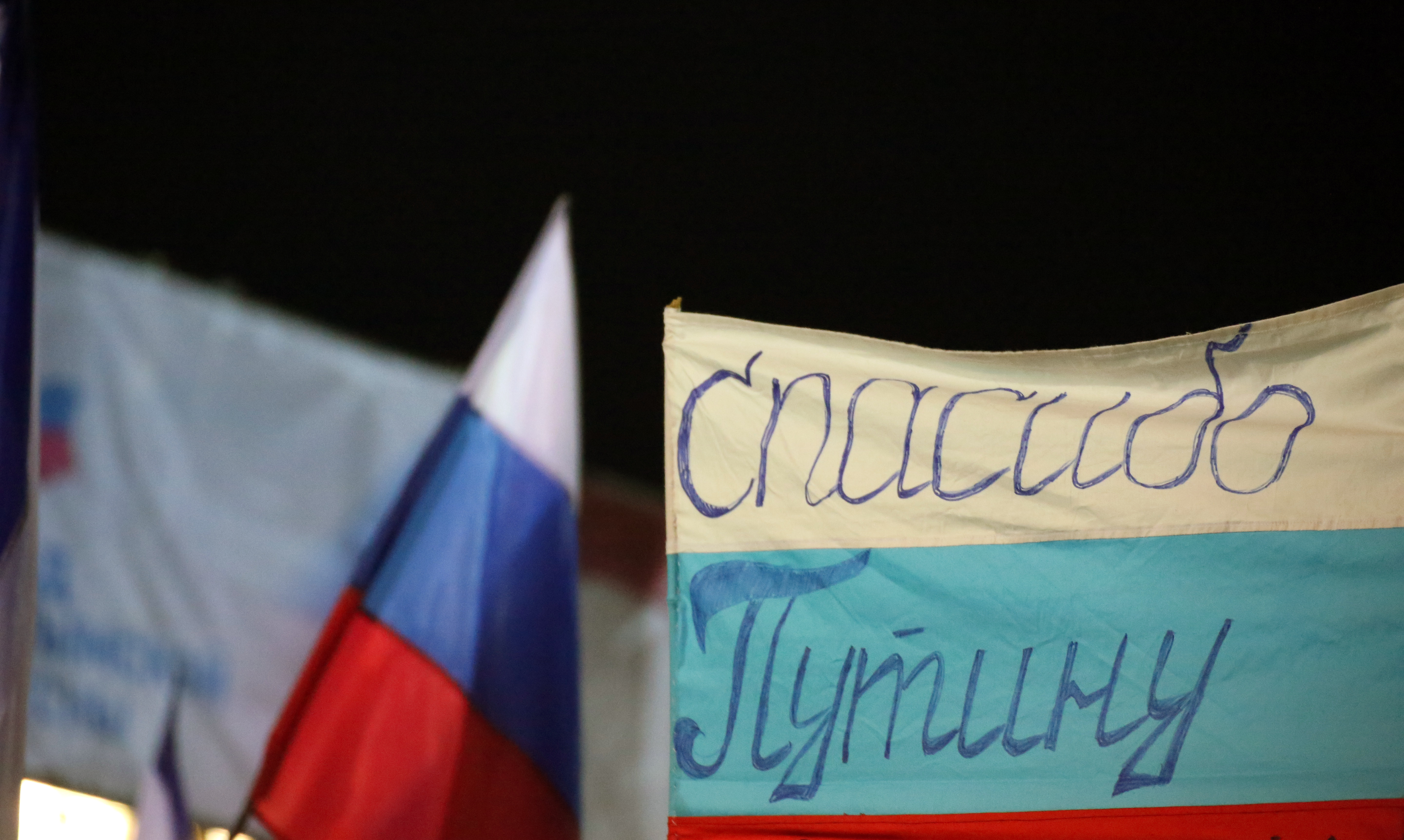
The annexation of Crimea will not be recognized by other countries, but is it possible to return the peninsula to Ukraine?
The anniversary of the annexation of Russia Crimea did not cause significant attention in the American press. The degree of indignation by the actions of the state, which was the first after the Second World War to annexed part of the territory of a neighboring state, clearly slept in a year. The events in the east of Ukraine distracted the attention of commentators from Crimea. The most noticeable publication was the letter of the President of Ukraine Petro Poroshenko, published by the newspaper Wall Street Jornal . “Crimea remains Ukraine,” writes Petro Poroshenko. "Our common duty with the world is the need to correct the injustice legally and in fact - to force the aggressor to leave. We must do this based on respect for the rights of our citizens, out of respect for international laws and in the name of ensuring global security," the President of Ukraine calls readers. Three days earlier, the anniversary of the referendum in the Crimea "celebrated" by his statement the State Department, who called this referendum "fiction". The US Foreign Ministry announced that American sanctions imposed after the annexation of Crimea will remain in force until the peninsula is under Russia's control. "The United States continues to support the sovereignty of Ukraine, its territorial integrity and the right to self -determination," the State Department said.
But even if the severity of emotions regarding the annexation of the Crimea was erased, the seizure of part of the territory of the sovereign European state, and this is how it was perceived in the United States, radically changed the perception of Russia and the attitude to the Kremlin, the former US Ambassador to Ukraine Stephen Paifer said. This is how he evaluates the results of this campaign of Moscow:
- Two or three years ago there was an idea that Russia would play according to certain rules. And although not everyone liked Russian politics, they believed in the world that Russia would not resort to force. Now the Baltic and Poland countries have serious and understandable fears regarding Russian intentions. If we look at the motivations offered by the Kremlin to explain the seizure of Crimea, and now Russia finally admitted that it was actually the capture of the peninsula, then the main one will be the thesis about the protection of the Russian -speaking population and ethnic Russians, regardless of where they live, citizens of which state they are. In this context of Latvia or Estonia, where Russians make up a significant percentage of the population, have reasons for anxiety. The result of the capture of Crimea was NATO attempts to strengthen the defense capability of their members bordering Russia. Since April of the past, small contingents of American military personnel have been carrying combat duty on the territory of these countries, NATO combat aircraft participate in patrolling the airspace of the Baltic countries, and joint military maneuvers are held there. In the near future, exercises will be held using tanks and other armored vehicles, in which an American motorized rifle brigade will take part.
- Nevertheless, can it be said that a year after the annexation of Crimea, the West, by and large, reconciled with the split of Ukraine, as the Kremlin claims?
This annexation will not be recognized, and this will entail tangible consequences for Russia
- I don't think so. Ukraine, in my opinion, chose the right approach. She says that the resolution of the Crimean problem will take a long time, and in the near future, Kyiv focused and efforts in the conflict in eastern Ukraine. And although now the topic of Crimea is not particularly addressed in the public statements of the Western capitals, I am sure that this annexation will not be recognized, and this will entail tangible consequences for Russia. For example, a ban on Western investments in Crimea, a ban on the export of Crimean goods, a ban on calls to the Crimean ports of foreign cruise ships. I think that all this will affect the level and quality of life in the Crimea. And these restrictions will remain in force, apparently, for years, if not decades.
- Andrew Weiss, what can be said a year after the annexation of Crimea about how this event is evaluated today in the United States?
“ The most important thing for the United States is now a ceasefire, attempts to contribute to the world within Ukraine and avoid complete confrontation with Russia, ” says Andrew Weiss . - I think that the annexation of Crimea is a very sad thing, but for today's administration this is not the main thing. Those sanctions that were adopted after the annexation, they are more or less soft things, these are absolutely not the sanctions that were imposed after the destruction of the Malaysian aircraft.
- That is, your point of view is if I understand you correctly that the annexation of Crimea for the United States was not too large an event?
Now the threat of a full -scale war or destabilization of Ukraine, the collapse of the Ukrainian government and several other terrible options are worried
- Of course, this is a major event. But the most important thing now is the geopolitical situation. There are no large number of people in Washington or in the West, who believe that it is real, that in the near future Russia can give Crimea back. No one is seriously counting on this opportunity. Now the threat of a full -scale war or destabilization of Ukraine, the collapse of the Ukrainian government and several other terrible options are worried.
A look at the annexation of Crimea as a relatively secondary factor in American-Russian relations, which should not distract attention from the search for a common language with Russia, has its supporters in the United States. For example, exactly a year ago, he was formulated in an article in the magazine Time, the former US Ambassador to the USSR Jack Matlock. After the appearance of this publication, I asked Jack Matlock if he was worried that something else could follow the Crimea. Here's how he answered:
“ I don't think Putin intends to do this, ” says Jack Matlock . “ But even if this happens, what from this?” Honestly, we would be happy if Ukraine remained part of the peaceful Soviet Union, and we told them about it. If you remember, Bush then called on to follow the peaceful Gorbachev treaty. Ukraine cannot be called a single state. I personally do not support some actions of Russia, but I would not want us to intervene in this crisis.
But still a different point of view dominates in the United States. Here is how the anniversary of the annexation of Crimea is seen by this action of the Kremlin to the former deputy Secretary of State David Cremerer:
This is the first annexation of part of the territory of one European country of another since the Second World War. This is the essence of the call of European and world security abandoned by the Kremlin
“ This is the first annexation of part of the territory of one European country of another since the Second World War, ” says David Kremer . - This is the essence of the call of European and world security abandoned by the Kremlin. Will the annexation of the territory of Georgia or Moldova, for example? Do the Kremlin have views on the territory of other neighboring countries? During this year, we realized that if the West does not follow a decisive answer, then Putin will continue to act provocatively, trying to understand how far he will be allowed to go. In this sense, on the one hand, the Western capitals responded quite convincingly, imposing more serious sanctions than Putin expected, on the other hand, the refusal to provide Ukraine for self -defense for self -defense is a great flaw of Western strategy.
- David Satter, from your point of view, how significant in the eyes of the United States, Europe has become the annexation of Crimea, or is it, by and large, the plot of the second plan, the plot passing for the world, how does the Kremlin hoped?
- We know that the annexation of Crimea was only the first step. After that, the war began in eastern Ukraine. We can say that, of course, the Western governments are most careful about the possibilities to stop bloodshed, ” says David Satter . - But, if you look separately at the questions of the annexation of Crimea, we see that now Russia certainly recognizes its participation in the capture, we see the actually the criminal character of the Russian regime, it is quite frankly recognized by this action. Because, as David Kremer correctly said, this was the first annexation after the Second World War. The international community has interest to avoid this kind of items, because it threatens stability. But besides this, we see how Putin frankly recognizes and even wants to emphasize that he lied about the annexation that it was planned in advance, that this was not a reaction to the threat of the Russian -speaking population. All that Russia and the Putin regime tried to carefully hide for many years, they decided to discover. I think this is the essence of these events.
- Dmitry Shlyapentoch, can you, as a historian, try to imagine the annexation of Crimea in a historical context? The vast majority of people in the West consider this as a blow by the world order that developed after the Second World War, but is there another point of view?
-Firstly , if we take the historical context, international laws were violated by the United States when attacking Serbia, when invading Afghanistan, with an invasion of Iraq, with participation in shares against Libya, Russia did not act like that due to the fact that it was weak and felt that the American military machine was quite strong. Now, we recall Pushkin, the king of Dodon has grown, he has less and less resources, so Putin, not only Putin, but also Iran, China, and many other neighbors began to disturb the old king, creating terrible harm to him. In the administration, as we see, two lines. The first line is a line symbolized by Madame Nuland, which is that it is necessary to help Ukraine, to give it weapons. The more realistic part, represented by Obama, who says that you need to come to terms with what is. Therefore, this can be considered as a kind of large picture of the gradual departure or semi -taking of America from a number of regions of the world. And the vacuum is filled either with new growing, reviving centers of power - Iran, Russia, China, or chaos, as we see in Iraq.
- David Satter, from your point of view, how correct is the parallel between the actions of the United States and its allies in the world and the actions, say, Russia? Such a parallel is often given, as we know, by the critics of Washington.
- Yugoslavia and the situation around Kosovo are fundamentally different, there were mass crimes against the Albanian population. Nothing of the kind existed in the Crimea. The idea that these cases can be compared is very strange. First of all, because America, not only America, but Western countries acted under the pressure of these crimes that were committed.
- And how do you feel about the thesis that the less active foreign policy of Barack Obama partly encouraged such actions of the Kremlin?
Russian leaders saw how, as a result of such an ill -conceived policy as a reloading policy, that the one who leads America, those who are responsible for foreign policy do not understand Russia
- Naturally, this is so. In addition, when Russian leaders saw how, as a result of such an ill -conceived policy as a reboot policy, that the one who leads America, those who are responsible for foreign policy do not understand Russia, completely incorrectly interpret the essence of Russian society, the nature of Russian leaders, these leaders, of course, lose primarily respect for American leadership. There is another question: there is a question about understanding, but there is a question about specific actions. Now we are facing the decision what to do: help Ukrainians who are actually subjected to external aggression, or simply leave them one on one with aggressors. We do not know and cannot accurately predict the results of our actions. But it is far from obvious that, without doing anything, we contribute to the peaceful settlement of the problem, I mean the provision of weapons. Naturally, this was done, I do not deny it. And if Ukrainians are better prepared to protect themselves, this can, on the contrary, reduce the possibility of a large -scale war.
- Andrew Weiss, you said that the relations of the West with Russia enter into a dangerous period. Where should you go, what do you think, the West, how to further build relations with Russia?
- This is a very difficult question. I think the first step is the need to realize that this is a priority question. I'm not sure that in all Western countries, even in America, this issue is a priority. Everywhere it can be seen that the question of Ukraine lies somewhere in the second echelon. This, in my opinion, is wrong. The second question is how to respond when there is a complete lack of trust, the complete absence of interstate contacts. There are several new actors, defendants who now have motives and ways to light a whole house, meaning militants in eastern Ukraine, who are now, perhaps, an instrument of Russian ambitions in eastern Ukraine, but in themselves are a more independent figure. This cocktail is very unstable, very unpredictable.
- Do you recommend continuing pressure on the Kremlin, do you think that you can negotiate with Putin or does communication with Putin requires pressure?
- I'm not sure that this or that path is effective in this context. I'm not sure that there is trust. If even tomorrow representatives of Putin appear in the White House or in Berlin and say: here is a deal for you, here are the parameters of economic agreements that the first person is ready to agree, I’m not sure that people will take this seriously in Berlin or Washington.
- Dmitry Shlyapenth, your point of view, how to proceed, what is ahead? Andrew Weiss draws a unpromising picture, I would say.
- There is no trust, of course. The Russian leadership has no trust in the American. Here the solution is more global - the problem of separating the pie. The Russian segment of plates is , roughly speaking, the territory of the former Soviet Union, the minus of the Baltic. If Putin decides that the Americans agreed that this part of the plate is given to Russia and no actions that could somehow infringe on the interests of Moscow will be made here, then, I think that relations can be established with Moscow.
- In short, is your recipe the section of the spheres of influence?
- Absolutely true. Moreover, here, I would say, you need to follow the British model of the beginning of the twentieth century. The British did not like neither the French with whom they competed in Africa, nor the Russians with whom they competed in Central Asia, then they decided that Germany was even more dangerous, and instantly nasty French and nasty Russians turned into very good people. The process of division of influences will occur, it can only occur more consistent and more smoothly or through confrontation. I do not think that the Kremlin passionately wished her.
“ David Satter, such a point of view, no matter how archaic it looks, it seems to me, echoes the said Matlock's ambassador.” In your opinion, is it worth the Kremlin to have hopes that the West will be ready to decide under one or another sauce to go, in the end, to the division of influence with Moscow?
- I think no, because the problem is not in Kiev, not in Astana, not Tbilisi, the problem in Moscow. And this is not a matter of the section of influence - this is a matter of preserving the criminal regime in Moscow. These events in Ukraine threaten this regime, because it is an example that is potentially infectious for Russians. If we say: what difference does it make, let's give in to the criminal regime in Moscow, let them establish the same thing in Ukraine, anywhere in the former Soviet Union, we will only sow instability and, possibly, catastrophic consequences for the future. All that exists in Russia is not viable. Sooner or later, this leads to a systemic crisis.
Former US Deputy Secretary of State David Kremer believes that the decision to capture Crimea and the followed by the Moscow crisis inflated in eastern Ukraine indicates that Vladimir Putin may not be aware of the shakiness of Russia's position:
If we consider the situation in the global context, in my opinion, Vladimir Putin caused the most serious damage to Russia
- Objectively speaking, the capture of Crimea, the war in the east of Ukraine contradict the interests of Russia. Putin’s popularity is high because the Russians have become the object of the non -Conscious propaganda campaign. At the same time, Russia's relations with neighbors deteriorated sharply, the population of Ukraine is one more than ever in their desire to confront Moscow. The relationship of Russia with the West is much worse than before. Российская экономика переживает углубляющийся кризис. Главным образом, это результат падения цен нефти, но немаловажную роль играют и санкции, которые отрезали российские компании от западного финансирования. Недееспособная российская экономика, как выясняется, не способна функционировать без западных кредитов. Если рассматривать ситуацию в глобальном контексте, на мой взгляд, Владимир Путин нанес серьезнейший ущерб России. Не исключено, что причинит еще больше вреда своими действиями, потому что он, по-видимому, переоценивает свои силы, считая, что он может позволить себе конфронтацию с Западом, хотя Москва в действительности не столь сильна, как это может показаться.
– Эндрю Вайс, с вашей точки зрения, велики ли шансы на возвращение Крыма Украине? В каких обстоятельствах это может произойти?
– Я бы сказал, что маловероятно, что это получится. Но я могу представить ситуацию в будущем, когда будут серьезные политические процессы, когда будут серьезные дискуссии между Киевом и Москвой по условиям международного права присоединения Крыма к России. Но это возможно только при политических дискуссиях.
А вот как на этот вопрос ответил бывший посол США на Украине Стивен Пайфер:
Трудно представить, что у Украины в краткосрочной или среднесрочной перспективе появятся инструменты, которые позволят ей вернуть суверенитет над Крымом
– Анализируя ситуацию, трудно представить, что у Украины в краткосрочной или среднесрочной перспективе появятся инструменты, которые позволят ей вернуть суверенитет над Крымом. В долгосрочной перспективе это будет зависеть в большой мере от того, что произойдет в России. Хотя сейчас это выглядит маловероятным, я считаю, что некоторые из политических инициатив Владимира Путина повышают вероятность того, что Россия может оказаться в положении Советского Союза двадцатичетырехлетней давности, которое привело к распаду СССР. Если это произойдет, кто знает, что может произойти с Крымом. На мой взгляд, коллапс России был бы наихудшим для всех исходом. Это привело бы к созданию опасного вакуума на пространстве Центральной Азии. Никто не хочет иметь дело, скажем, с Иркутском или другими небольшими государствами, в руках у которых может оказаться ядерное оружие. Но такой сценарий исключить нельзя, в действительности, он становится, на мой взгляд, более вероятным. Так или иначе, Соединенные Штаты в течение сорока с лишним лет не признавали включение прибалтийских республик в состав Советского Союза.
– Эндрю Вайс, как вам такой сценарий Стивена Пайфера: статус Крыма может в будущем быть определен распадом России?
– Я бы сказал, что вариант, который посол Пайфер описал, – мне кажется, не самый реальный.
– Дмитрий Шляпентох, ваш прогноз?
Если что-либо произойдет с лидером, если вдруг у Путина действительно будут какие-то личные проблемы, тогда машина может развалиться в одну ночь, как это произошло при Горбачеве
– Никто не предвидел ни распад Советского Союза, ни Первую мировую войну, ни множество других вещей. Может распасться Россия, может быть кризис. Системный кризис – это некая абстракция. Но системный кризис есть везде, системный кризис есть в Америке, в Китае есть системный кризис, везде системные кризисы. Куда эти системные кризисы реально выведут – этого никто не знает. При этом надо помнить, что очень важна здесь роль государства, которую американцы обычно не всегда понимают. Авторитарное государство при наличии сильного лидера и хорошо смазанного репрессивного аппарата обладает огромной устойчивостью. Если что-либо произойдет с лидером, если вдруг у Путина действительно будут какие-то личные проблемы, тогда машина может развалиться в одну ночь, как это произошло при Горбачеве. Если же этого не произойдет, система может работать очень долго и весьма эффективно.
– Дэвид Саттер, с вашей точки зрения, велики ли шансы Киева вернуть Крым?
– Я думаю, что шанс есть. Естественно, Россия или путинский режим будет сопротивляться этому до последнего. Но судьба самого режима может создать такую ситуацию, где все-таки Крым перестанет быть частью русского государства. Если в России в один прекрасный день будут руководители, которые хотят, чтобы Россия стала нормальной страной, первым шагом к этому будет возвращение Крыма и восстановление международных норм.