
Translated material
Kefir for America
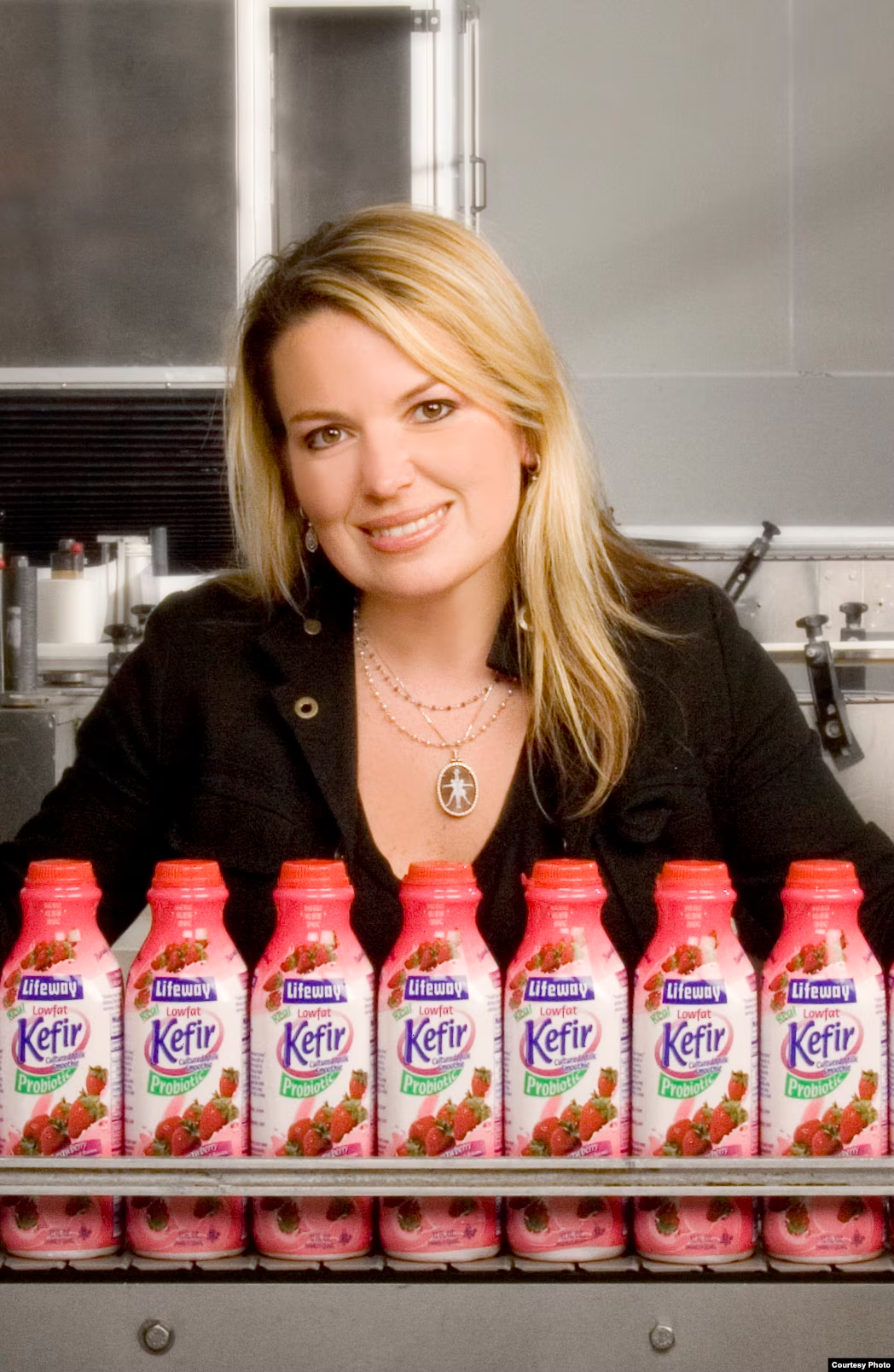
The Smolyansky family, who left the USSR in 1976, built her business in the production of kefir - a drink known to all in Eastern Europe, but until recently almost no one in North America
In 1976, when the parents of Yulia Smolyanskaya who emigrated from Odessa to Chicago first saw an American supermarket with an abundance of food, they fell to their knees and cried. Nine years later, traveling around West Germany, they found a milk drink popular in their homeland in a local supermarket. This drink later changed the fate of the Smolyansky family.
“They bought a couple of kefir bottles there,” Julia told Radio Freedom to the journalist. “And my father realized: there is everything in America, but there is no kefir. Mom added:“ You are an engineer, why don't you start producing it, but to sell it? ”
39-year-old Julia Smolyanskaya is now leading Lifeway Foods-a business that has turned that old conversation. For thirty years that have passed since the trip to Germany, the Smolyansky family built a product called Kefir Business Imperia. This sour -milk drink does not surprise anyone in Eastern Europe and the countries of the former USSR, but almost no one knew in the United States until recently.
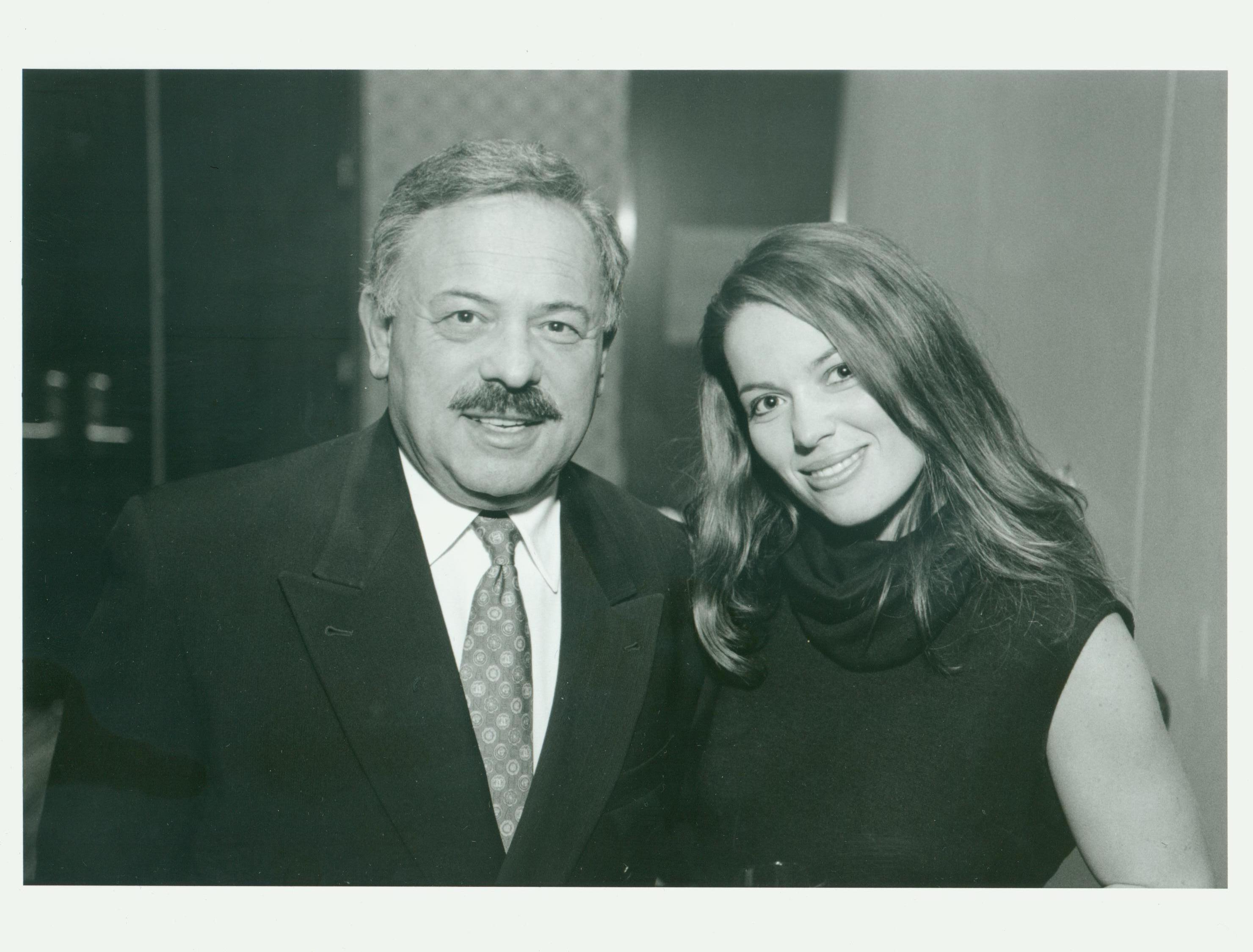
Her father, Mikhail Smolyansky , founded the company in 1986 in the basement of a family house in a suburb of Chicago. He began to experiment with recipes for making a drink. Friends and relatives from the Soviet Union brought him a sourdough for kefir. Using his engineering skills, Mikhail built a workshop for production.
Today, according to Lifeway itself, the company's share in the US kefir market is 95%. Thanks to the efforts of this company, this sour-milk drink in the country began to be perceived differently. From niche goods for a healthy diet, it turned into a serious competitor to yogurts and other sour -milk drinks in mass trade.
“Initially, we counted on E migrants who moved to the United States,” says Julia. “Then my father I found a niche in the market for a healthy diet, experiencing explosive growth for kefir. Then, I think, he saw the opportunity to switch to a more massive level and grow along with the sector of natural foods. And in the end, this sector in itself has finally become a mass market. "
On March 16 this year, Lifeway said: its total sales in 2014 increased by 20% compared to 2013 and amounted to 130.2 million US dollars (about 7.8 billion rubles) . Last year, the company launched the first large -scale advertising campaign in print and on TV throughout the country. Last week, a new factory in Wisconsin launched the first products. According to Smolyanskaya, it will take the production capabilities of the company to five times. “I think we have the opportunity to reach 500 million dollars of annual sales,” Julia believes. “I don’t know for sure when this will happen, but soon enough.”
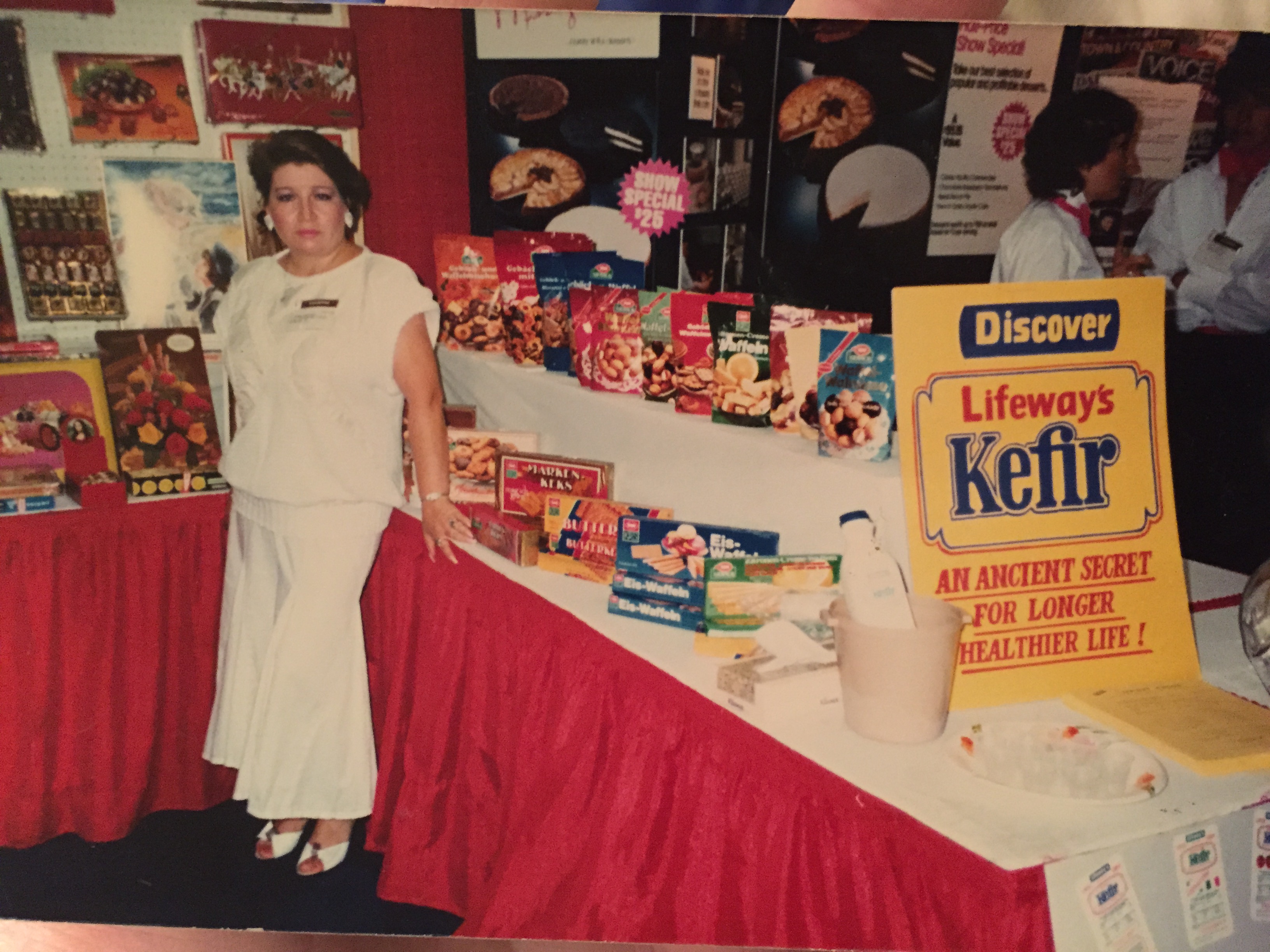
Market success and tragedy of 2002
The heiress of the business recalls that in 1976 her family arrived in the United States, having only $ 116. Father, a Jew from Kyiv, felt like hand and feet in the Soviet regime and was able to leave the USSR during a wave of emigration from the country that came in the 70s.
The family has become one of the dozens of those that chica chose for the future life of Chicago. Smolyansky quickly imbued with the entrepreneurial spirit of their new homeland. Michael found the work of an engineer, and Lyudmila - a Ukrainian from Kharkov - opened a shop with Russian and Eastern European products.
The store quickly became a whole network, and soon Lyudmila began to supply Eastern European products to other outlets throughout America. They noticed the bottle of kefir, hit the eyes of Smolyansky in 1985 during the Cologne Trading Fair, where they selected goods for their trade.
Julia herself first tried kefir only after the father released the first batch of a drink in the basement of their house. “I was about 11 years old. And I really liked him,” she recalls.
Julia and her younger brother Edward (now he is a financial director in the company) grew up in a family where they spoke Russian. She pronounces the word "kefir" in different ways-then in the American manner of "ki-flur", then, especially when she quotes her father, on Russian.
Julia pronounces the word "kefir" in different ways-then in the American manner of "ki-flur", then, especially when he quotes his father, on Russian
Two years after the opening of the company, Mikhail Smolyansky brought its shares to the public market in order to spur development. This happened on the NASDAQ exchange in early 1988. One promotion cost 1 dollar. The revenue from the sale of shares allowed to open a new workshop. From 1988 to 1997, sales grew from 800 thousand to $ 6 million. Two years later, a 20% stake in the company bought a French grocery giant Danone. The Smolyansky family, both then and now, has a control package.
By that time, Julia had already entered the family business. The father prepared her for the fact that over time the management of the company would completely move on to her. This happened in 2002, unexpectedly under tragic circumstances: Mikhail Smolyansky died of a heart attack. He was 55 years old.
His death was a blow to both the family and the shareholders of the company. The cost of shares the day after death fell by 27%, up to $ 5 10 cents. The NASDAQ exchange was even forced to suspend Lifeway papers. Julia Smolyanskaya became simultaneously president of the company, its general director, director and treasurer. At 27, she became the youngest head of a public company in the United States.
Friends advised the family to get rid of all shares of the company, saying that its history is "finished", Julia recalls. But she was determined to continue the case and worked, “like a robot”, all several years required to return the stability to the business: “Everything that my parents worked for, what they achieved and achieved, for which they risked, I did not want all this to be put to the wind.”
The next line
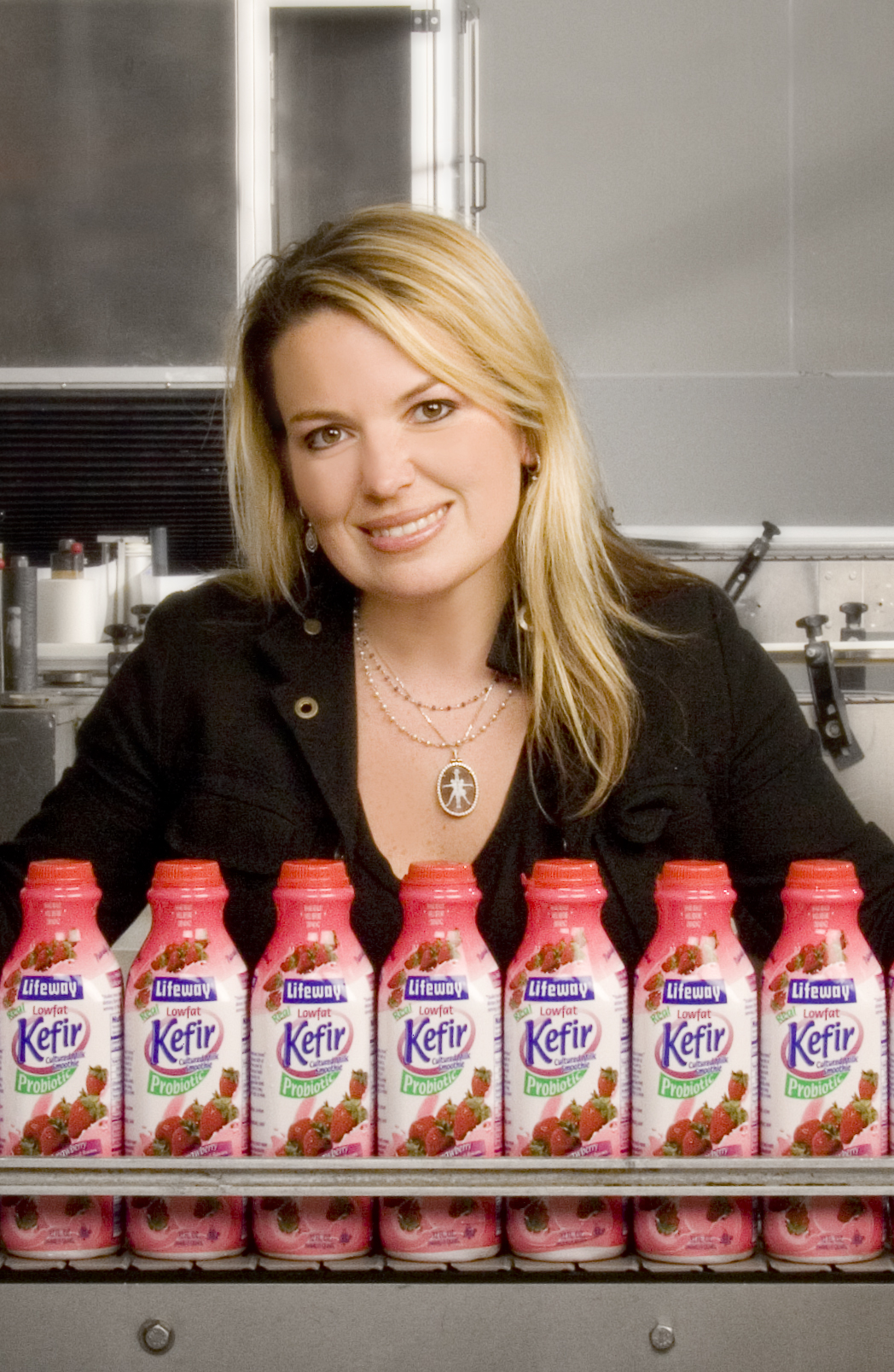
Under his father, he managed sales and marketing, as general director Julia actively began to do everything to raise the image of both the brand Lifeway and the drink itself - kefir. She has been doing this for 13 years at the helm of the company.
Julia invested in equipment that completely covers the bottles with kefir with a continuous plastic label, thus leaving more space for texts. In them, the company explains the benefit of the health of probiotics. The World Health Organization describes them as "living microorganisms used in adequate quantities that have a healing effect on the human body."
The company also introduced new tastes and varieties of kefir into production. Among the innovations are “children's” packaging, frozen kefir, and recently kefir with a high content of proteins, designed to make a profit on the interest in the USA in the interest in protein diets.
“We really made an innovative product that remained unchanged in the USSR and Eastern Europe. We came up with a thing like frozen kefir. The drink has been known for two thousand years, and no one thought of making it something like ice cream,” says Smolyanskaya.
For a long time preserving the leadership of the market in the USA, Lifeway is now looking at global markets with interest. One of the last year’s studies showed: by the end of 2014 the capacity of the global probiotic market reached 32.6 billion dollars.
Julia says: she wants Lifeway for Kefir to become the same household name as Hershey's to become in the American chocolate market, and Tropicana - for orange juice. “I believe that we have every opportunity to become a global brand,” she shared with a journalist Radio Liberty.
Julia says: she wants Lifeway for Kefir to become the same household name as Hershey's to become in the American chocolate market, and Tropicana - for orange juice
Mikhail Smolyansky in the 1990s planned to start sales of kefir under his brand in his native Ukraine. But when a car that worked with his father on this issue mysteriously knocked out a car, the car was abandoned to death, the idea was abandoned, Julia says.
In the 1990s, bottles with the inscription Lifeway could also be found in stores in Russia. But their cost was too high, and only the rich could afford this kefir. After the default of 1998 and a sharp depreciation of the ruble, supplies to the country ceased.
Now Lifeway is selling kefir in Canada, Mexico, Great Britain, Kuwait and Hong Kong and in some other markets. There are no plans to return to Russia, says Julia, now there is no. This idea was considered 2-3 years ago, but, faced with corruption, they were disappointed in the project. Every time the company tried to register its brands in Russia, it was extorted bribes: “I checked whether this or that name was already busy, it turned out to be free. Three hours after we submitted an application, we were refused it, saying that such a brand already exists. And they added: but for 5 thousand dollars we can make this name accessible three times with different names, and then said it. yourself: "Forget."