
Translated material
Immersion in absurdity
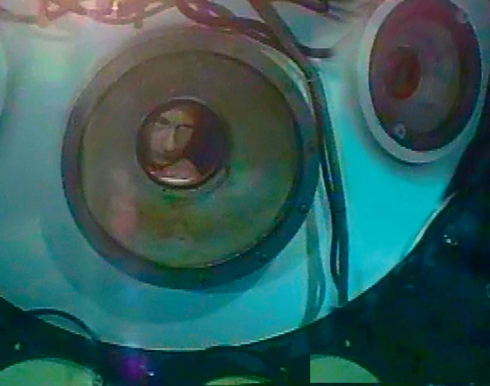
Vladimir Putin during a dive to the bottom of Lake Baikal, on August 1, 2009, March 2015 turned out to be quite remarkable. The national leader first disappeared from the field of view of the public for ten days, frightening the political elites, and then appeared in the film “Crimea. The path to his homeland ”and with an unexpected frankness told how he personally managed the operation to seize the Ukrainian territory and how was ready to use nuclear weapons in the event of the need to apply nuclear weapons. It doesn’t matter that the president’s interview was recorded in advance. It is important that these words were generally said, and now they can be given a legal assessment (p. 28–35).
They, in fact, determined the content of the political week. Placies at the many thousandth Moscow rally in honor of the anniversary of the annexation of Crimea, where calls were flashed to return Poland, Finland and even Alaska, a statement by the Secretary of the Security Council of the Russian Federation Nikolai Patrushev, who found the sharply intensified Finnish nationalists and reveners in Karelia, the agreement on allies and integration from the southern industrial. In particular, the entry of part of the military units of the Yuo into the Russian army - all this was read as a detailed commentary on the president’s television revelations (by the way, about 40 % of Russian viewers watched the film, this is a unique indicator).
Russian society proposes a rather primitive picture of the world, in which external expansion is the main goal, primarily territorial. And society does not just perceive such a proposal to “Hurray”, but even ahead of the most daring ideas of power. The society demonstrates or at least declares readiness for any sacrifice - up to self -destruction, and the elite - the complete inability to formulate scenarios of the future, the center of which would not be the current president. Hence the panic associated with its short -term disappearance and a wild set of versions , this is the disappearance of the explanatory (p. 20–27).
Literally in real time, we have the opportunity to observe the spectacle even more unique than the president’s story about how he consistently violated the norms of international law. We see how the authorities felt for some mobilizing values important for most Russians and actualized them through television propaganda. This is an important point, which also requires philosophical understanding (pp. 34–37).
Photo: Kremlin/Ria Novosti/Reuters