
Translated material
Kolomoisky rebellion
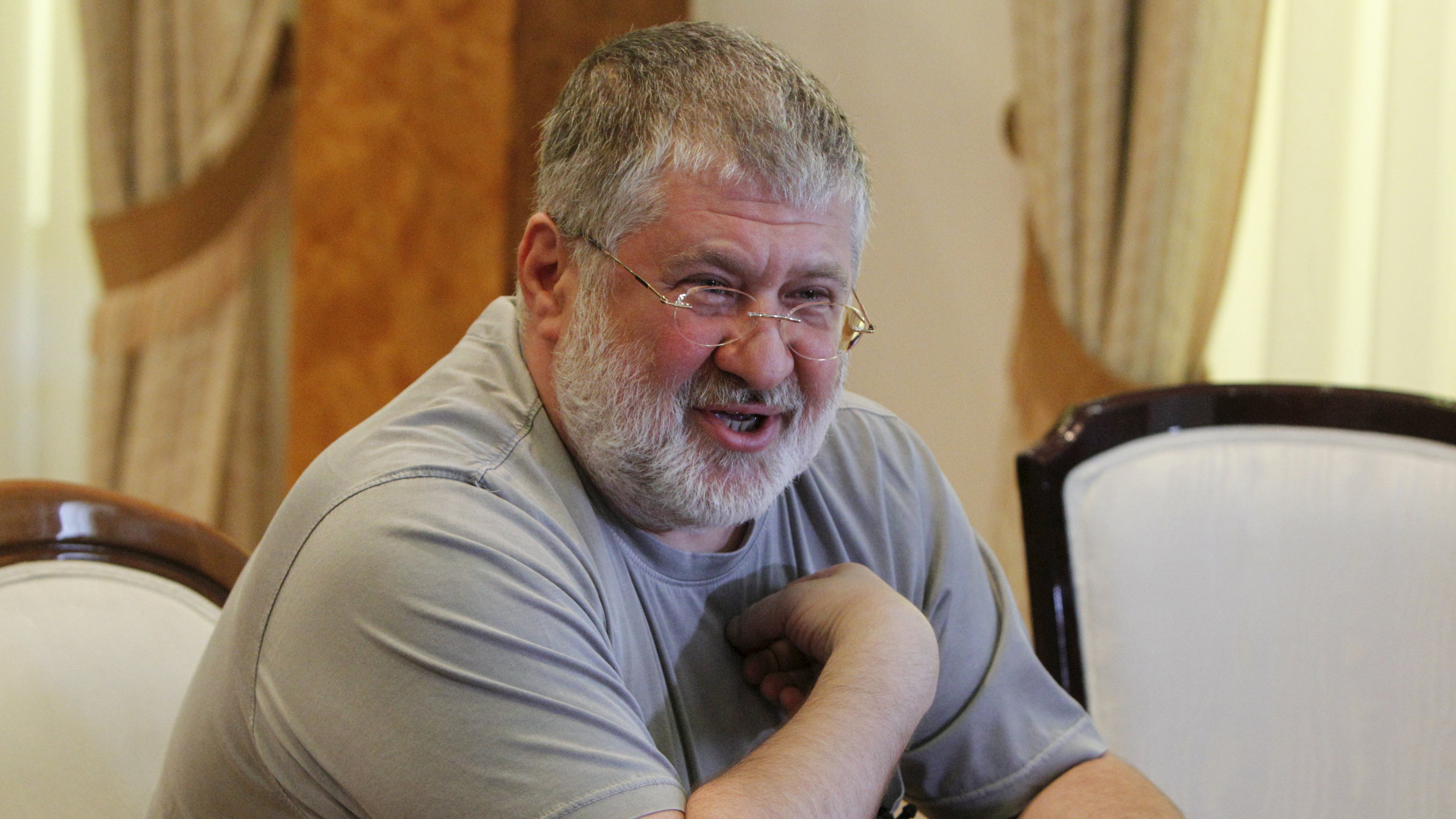
A few hours before the resignation of Governor Dnepropetrovsk, experts of the “face to event” program appreciated its role and influence in Ukrainian politics
Full video version of the ether
Elena Rykovtseva: What will be completed by the confrontation of Igor Kolomoisky and Petro Poroshenko, we will talk about this today. The confrontation is very sharp, a lot of people are involved in it, a veche is preparing in Dnepropetrovsk. In the studio, Alexander Birman, a special correspondent of the online publication "Lenta.ru", with us in touch from Dnepropetrovsk Yuri Raichel, columnist of the newspaper "Day" and Vakhtang Kipiani, chief editor of the Internet portal Istorichna Pravda. This is an acute internal conflict in Ukraine, but, nevertheless, it is perfectly illuminated on all federal Russian channels. I propose to start our conversation by viewing a very short, very informational report of our colleagues from the Reuters agency, as the Kolomoisky Ukrtransneft is taking place, which he himself calls the liberation from the invaders.
(Video)
Elena Rykovtseva: Alexander, look, we understand the situation is very simple: Petro Poroshenko decided to replace the head of "Ukrtransnafta" with his person with anything. There was a man of Kolomoisky for many years. Igor Kolomoisky believes that he did a lot for Ukraine, for oil, in order to save oil from the occupied territories, that a person has made a great contribution. And suddenly, from the point of view of Kolomoisky, he is swept away, overthrow with some machine gunners and put a person of another, it is not clear what, he calls him a Russian occupier, and this man is no longer Kolomoisky-this is a person from Poroshenko. In this connection, the question arises: why is Petro Poroshenko, knowing in advance that such an acute reaction will cause a change in the head of Ukrtransnafta, decides to do this? What tasks he, in this case,, in this case, does you think, decides such a militarized replacement for the management of this company?
Alexander Birman: In addition to Ukrtransnafta, there were still fan captures there. That is, on the night of Monday, according to the same scenario, Kolomoisky came to the Ukrnafta office. Ukrnaft, if I am not mistaken, is one of the largest owners of gas station networks in Ukraine. Ukrtransnaft are pipelines, Ukrnafta is a retail sale of gasoline. Ukrnaft, as I understand it, it can be a much more valuable asset. Kolomoisky acted like Boris Abramovich Berezovsky at one time: in order to manage assets, he does not have to have control, he simply put his man there. For example, in Ukrnaft, a control shareholder is Naftogaz of Ukraine, with Kolomoisky, if I am not mistaken, about 42% of the shares of Ukrnafta, his person heads the company, business is actually managed by Kolomoisky. The Aeroflot scheme, tested by Berezovsky, is repeated to the end with accuracy. Why is Poroshenko needed? I think Kolomoisky to a certain extent himself provoked such an attack with his two actions. The first action: in early February to Minsk-2, Korban, the deputy head of the Dnipropetrovsk region, said that it was necessary to negotiate with the Donbass, one cannot continue confrontation-this was one signal against the line of Poroshenko.
Elena Rykovtseva: This coincides with the position of Poroshenko, who voices her in all negotiations, enough to fight. What is the betrayal of this position in relation to Poroshenko's position?
Alexander Birman: Kolomoisky, when the conflict developed, he said that the DPR and the LPR must be recognized. It was about the fact that there are authorities in Donetsk and Donbass, with whom we need to negotiate, that is, not to say that these are invaders, terrorists and so on.
Elena Rykovtseva: Today's statement, you think, Kolomoisky continues this line. He said not quite so, but with pleasure they interpret the federal channels that he recognizes them.
Alexander Birman: He said that, unfortunately, they have to admit them.
Elena Rykovtseva: Not in the sense of official recognition, but to be considered what they are.
Alexander Birman: This is a political moment. There was still an economic moment. Kolomoisky through Boris Filatov tried to initiate a large -scale revision of privatization in the Rada. All the largest owners of Ukraine have assets in the mining industry. Akhmetov’s privatization of Ukrtelecom, privatization of regional fruits, electrogenerations and so on.
Elena Rykovtseva: On the principle of "robbery, the loot"?
Alexander Birman: To a certain extent yes. He opened Pandora's box thereby. Because it is clear that in this way he caused the fire of all the oligarchs. Why he did this is a question, here we can talk about versions. It is clear that this step is more painful than the statement of Korban, he could not remain unpunished so that Poroshenko would not try to strike at Komoysky’s positions.
Elena Rykovtseva: Do you think that by replacing the management of Ukrtransnaft, he tried to press it, to restore it?
Alexander Birman: Prior to the change of leadership, the Verkhovna Rada adopted a law that allowed the state by a simple majority to change the leadership.
Elena Rykovtseva: Now she again wants to change him so that he can block the decision of the state again.
Alexander Birman: If Kolomoisky is taken away from the oil industry, then this will deprive him of quite serious resources.
Elena Rykovtseva: You think that this is an attempt to restore Kolomoisky for the fact that his deputy head of the administration indicates the opportunity to negotiate with the separatists. The second is that he tried to quarrel Poroshenko with all the oligarchs, to arrange a buch, let's say, associated with privatization. Yuri, we would like to listen to your version why Petro Poroshenko decides, knowing what acute Igor Kolomoisky reaction will be, how influential this person is, he still decides to take and replace the head of Ukrtransnafta.
Yuri Reichel: The situation breaks up into two parts. The first is intraoligarchic games, the confrontation of Kolomoisky, for example, with Akhmetov, Firtash and other oligarchs. Especially recently, he has a difficult relationship with the son -in -law of former President Leonid Kuchma. Purely economic, financial interests are adjacent here. The third part is the need to put a certain order, at least external. Because in Ukraine, no radical democratic and economic reforms are conducted. This puts the Ukrainian authorities in the situation that it cannot receive sufficient economic and financial assistance in the West, which the West, in principle, is ready to provide and even promised it, so some order needs to be put on. The latter is the general political situation. Indeed, the Ukrainian oligarchy in the broad sense of the word is one of the main brakes of the future possible reform of Ukraine in a democratic direction. Therefore, a clash with the presidential authority, the point is not even in the specific surname of President Poroshenko, and the attempts of not only Kolomoisky, but also other oligarchs to seize certain specific principalities in the form of regions, and the Dnipropetrovsk region is simply a very convex example of such an attempt, this is an attempt to get some kind of armed force. Although I am presented with Moscow fears that in Dnepropetrovsk on the street they will begin to shoot, armed people obeying Kolomoisky will begin to somehow perform.
Elena Rykovtseva: This is not fears - it is hope. The federal Russian channels are hoping for what will happen that way.
Yuri Reichel: I have to dispel their hopes, and very seriously, because nothing like this will happen either in Dnepropetrovsk or Zaporozhye, where the interests of Kolomoisky and Akhmetov also collide, who transferred a significant part of his assets from Donbass to Zaporizhzhya, partially to the Kharkov region. Nothing of the kind will happen, so it is undoubted that this conflict will not result in armed clashes. Most likely, a certain compromise will be found. At the same time, the presidential authorities will have to declare their success in confrontation with the Ukrainian oligarchy. Some time ago, President Poroshenko gathered the largest Ukrainian oligarchs for a meeting and in a rather strict tone invited them to work for a future democratic and reformed Ukraine. This met, to put it mildly, not quite understanding, especially from Kolomoisky and Akhmetov. Therefore, you can easily imagine that after the situation with Kolomoisky is resolved in one way or another, the line of similar resolution with Akhmetov will come.
Elena Rykovtseva: How do you regard the translation of all this conflict by the Dnipropetrovsk administration into a political plane? Today, Gennady Korban, he accuses Kyiv on all political points with hard statements, does not concern his performance far. He says that you are lying with the reforms, you are lying with a counter -terrorist operation, you will lie down with the number of victims, you will lie down in everything. He announces the verdict, in fact, to all the rule of Petro Poroshenko. Then they gather people. I also don’t think that people will collect people under the slogans “return us the leadership of Ukrtransneft, I’m sure that this will go under political slogans. How do you evaluate this? This is already a political confrontation, this is political blackmail.
Yuri Reichel: To a certain extent, this is a political blackmail, it only seems that no one is especially afraid of this blackmail. The fact that Korban acts, not only Korban, and other Kolomoisky close to the Dnipropetrovsk regional administration, make such statements, the best defense is an offensive. Such things are not the first to say this, there are some political forces in Ukraine that accuse President Poroshenko of betrayal and that the anti -terrorist operation is not carried out. Moreover, it is impossible to boast of special successes recently by the Ukrainian authorities, including militaryly. Therefore, to a certain extent, this is an attempt to loosen that soil that seems to be, certain underwater trends that have not yet come to the surface. This is also a way, on the one hand, political blackmail, and on the other, political bargaining. That is, the bargain in that future is the political compromise of the financial, economic, which will one way or another will be achieved between the president and Kolomoisky. Therefore, the meaning of this kind of statements should not be exaggerated - this is largely rhetoric. The same applies to tomorrow in the evening. At the same time, Korban dissociated himself from this veche. The people who organize it are someone elected to the deputies of the parliament, and someone in the regional council, in city structures, people close to Kolomoisky. Therefore, undoubtedly the secret hand, almost said Moscow, is visible here, but it will not be of particular importance - this is a purely propaganda act related to the fact that Kyiv wants to show that in Dnepropetrovsk there is a real government that actually confronts the separatists and terrorists in Donetsk and Lugansk, and you should not quarrel with this authority, because otherwise there will be large ones, including otherwise Military diplomatic, problems.
Elena Rykovtseva: Do you think that the usual ordinary layman in Dnepropetrovsk will not go to this rally, because he will support Kolomoisky with his soul and heart, only his organized supporters will go?
Yuri Reichel: Undoubtedly. I must say that Kolomoisky, including in Dnepropetrovsk, is a rather complicated attitude. On the one hand, the majority are grateful to him for holding the region in a peaceful position in a rather sharp situation of spring spring, especially the March April last year. They give him their due in this sense, but the attitude towards him as an oligarch, as a person who is very illegible in his own funds of both political, financial and economic, is very complicated. This is not to say that he is so very popular as some of his neighboring entourage represent it. Most likely, it will really be such an organized meeting that will issue some loud resolution, will require something from the president. But this is nothing more than rhetoric and shocking air.
Elena Rykovtseva: Our colleague from Dnepropetrovsk believes that there will be no power clash, that this is like a relatively soft attempt to blackmail, then they will agree on something. How do you regard the degree of danger of the power structures that are now under Kolomoisky, now according to these structures a special resolution is adopted that they should categorically disarm them? How do you regard its power influence in the country and business?
Alexander Birman: It seems to me that if you nationalize Privatbank, it will work, the economy of Ukraine will not bring down this. I do not understand well that now it can make the Ukrainian economy even worse.
Elena Rykovtseva: There will always be much worse.
Alexander Birman: In this case, the influence of Kolomoisky, in my opinion, is not so much in the financial sector. I watched statistics, last summer there was information that the bank does not feel very well, request a bunch of loans from the National Bank of Ukraine and so on. What Kolomoisky really has is oil, fuel, without which no country is functioning. But now they are trying to take it away from him. The only thing that Kolomoisky has is media, a media resource and a lobbying resource, since it is the main sponsor of Jewish organizations of Ukraine. This resource also cannot be discounted, because it is some kind of connection in the West. It is not yet visible that they fit for him as Gusinsky at the beginning of the 2000s, when the World Jewish Congress participated and so on. There was a fairly tough conversation from Kolomoisky with the American ambassador, the United States on the side of Poroshenko, it is unlikely that from the West some public organizations will extend the hand of helping Kolomoisky. On the other hand, I myself came across this when I talked with co -religionists and fellow tribesmen from Ukraine, really the influence of Beni, as it is called, it is very strong. There is an inadvertible term “Jews”, but there is an important point that with all the fact that the image of Bandera and so on, which was supposed to push the Jewish population of Ukraine from this entire nationalist husk, nevertheless, the Jewish population of Ukraine supported Kyiv in the conflict around Euromaidan, Yanukovych and so on. This is precisely the merit of Kolomoisky, because the key organization is under its sponsorship. If Kolomoisky directs this resource against Kyiv, it will be painful enough. As for the power part, it seems to me that there is a significant nuance. The country is in a state of strict conflict one way or another. I saw a statement by the adviser to the head of the SBU, who said that external forces, referring to Russia, can take advantage of this conflict.
Elena Rykovtseva: It is very important to understand that already now on Russian federal channels, which are an absolute Lakmusov papel of what the authorities thinks sharply in relation to Igor Kolomoisky. If earlier it was a total enemy who shot down the Boeing, Kolomoisky personally gave orders to make Books on Boeing, that is, it was absolute evil, now that Kolomoisky enters the battle with Poroshenko, this story is very gently and calmly covered, it is not even commented on, I do not hear any hard assessments to Igor Kolomoisky. For the first time we are told only a story without assessments.
Vakhtang Kipiani is in touch with us. Why does Petro Poroshenko decide to make such a rigid replacement for the leadership of Ukrtransnafta, knowing that he will undoubtedly encounter the same strict reaction of Igor Kolomoisky? Why do you think it was necessary to knock out this system from under it?
Vakhtang Kipiani: A very difficult question, because you need to be Peter Poroshenko to answer him. There are several versions, they sound. Firstly, the president needs some kind of money in the budget, this money can give control over the state company. The second point: there is a popular expression to show the success of the reform of the fight against corruption, you need to plant three close friends. For this year, we did not see Poroshenko’s close friends, respectively, there are socially significant figures that behave inappropriately, Kolomoisky’s control over two state -owned companies - this is not very correct in the crisis, the state itself wants to dispose of these companies and receive dividends. The third way, many people call it, I refuse to believe that there is a certain oligarchic redistribution of property, Poroshenko as a president, but at the same time a large businessman, perhaps the oligarch, leads a certain campaign to select state property control with the aim of transferring or so-called their people, or the names of three or four oligarchs are called, and everyone can substitute any of any The surname, no one still calls a single fact. В этом смысле это печальная история о том, что государство сначала допустило контроль бизнесменов над госкомпаниями, хотя юридически они там не должны быть, с другой стороны выковырнуть невозможно. У Порошенко, возможно, нет других путей для усиления своей личной власти президента Украины.
Елена Рыковцева: Ведь можно было немножко потерпеть. Я вам прочитаю смс от нашей слушательницы Натальи, она сочувствует Украине совершенно определенно: "Мне кажутся непродуманными действиями замена людей Коломойского вместо мирного решения вопроса. Сейчас, когда Украина ослаблена и война полностью не закончена, нельзя идти на внутренние конфликты между украинскими олигархами и давать российской власти возможность злорадствовать над неудачами украинской власти". Она права в том, что действительно сейчас это предмет огромного злорадства, потирания рук. Все это перешло в политическую плоскость, украинская власть заработала в свой адрес массу политических обвинений. Вы считаете, игра стоила свеч?
Вахтанг Кипиани: В таком ракурсе нет. В принципе мнение российской телеаудитории, и даже сочувствующих Украине, как наша слушательница, – это все третьестепенно. Главное в том, что это вызвало кризис в отношении людей, в той или иной степени близких, которые плечом к плечу стояли на Майдане, которые в том или ином виде разделяют общеевропейские ценности, которые мы пытаемся отстоять, право выбора для страны курса, честную не олигархическую, не коррумпированную политику, вот этот кризис заставил многих сомневаться. Люди ругаются, люди ссорятся, перестают пожимать друг другу руки. Ситуация в Украине стала хуже, а результат не достигнут. В этом смысле, конечно, есть такое выражение – если ты поднимаешь камень, ты должен ударить. В этой ситуации обе стороны подняли руки, показали, что у них есть камень, но в итоге никто не ударил. В этой ситуации каждый убеждается в том, что его оппонент недоговороспособен, кто хотел плохое сказать о Коломойском, имел такую возможность, многие сказали очень плохие слова о Порошенко, и это ухудшило внутриполитическую ситуацию в стране, в частности, перед угрозой нападения российских войск, террористов на востоке. Мы каждый день читаем новости о новых так называемых гуманитарных грузах, мы знаем, что они привозят не продукты, не лекарства, а топливо, вооружение и так далее. В этом смысле страна стала слабее, кризис не закончен, мы не знаем, чем он закончится, но мы уже слабее. Это ужасный результат первых нескольких дней кризиса.
Елена Рыковцева: Александр Бирман считает, что два серьезных вида влияния существует у Игоря Коломойского – это медиа и лоббизм. Я хотела спросить у вас о медиа, какой у него пакет в днепропетровской прессе и в прессе всей страны?
Юрий Райхель: Телевизионного канала, подконтрольного Коломойскому, в Днепропетровске нет, если не считать государственную телерадиокомпанию. Но объем новостей там достаточно ограничен, в остальное время они ретранслируют другого вида программы. На республиканском уровне у него есть канал "Один плюс один", другие каналы, менее обиходные. Дело в том, что медиа-ресурс Коломойского значительно уступает медиа-ресурсам других олигархов. Телеканал "Интер" имеет почти 90% покрытия по территории Украины, а канал "1+1", [принадлежащий Коломойскому] не имеет такого покрытия, он в основном покрывает крупные и средние города Украины. Он присутствует в кабельных сетях, но кабельные сети – это тоже принадлежность крупных городов. Поэтому я бы не стал переоценивать медиа-ресурс Коломойского в смысле его влияния на всю страну. В то же время этот медиа-ресурс достаточно эффективен в киевских играх, в олигархических играх. Потому что на "1+1" работает достаточно квалифицированная команда, они умеют делать информацию, соответствующим образом ее подавать, мы это прекрасно видел и знаем по событиям до Майдана, во время Майдана и после Майдана. Поэтому медиа-ресурс Коломойского – это в основном медиа-ресурс для тех или иных игр на уровне украинской столицы.
Елена Рыковцева: Вахтанг, вы согласны с тем, что не нужно переоценивать медийное влияние Коломойского, что это скорее "1+1", который занимает определенную нишу?
Вахтанг Кипиани: По украинским меркам канал "1+1" – это один из двух крупнейших каналов. Есть два главных канала – "Интер", которым владеет Фирташ, это канал бывшей Партии регионов и крупного капитала, который ориентирован на Россию, на российский газ, на российские политические интересы. С другой стороны канал "1+1", как бы то ни было, он канал национальный, Коломойский является украинским олигархом, очень патриотичная команда, но, безусловно, этот канал участвует в олигархической войне. На сюжет на канале "Интер" выходит сюжет на канале "1+1", и оба сюжета позорны, там ни о каких стандартах, ни о каких честных правилах журналистики речи не идет. Но это два канала, которые влияют. Причем "1+1" влияет больше на правобережную и киевскую аудиторию, скорее украиноязычную и украинскую по своему этническому составу, "Интер" скорее влияет на восток, поскольку он русскоязычный, то в большой степени на русскоязычных в больших городах, как Харьков, Запорожье, Днепропетровск, ранее Донецк, Симферополь и так далее. В этом смысле это неприятная война, потому что она уничтожает не только доверие к политикам или бизнесменам, она уничтожает доверие к журналистам. Кроме того не надо забывать, что у господина Коломойского есть еще один крупный медиаресурс – это информационное агентство УНИАН – это одно из двух крупнейших в Украине информационных агентств. Очень многие СМИ, особенно региональные, являются подписчиками этого агентства, люди очень часто используют этот сайт как один из главных источников новостей. Сайт, который принимает участие в информационной войне, является, мягко говоря, недоброкачественным, поэтому страдает в итоге вся стран, получающая не всегда качественную информацию. В этом смысле последствия этой войны будут еще долго аукаться.
Елена Рыковцева: Можно сравнить отношения Петра Порошенко как президента с олигархами и отношения Владимира Путина с олигархами? Его линия состояла в том, что он лишил их власти медийной, лишил денег, влияния, разорил в конце концов некоторых, например, мы знаем, Березовский с чем остался в конце своей несчастной жизни, но при этом он приблизил к себе группу других олигархов, про которых почему-то в массовом сознании не считается, что они олигархи. Мы знаем, что есть кооператив "Озеро", который прекрасно живет, который владеет большими кусками собственности, получает роскошные государственные заказы. Но массовое сознание не считает, что Россия олигархическая страна, про Украину говорят, что это страна олигархов, а про Россию нет. How to explain this?
Александр Бирман: Термин "олигарх" реанимировал недавно трагически погибший Борис Немцов на фоне первой стычки власти с олигархами. Тогда они были олигархами в полном смысле. Олигарх – это когда ты деньги конвертируешь во власть, у тебя большие деньги – у тебя большая власть. Путин сказал, что олигархов не будет и этот обменный пункт закрыл. Грубо говоря, те состоятельные люди, которые сейчас есть, могут решать свои проблемы через дружбу с ним.
Елена Рыковцева: Только бизнес, никакой власти не может быть.
Александр Бирман: Она есть, но не в таких масштабах, как была у Гусинского или Березовского.
Елена Рыковцева: Можем мы сказать, что Порошенко в этом смысле идет по пути Владимира Путина?
Александр Бирман: На самом деле этот конфликт, который возникает у Порошенко с олигархатом, потому что олигархат в последний год инвестировал в войну, война стала переоцененным активом, люди выходят из этого актива, первая ласточка – это Коломойский. Когда ты выходишь из какого-то актива, ты должен вложиться в другой актив. Тут у олигархата получается интересная штука, что основные активы украинские завязаны на Россию. Соответственно, если ты хочешь капитализировать не войну, а мир, любой актив не будет приносить денег, пока не выстроены взаимоотношения с Россией. Олигархат, вне зависимости от своих взглядов, становится пророссийским по своей направленности. Показательно, что раньше наиболее радикальную позицию по отношению к России занимал именно Коломойский. Ахметов и Фирташ что-то мутили с Россией, с какими-то бизнесменами. Сейчас, когда он перестал инвестировать в войну, ему нужны новые источники дохода, а выстраивать источники дохода без взаимоотношений с Россией он не может.
Елена Рыковцева: Не следует ли из ваших слов то, что сейчас говорит Коломойский по поводу ДНР, ЛНР, что Корбан озвучивает список претензий по части войны, по части операции, не следует ли, что это некий реверанс в сторону России, связанный с его бизнесом?
Александр Бирман: Именно это я и хочу сказать.
Елена Рыковцева: Вахтанг, согласны ли вы с Александром, что, возможно, Коломойский совершает предательство по отношению к тому, о чем он говорил раньше?
Вахтанг Кипиани: Я категорически мотал головой, когда Александр говорил. То, что он говорил, это абсолютная, извините, ерунда, потому что она не опирается ни на один факт. Я очень критичен к Коломойскому как госслужащему и тем более к его выходкам, но нет никаких оснований полагать, что он инвестировал в войну – это термин совершенно ненормальный, так люди не должны выражаться. Никто, ни Коломойский, ни Порошенко, ни кто-либо другой в войну не инвестировал – это неправда. Защита своего дома является священной обязанностью любого человека, гражданина и мужчины. И он в этой ситуации поступил абсолютно правильно, как бы мы ни относились к его сегодняшним действиям, тем более к присасыванию к госсобственности – это разные вещи. Второе: бизнес Коломойского никак в России не заинтересован. У него есть крупный банковский сектор, часть которого Россией, по сути, экспроприирована и в Крыму, и в Москве, "Москомприват". Все его металлургические и другие бизнесы задействованы на Европу, на мир. Он в этой ситуации вполне европейски ориентированный бизнесмен. Я думаю, что как раз это позволило ему в ситуации прошлого года занять глубоко патриотичную позицию, в отличие от Фирташа, который получает газ для своих химических предприятий сто процентов из России, и сто процентов предприятий Фирташа остановились бы, если бы он не имел специальных условий от Кремля. Коломойский в этом смысле рисковал только своим московским банком и плюс филиалами в Крыму.
Елена Рыковцева: Коротко говоря, он не предатель?
Вахтанг Кипиани: Конечно, нет. Он, может быть, совершенно некультурный человек и коррумпированный олигарх, но он не предатель.
Елена Рыковцева: Я хочу озвучить смс, которая только что пришла, она озвучивает позицию Петра Порошенко. Нам пишет Марк из Москвы: "В Украине еще остались деятели, готовые греть руки на пожаре, не все сбежали с Януковичем. Они явно попытались воздействовать на Порошенко. Хорошо, что ему вроде бы хватило ума понять – не туда пошел, и не обострять дальше". То есть наш слушатель впрямую связывает все, что произошло с заменой власти в "Укртранснафте", с тем, что некто повлиял на Порошенко, подсказал ему неверное решение, но Порошенко вовремя остановился и дальше обострять конфликт с Коломойским не будет. Каков ваш прогноз по части дальнейших действий Порошенко?
Вахтанг Кипиани: У меня нет знаний, которые позволяют мне делать прогнозы. Это надо владеть инсайдом из окружения президента, я не владею. Нужно вспомнить, с чего это все началось. Коломойский является единственным крупным бизнесменом или олигархом, который в данной ситуации контролирует очень крупные, очень важные и очень хлебные государственные компании. Никто другой таких эксклюзивных условий от украинского государства не имеет. Ранее имели, сейчас нет. Поэтому то, что происходит, я думаю, это справедливая попытка отодвинуть единственного, который влияет на государство и не дает государству получать дивиденды в "Укрнефти". Если бы он поделился дивидендами, о чем полтора года идет дискуссия, думаю, что этих событий не было бы. Эта история скорее о жадности, чем о предательстве. Думаю, что каждый должен выйти из этой ситуации более умным и не говорить какие-то абстракции о предательстве, о российских интересах. Поскольку весь бизнес находится в том числе в Днепропетровской области, Игорь Коломойский заинтересован, чтобы в Днепропетровске было тихо и спокойно. Господину Корбану нужно меньше рассказывать о сопротивлении Киеву, больше работать на должности заместителя главы администрации.
Елена Рыковцева: Вы завтра от народного вече не ждете никаких неприятностей, особенных драм?
Вахтанг Кипиани: Я бы очень хотел, чтобы их там не было.