Translated material
Koenigsberg ruins
In the Kaliningrad region, not only Kant’s house, but almost all the architectural heritage of Prussian times, is broken
In Kaliningrad, a scandal erupted the other day - unknown people insulted the memory of Immanuel Kant . On the wall of the house, in which the great philosopher lived for several years, the vandals wrote "Kant - sucker". But perhaps more Kant would have insulted the oppressive atmosphere of devastation. The ruins will soon remain from the house that was supposed to become a museum. And, it seems, hundreds of ancient buildings of Koenigsberg are waiting for such fate.
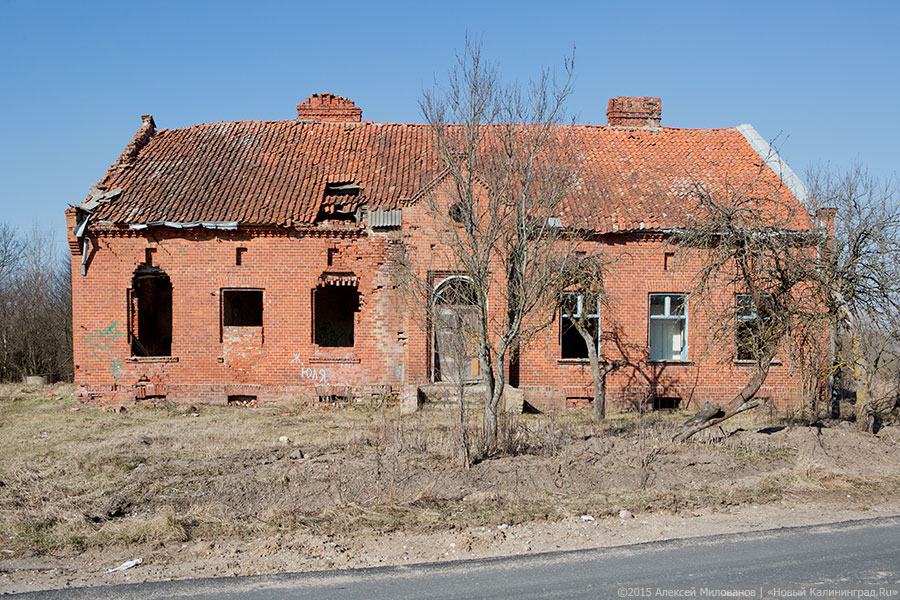
The leading editions of Europe and Russia reported the village of Veselovka near Kaliningrad last week: Kant was offended here. The inscription "Kant - sucker", and under it a flower and a heart arose on a house where in the 18th century the philosopher lived and worked as a home teacher.
The inscription was discovered by journalists who decided to check how the house was preserved, where it was planned to open the Museum of the Memory of the Philosopher. It turned out that no one guessed the guard, and the wind was still walking in a holey roof and chipped walls. The building is rapidly dilapidated and has every chance not to survive to the museum future.
Meanwhile, in the region they are looking for persons similar to “some bloggers” - according to the governor of Nikolai Tsukanov , it was they who made an insulting inscription. For these words, ten bloggers of the region decided to sue Tsukanov, says Dmitry Trunov, official representative of Livejournal in Kaliningrad.
- I work on the development of the Kaliningrad blogosphere, telling the whole country about events, including those aimed at maintaining historical heritage, but here is such a negative image. At least you need to explain yourself. If the governor does not explain what happened, we will file a lawsuit against him about slander, ”says Dmitry Trunov.
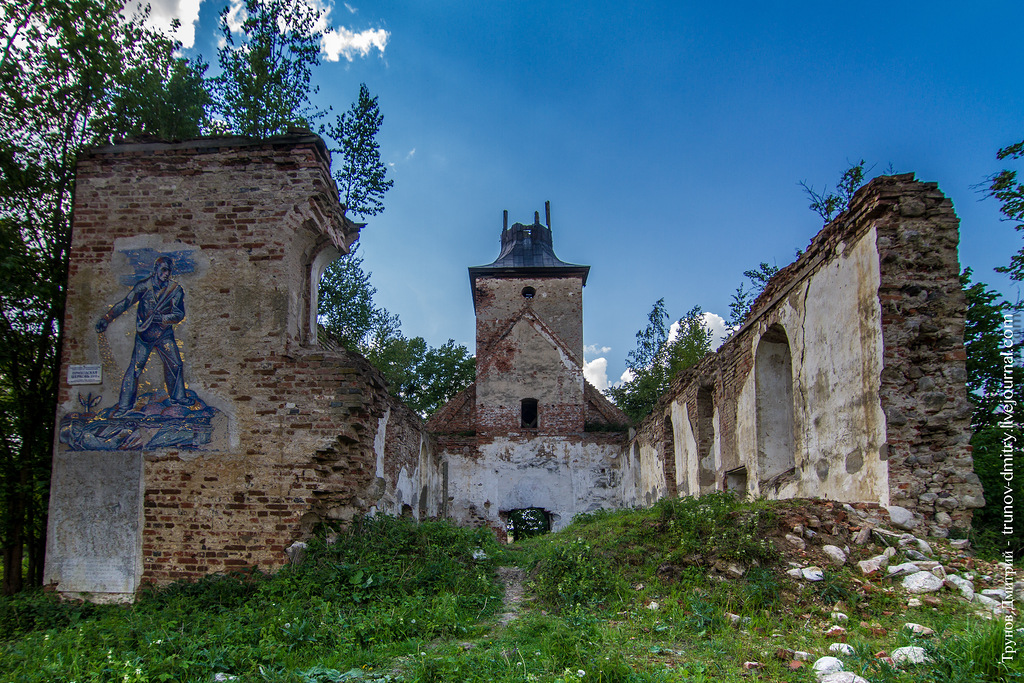
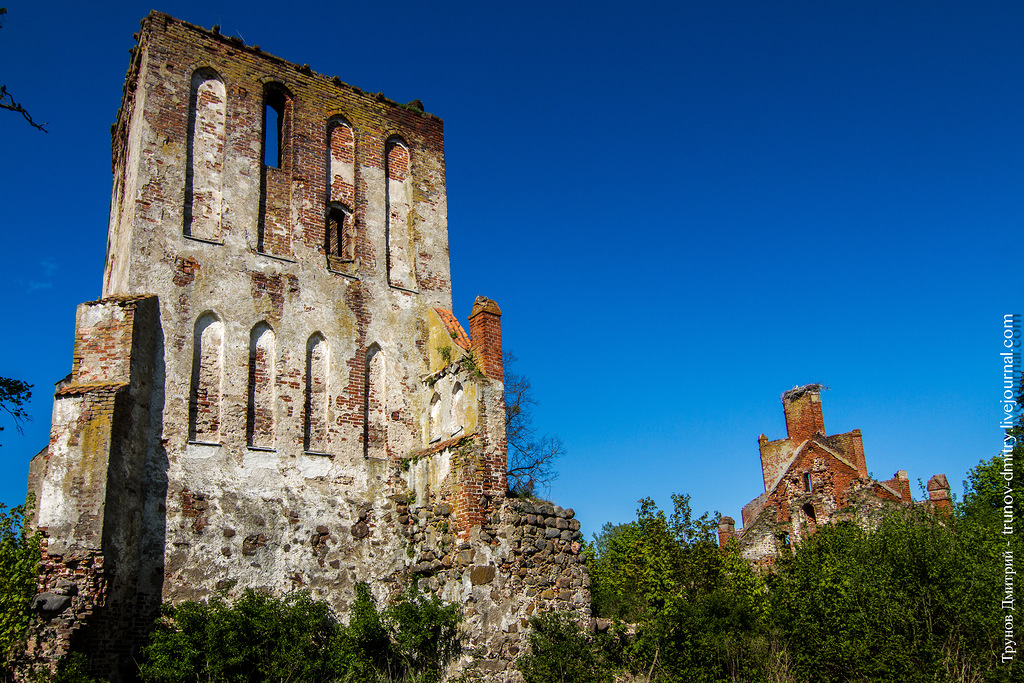
A blogger has been making an Internet project for a year called "The place where they put a cross" in order to convey to the public, as in the region they relate to antiquity. Hundreds of objects - Kirshs, Order castles, forts, estates collapse from time and universal indifference.
- There are public toilets, cows, piles of bottles are walking, you can find syringes. Whoever we bring to the region, everyone is horrified. And the regional government positions us as a piece of Europe, that we have a rich history, you can see a lot of things, ”says Dmitry Trunov.
Many of these buildings have a master - the Russian Orthodox Church. IN
It is not clear where a large investor will come from, who will come to the ruins
In 2010, about two hundred objects were transferred to her, including 10 ancient castles and 133 kirchs. Three quarters of the property was in disrepair, but something else can be saved. Local authorities emphasized: now Catholics and Lutherans could not claim buildings. In addition, the owner will restore objects. However, today the Russian Orthodox Church does not have funds for such large -scale work.
- Those buildings that were handed over to the Russian Orthodox Church, one way or another, there is no user. The owner is not a user. It is necessary to find the user so that he does something, contain. But it is not clear where a large investor will come from, who will come to the ruins. Take at least a Ragnate castle in the Neman, there are many billions there, and they will pay off after how many decades? -says Anatoly Valuev, deputy director of the Kaliningrad historical and art museum.
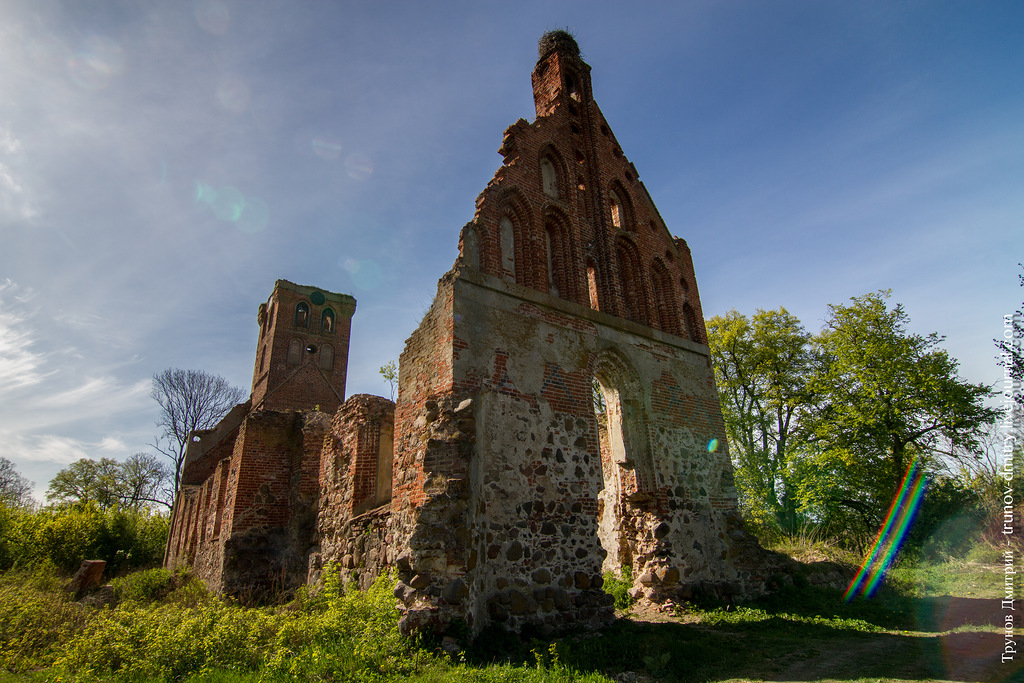
Today, the Russian Orthodox Church managed to restore only a few Kirch belonging to it. Due to the lack of funds for reconstruction, some objects are transferred to the authorities so that their repair is carried out already on budget funds. The regional service for the protection of monuments helped the diocese to draw up applications for the inclusion in the federal target program of Seven Kirch and one castle. The help of philanthropists and philanthropists, German communitys is also accepted. True, not always successful. At the expense of foreign funds, they tried to restore Kirkh Arnaau with unique frescoes of the XIV century. But the cooperation was terminated-representatives of the German side said that due to the negligence of the Russian Orthodox Church, 98% of the frescoes were lost. In the diocese, the information refuted the information.
The digested foundations of the Royal Castle of the XIII century in the city center die in the open air. Now a competition is being held for the development of the Kaliningrad Center, and it is assumed that the ruins will be inscribed in the city landscape. However, this will not happen soon, ”says Alexander Pogadin, the head of the city planning bureau of the city. The open part of the foundations is unlikely to be able to save. Perhaps later new excavations will be initiated here, the historian says.
According to him, it is necessary to preserve ruins, but not all objects need to be restored. The object is without a function, and even more so far from tourist routes, is not viable. From the first East Prussian castle, Balg remained only a pair of finge walls-it is too far from the city, moreover, there was no investor on him. Now volunteers have connected to his conservation.
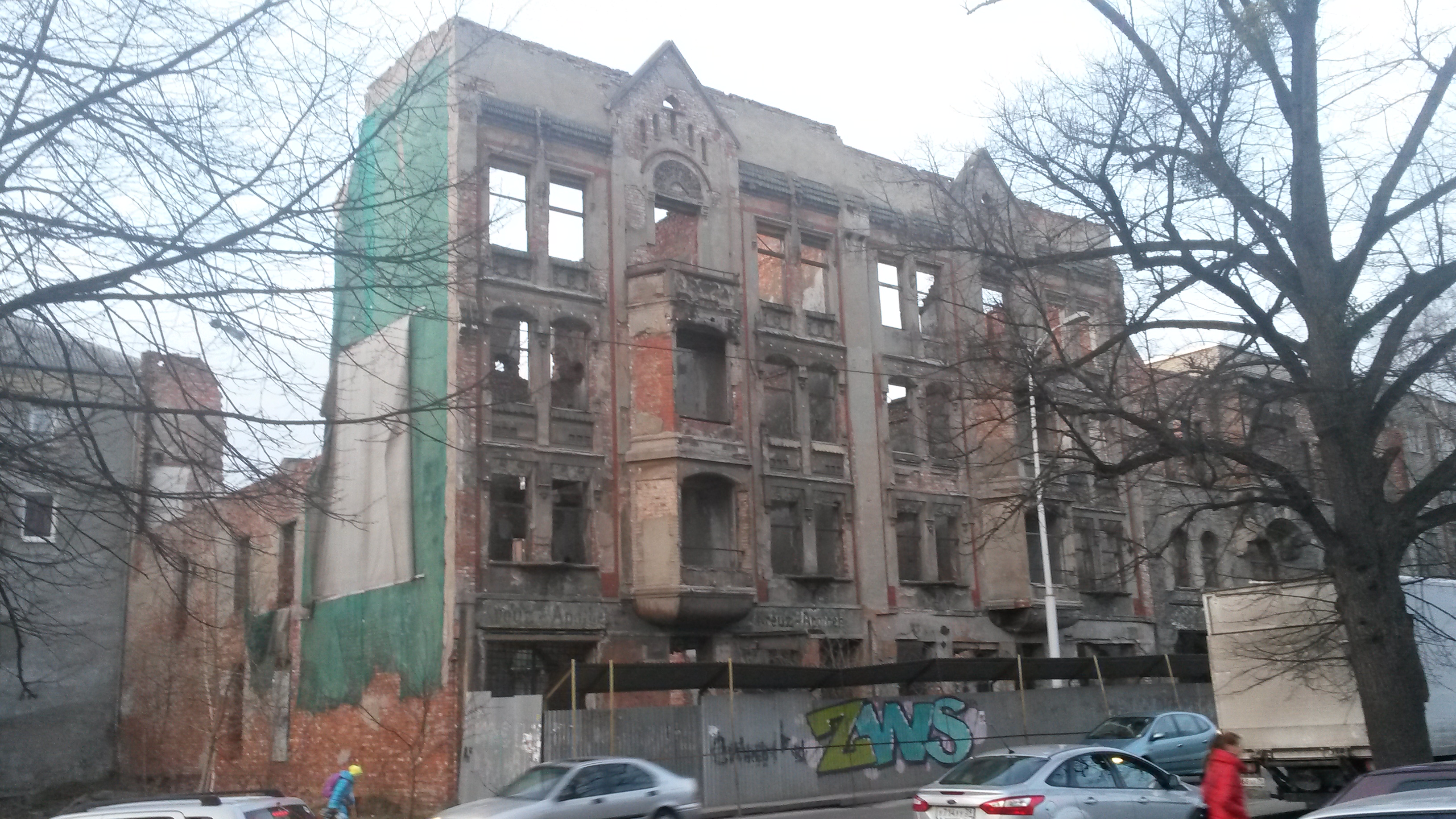
Recently they began to restore the dilapidated castle of Brandenburg. And the once beautiful building "Kroyts Apteki" in the very center of Kaliningrad will probably collapse soon. For many years it is fenced by a fence, a man has already died in the ruins there. But the authorities still cannot decide what to do with it. The city has no funds for recovery. Now from the building with stucco molding on the facade there were only leaky walls.
In Europe, there is a concept of restoration repairs when people live in a building that is recognized as a monument. We have, if this is a monument, then you must restore it, and this is hundreds of times more expensive
A similar story with an old estate near Chernyakhovsky, where the great Russian commander Mikhail Barclay de Tolly died in the 19th century. A few years ago, the Moscow businessman Viktor Baturin bought the estate and almost completely restored the estate. But then the estate was arrested for debts. Now the vandals are knocked out of glass and doors here, the ceiling beams are cut. Officials can not find out the name of the new owner of the building, which means that reconstruction is not yet possible here.
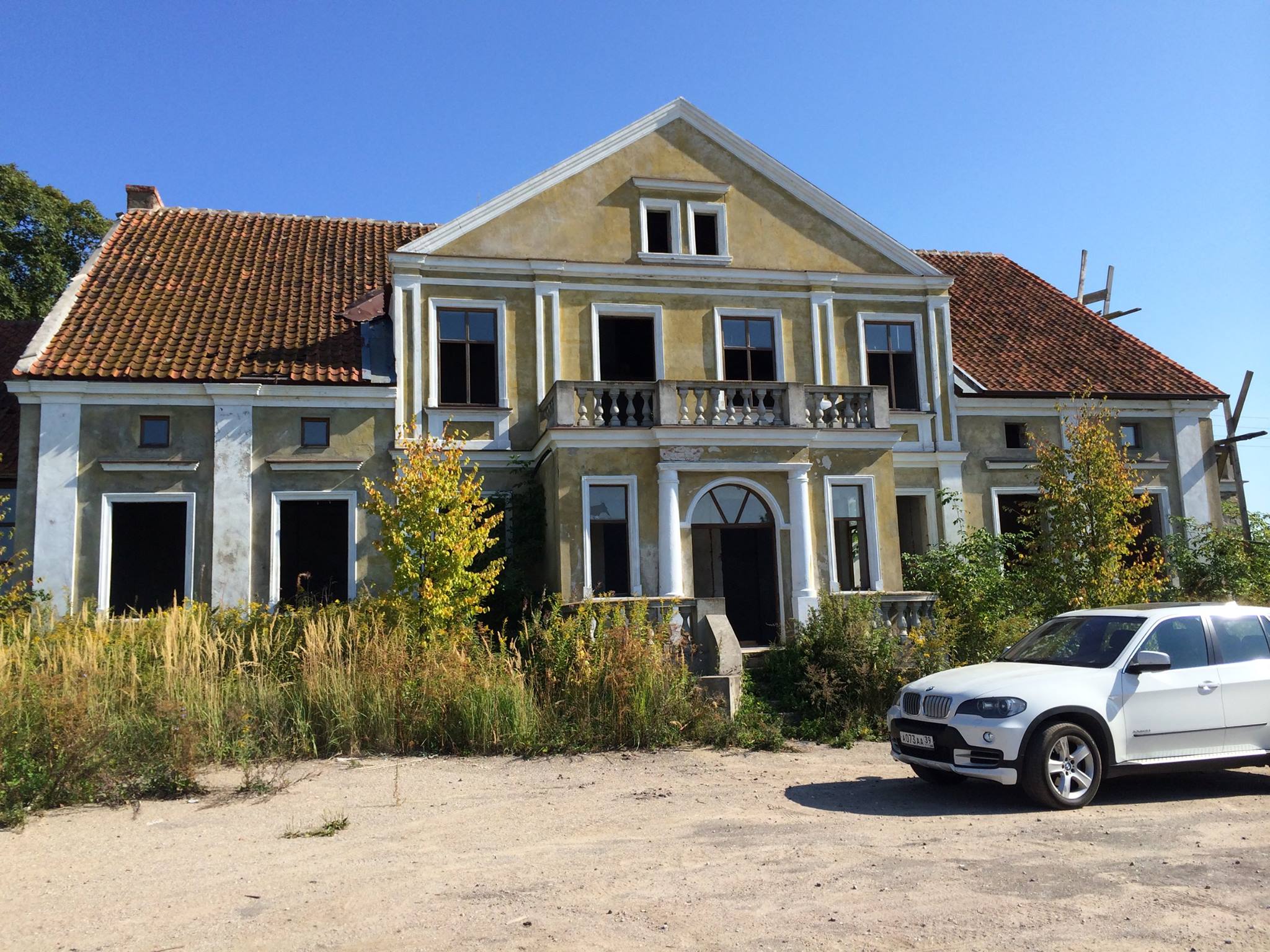
Of the total number of objects of antiquity today, only every tenth has been restored, Anatoly Valuev clarifies. In some cases, when it comes to residential buildings, the situation could save changes in the legislation. In Europe, citizens help to support buildings.
- There the building is given for a symbolic price, if only there was the owner and the object would not fall apart. Or the old quarters in the cities of Europe - there cannot be rebuilt historical objects, but for the fact that people live there, the state pays them. They live in dilapidated, non -modern housing, but they support it, ”the historian emphasized.
“Our legislation is not very correct, in the sense of the“ monument, ”says Alexander Pogadin. - In Europe, there is even the concept of restoration repairs when people live in a building that is recognized as a monument. They can repair it, the only requirement is not to change the type. We have, if this is a monument, then you must restore it, and this is hundreds of times more. It should be a licensed company, materials and attitude should be museum, not everyday. Here is such a gap in the legislation.
In the current economic and political situation, sources of financing for large -scale reconstruction work will be even more difficult, historians say. And today, volunteers are increasingly engaged in the preservation of monuments. After all, soon there will be nothing to restore.