
Translated material
Gaze management
Cultural diplomacy, which is dedicated to the book of Michael David-Fox “The windows of the great experiment. Cultural diplomacy of the Soviet Union and its Western guests, 1921-1941, ”is one of those areas where the Soviet Union belongs to unconditional innovation: when Nazi Germany in the 30s, and from the late 40s, the United States built its own cultural diplomacy systems, they were largely oriented towards Soviet samples-sometimes directly borrowing and sometimes pushing away. Creating new as an alternative. However, the Soviet innovation was largely forced, from the inaccessibility or great difficulty of traditional forms of diplomacy, and where they were available, from the difficulty of finding contacts and effective interaction with state institutions. We only remind that the diplomatic recognition of the Soviet Union Great Britain and France occurred only in 1924, Japan in 1925, the United States in 1933.
And diplomatic recognition in itself was only the first step towards the path of establishing interstate relations - the very possibility of which was under a more or less actualized issue due to the initial attitude on relations on top of the governments, directly to the peoples, postulating the championship of class interests over national and ideas about the Soviet Union as a “socialist country” - the first step on the way to the Beslassic and the Beslassic non -state community. Universalist aspirations immediately came into conflict with the requirements of interstate relations. To the extent that the RSFSR, and then the Union turned out to be necessary to interact with other states, primarily with the Western, the country had to follow the existing norms - but the very essence of the Soviet project was in conflict with the latter: the union was not originally “a state among states”, and, therefore, its adoption of interstate norms, especially in the first decades of its existence, remained conditional, and observance of them, and observance of them, and observance of them, and observance of them, and observance of them As an “imposed order”, it was not conscientious, since the order itself was thought of as hostile - and, therefore, accepted only until there was no actual opportunity to change it.
 © New Literary Review
The Comintern, being a powerful instrument of communist influence and management of the international communist movement, especially in the 1st half of the 20s, at the same time presented as entirely controlled from Moscow-and his activities and activities, respectively, of foreign communist parties acted as aggressive intervention in internal affairs, attempts to build a “fifth column”. Such a strategy - and its perception from outside - represented its advantages at times, but its costs were also very noticeable, when any contact with Soviet political representations or with the authorities of the Comintern was close to identity with the “work for a foreign state”, with subversive activities. It is clear that such a state of affairs seriously narrowed the circle of those who were ready to cooperate and interact with advice abroad - in essence, in essence, those who already belonged to the communist movement or, at least, was very close to him and who was ready to risk their connections in other circles (i.e., in most cases, those who had no such ties).
From this, the Soviet side of the Soviet side in the all-political sphere of interaction flowed from this-at least one where political interest was not clear and unconditional. It is noteworthy that the All-Union Society of Cultural Relations with foreign countries, created in 1925, acted as a successor to the foreign assistance commission (KZP), in turn, which inherited the case of Pomgol and the Central Commission under the All-Russian Central Executive Committee: organized Ara, food assistance was built on fundamental extraopoliness-and this resource of non-political interaction and will be in the same further use the VOKS, involving those who, otherwise, with obvious politicization, would consider such contacts unacceptable for themselves; Politicalization here took place , as it is included in the activity, and not at the “entrance” stage.
From the very beginning, the “social” character of the Voks was a cover - O.D. Kameneva, the head of the KZP, raising the question of the organization of VOKS, wrote in 1924 D.B. Ryazanov (director of the Marx -Engels Institute): "Do you think it is advisable to create a" public organization "?" (p. 81)-in a characteristic way, designating the irony, according to David Fox, eloquating the "social" character. As she wrote, V.V. Kuibyshev on December 18, 1924, regarding the various sections planned within the framework of the VOCS (cinema, scientific, technological, legal, museum, ethnographic and pedagogical), whose work was involved in leading specialists in these fields: “These scientific, literary and other sections give work outwardly social character” (p. 83). But it soon turned out that this decision “allows you to achieve much more [i.e. Not only to serve as a cover for someone else's gaze]: different sections of Voks could involve the most important figures from the relevant branches of knowledge in their orbit, help establish ties with foreign scientists and cultural figures and extend the influence of the organization beyond the possibilities open to its permanent personnel ”(ibid.).
For domestic figures - so different as the indispensable secretary of the Academy of Sciences S.F. Oldenburg and V.E. Meyerhold, - work in Voksa made it possible to contact with foreign colleagues, foreign trips, and obtaining foreign literature. The value of such opportunities increased all the more so since other ways to obtain the same were gradually reduced: if in the mid-20s the authorities were afraid of long-term trips abroad, seeing this preparation for emigration, then by the end of the 20th fears they already caused short-term visits; which began to grow in 1927-1928. The tension in relations with the West, the restriction of contacts encouraged to appreciate the VOKS as an official justification of the latter - and VOKS, for its part, in response, could not only demand loyalty, but also encourage the actions in which he was interested - like participating in ideological campaigns, signing or writing statements, etc.
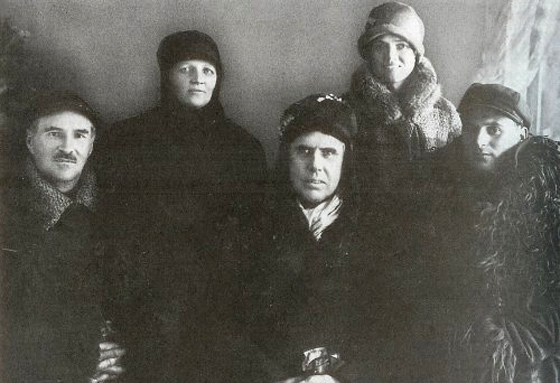 Theodore Dreiser and Ruth Kennel in Stalin (now - Donetsk), 1927
Foreign participants in cooperation with VOVS have a variety of motives - starting from the possibility of obtaining information about Soviet Russia and establishing/restoring ties with local figures to hopes for obtaining certain privileges and advantages from the Soviet side. The experiments of the organization of "friendship" in Western countries were of varying degrees of success - from the most stable in Berlin and Prague with numerous departments in the country to very unsuccessful attempts to organize in Paris and London. As far as one can judge, one of the main problems was the uncertainty of the boundaries of control - on the one hand, Voks sought to involve eminent foreigners into the activities of societies, to influence the cultural circles of the relevant countries, on the other hand, his leading ranks were constantly afraid to lose control of societies, trying to carefully monitor their activities as possible. The problem of this kind is very expressively represented in the dialogue that occurred between the successor of Kameneva according to the head of the VOKS Fedor Petrov and his referent in Central Europe Levitite Livent when discussing the report of the latter (July 17, 1929):
“Petrov: In fact, whose culture, in your opinion, is influenced: ours or them on us?
Levita: In the field of technology, they affect us.
P.: And in medicine?
L.: In medicine, too, but there are other areas, for example, a theater where we have a tremendous influence. I must say that the pyskator, who founded three theater in Berlin, is entirely under our influence.
P.: And in musical terms, on the contrary?
L.: Correctly ... But ... we had a huge impact ... in relation to the cinema. Our exhibition has a tremendous success in Germany ... There is some influence in pedagogically ...
P.: You said that filmmakers are studying with us, but not technology?
L.: In relation to all issues regarding technology, we, of course, learn from Germany, but even despite the weak equipment, our films are considered exemplary ”(p. 327).
Analyzing this dialogue (p. 326–328), David-Fox draws attention to the perception of cultural interaction that is more or less clearly present both in other documents and performances of this time as a competition-a play with a zero sum, when the question is who affects whom-who is the object of cultural influence and who falls under it, while there is no mutual action. Thus, it turns out that in the framework of such an understanding there is no contradiction between the relative “openness” of the USSR of the 20s, changing and different in different areas by a combination of “openness” with “closedness” in the 30s and the apotheosis of the battery of the late 40s and the beginning of the 50s and the beginning of the 50s: the difference is determined not by the initial understanding, but the interpretation of the actual position of things, tactical and strategic considerations-tactical and strategic considerations. The opportunity to win in the competition for influence, the opportunity to do without influence from the outside (for example, the very issues of "technology" that sound in the conversation of Petrov with a referent).
Hence the specific situation in friendship societies from the mid-1920s: ideally, their foreign members had to perceive the Soviet approach and broadcast it outward, the degree of their “friendliness” or “hostility” was measured on a scale of proximity/far to this approach-any oncoming sentence on their interpretation was only difficult to overcome, the interaction was provided. Forced to the extent that it could not be limited exclusively by exposure.
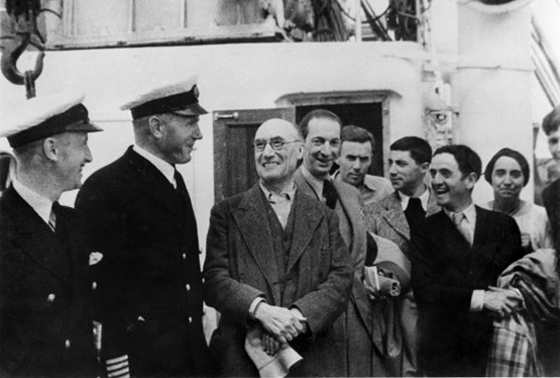 © Bibliotheque Litteraire Jacques Doucet, Paris, France Andre Jew during a trip to the USSR
Accordingly, the most effective situations were those in which the Soviet side initially could not count on direct control - the limiter was inscribed in the initial framework of action, prompting more “thin” forms. A successful example of this kind was the interaction with the Hitych society in Germany: actively developing since 1923-1925. Voks’s ties with this society lasted until 1933, while being far from attempts by ideological dictatorship, since the Society led by Houthch was considering rapprochement with Russia as part of state, diplomatic logic - and not as proximity with Soviet experiment. Hetych himself, who was a monarchist, and then became a “reasonable Republican”, “dreamed <...> about the historically predetermined geopolitical partnership” (p. 124), successfully combining “science with politics, which brought brilliant results - as long as it came to the policy of the Weimar Republic” (ibid.). As a result, the Khtych society became a profitable partner of Voks: in the journal of the company ( OST-EUROPA ), Voks placed its own articles, stipulating the inadmissibility of editorial changes, but adjusting to the nature of the publication-and appreciating this opportunity to break through to the audience, inaccessible to the publication (not to mention the Comintern) of publications. In turn, the Hitych society tried to avoid issues undesirable for the Soviet side, or, in any case, to interpret them as part of vocabulary acceptable for VOKS, to carry out the selection of authors in similar parameters, etc. In 1925, A.A. The rod wrote to Kameneva:
“Of course, you do not have to turn a blind eye to the fact that bourgeois figures and scientists“ located ”to us in the case of any serious crisis in relations between Germany and the USSR are unlikely to protect our interests. But they still will not perform openly, if even we were connected with them in another way. During the conflict last year, many of the members of the “Friends of the New Russia” departed from the [nation] and even left it. Under normal conditions, we have in the hezelchaft (i.e. in the company of prof. Hitych.- M. David-Fox ) a very powerful device that we can use to promote the ideas of convergence among Germany bourgeois circles ”(p. 128).
Each of the parties believed that she had an impact on the other and could (to a certain limit) manipulate it: if VOKS exposed the Hitych society as an example of its greatest success, then, similarly, the society itself enjoyed established ties with the USSR through VOKS to strengthen its influence in the German Foreign Ministry; It is noteworthy that the disappointment of the Soviet side by the end of the 20s was related to the discovery of the fact that the Hyutch society “can only be used relatively” (from the report of the VOKS referent in Central Europe Levitite-Live, p. 130).
The initial goal of VOKS was to acquire new “friends of the Soviet Union” and the preservation and strengthening of the loyalty of existing ones - and one of the main means to this was the organization of visits to the Soviet Union with a visual demonstration of the country's achievements, the destruction of prejudices and the creation of a positive image. Thus, in the foreground, the question of the production of the proper image was found; The means of its creation was, of course, a “controlled demonstration”. The section of the work of David-Fox, dedicated to this problem (chap. 3-5), is perhaps the most interesting, since it goes far beyond the traditional contrast of “illusion” and “truth”, “deception” and the “facades” created. Having studied in detail the technique of “shows” and selection of objects, the researcher comes to the conclusion that:
-Firstly, the elected objects were far from the desire to “deceive” the observer-he was presented with exemplary construction projects, agricultural enterprises, children's communes, etc., while the optics that were sought to transfer to foreign observers, and the optics of the inner gaze and the presenters themselves turned out to be identical or very close. The logic of “samples” flowed from the extreme limited resources aimed at modernizing a backward country - but the “model” was that it was to be distributed, replicated: the direction of movement and at the same time a demonstration of opportunities - the achievements that are possible with the right, Soviet approach; The limited achievement was due to the limited time and resources, while the demonstrated achievement showed the truth of the chosen path and its avant -garde character;
-Secondly, not only the demonstrated object was significant, but also the explanations accompanying it, which should create the appropriate context,-so, one of the usual explanations was a comparison with pre-revolutionary conditions: that which was supposed to impress was the speed of changes in the previous state, and within this framework, and within this framework, other, very unpretentious ones, not only did not interfere with the realities. the impression made, but they were able to strengthen it - demonstrating the world, not yet exposed or subjected only to a low degree of transformative effects;
-Thirdly, the objects demonstrated were (at least in most cases) are radically far from the myth of the "Potemkin villages" [1] : Not to mention the large construction sites and industrial giants of the 1st five-year plan, carefully presented to travelers, colony. Gorky and commune to them. Dzerzhinsky, led by A.S. Makarenko, or Bolshevskaya commune for street children had an independent story, then became exemplary - and only then turned out to be objects of visiting foreign tourists [2] . However, the impact turned out to be far from always controlled: so, contrary to expectations, some foreign tourists, observing large construction sites, noted primarily the abundance of unskilled manual labor, the extremely low level of mechanization, and the persistent propaganda of hygiene aroused their thoughts on the unscrupulousness of the population in need of such propaganda.
For many - if not for all - eminent foreigners who visited the Union in these years, the main relations with their own audience were the reaction to what was happening in their world, and not in the country where they had come.
As a special and extremely significant case, David-Fox analyzes Maxim Gorky's trip to his return to the USSR, primarily a well-known visit to the elephant (the Solovetsky special purpose camp), since both current reviews and the traverse written as a result play on the special status of the author, who acts in relation to the Soviet reality as partly and therefore, can better explain to foreigners Soviet reality, and to better explain Soviet reality. To internal readers give an external look. Печально знаменитый текст Горького оказывается невозможно проинтерпретировать, ограничившись лишь словами о «фальсификации», сознательном «искажении» действительности и т.п., поскольку в этом случае Горький создает целую и по-своему логичную систему описания, которая позволяет эффективно преодолевать неудобные реалии, не погрешая против своих убеждений и представлений о себе как о добросовестном наблюдателе, прокладывая путь к доктрине «социалистического реализма». Ведя речь об «истинном реализме», он противопоставляет его тем самым реализму ложному, ограниченному воспроизведением одной наличной действительности, замкнутому в сферу непосредственно наблюдаемого — и тем самым оказывающемуся «натурализмом»: истинный реализм требует добавления «желаний и возможностей», «революционного романтизма», нацеленного на преобразование действительности, видящего в действительности зародыши, проявления того, чему предстоит восторжествовать в дальнейшем — в том числе за счет воодушевления людей этими романтическими образами, благодаря которым они оказываются способны разглядеть в своем существовании то, чему суждено его превзойти. Это поясняет разрыв, существующий между тем, что Горький видел на Соловках — и что он счел нужным описать:
«Когда Горький описывал Соловки как место перевоспитания, он проигнорировал или обделил должным вниманием многие вещи: массовую смертность от непосильного труда, стремление извлечь из принудительного труда максимум выгоды, наказания тяжелой работой в виде таскания воды вверх и вниз по лестницам, доводившие заключенных до изнеможения, и т.п. < … > Но Горький не просто обманывал — он создал систему самообмана в массовом масштабе. Писатель не выдумывал наличие системы перевоспитания и “культурно-просветительской” работы на Соловках — он усиливал черты нехарактерного образца, который действительно существовал; это привело к переопределению реальности, что явно напоминало методы, при помощи которых иностранцев пытались заставить “правильно” воспринимать стройки коммунизма» (стр. 263).
Тем самым текст, который во многом опирается на практику демонстрации зарубежным туристам и представления вовне, оказывается переносимым к внутренней аудитории — и Дэвид-Фокс демонстрирует, что и в этом случае, и в целом ряде других практики, возникшие первоначально в рамках культурной дипломатии, формирования надлежащего образа у иностранцев, затем оказываются используемы внутри страны — непосредственно или в модифицированном виде, равно как и «образцы» переходят от внутренних пользователей к внешним или наоборот. Впрочем, текст Горького демонстрирует и другую особенность многих травелогов и отзывов иностранцев — они, в свою очередь, оказываются средством коммуникации с Советским Союзом: акценты, расставленные в текстах, положительные отзывы по поводу конкретных реалий или того, что считается реалиями советского мира, призваны зачастую выполнять перформативную функцию — побуждать советское государство к поддержке или сохранению указанных тенденций или поощрять то, что отмечается как поощряемое, — отход от «описания действительности» оказывается средством побудить привести действительность в соответствие с создаваемым описанием. Последнее мыслится возможным в том числе и благодаря демонстрируемой Советским Союзом крайней чувствительности к иностранным отзывам — но эта чувствительность на практике дает мало возможностей к такому использованию, поскольку выступает для советской стороны как инструмент классификации иностранцев на «друзей» и «врагов», а соединение положительных и отрицательных отзывов объясняет, например, «мелкобуржуазным» мировоззрением наблюдателя — направляя усилия на «работу» с ним: иными словами, результат наблюдения, судя по анализируемым Дэвид-Фоксом отчетам работников ВОКСа, интерпретируется как производное от качеств иностранца и работы с ним — а нежелательный результат наблюдения соответственно объясняется недостатками посетителя или провалами в работе с ним, но никак не затрагивает сами реалии.
Хотя ВОКС во 2-й половине 20-х был весьма влиятельной организацией, однако он никогда не обладал монополией на «культурную дипломатию» и на разнообразные формы работы с иностранцами — за границей помимо дипломатических и связанных с Коминтерном каналов (самым известным из которых будет берлинская империя Мюнцберга) присутствовали представительства или организовывались проекты от отдельных министерств и ведомств, внутри страны ситуация оставалась аналогичной, а попытки монополизировать прием иностранцев были окончательно подорваны становлением «Интуриста», когда ВОКС оказался в зависимости от последнего с технической точки зрения: если первоначально «Интурист» иногда затребовал гидов от ВОКСа, то вскоре обзавелся собственным штатом и взял на себя организацию «типовых маршрутов» и т.п.
История взаимодействия «Интуриста» и ВОКСа, рассматриваемая Дэвид-Фоксом, особенно любопытна демонстрацией возобладания экономических мотивов — и тем, как они переплетались с политическими. «Интурист» создавался в 1927—1929 гг. как «коммерческое» учреждение, надежды, с ним связанные, в первую очередь относились к притоку «валютных иностранцев» — и вопросы прибыльности для него стояли на первом плане. Так, ограничение свободы передвижения, навязываемое сопровождение и т.п., служившие снижению неконтролируемых контактов туристов с окружающими советскими реалиями и контролирующие их впечатления, не противоречили экономическим задачам, а оказывались своеобразной напряженной гармонией политических и экономических мотивов: контроль, под который попадали туристы, одновременно ими же и оплачивался, плотный график означал множество экскурсий (например, автоматически включаемую утреннюю экскурсию: от нее путешественник не мог отказаться — и она включалась в счет) — навязанные услуги, каждая из которых предоставляла доход «Интуристу» (стр. 304—305).
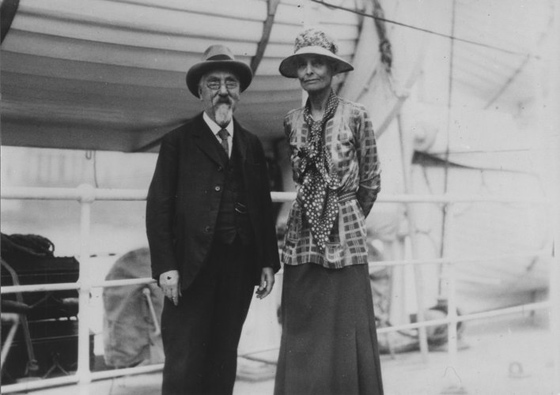 © LSE Library Сидней и Беатрис Вебб отправляются в СССР, 1932 г.
Если в 30-е годы «Интурист» отнимет у ВОКСа массовых «валютных иностранцев», то на ВОКСе останется прием «больших иностранных гостей»: именно на 30-е годы придется череда визитов иностранных знаменитостей с триумфальными встречами, ориентированными уже не столько на зарубежную, сколько на внутреннюю аудиторию. В отличие от привычной схемы «увлеченных» или «ослепленных» западных интеллектуалов, не замечающих советских реалий, Дэвид-Фокс демонстрирует наличие систематического различия между текущими записями, дневниками, отзывами, зафиксированными во время визита, — и последующими описаниями, оставленными путешественниками: иными словами, речь идет не только, а зачастую не столько о том, что они не увидели, сколько о том, почему затем, в описаниях, предпочли скорректировать увиденное. Показательным примером служит случай Драйзера: его русский дневник (1927—1928) полон саркастических замечаний и демонстрации высокомерия по отношению к увиденному, где его раздражало все — начиная от гостиничного неустройства и постоянных бытовых неурядиц до попыток контролировать каждый его шаг и приставить к нему соглядатаев. Но по возвращении в Нью-Йорк он пишет Рут Эпперсон Кеннел, с которой у него был двухмесячный роман во время путешествия по Союзу и которая служила ему переводчиком и секретарем:
«Я почувствовал, что не должен смешивать испытанные мною личные неудобства и свою бурную реакцию на новый мир с действительным ходом дел в России. И в особенности я решил… что мне не стоит слишком уж пытаться помешать идеалистическому дерзанию» (стр. 239).
Предсказуемым образом для многих — если не для всех — именитых иностранцев, посетивших Союз в эти годы, основными были отношения с их собственной аудиторией, реакция на происходящее в их мире, а не в той стране, куда им довелось приехать: восторженные или негативные отзывы иногда в одинаковой мере говорили об отношении к своим делам, а не о происходящем в стране, где они провели от нескольких недель до нескольких месяцев. Восхваление тех или иных сторон советской жизни оказывалось аргументом во внутренних спорах — аргументом тем более сильным, что не только говорили о желательности перемен, но и демонстрировали их осуществимость: это была ссылка на утопию, ставшую реальностью. Зачастую основным предметом интереса, тем, что определяло оценку, оказывался конкретный аспект советской действительности: именно он задавал перспективу остальному описанию, так как последнее призвано было обосновать его, дать способ рассмотрения — как фон в картине. Для Поля Робсона, восторженного поклонника Союза, главным было отсутствие расизма — так что он находил даже сходство между русским и «негритянским» (sic!) языками, а для Андре Жида — освобождение сексуальности, мир, где гомосексуальность больше не является преступлением. Последний случай особенно показателен: для последовательного нонконформиста именно визит в СССР стал поворотной точкой — и восторженный прием, и настойчивые попытки контроля над ним и его свитой, и увиденное им крушение собственной мечты — восстановление криминализации гомосексуальности, наступающее сталинское викторианство и ханжество, то, от чего он бежал всю свою жизнь, — привели к результату, противоположному тому, что ожидали устроители. Так, напечатанные в количестве 300 тыс. экземпляров фотографии Жида привели его в панику, поскольку он лишился возможности прогуляться по городу, где каждый теперь узнал бы его в лицо, а массовая пропаганда его произведений перед визитом продемонстрировала конформность и управляемость вкусов — черты, наиболее отталкивавшие его. В результате он писал в «Возвращении из СССР» (1936), адресуясь к своей устойчивой аудитории:
«Важно не обольщаться и признать без обиняков: это вовсе не то, чего хотели. Еще один шаг, и можно будет даже сказать: это как раз то, чего не хотели» [3] .
Советская же реакция на текст «Возвращения…» привела к закономерному результату — публикации им «Поправок к моему “Возвращению из СССР”» (1937), где Жид высказался еще определеннее — он не был человеком, который менял свои взгляды под давлением, или, точнее, был склонен под давлением поступать наперекор. Как писал он позднее:
«Я бы хранил молчание о печальном и неудовлетворительном состоянии дел в Советском Союзе, имей я свидетельства даже незначительного прогресса и движения к лучшему» (стр. 446—447).
Данная фраза тем более характерна, что может раскрыть логику самоцензуры многих других иностранных наблюдателей: для Жида в отношении той динамики, которая его интересовала, данные были самые неутешительные, для иных авторов дела обстояли иначе — как для Фейхтвангера, призванного по инициативе Кольцова исправить впечатление, произведенное Жидом. Для немецкого писателя основным был антифашизм — о чем он сам прямо и неоднократно заявлял в тексте скандально знаменитой книги, — и здесь СССР в 1937 г. принципиально отличался от западных демократий, казалось, неспособных решительно противостоять нацистской угрозе: в поисках союзников в этой борьбе Фейхтвангер был готов многое оставить «незамеченным» из того, что выходило на передний план для Жида. Для другого знаменитого путешественника, Беатрис Вебб, многие неприемлемые черты советского мира будут объясняться свойствами того «грубого материала», с которым пришлось работать большевикам, — и потому окажутся за пределами книги, дабы свойства, обусловленные местом и временем, не могли быть использованы для дискредитации идеи. Вновь обратим внимание, что речь идет не об «ослеплении», а о вполне сознательном отборе материала — диктуемом и представлениями о направлении движения (горьковский «романтический реализм»), и представлениями иностранной аудитории, которой адресуются эти тексты.
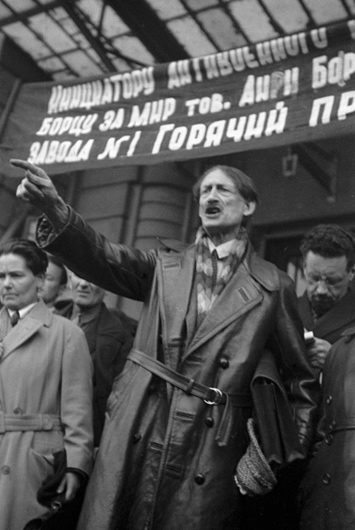 © РИА «Новости» Анри Барбюс во время выступления на одном из московских предприятий, 1930 г.
1937-й оказался последним годом «больших визитов»; к этому времени ВОКС многократно подвергался чисткам и проработкам, но эпоха Большого террора предсказуемым образом прошлась по нему тяжелее всего — в одном из внутренних документов, цитируемом Дэвид-Фоксом, основанием к чисткам служат «связи с заграницей»: примечательно, что автор документа не находит ничего курьезного в обвинении сотрудников «общества культурных связей с заграницей» в наличии этих самых связей. Но именно 30-е оказались временем и наибольших успехов культурной дипломатии Советского Союза — свою роль здесь играли и Великая депрессия, на фоне которой успех Первой пятилетки выглядел особенно впечатляющим, и рост европейского фашизма, пугавший многих интеллектуалов, и одновременно поиск многими правыми взаимодействия с Союзом (популярные в это время идеи право-левого синтеза — для тех, для кого в словах «национал-социализм» вторая часть значила не менее первой), и успех политики Народного фронта: сами иностранные наблюдатели вырабатывали модели описания и объяснения, которые позволяли представить Советский Союз в выгодном свете — для своих читателей и в иных случаях и для читателей советских. Наиболее ярким примером последнего рода стал Анри Барбюс, в конце концов оказавшийся биографом Сталина, нашедший каноническую формулировку «Сталин — это Ленин сегодня», — восхваление, идущее извне, и в реалиях 30-х годов было куда убедительнее для читающей аудитории, чем непрерывный поток внутреннего славословия, подтверждая, придавая авторитет последнему.
Предвоенная пора резко сократила поток иностранных туристов, который с 1939 г. был отчасти компенсирован туристами немецкими — их уже не возили на «стройки социализма», но показывали многочисленные церкви, монастыри да дворцы. В послевоенный же период Союз замкнулся от западного мира: туристы и даже западные знаменитости, не принадлежащие к однозначным сторонникам, т.е. к тем, кого уже не было нужды убеждать, не были особенно желанными гостями. В 1950-е годы ВОКС был закрыт, в 1957 г. его функции унаследовал Союз советских обществ дружбы и культурных связей с зарубежными странами, а при Совете министров СССР был создан Государственный комитет по культурным связям, просуществовавший до 1967 г., когда на смену ему пришел Отдел культурных связей в составе МИДа. Тем самым положение «культурной дипломатии» в СССР оказалось «нормализовано», подчинено по принятой в большинстве стран к этому времени модели ведомству иностранных дел: поскольку Советский Союз к тому моменту не только встроился в «мировой порядок», но и стал одним из двух его основных создателей, то необходимости в особой, выведенной за пределы МИДа системе «культурной дипломатии» уже не было — как, впрочем, и надежд на прорывную роль такого рода дипломатии в отношениях с Западом.
Дэвид-Фокс М. Витрины великого эксперимента. Культурная дипломатия Советского Союза и его западные гости, 1921—1941 годы / Пер. from English. В. Макарова; scientific. Ed. перевода — М. Долбилов и В. Рыжковский. — М.: Новое литературное обозрение, 2015. 568 с. (серия Historia Rossica)
[1] Далекость от мифа о «потемкинских деревнях» приближает к реалиям этих «деревень» — поскольку наблюдатели путешествия Екатерины II в Крым писали о декорировании городов и селений: это было управление взглядом, стремление создать надлежащее впечатление, но на основе существующего; новые поселения Потемкин стремился показать более привлекательными, чем они были к тому времени, — если угодно, это была не фикция, но pokazuha .
[2] Случай Болшевской коммуны особенно интересен в том плане, что известность к ней пришла из зарубежной публикации — статьи Вильяма Ресвика, опубликованной в леволиберальном американском журнале The Nation (в номере от 11 ноября 1925 г.). Статья привлекла внимание уполномоченного ВОКСа в Вашингтоне Бориса Сквирского, направившего запрос в Москву, после чего уже в 1926 г. советская центральная пресса стала распространять информацию о Болшевской коммуне: «процесс, в результате которого она стала образцово-показательным учреждением, был запущен в ответ на международное одобрение» (стр. 272).
[3] Жид А. Возвращение из СССР. Фейхтвангер Л. Москва 1937. — М.: ИПЛ, 1990. С. 91.