
Translated material
Book Review of Marina Efimova
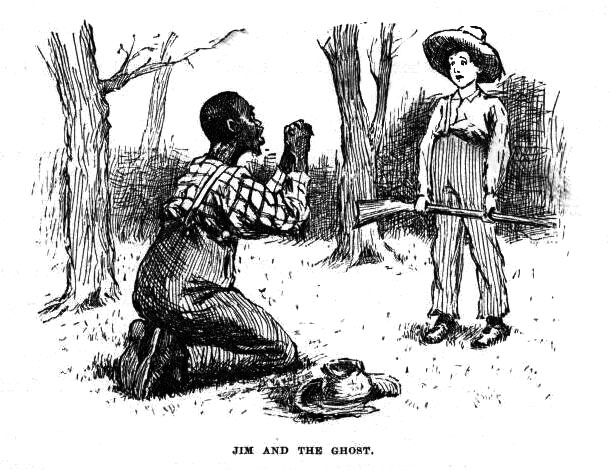
America Huck Finn
Alexander Genis: Hemingway said that the real, not borrowed American literature began with Geklberry Finn, Mark Twain. A new study tells about the fate of this book, which Marina Efimova will present to the audience.
Marina Efimova: The book discussed today is the study of one of the leading specialists in the work of Mark Twain - Professor Butler University Andrew Levy. He called the book "America Huck Finn. Mark Twain and the era that formed his masterpiece. ”
Roman Mark Twain “The Adventures of Geklberry Finn”, published in 1884, is still considered the most read book in America after the Bible and Shakespeare. No noticeable critic doubts that this novel is a literary masterpiece. However, there is no other work of American literature, which, from the moment of its publication and still so many times would be rethought, criticized, overestimated, published with bills, temporarily withdrawn from libraries or was completely prohibited. Sam Mark Twain, apparently, foresaw troubles because he supplied the first edition of the novel with such a warning:
Announcer: “Persons who will try to find motives in this narrative will be put on trial; Persons who will try to find morality in it will be exiled; Persons who will try to find a plot in it will be shot. ”
Marina Efimova: The persecution of the novel “The Adventures of Geklberry Finn” was activated twice: the first time during the life of the author - at the end of the 19th century, and the next time - almost a hundred years later - in the second half of the 20th century. I remember this second period well: the book, despite the undoubted abolitionism of the author, was interpreted as racist and in some places began to be removed from school libraries. The options for such an interpretation still pop up. In the book "America Huck Finn", Professor Levy writes:
Диктор: «Современная борьба вокруг «Гека Финна» - это борьба против «слова на букву Н» (имеется в виду оскорбительное для афро-американцев слово «ниггер», которое повторяется в книге 200 раз – разумеется, в репликах персонажей романа). And since the “Adventures of Geklberry Finn” is traditionally considered literature for children, the abundance of insulting words among many is now doubt about the appropriateness of the study of this novel in high school. However, in those days when the book saw the light (in the 80s of the 19th century), the noise around it was raised in a completely different reason. ”
Marina Efimova: The 80s of the 19th century were in America (among other things) for years of radical changes in relation to society towards children and their education. For the first time, children began to be considered as a kind of social class. A separate area - pediatrics were borne from medicine. For the first time, sites equipped for children's games first appeared. The number of the so -called sharply increased. "Public schools." Reformers defended the principle of compulsory schooling. Conservatives considered this a guarantee of the corruption of the younger generation. The company rose against newspapers that abused detail descriptions of cruel crimes. (By the way, Twain himself agreed with this, who wrote that the newspaper gives him “suicide before each breakfast - like a cocktail, and a murder keeps up with the main dish”). A harmful influence on adolescents is widely discussed by society. DIME NOVELS - penny, boulevard literature. Levy writes:
Announcer: “Now we understand“ Huck Finn ”as children's literature, but with a serious approach to a racial problem. In the days of Mark Twain, everything was the other way around. The book was considered an easy story with a comic black character, in which, however, the author hurts a serious and relevant topic - raising children. According to the concepts of the then reviewers, Roman abounded with ridicule over serious debates about the attitude of society towards childhood. ”
Marina Efimova: And indeed, as if in the peak of the educational seriousness of his time, Mark Twain offered as a medicine “for a small outfit: a glass of soothing tea with a teaspoon of arsenic”. And during convulsions, he advised "To soak the patient in a tub with water for a day." At the same time, his children's characters - both in Tom Sawyer, and in the “Adventures of Geklberry Finn” were not just children, but people. Among them were people with the makings of noble and low, as Levy writes, "both victims and villains."
Announcer: “Twain masterfully described the stubborn reluctance of children to obey the rules, their tendency to blasphemy, their self -sufficiency and open resistance to attempts to“ siblize ”them (as Huck would say). And in those days to take children's literature seriously, write separately about children - about children without adults - meant to take the side of the reformers. ”
Marina Efimova: The fact of the matter is that Mark Twain cannot be dragged to any side. He sincerely sympathized with black slaves, fought for their freedom, but allowed himself and playing a trick on them (as, indeed, over everyone else). Together with the novel by George Cabille Twain, he arranged readers aloud from the novel - dialogues of Huck and a fursful slave Jim, imitating the artistry and imagery of the illiterate eloquence of both heroes. The audience laughed, the moralists were indignant. Famous educators of youthful were pale with horror, reading Twain's jokes about children, but it was he who created immortal children's images: Tom Sawyer, Becky Thatcher, Huck Finn, Tom Kent. Perhaps Mark Twain always remained by himself because belonging to a certain camp inevitably narrows the horizons, prevents him from seeing what is done in the opposite camp. The noble abolitionists of his time were indignantly fought against the plays of the Folk Theater, popular in America of the late 19th century-“Menstrel Show”, where (in addition to other numbers) white comedians, having grown up soot, represented blacks. Levy explains:
Announcer: “Sometimes these comic numbers were mocking, sometimes touching, and always authentic. Young Twain, peering into these common, fair, often brutal (and already old-fashioned) performances, saw that if desired a white man was able to say something important in the voice of blacks, to express that he has on his mind as if he had on his mind. And in the “Adventures of Geklberry Finn” - in this stormy mash of Shakespeare with Sheherazada, the circus with philosophy - Mark Twain imported the Menstrel Show genre into large literature. ”
Marina Efimova: Roman about Gek Finna Twain began to write in the summer of 1876 in Elmir, New York, in a small office, where, in addition to him, several cats lived. His beloved daughter Suzy, then still small - an incorrigible liar and a dreamer, leading a hopeless war with grammar - was the main prototype of Huck. Maybe because his image became so immortal that he was warmed by his father's love of a brilliant author.
Those of Russian readers who were lucky to read the “Adventures of Geklberry Finn” in English, know that the third immortal character of the novel is the language. The text of the novel consists for the most part of the famous monologues and dialogues of Huck and Jim - a semi -literate Missuri boy and an illiterate fluent slave. And from these dialogs, two philosophers (or at least two inquisitive mind) and two hearts, discovered kindness and sympathy. Already at the first meeting, Gek promises not to give out a fluent jim, even if everyone is considered him (as a hek expressed) is a “dishonest apchinist”. Every moment in the novel where hek and Jim say, or mix you, or immerses you in deep sadness. And for their conversations, “like through the veil”, the portrait of America Mark Twain is visible.