
Translated material
Robinson Island
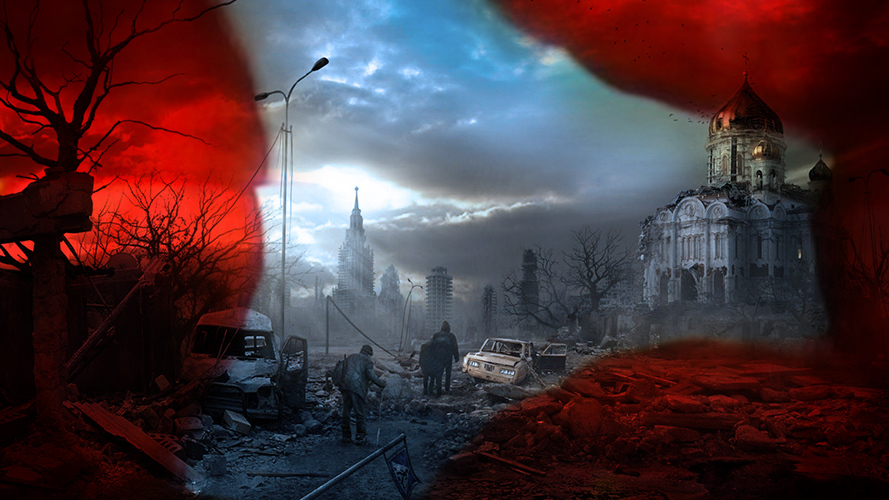
1. No fiture?
"Donmet bea What You Want,
Donmet BeLd What You Need,
There's no future, no future,
No Future for You "
Sex pistols
In a sense, this text is a continuation of articles published on Colta.ru, which occurred with Russian media. Disaster - but only on a much greater scale - the main topic of the following reasoning: some components of a large -scale catastrophe, its mechanism. It will be about banalities that many already know; I will try to place banality in places and see what happens.
What is happening with Russia, especially in the field of public consciousness, is called disaster quite fairly. Let's see what it consists of. The main feature of this catastrophe is the loss of society about the reality of its own existence, economic, social, cultural and political; The far -goed process was the cause of the moral degradation of society. The latter, in turn, makes any public discussion impossible, which gives rise to further degradation. Russian society could not develop the language of such a discussion, it is not able to discuss even simple and pressing problems - first of all, because it does not want to recognize the very existence of these problems. So the patient with the last stage of cancer is sometimes convinced that in the near future all his ailments will retreat and he, having cheerfully jumping up from the bed, will run on ordinary affairs.
A kind of schizophrenia has developed in the public consciousness: everyday difficulties and troubles that the Russian faces are perceived as existing exclusively in his private life, there is nothing to do with the general situation in the country, first of all, to politics, which have no. The political system, power, administrative structure, public sphere - all this exists as if separately from poor medicine, bad schools, corruption and impoverishment. In the second of these spheres-which the Russian only considers the real one-he is inclined to pragmatic to solve his problems by the “obvious order”, and by the first he is indifferent, does not perceive it as something important. Moreover, in the framework of the public sphere, he prefers to express and act irresponsibly, since, in his opinion, what is happening here is in no way connected with his real life. “Real” exists only in everyday life, no general rules of not next.
The main feature of the catastrophe is the loss of society about the reality of its own existence.
All this is the result of the extreme atomization of society, which has both historical, “long -playing” reasons and relatively recent reasons. The first include the consequences of several terrible shocks that have happened to Russian society in the past hundred years, as well as “negative selection” - the basis of the social policy of the Stalin's time (and partly subsequent times). We will not forget the obvious thing: the current population of Russia there are descendants of people who accidentally survived the meat grinder in the imagination, which explains a lot. Sustainable horizontal social ties, the very idea of social, class, gender, generational solidarity - all this is impossible in an atomized society; In it, such connections have a chance to arise only for a short time to immediately disappear without any trace.
Another circumstance, recently, is, as it were, “modern”, but gradually going into the category of “historical”. A neoliberal course played a fatal role and the rhetoric of the nineties accompanied by the “invisible hand of the market”, which the hand supposedly puts everything in the right places and allows all difficulties. “The invisible hand of the market” can sometimes (far from always) work in a society that is traditionally used to realizing their interests, ready to protect and implement them, in a society where there are groups united by ideas about identity and internal solidarity - but not in a total atomized society. In the latter, neoliberal performances lead to the triumph of the most cynical egoism. Without this egoism, the current regime in Russia would be impossible.
Relative reasons should include a conscious policy of the authorities of the past 15 years, which has done everything so that horizontal social ties do not arise in Russia, thereby casting doubt on the famous administrative “vertical”. Fear, coercion and encouragement of the most primitive cynicism to the detriment of public interest - all this had its fruits. The zeal with which power destroys any social initiatives and organizations comes from this; As a result, as already mentioned, in Russian society there are almost no institutionalized manifestations of any significant solidarity-professional, social, any other (except for those varieties that are stubborn by the authorities, such as the semi-criminal solidarity of police officers, secretary services, and so on).
Residents of Russia have no meaningful idea of their own past (personal, family); The “History” itself is considered only as “state”, “ours”, but not “mine”.
As a result of these reasons, Russian society has a weak idea of reality of a different order than personal everyday concerns-about the reality of the existence of oneself as a whole, of the reality of their own socio-political interests, the reality of a complex structure of life outside the country. The indifference (and even contempt) is used by the authorities, which easily manipulates atomized society, replacing the painful (due to the lack of a language that is understandable to all) a public discussion controlled bursts of mass hysteria on far-fetched, artificial occasions. Such a tantrum is given to society easily, for it concerns things that are not directly “ordinary person”, not related to things in the practical sense of not relevant - like the intrigues of America, Lenin’s mummies or the so -called traditional values. The latter are also perceived as something ornamental and does not require any real responsibility. So the strange identity of the new Russian patriot, a kind of kaleidoscope, was formed, in which bright pictures are accidentally composed of random things proposed by the authorities. That is why official propaganda is so successful in Russia-in a sense, it enables a member of the society to “play” with the definition of itself as a “patriot”, without requiring any responsibility for this. Everything is absolutely not necessarily, the kingdom of frivolous arbitrariness.
An extremely important role in this process is played by the past, which has become a rich resource for such a policy. The past is used to justify stupid things or crimes committed by the authorities - as well as a society at the direction or hint of power. An illusion is created that “history” can justify any action, because no moral responsibility from manipulations with the past follows. The past for the current regime is a resource like oil or gas, which should be used in the most profitable way. On the other hand, the inhabitants of Russia do not have a meaningful, detailed idea of their own past (personal, personal, family), instead of it - a set of hysterical reactions on the reasons set by power; The “history” itself is considered only as “general”, “state”, “ours”, but not “mine”. One of the consequences of this was the destruction of the strongest of the types of social solidarity - personal solidarity with their own parents, family and so on. The death of a family member in the Soviet camp does not correlate in the minds of the current Russian with his current praises to people and institutions that organized and carried out this murder. Moral decline and destruction reached such an extent that the parents of the military who were illegally sent to fight in the Donbass and those who died there, relate to what happened as an unfortunate occasion . There is no accidental solidarity in chaos.
In an atomized society, neoliberal performances lead to a triumph of the most cynical egoism. Without this egoism, the current regime in Russia would be impossible.
The result is known: the disappearance of politics in Russia as such - and interest in it. And not only because the authorities destroyed the opposition: society simply does not see any sense in the functioning of the very sphere of public policy. This area is in no way connected with his life, which is why it is better to condemn the irreplaceable power, no matter how cruel, ineffective and corrupt it may be. The attempts of the opposition, especially the unofficial press, are somehow doomed to counteract this for a simple reason: those who disagree are forced to discuss-albeit from a critical point of view, in this case it does not matter-the same agenda that the authorities offers. If the Kremlin says yes, the opposition automatically says “no” - and vice versa. Public policy and public discussion were reduced to the most primitive chosen, which has no rational justification. The disappearance of the idea of reality, the dominance of the irrational and “sincere” (we denote this area of the mental, emotional, in which the priority completely dissolved) - this is what this area is in today's Russia. It is enough to recall the regrettable hype around the “disappearance” of the president for several days - no one except the authorities, such tricks are not profitable, because they demonstrate the squalor of “public discussion” in today's Russia.
The catastrophe automatically excludes the possibility of changes, as it does not imply going beyond its limits. Before us is the kingdom of tautology. In a sense, the supporters of the authorities and the opposition are convenient to follow the current order of things: everything is predetermined, and there is no need to keep in mind the other, someone or something outside the influence of their own point of view. Despite fierce disputes, a genuine discussion is not conducted; The parties do not try to convince each other, they once again convince themselves of their own rightness - and nothing more. Not a single opposition publication is trying to expand the audience and attract opponents to its side; As for the latter, they are all the more satisfied with their position.
Society, which has broken up into atoms, cannot and does not want to understand itself that - again and again - arranges power: after all, in this way it only strengthens its position. No economic difficulties, no social problems are threatened with the position of the current regime, since various social groups and individuals do not perceive these problems as “political” ones. The arising troubles allow one-time-but no one is trying to take on systematically: after all, for this it is necessary to realize that somewhere (and most often nearby) there are the same people who find themselves in a similar situation . In real life, group interest is designed in a political language, understandable for the whole group, and then it is taken into the political sphere. Only in this case there is a real agenda for society - and the ability to embody it in the form of a system of political parties and institutions.
Public policy was reduced to the dominance of the irrational. It is enough to recall the regrettable hype around the "disappearance" of the president.
The basic for the real identity of society, its compounded solidarity is the idea of the future, the image of the future. It should be noted that the future - both for the country and for individual citizens - today in Russia no one is discussing at least constructively. There are many catastrophic scenarios, but this genre itself excludes the possibility of a positive response to a mortal general danger. From the disaster, they either run or humbly wait for it. In any case, no one is building large plans for the future in Russia; Especially such a conversation is avoided by power. Why?
Any serious image of the future proposed by society is based on the present and the way of its perception (of course, we are not talking about utopian projects like communist). If the reality of the present is not perceived by a Russian at a different, except for the domestic level, then there is simply nothing to build such an image. “Future”, to which it is worth striving, or at least focus on it, cannot consist of today's fractional affairs; The future is a complex project, the details of which are selected from working economic, social and political mechanisms recognized by many, are selected from the fact that the members of the company are not rejected as such, pointing only to the need to finalize and improve. Regarding such details of the future, a kind of social consensus must exist today . There are no similar institutions in modern Russia. The state apparatus, judicial system, schools and universities, healthcare, academic science, army, press - almost everything is discredited. In such a situation, we talk about the future where there will be schools or hospitals, police or courts, even ideal, awkward. That is why the authorities do not speak. As for the opposition, she just has nothing to say here. Firstly, she plays according to the rules established by the authorities; This mainly applies to discussions. Secondly, the opposition, with slight exceptions, is based in the capital and is poorly represented by the structure of life outside it (and, even inside, honestly, is also not very good). Thirdly, it is the opposition who prefers to talk about the "catastrophic scenarios" of the future, thereby narrowing its field for maneuver, already very limited. Opposition rhetoric is focused mainly on several persons; At the same time, he is silent about what should happen if, for some reason, these persons suddenly disappear. Everything that the capital's opponents offer power is to replace the bad leaders with good; At the same time - despite the claims to be “democrats” - the opposition actually hope that their requirements of “free and honest elections” will not be implemented immediately. They guess how terrible the results of such elections will be for them and the country today . It is impossible to disagree with this.
The disoriented, atomized, degrading society, cynically entitled, but strategically myopic reckoning power, deliberately destroying its own country, and its shadow, a few opposition that does not want to understand what exactly is opposed to-and, most importantly, for which. The half -dead institutions that have lost confidence, a decaying state system, braided by a network of informal connections and informal interests of groups hidden from the gaze. Loss of international authority and external isolation. This is the result of a 25-year-old post-Soviet history of Russia, which began with calls for a "normal life." It looks like a catastrophic script that could be invented a quarter of a century ago. In this sense, the catastrophe really happened. The question is what to do in this situation-and is it worth doing at all.
2. The common sense of Robinson Crusoe
“Listing the things that I transported from the ship, as already mentioned, in eleven tricks, I did not mention many trifles, although not particularly valuable, but nevertheless served me. So, for example, in the cabins of the captain and his assistant, I found ink, feathers and paper, three or four compasses, some astronomical instruments, telescope, geographical cards and a ship magazine. I put all this in one of the chests just in case, not even knowing if I will need any of these things. Then I came across several books in Portuguese. I picked up them. "
Daniel Defoe. “Life, the unusual and amazing adventures of Robinson Crusoe, a sailor from York, who lived for 28 years in complete solitude on an uninhabited island near the coast of America near the mouths of the Orinoko River, where he was thrown away by a shipwreck, during which the entire crew of the ship, besides him, died with his unexpected liberation with pirates; Written by himself "
The only future of Russian society that makes sense to discuss today is if it is interesting to someone at all-a post-catastrophic future, or rather, its image, obscure outlines. You can even try to imagine the basic elements of such a future - at the most primitive level, of course. Say, we will agree that after some time (ten, twenty or thirty years, in this case it doesn’t matter) the Russian population will expel their food, raise and teach children, avoid suffering, illnesses and death, and not to smoke entertainment. It seems that everything. But where to get the mechanisms that will allow this to do this at the level of the whole society - if they are discredited? After all, the atomization of society at some point (and it is already coming) will not allow a separate atom to perform even such simple functions as a continuation of the genus and maintaining life. So I want or do not want to, but you will have to turn to those who have lost confidence in social and administrative mechanisms. But before - a small remark.
To remove from the shadows, to reformulate and offer society the “History of Russian Freedom and Justice” instead of the “History of the Russian State”.
Образ будущего, пусть даже расплывчатый и не обязательный, не может быть предложен российскому обществу «сверху», «сбоку», вообще со стороны. Его привлекательность, если вообще можно об этом говорить, есть результат его самодостаточности. Образ будущего есть комбинация разных отношений разных социальных групп (прежде всего, способных сформулировать свое отношение и свои надежды) к уже существующей ситуации — кто бы ее ни интерпретировал, власть или оппозиция. Для посткатастрофического российского общества единственный вариант таков (весьма туманный, но все же): этот образ должен складываться в ходе совместной работы социума и тех, кто может профессионально оценить его состояние, содействовать разработке языка общественной дискуссии, помочь сформулировать интересы различных групп. Иными словами, условием появления действительно притягательного образа будущего является создание рамок и способов его обсуждения. А теперь вернемся к механизмам сегодняшней российской жизни.
Эти механизмы надо не только определить по типу «хорошие» или «нехорошие», «непорочные» или «дискредитировавшие себя» (или даже «дискредитированные»); следует узнать, что они на самом деле собой представляют сегодня. Вот действительно нужная и достойная работа: тщательно описать и изучить механизмы функционирования российской жизни на низшем и среднем уровне — как на самом деле устроена система местной власти, как работают школы, больницы, учреждения культуры, кто там трудится, на какие доходы в действительности существуют учителя, врачи и библиотекари, какова реальная экономика мелкого и среднего бизнеса, нарисовать социальный портрет тех, кто идет контрактником в армию, выяснить, на чем строится материальное благополучие работников силовых структур и бюрократии, и проч. Безусловно, этим уже давно занимается немало социологов, экономистов и представителей других профессий — разве что «политологов» я бы исключил, их подобные вещи вообще не интересуют. Все верно, но такого рода работа, такого рода знание имеет сейчас в России чисто академический характер и не претендует на выход из довольно узких рамок академического описания отдельных феноменов, не становится общественно значимым (да и просто общественно известным) фактором. Работа, которая может способствовать пониманию обществом самого себя, — вообще не академический проект, скорее последовательная серия обсуждений с участием представителей разных социальных групп и — конечно же — социологов, экономистов, журналистов и проч. Обсуждения эти могут постепенно расширять социальный охват, фокусироваться на все большем количестве разных тем, в идеале — превратиться в постоянный процесс, все время присутствующий в медийной — и даже повседневной — жизни. В результате возникает возможность нащупать реальную жизнь российского общества, что включает шанс для самих членов этого общества понять себя, приблизиться к собственной реальности. Кроме того, в ходе подобных дискуссий вырабатывается соответствующий язык, который в конце концов будет способствовать осознанию разными социальными группам своего интереса как политического. С этого начинается grassroots movements and politics .
В России больших планов на будущее не строит никто. Why?
Следующий пункт можно было бы назвать «работой с прошлым». Многим очевидно уже сейчас: пока не поздно, следует остановить постыдное использование истории России в качестве ресурса и инструмента идеологической манипуляции. Этот прискорбный процесс стал возможен, прежде всего, благодаря глубокому историческому невежеству, причем в данном сюжете и власть, и общество в России находятся примерно на одном уровне. Так что речь идет о разновидности просвещения, но только отчасти. Важнейшая задача: вывести из тени, переформулировать и предложить обществу «Историю российской свободы и справедливости» вместо «Истории государства Российского». Опять-таки перед нами не чисто академический вопрос, хотя задача эта тесно связана с высоким гуманитарным знанием. Чтобы начать действовать в этом направлении, нужно трезво представлять себе нынешнее положение дел. В учебниках, в госпропаганде, в головах подавляющего большинства населения страны царит государственническая, мифологическая концепция прошлого страны, по сути — история смены правителей и трансформации государственных институций (специалисты называют это «историей Иловайского», по автору дореволюционного учебника). В советские годы — после того как Сталин вернул преподавание истории в учебные заведения — такая разновидность истории господствовала, будучи лишь слегка изменена и дополнена «классовой борьбой» и цитатами из классиков марксизма-ленинизма. В постсоветское время подобный подход окончательно восторжествовал, причем в самом архаичном виде; более того, именно такие представления оказались наиболее популярны в обществе, ибо они лучше всего отвечают прагматическим целям и задачам власти, составляя базу для столь мощного инструмента официозной пропаганды, как медийная поп-история. Таким прошлым легче всего манипулировать, вытаскивая из него на всеобщее обозрение ту или иную известную историческую фигуру, одновременно развлекая и индоктринируя публику. В этой истории нет места для истории социальной, для истории разных народов, населяющих Россию, отодвинута на второй план региональная история, наконец, отсутствует совершенно иная российская традиция — традиция справедливости и свободы. Традиция справедливости и свободы осторожно использовалась (и даже пропагандировалась) в советское время, однако была дискредитирована как способом ее преподавания и изучения, так и ее местом в советской идеологии. Радищев, Чаадаев, ранние славянофилы и западники, Герцен, Чернышевский, народники, либералы и социал-демократы начала XX века — большинство из них в советской исторической концепции выполняло роль близоруких предтеч большевизма, как бы лишаясь собственного места и уникальной ценности; в результате вместе с крахом советской идеологии эта линия — мощная, живая, сложно устроенная и потенциально плодотворная, ибо объединяла идею «свободы» с идеей «справедливости» (прежде всего, социальной), — ушла в тень. Замечательный пример — скромно отмеченное столетие смерти Льва Толстого. Толстой оказался опасен и власти (противник официального православия, анархист, беспощадный критик милитаризма, классового общества и так далее), и либеральной оппозиции, для которой он слишком радикален и пугающе враждебен к «культуре».
Все, что предлагает оппозиция, — заменить плохих руководителей хорошими; при этом она надеется, что ее требования «свободных и честных выборов» не будут реализованы немедленно.
Почти все созидательное, действительно полезное, осмысленное из того, что произошло с русским обществом и русским общественным сознанием в последние два века, связано с представителями «истории свободы и справедливости», с их идеями и их деятельностью. Точно так же в тени осталась социально-демократическая линия советского диссидентства — в отличие от религиозной и националистической. Образ будущего российского общества невозможен без «истории российской свободы и справедливости» — никто больше представителей этой традиции не способствовал тому, чтобы Россия лучше узнала сама себя и свое действительное, а не воображаемое, место в мире. «История свободы и справедливости» ждет того, чтобы ее переоткрыли, предъявили без помпы или сентиментального придыхания, представили в качестве живой, актуальной, а не покрытой академической патиной.
Наконец, последнее. Чем же может функционально стать образ будущего, о котором идет речь? Прежде всего, точкой сборки самых разных идей и представлений о трансформации общества и государства. В таком случае важность этих идей и представлений оценивается не с позиции их сегодняшней практической применимости, а исходя из соответствия, даже устремленности к угадываемому образу будущего — не утопическому или катастрофическому (не забудем, катастрофа уже произошла), а тому, что исходит из здравого смысла.
Сегодня здравый смысл применительно к российскому обществу можно было бы определить как комбинацию самых разнообразных движений в следующих направлениях: обрести представление о себе самом, «вернуться в реальность» собственного прошлого и настоящего (постепенно вернуться, ибо атомизированное общество не вынесет мгновенно поставленного перед ним зеркала), в процессе обсуждения выработать свой собственный язык, свою собственную повестку дня, не зависящую от фронтов нынешней «холодной гражданской войны». В результате может возникнуть хотя бы намек на общественное согласие по поводу того, к чему действительно следует стремиться, на молчаливое принятие некоторого набора целей. До поры до времени эти цели находятся вне сферы политического. Пути достижения таких целей у разных социальных, этнических, гендерных, конфессиональных групп разные; каждая из них формулирует свои интересы и способы их достижения — оказавшись тем самым уже в политической сфере. Вот с этого момента консолидации разных социальных групп на базе взаимного признания интересов других (и на основе разделяемого многими языка общественной дискуссии) в стране может начаться настоящая политика. Эмоциональная, реагирующая, бульварная, истерическая повестка дня, навязанная сегодня властью обществу, имеет шанс смениться реальной. Шанс, впрочем, небольшой.
Раздраженный читатель спросит: мол, хорошо, но кто все это будет делать, кому это нужно? Ответ простой — любой, кто, подобно Робинзону Крузо после кораблекрушения, захочет выжить и устроить себе и окружающим новую, человеческую, просто хотя бы какую-нибудь посткатастрофическую жизнь. Крушение обнуляет почти все, что было до него, включая привычки людей. Лучшим другом Крузо оказался каннибал, сменивший в силу новых обстоятельств диету.