
Translated material
One hundred billion on one wing
Superjet can absorb any amount of additional funding
Superjet can absorb any amount of additional funding
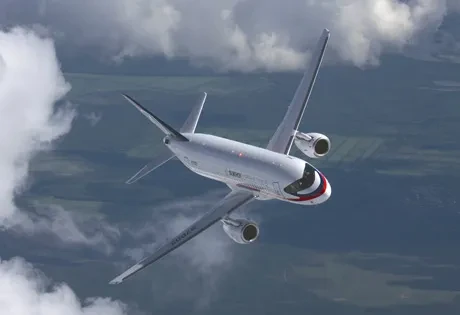
Last Friday, Vladimir Putin said: “They decided yesterday again to complete our civilian component in aviation, our UAC, another 100 billion rubles.” The president said these words at a meeting with Internet entrepreneurs, advising them to join the work in the field of civil aircraft.
Comments immediately appeared that 100 billion rubles-the next influence of the state into the Sukhoi Superjet 100 project (SSJ-100), although we note that the president did not say this long-suffering airline in a word. He said “as a whole”: “The civilian part of the aircraft industry has always been in the Soviet Union as if in second place after combat aircraft, and we need to develop the civilian unit, they should develop together.”
The information that the lion's share of 100 billion rubles will be sent to CJSC Sukhoi Civil Aircraft (GSS)-the manufacturer of the SSJ-100 aircraft-“leaked” from the GSS itself, where they are sure that the money will go first of all to support SSJ sales and subsidizing the transfer of these aircraft to leasing to small airlines. Another part of the money will be aimed at organizing the process of replacing imported components, the share of which in the SSJ-100 is about 60%.
But the types of top management of the GSS for the development of 100 billion rubles personally seem to me ghostly. And that's why. The process of replacing imported components cannot be organized for several months, years can take this. And the problems have arisen today.
Here is a list of only some suppliers of components Sukhoi Superjet 100:
Avionics —thales (France);
management and life support system - Liebherr (Germany);
chassis - MessierDowty (France);
Fuel system —intertekhnique (zodiac) (France);
interior and oxygen system - b/eaerospace (USA);
Fire system - Autronics (Curtisswright) (USA);
power supply system - Hamilton Sundstrand (USA);
Engine vibration sensors-Vibro-Meter (Switzerland);
wheels, brakes - goodrich (USA);
The French company Thales, which supplies Avionic for the SSJ-100, is already experiencing difficulties with the purchase of American components for its products, because the USA consider these details to double products, and the United Aviation Corporation, which includes the GSS, is better known as the manufacturer of the SSJ-100, but an enterprise that produces military fighters.
If with individual details for the production of components intended for the SSJ-100, the French Thales have difficulties, suppliers from the USA and Germany most likely experience the same problems.
Under these conditions, the investment of tens of billions in the SSJ-100 project looks like a waste.
Moreover, in January of this year, SSJ-100 lost his chief lobbyist Mikhail Pogosyan, who released the position of President of the UAC.
Poghosyan for many years was considered a person who supported the myth that the SSJ-100 is able to occupy up to 25% of the global market of close-range passenger aircraft. It was this myth of the upcoming expansion of Russia to the world civic aircraft market that made it possible to turn the Sukhoi Superjet 100 into a superpoles, which absorbs more and more financial injections. Three years ago, in February 2012, the Novice investigation department, having analyzed the direct budget financing of the airliner, receipts from “firm contracts” and loans received by the GSS, calculated that the astronomical amount was spent on the production of SSJ-100-about 7 billion dollars. By the way, direct competitors of Sukhoi Superjet 100 to launch their aircraft into serial production required 1-1.5 billion dollars. We are talking, for example, about manufacturers of the Brazilian Embraer 190, Canadian Bombardier CRJ900/1000, Chinese ARJ21, Japanese Mitsubishi Regional Jet 90 ER. At the same time, for example, by the beginning of the serial production of the Brazilian Embraer 190, a package of truly “solid” orders for 900 aircraft was already formed .
It seems much more likely to me that the lion's share of 100 billion rubles will be aimed at paying off accounts payables. For example, a substantive bank, the manufacturer Sukhoi Superjet $ 100 $ 100, a Sberbank - a little less, only $ 600 million. But since the foreign exchange revenue in the conditions of frozen sales and intensifying sanctions will have to be forgotten, it will be possible to pay off the state banks only at the public expense.