
Translated material
"Putin is not Bismarck"
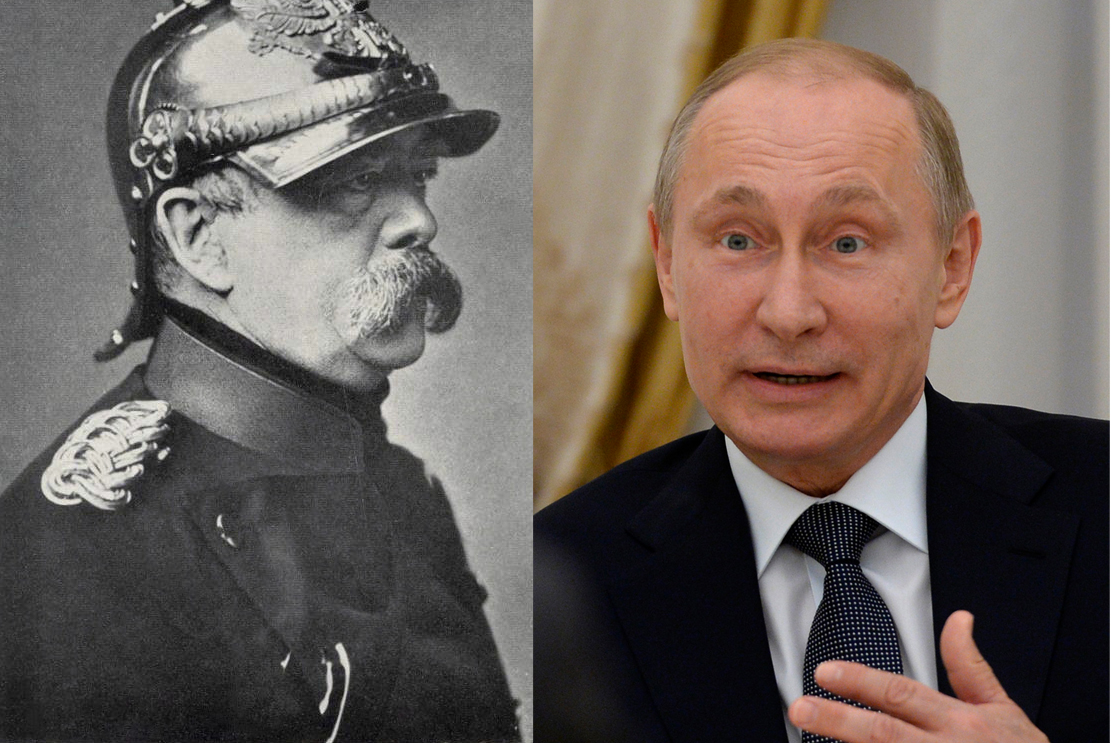
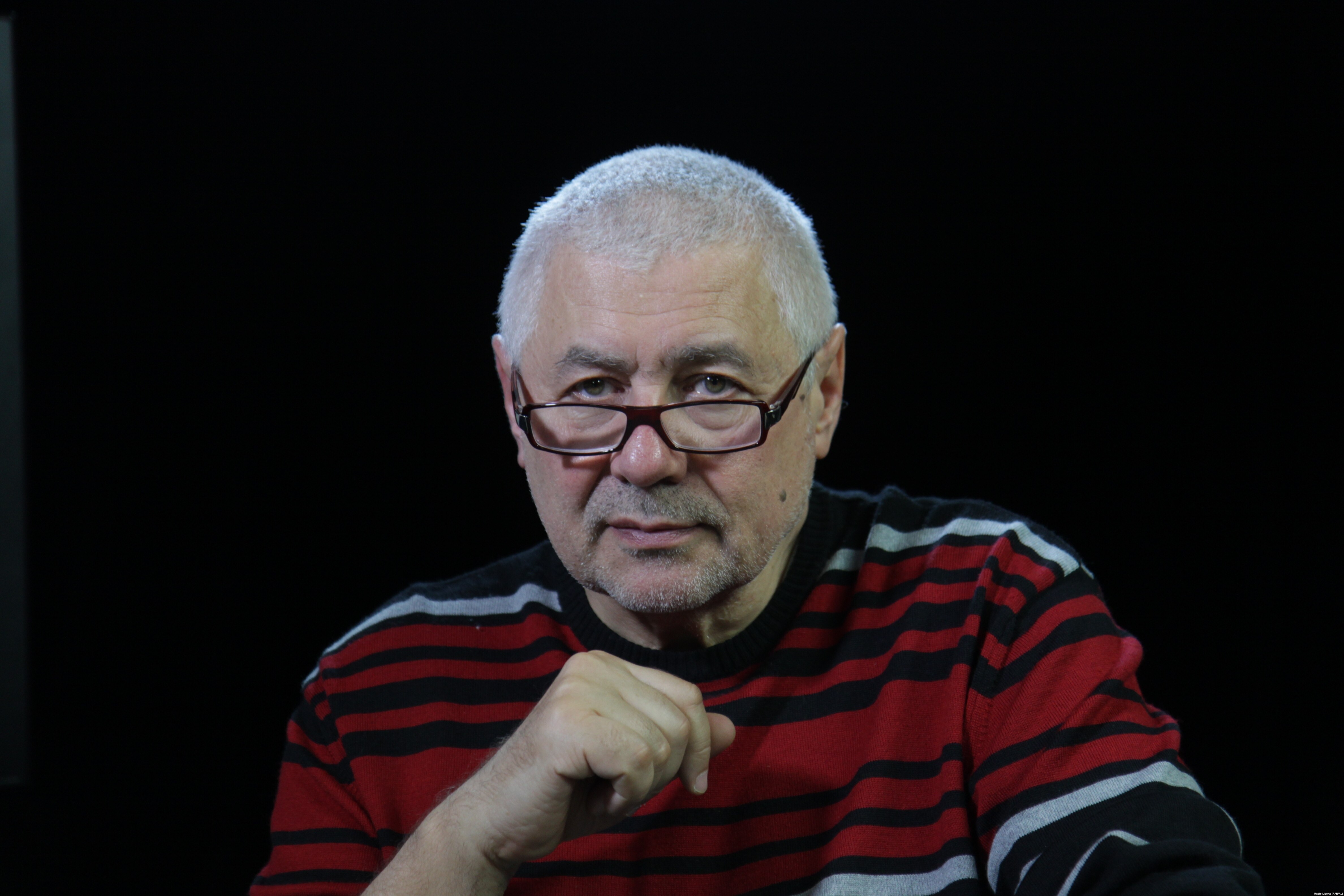
Gleb Pavlovsky and Yaroslav Shimov-about the failure of the foreign policy of Russia and the 200th anniversary of the inventor of Realpolitik Otto von Bismarck
On April 1, the 200th anniversary of the birth of Otto von Bismarck , the first in the history of the head of the United Germany, nicknamed the "Iron Chancellor" and is considered the founder of the concept of "real politics" . Realpolitik is a state course not related to any ideology, but built on the basis of practical considerations and specific benefits for the country in the world arena. Russia of the era of Vladimir Putin is an example of the unsuccessful application of the principles of RealPolitik if such a term is generally appropriate for the characterization of today's foreign policy of Moscow, says political scientist, president of the Effective Policy Fund , Gleb Pavlovsky . However, experts close to the Kremlin often use this term - as an appraisal adjective, without a deep understanding of its meaning in the context of different eras.
- Real politics is to defend the political and national interests of the state, regardless of ideology and allied obligations. What unites “realists” politicians in all eras? How did the term realpolitik use in diplomacy and in the diplomatic struggle in the 19th century and are used in our time?
“In the 19th century, when the term realpolitik arose (primarily in relation to Bismarck and partly to the emperor of France Napoleon III ), he meant, first of all, the rejection of the previous balance of power, the former “ Viennese ”European order ,” Gleb Pavlovsky believes. - This, on the one hand, was the discovery of how easy it is to act, when you “cross the norms” - accepted, in any case, in the middle of the 19th century. On the other hand, time showed that one who does not adhere to these norms is beneficial only until the inertia of the previous situation remains, until everyone else understood that they could do the same. In this sense, Otto von Bismarck, his Realpolitik, lowered the stone from the mountain, ultimately crushed this stone - his brainchild - the German Empire. Today, of course, Realpolitik has a completely different meaning. By the way, Bismarck was not at all inclined to rhetorical twists, to demonstrations and brilliance. He was simply a virtuoso politician and diplomat, but the system that he built was suitable only for such a director. When Bismarck left, this system began to fall apart and led, in general, to the First World War, to the "end of Europe". Today, I think, Realpolitik is a term from the field of memories, and an analogue for our time is only the level of "neglect of the previous forms of politics." This is also in fashion today, primarily in Russia, although not only in it.
- The history of European and world politics - until the 19th century and the era of Otto von Bismarck, and after - did not differ in the dominance of moral and ideological principles over benefit. Although they all covered them and always. Is it possible to judge politicians for looking for benefits - for themselves and for the state? Indeed, today, at least in Russia, Realpolitik is often a negative term, primarily a reproach towards abroad: "This is with them, this is not with us!"
- It is pointless to discuss the Russian not even foreign policy, but propaganda, since it not only does not cover anything - it is very ill! Russia is a sample of unsuccessful use of Realpolitik. But if we talk about past eras, I would object: after the defeat of Napoleon, Europe became a continent, which was for a long time, almost half a century, freed from the great war of the great powers. It is precisely due to the fact that politicians adhered to approximately the same values. Today, we would not like many of these values-legitimism, the “Brotherhood of the monarchs” and the like things, but the Holy Union by the agreements of 1815 in a sense was created by the 19th century, which is recalled by amazing economic and cultural development. Politicians are cynical - but they are not infinitely cynical! Endlessly cynical politicians lose, because they simply do not agree with them, because they know that such agreements are worth nothing.
Russia is a sample of unsuccessful use Realpolitik
Politics is always a balance. The thesis of Cardinal Richelieu is known about what the difference between the moral of the state and the moral of people: "A person has an immortal soul and will answer before the Lord, and the state is mortal, and if he does not save him today, then tomorrow he will not be." This also has a certain reason. Politics balances between these two positions, but it should not completely turn into cynical maintenance of current interests. Because in this case, the state loses the strategy, and the one who does not have its strategy falls into the power of a stranger strategy.
Gleb Pavlovsky and Yaroslav Shimov-about the failure of the foreign policy of Russia and the 200th anniversary of the inventor of Realpolitik Otto von Bismarck
- The ideologists around the Kremlin (although not the Kremlin power itself) build their concepts on the slogans of the national “Russian world”, “powers and its environs”, fastened by a single national spirit and history. On this basis, they urge to pursue a policy that is beneficial to Russia, while talking about morality and the idea with a capital letter. Are there any contradictions? Simply put, who is confused in what?
- The foreign policy of Russia is now in a failure, in one in which it is even pointless to kick it. All possible errors have been made, they are piled on one another. The worst in Russian politics is its vocabulary, a completely meaningless and worsening position of the state. Because the country that proclaims the slogan “I do not need no one, I am self -sufficient!”, - loses friends. Russian politics undermines those few unions whose participants are Russia. We see how - carefully, of course, - but even such reliable allies as Belarus and Kazakhstan begin to crawl to the side. At the same time, Kazakhstan goes into the shadow of China approaching Central Asia. Not because China wants to capture these territories. Beijing only fills the artificial vacuum , which Russia, with its rhetoric, its aplomb, creates - and which, of course, will be filled with others. And in this sense, the worst that Russia can wait is strategic dependence on China. This, perhaps, is also not a tragedy from the point of view of world history, but this is not too pleasant for the current generation of politicians and citizens of Russia.
-So who is still sitting in the Kremlin today-politicians-“realists” or politicians-“moralists”, figuratively speaking, in words and in practice? Who was President Vladimir Putin who became and who became? Especially in the context of the events of the last year, the situation in Ukraine, the introduction of Western sanctions and other things?
- I do not see realism in our politics at all. It is not realistic, except in only one aspect: in the use of the weaknesses of the existing world system. And the world order is certainly weakened, and it is easy to dispute. But what is the realism to undermine the very system, the very order that has defended your own security over the past 25 years?
The worst in Russian politics is its vocabulary, completely meaningless
If we return to the analogies with the 19th century, we recall Napoleon III, who was full of geopolitical fantasies, loved the theme of greatness very much and spent an active, and terribly unsuccessful, as a result, foreign policy. Her failure cleared up at the end, Napoleon III was considered a genius for a long time. Because he set the task of destroying, and destroyed, the previous order after the Vienna Congress, believing that the agreements signed there are binded by France. And in the end, it turned out that France defended this order - after all, it turned out to be one on one against Germany Bismarck. It is known how it ended - for Napoleon III and for France. We see something similar today. To talk about realism and even more funny discussions about the "moral grounds" are destroyed by the system of relations in which Russia, good or bad, but safely existed, with the boundaries recognized by the rest of the world. Today we can congratulate us on the fact that we have unrecognized boundaries - and this can hardly be recognized as an achievement, ” Gleb Pavlovsky is sure.
The historian of the countries of Central and Eastern Europe, the radio observer, Liberty, Yaroslav Shimov, recalls that Otto von Bismarck, unlike most politicians who tried to follow his example, was able to combine goal -setting and more effective and strict ways to achieve their goals, while not looking too much at the ideological principles that were very important in the XIX century:
Bismarck did not like the liberal ideology, but the goal - to unite Germany - seemed to him both necessary, and correct, and possible
- Bismarck managed to do something that many did not succeed before him, namely, to cross the energy of German nationalism and the state tradition, primarily the Prussian, which he, as it were, “put on” Germany united by his efforts. Solving real political tasks, Bismarck at the same time was abstracted by the fact that the nationalism of the mid -19th century, including German, should have been liberal. Bismarck did not like the liberal ideology, but the goal - to unite Germany - seemed to him both necessary, and correct, and possible. And he used to achieve this goal all those methods that he considered necessary, not stopping at either ideological obstacles, or before the most traditional, to put it mildly, from a purely diplomatic point of view, techniques. For example, a well -known story is recalled about how Bismarck provoked France to announce Prussia and the German Union of War in the summer of 1870 - slightly correcting the published text of the report on the conversation of the French ambassador with the king of Prussia.
Gleb Pavlovsky and Yaroslav Shimov-about the failure of the foreign policy of Russia and the 200th anniversary of the inventor of Realpolitik Otto von Bismarck
- What role did Bismarck play the scale of the personality of the personality that he was remembered after so many years? After all, there were many politicians who acted in the same methods as he, cunning politicians, in that era.
- Bismarck was a master of his work - political and diplomatic - and primarily a very effective politician. The result of his activity was not only impressive, but also very long -term, since the unification of Germany largely determined the nature of the entire European policy for many decades ahead. What Bismarck’s successors did, to what extent they followed or did not follow the line that he chose - this is a separate conversation. Rather, they did not follow, in many ways. But, nevertheless, the most important matter of life Otto von Bismarck is a united strong Germany in the center of Europe - still vividly. What do we see now? United Germany, albeit in a slightly different borders, in the center of Europe, which is an economic and political engine of the EU. I think that Bismarck would be glad, looking at today's Germany.
- Each time, speaking of historical figures, you think that mass culture and the Internet are able to simplify anything and turn a historical person into a comic book. The figure of Bismarck in world history today, in the mass consciousness, is this a mythical image? Or is it a real person who is simply evaluated in different ways, in accordance with the ideas of the new era?
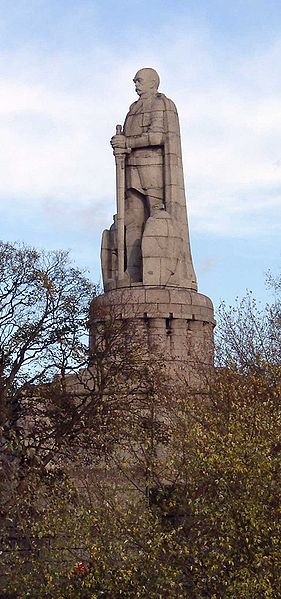
- Bismarck was a bright and ambiguous person. But the mass consciousness is very fond of drawing comics, especially since the successors of Bismarck were very actively drawing themselves. I will mention only one famous thing: in the propaganda of the Third Reich, posters with the image of Friedrich the Great , Otto von Bismarck and Adolf Hitler were used. Such a line was drawn-"three great builders, the fortify and the expander of Prussia-Germania." Of course, this is nonsense, because each of these leaders solved different problems in different historical eras and very different methods. If Otto von Bismarck looked at the main provisions of Hitler’s policies, he would hardly have respected them approvingly. Not for moral reasons - for purely political. Yes, Bismarck is largely turned into a comic book, into an iron chancellor with a Prussian helmet on his head, with a magnificent mustache, although in fact he was by no means an iron person, but a nervous one, with a large number of different ailments from a rather young age. In his life there was a lot of physical and mental troubles and even suffering, which he, possessing really an iron will, overcame - and by the end of his life he created the image of a patriarch of politics. And this image towered so much over the whole of the then German political elite that when Otto von Bismarck, the young emperor Wilhelm II then resigned (also without a competition with the Patriarch of Politics), one German magazine published a caricature of Bismarck’s successor, Chancellor Leo von Caprivi : the new Chancellor drowned in Bismaric saps, In his helmet and uniform, as far as they were not in size.
- If we compare political realism, I will now use a slightly different, although similar term, in world politics in the 19th century, in the XX century, in our XXI century - what changes in the rhetoric and interpretation of this concept are the most noticeable?
- There are diplomats and leaders who are primarily considered adherents of politicians as an art of possible, that is, do not burden politics with ideological principles or in advance goals, but this is a very colorful row. Here we can recall, for example, Henry Kissinger , who achieved the normalization of the relations of the United States and China, the so-called discharge in the 70s of the XX century between the United States and the Soviet Union. At the same time, the US presidential administration, which Kissinger served, supported very low -sympathic regimes in different regions of the world. That is, it is a flexible game to achieve the goals.
The current Chancellor of Germany, Angela Merkel, can also be considered the highest realist
But on the other hand, for example, the current German chancellor Angel Merkel can also be considered the highest realist. She carefully leaves any Visions, large concepts and theories, is engaged in the affairs of today and seeks ways to the most effective solution “here and now”-of course, looking at tomorrow, but only so that the design she will create today does not collapse quickly. Bismarck probably acted a little differently, maybe simply because he lived in other conditions, in another era, when the changes were not so fast, and the rhythm of life, including political, was not as rapid as it is now. But the ability to find the shortest path from point A to point B from a political point of view - it is rather unites politicians of such a direction, and not some neglect of moral principles that they are usually attributed to them. The same Merkel does not neglect the principles - if we take, for example, her position in relation to the Ukrainian crisis, says Yaroslav Shimov .
-

Alexander GOSTEV
The editor of the RS information service, international observer, author and editor of the heading and podcast "Atlas of the World"
Gosteva@rferl.org