
Translated material
Sharia vs.
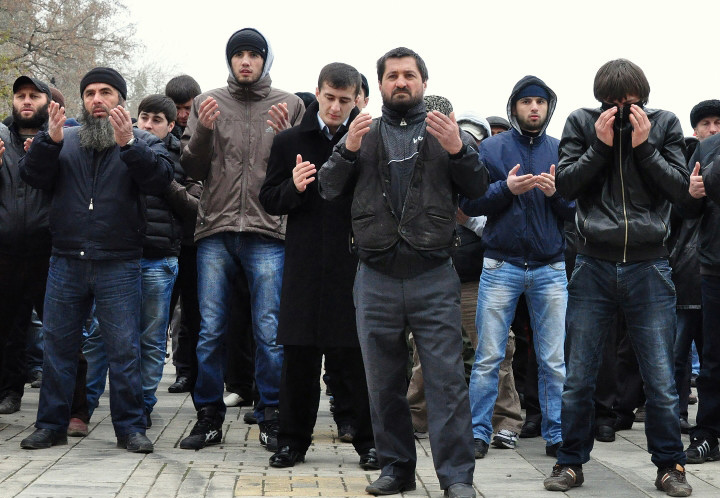
COLTA . RU publishes with small abbreviations a lecture from the “Invisible Country” cycle, read at the Public Opinion Foundation by a sociologist Evgeny Varshaver from the RANEPAS for the FOM-Labs project.
Dagestan is a model of society for me, which, due to its relatively small size, I can observe in detail. Regular visits to Makhachkala and in other Dagestan allow me to understand how the society as a whole functions, to simulate it. And after that you realize that those social processes that you are observing in all other Russia have already seen somewhere.
The standard words with whom I go to people in Dagestan: “In Russia, there is a very misunderstanding about how people live in Dagestan, Dagestanis are perceived as terrorists, as it is incomprehensible to anyone. My task is to ride all Dagestan, to talk with people. As a result of all these interactions, I write scientific texts, speak in the media and tell how Dagestan actually arranged. ”
Dagestan is very different. The model, in which there is a secular city and there are religious villages, absolutely does not work. In this sense, there is a highland Avar Dagestan, where we have our own religiosity - which, we do not understand yet. There is the religiosity of the foothill Dagestan - what can be designated as "Dargian religiosity." And there are Lak villages, they are absolutely not religious. Moreover, in a sense, this was a village where they are fighting for the opportunity to be secular.
And such a very different Dagestan takes and gathers in Makhachkala, who in Soviet times was an absolutely Soviet city. There were about half the Russians there, the Dagestanis who lived there were secular. And then a powerful replacement of the population occurred.
The traditional economic system, traditional-Soviet, broke. It allowed a significant part of the population to be in the mountains, have its so -called Kutan, and grazing. All this has broken. And since the 90s, active urbanization has been taking place in Dagestan. Interestingly, these are approximately the processes that took place in the central part of the Russian Empire at the beginning of the twentieth century. And in Europe at the beginning of the twentieth century. And which, accordingly, are very well described by sociology. In a sense, we can say that science of sociology itself arose as a reaction to urbanization.
And now the whole sociology that we know is Weber with his rationality, Durkheim with his anomia-all this takes and begins to work very interestingly and unusual in Makhachkala.
How do people agree when they are so different as it turns out to achieve some kind of solidarity, how can it be possible to ensure that some kind of collective action arises? When you try to find out how self -organization is arranged in Makhachkala, you need to study the housing and communal services. I absolutely did not assume that I could bring me to the study of transformer boots and columns, but it turned out that this is the material embodiment of those social relations that exist in this territory.
You go along the street and see: high pillars, electricity was carried out very smoothly, and from each pillar it even departs wires to each house. At this moment, it becomes clear that on some conditions and grounds on this street they agreed among themselves. There are other streets where the mops are stuck into the ground, and now wires stretch from mop to the mop. At the same time, you see that the wires duplicate each other, they reach somewhere, but not somewhere. And then the types of pillars are completely changing. And I felt to find out - how did it happen? Further it turned out that such a beautiful model, in the framework of which people self-organized and decided something, somehow united, practically no.
In the rest of Russia, at least the right of strong works. But in Dagestan there is no - because it is not clear who is how strong.
I highlighted three models. The first is leadership: there is a certain initiative person, he conducts electricity for the whole street himself. If he has enough money, then he considers this to some such gift to neighbors. It may say: I do not need to return anything. There are other options when, on the contrary, he begins to walk around his neighbors and say: well, return the money to me. Or: If you want to connect to my wires, you must pay me. Actually, these are not only wires - these are water supply, sewage, and all those things that are needed for the normal functioning of houses.
There is a model of a mediator. In this case, the mediator becomes the deputy head of the administration of this village. Actually, the idea is that the city is absolutely not ready to fully pay and do the work, but it can somehow assist it, partially. As a result, this mediator comes to people to a certain street and says: look, there is an agreement that they will put, for example, a gravel, and you will pay for transportation and then you will smooth it out of money. And so, after a few iterations, the gravel really appears, and the road appears in this territory.
There is a third option, the third model: it can be designated as institutional. When there is already some community, some group ... for example, in a quarterly mosque.
I continued this project, and here the reality that I studied made me an incredible gift. I sat in a tea room, talked with people about whom it was clear that they were such businessmen, hard workers. They smoked one cigarette after one, swearing. And then it turned out that they solve all the controversial issues arising from them according to Sharia.
They are not Muslim fanatics. That subculture, about which it is known that yes, really are people who are trying to live according to Sharia. After I talked with these businessmen, it turned out that it was simply beneficial for them. And that they solve some general problems characteristic of Dagestan through the creation of a new institution.
This is not to say that only religious people solve their problems and disputes according to Sharia. This is a fairly common occurrence. Here is an example. An accident happens, two people jump out, insult each other, begin to fight. The first tooth is knocked out to the second. After a while, one says to the other: uh, are you a Muslim? He cannot answer that he is not a Muslim, and says: then let's go to the imam. And in the end they differ amicably: Imam decided that one another was repairing the car, and the other inserts a tooth.
An even more non -trivial case - there was one policeman, this policeman celebrated a promotion with his fellow villagers on the river. And there was a woman with relatively easy behavior. The fellow villager. Then the rape happened, or it was by mutual agreement. But as a result, she wrote a complaint to the police about him and said: I am ready to pick up this complaint, but only if you rewrite the apartment to me. He agreed, came to the developer - and they entered into an agreement on Sharia. With three witnesses - as, in fact, you need to conclude this contract when you resolve the issue of Sharia.
But then the policeman still lost his position. He comes to the developer and says: I need to return this apartment, because I lost my position. She, in fact, did not fulfill her part of the agreement, and, well, this is wrong. The developer replies: I am very simple - from the point of view of Russian legislation - I can now rewrite the apartment with one stroke of the pen to you back. But I can’t do this, because this agreement has already been concluded according to Sharia. You can solve this problem if you find an imam who agrees that you are right.
A policeman and friends find an imam, bring to the developer. “Indeed,” says Imam, “these people are right.” The developer clarifies Imam: what did they tell you? Further it turns out: in history there are circumstances about which the imam does not know. “No,” says Imam, “in this case, I cannot give you an apartment.” The cunning developer asks: Well, if you prove that there was blackmail? “Well,” Imam answers, “if you prove that there was blackmail, then yes, indeed, I can make this apartment return to the owner.” And then the imam sighs and continues: we are all the wrong issues here. Now, if we were in an Islamic state, then a man, a man, a woman, and the accomplices of a man would have to death with stones for adultery.
This is how the problem of using Sharia in modern Makhachkala is approximately arranged.
Then the question arises: how to study such things? I need optics, and I find it. Optics is called “competition of jurisdictions”, “polyuridism” or “legal pluralism”. In the world, this happens when two legal systems operate in the same territory at the same time.
So it was, for example, when Islam came to the territory of the Persian Empire and Byzantium in the seventh century. Sometimes one part of the relationship is regulated by one legal system, and the other is regulated by the other, sometimes one legal system, as it were, coops the other in itself, and this is called weak polyureidism. And when they really compete and people choose where to go to solve certain problems, this is called strong polyuridism.
Walking in Makhachkala absolutely safely simply because they see a coalition for you.
It would seem that it could be easier? There is a secular court, and there are imam. You come and study how people choose between these two options.
But further it turned out that those problems that people solve through Sharia, they in Dagestan will never be decided in court. And it became very clear to me that not institutions compete with each other - a secular court or imam - but orders.
We know the word “order” thanks to Douglas North , who says that there are open access orders and orders of closed access. “Good” states are characterized by the order of open access - this is when all people are objects and subjects of the legal system. And there is closed access - this is when the elites solve their questions among themselves, and all other people solve their issues among themselves. And at the moment when the elites are faced with non -elites, the issue is automatically resolved in favor of the elites.
And then I realized that the modern Dagestan lives in order, which can be designated as a coalition clinch, and he is opposed to an emerging Islamic order.
What is a coalition clinch? Everyone is trying to place himself and the closest members of his coalition in those positions that will protect you as much as possible. At the same time, everyone does it. As a result, there is a situation when no one can really defeat anyone, and thus maintaining order.
Here is a quote from one guy who entered the land conflict and even lost it, but then his fellow villager became the head of Dagestan - and the guy, in general, had some new species for this land conflict. He says: in Russia, at least the right of strong works there. And the right of strong works for us, because no one knows who is how strong.
Moreover, the coalition clinch is characteristic that you yourself do not know how strong you are. Because if you are an ordinary member of the coalition, then I’m not completely sure whether you will strain to solve the problem of the strong member of the same coalition that sits higher. And finally, before the conflict, it is impossible to understand what your coalition you have. Not to mention the fact that you do not know how strong a person is opposite you.
At some point, when I began to understand this, there was a clear feeling that walking around Makhachkala absolutely safely simply because they see a coalition for you.
But any accident that occurs in modern Dagestan illustrates very well why a coalition clinch is bad. I call my brother, he calls his brother, then still call, then - and now you drive to the place of the accident and see that they are standing and talking cute, breaking into couples, fifty people. How many social products could be done during this time, how many good things to do, how much money to scroll!
And it is not surprising that some groups in Dagestan society began to invent how such a loss of time and money can be avoided. And since the delamination and secularization of Dagestan, in general, did not occur, even in the most Soviet families there was a feeling-I will now try to describe it-that Islam exists, he is hiding in the corners, he is in the language. He is in some basic sense that we, of course, play different games here, but Allah is inevitably.
Islamic order is much cheaper than a coalition clinch. This releases a bunch of resources.
Based on this cosmology, a new order is formed. In the institutional economy, it is believed that order is a set of institutions, no cosmology. But the institutions just do not appear. And the Islamic order sprouts justice institutions. And the institute is when there are some rules and there is ENFORCement , forcing power. That is, some agents-ordinary people or special organs-which will be tapped on the head if you violate any rule.
Story. A certain person owed a large amount of money to another and disappeared. The lender finds former bandits who have become halals recently, that is, they go to the mosque and are quite seriously related to Islam; Previously, they were hunting collectors and now also do not mind. But not by lawlessness, but in Islam: that is, to remove exactly the amount that is supposed to take a small percentage.
Further the debtor is cut on the road. They transplant him to another car, they are being taken. Next to him is the creditor and collectors. The creditor says: well, look, in principle, you can now disagree, but then you will have a business with them. Or you give a debt to me and some percentage to collectors for their services.
But here the collectors are somehow starting the greyhound and demand more money. The creditor objects: no, this is not according to Sharia, we agreed on another. Then a Sharia specialist, creditor, debtor and collectors are already sitting. And the Sharia specialist explains to the collectors that they are wrong. They take a day for thinking, consult with their imam, return and say: yes, indeed, you are right. And they took exactly the amount that they relied on.
This is clearly not an isolated case. So in Dagestan there are institutions that are built on the Islamic order and form it in many ways.
Now the most important thesis: Islamic order is a city phenomenon. Being rooted in the old ethics and cosmology that was in the villages, he was very transformed. And the current Dagestanis, Makhachkala residents who profess and practice Islamic order are more associated with the world ummah, that is, with the whole combination of believers than with their village. And they almost always spend weddings in Makhachkala. I was on one of these weddings, where such a guy with a large beard was sitting and on Facebook read in English about what is currently happening in Syria.
You can clearly diagnose that the Islamic order is progressing. And the imams say that more and more things, especially financial, are really decided according to Sharia.
Islamic order is much cheaper than a coalition clinch. This releases a bunch of resources, and this is very well understood by the Makhachkala businessmen, who are the main agent of the Islamic order in his confrontation with a coalition clinch.
When one of the communities became clear that they did not know how to conduct business in Sharia, they threw themselves and gave a scholarship to a man who simply went to Egypt and studied there Sharia for business. He arrived and taught everyone to solve issues.
Different power players will resist this order simply because their order is a coalition clinch, they occupy a high and advantageous position in coalitions. On the other hand, the Islamic order is perceived by the majority of my informants as legitimate and as fair.