
Translated material
"It is difficult for me to come to Russia"
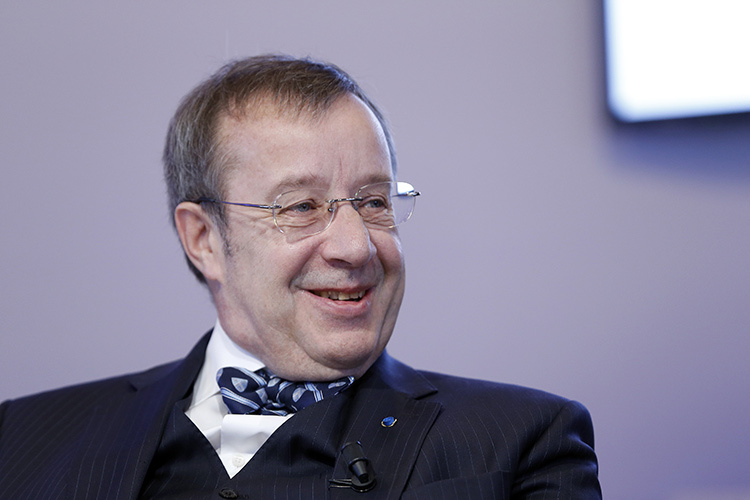
Estonian President Toomas Hendrick Ilves loves music. In his youth, he attended concerts at the legendary New York CBGB club, where Ramones, Blondie and Talking Heads began, and for the past few years he has been opening the Tallinn Music Week showcase, which has been collecting about 800 music industry professionals from around the world. After the speech, President Ilves gave an exclusive 10-minute interview with Colta.ru about his favorite music, hipsters who drink craft beer, the last video of Pussy Riot and the attitude to Russians in Estonia.
- How did you once end up in the CBGB club ?
-I lived in the early 1970s in New York-I studied at Columbia University. And my friends were hanging out in CBGB .
- Often you were there and who did you hear?
- Well, I visited several times ... on new York Dolls , on Lou Read when he launched his solo tour. There are many who performed there.
- Did you have a favorite group in CBGB ?
- I never had a favorite group. When you are seven or even three years old, you may have a favorite color, but, obviously, it goes away with age. I love interesting music. At that time, I listened not only rock and roll, but also classics, blues ... For me, music is not divided into genres.
- And now in Tallinn, among the whole many clubs or bars, is there the one where you can be found?
- At my work, it’s hard to walk around clubs and bars. But I'm listening to music ...
In your country there are people who are trying to paint in the Russians in Estonia in unpleasant, dirty colors. But this is nonsense.
- In the Philharmonic?
- And there too. As I said, I have no attachment to a certain type of music. It seems to me that this is true for most people. One friend of mine is a famous Estonian classic composer, but he began with the fact that he played in a rock band.
- You notice the influence of the Tallinn festival Music Does Week have on Tallinn?
- Tallinn is obviously changing. It becomes more open to alternative music, part of which is Tallinn Music Week . The city becomes more friendly. We have the areas of the city where they live ... You know, only hipsters who drink craft beer (laughs) .
-Is there any benefit for the Estonian economy from Tallinn Music Week ?
- I suppose bars and hotels earn. I don't know how much. As far as I know, Tallinn organizers Music Week keep on the payback point and do not earn significant money. But bars and hotels - yes.
-Like a music lover, perhaps you appreciate some Russian group from among those that have already come to TMW , or from the past?
- I do not know Russian groups. I know that in Estonia there is a rap group that sings in Russian, and it is interesting. But with modern Russian music, it is difficult for me to come to Russia, you know (laughs) .
Can you imagine that in Moscow on the state channel you decide to criticize the president?
- Does nothing connect you with Russia or the Soviet Union at all?
- Nothing. My grandmother was Russian - and that's all. I did not live in the USSR. I only know that in the 1980s Russians came to Tallinn, because it was freer here. My friend Artemy Troitsky, who now, by the way, lives in Tallinn, came here because musical life here was more diverse and saturated than in Moscow.
- By the way, Artemy Troitsky did not let you listen to Russian music?
- Gave, gave. I don’t remember now what (laughs) . But at a meeting, we always have a more important topics - political repressions, Pussy Riot , etc. You can see my speech at the opening of Tallinn Music Week in 2012 - it is in YouTube : the very speech that I said in support of Pussy Riot before they became famous. They were only arrested.
One of the main features of my work is that it is not divided into parts-separately music, separately politics, separately something else: this is one large, tightly tied knot of various topics.
- Let me touch the non -recusial topic. As far as I know, approximately 30% of the population of Estonia are Russian ...
- Russian -speaking. Ukrainians and Belarusians also live with us.
- This is a large percentage, most of the society.
-Yes, somewhere like that. Plus.
- Do you distinguish the Russian -speaking part of the Estonian population in a separate group? Think about her as a special part of society?
- The Russian -speaking part of the population lives here as a full part of a democratic society. They can say what they want, think what they want, work where they want and travel where they want. Of course, there are certain cultural and religious differences, but, it seems to me, in our Estonia they do not pay much attention to them. In any case, I do not attach great importance to this. We have parliamentary elections here, in which right -wing parties with Russian -speaking candidates, left -wing parties with Russian -speaking candidates, and liberal parties with Russian -speaking candidates take part. I know that there are people in your country who are trying to paint the attitude to Russians in Estonia in unpleasant, dirty colors, but this is nonsense. We have a free society here. Last August, I was seriously attacked by one of the Estonian state television channels for protecting Pussy Riot . I am personally. Can you imagine that in Moscow on the state channel you decide to criticize the president? In Estonia - O'Kay, I only liked it.
- By the way, did you see the last video Pussy Riot ?
- Yes, I saw. I was not very impressed.