
Translated material
Is the inflation peak passed?
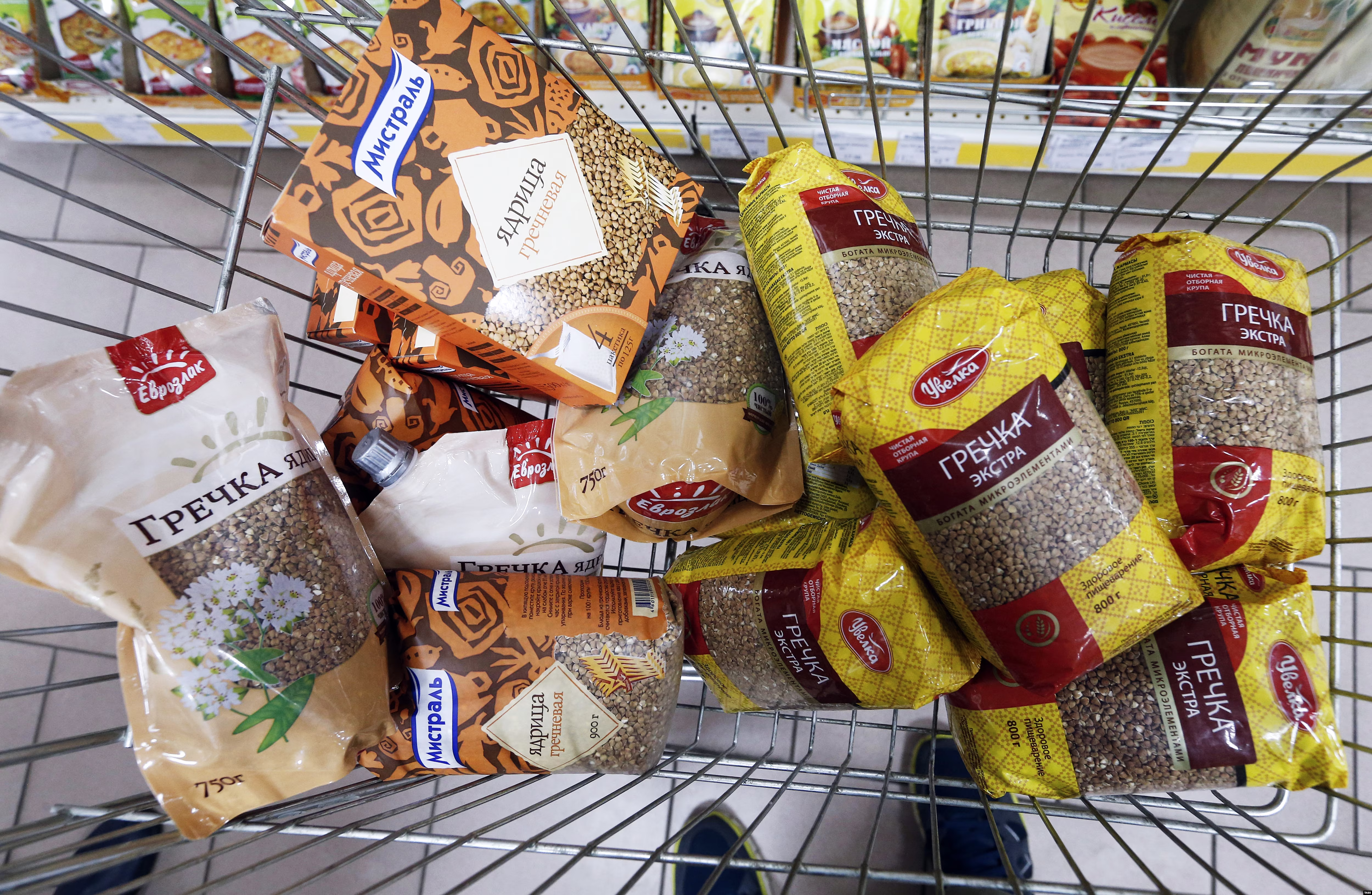
Prices are stabilized, the ruble is growing, internal demand is falling
The ruble exchange rate is growing exactly two months in a row - from the lower point marked on February 3 . Weekly increase in prices remains almost unchanged for more than a month. Such dynamics as a whole allows us to say that the influence of the recent devaluation of the ruble on the growth of domestic prices in the country has mainly ended, experts say. It smoothes this growth and an increasing decline in domestic demand caused by a reduction in the incomes of the population.
Since the end of February, the weekly growth rate of consumer prices in the country has not changed - 0.2%. And only in the last week of March, according to the data presented this week to Ruststat, did they slightly accelerated - to 0.3%. However, even such an acceleration, rather, arithmetic than the actual, says Dmitry Poleva, chief economist in Russia in the Dutch Bank of ING.
According to him, the case is in the rounding of data. “If we evaluate a larger number of decimal signs after aim, then there was no noticeable acceleration. This is also seen in the structure of prices for those goods and services that Rosstat reveals in the last week of March compared to the previous one.”
The strengthening of the ruble rate does not also help to strongly slow down the increase in prices in the country, as the weakening of the course affects its acceleration.
One of the main factors in a sharp acceleration of prices in the country in recent months has become a large -scale ruble devaluation. So, in January, prices rose immediately by a third to the level of December. Monthly inflation was 6.5 times higher than in January 2014, and the annual one was 2.5 times.
In November last year, representatives of the Central Bank of Russia cited the following estimates: the devaluation of the ruble for every 10% leads to additional consumer prices in the country by about 1% . However, the pace of current devaluation turned out to be so swift that the real ratio was no longer 10: 1, but rather 10: 1.5 or even 10: 2, some experts noted at the beginning of the year.
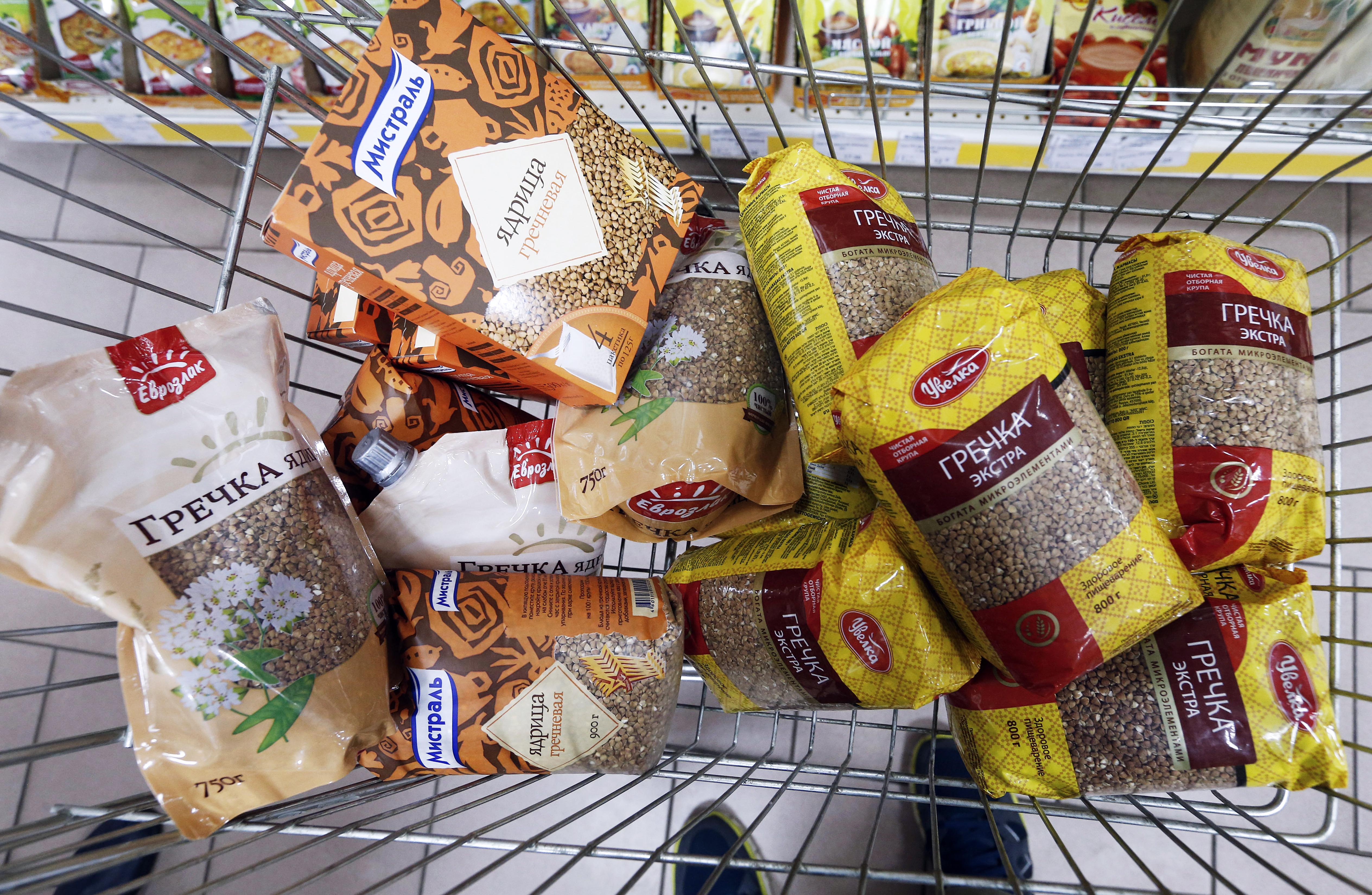
Prices are stabilized, the ruble is growing, internal demand is falling
However, from the end of January, oil began to rise in price, the prices of which were followed by the ruble. And soon the acceleration of the current inflation rate has ceased, they actually remain at the levels of the beginning of February and still. But does this allow us to say that the transfer of the ruble devaluation to the current inflation in the country has actually played? Indeed, until recently, many experts believed that this effect would appear at least until the middle of the year ...
Desseric inflation data has recently been argued that the ruble devaluation effect has already been almost played out, and in March, monthly inflation can be approximately 1%, said Oleg Kuzmin, the main economist for Renaissance Capital investment company. “According to our estimates, annual inflation reached the peak. In March, it will be about 17%, after which it will begin to decline.”
Sellers easily increase prices when the ruble weakens, but to reduce them when the ruble, on the contrary, is strengthened, they are not ready.
The devaluation is manifested in prices for about 3-4 months, and since its peak fell on December, we can say that this effect has practically exhausted itself, the chief economist of the Uralsib Capital investment company Alexei Devitov agrees and explains: if this devaluation in general, the annual price growth would now be about 8%, and not the current 16.7%. The difference is consistent with the scale of the devaluation. “Based on the weakening of the ruble by about 40-45%, we can say that the effect of devaluation is almost completely exhausted.”
According to analysts of the Dutch bank, the peak of the current growth of consumer prices in Russia is in the range from 15% to 18% per year. And since the current rates of annual inflation in the country, having already exceeded the average level for this range, are not yet growing, it can be assumed that the effect of devaluation on inflation has mainly played, Dmitry Poleva notes. “In the coming months, the annual inflation in the worst case will be close to the current indicators, and at the best it will slow down a little.”
The macroeconomic statistics presented by Rosstat for the first two months of the year confirmed a sharp decline in both sources for internal demand in the country and its real manifestation.
The fall in demand will have a decisive effect on the dynamics of price growth this year, but this will be especially strong in 2016.
For example, the real average monthly salary in the country, that is, taking into account its purchasing power, decreased by 9.1% to the level of January-February last year, a real pension-by 4.1%. The fall in the population’s incomes inevitably reflected in the volume of trade and paid services.
So, the turnover of retail trade - for the first time in the last years - has declined to last year's levels. During 2014, only the pace of its previous growth slowed down, while this time it is about the decline, in February - at once by 7.7%. In the same month, the volume of paid services to the population decreased by 1.5% - also for the first time in the last years during which they only expanded.
In other words, the reduced internal demand, as expected, becomes one of the key factors that determine the current inflation in the country. Yes, he partially smoothed out the rise in prices in January-February, but in general, his influence will appear, rather, in the second half of the year, Oleg Kuzmin believes. “The fall in demand will become one of the main factors in the slowdown of annual inflation from about 17% at the end of the first quarter to 11.5% at the end of the year.”
Based on the weakening of the ruble by about 40-45%, we can say that the effect of transferring devaluation to prices is almost completely exhausted.
The beginnings of internal demand in the country became one of the main reasons why the general influence of the recent ruble devaluation on prices was not as significant as expected, based on the very scale of devaluation at the end of last year, Dmitry Poleva notes: “The fall of demand will have a decisive influence on the dynamics of prices this year, but this will appear especially in 2016.”
In the last three months of last year, the ruble exchange rate to the dollar decreased by 43%, in January 2015 - by another 24%. However, since then it has almost continuously increased. From the minimum level marked on February 3 - 69 rubles and 66 kopecks per dollar - it has been growing for exactly two months and by April 3 it increased by more than 18%. It is curious that the increase turned out to be uniform by months: both for the period from February 3 to March 3, and from March 3 to April 3, it amounted to 8.5%each.
In the coming months, annual inflation in the worst case will be close to current indicators, and in the best will slow down.
But if the devaluation of the ruble had a powerful and very quickly impact on the increase in prices, then it is clearly not to be expected to expect a similar influence on prices. “Sellers easily increase prices when the ruble weakens, but to reduce them when the ruble, on the contrary, is strengthened, they are not ready,” Alexei Devyatov is ironic.
If the ruble does not begin to weaken again , it either levels the effect of the influence of devaluation on prices that has not yet been fully realized, or can even lead to a certain decrease in prices - for those goods for which will fall especially strongly, adds Dmitry Field. “For sellers, this will become one of the possibilities to somehow maintain the demand for such products.”
The noticeable strengthening of the ruble in the last two months, however, is unlikely to significantly slow down the current growth rate of prices in the country, Oleg Kuzmin agrees. It recalls that the strengthening of the ruble occurs after its very strong and rapid devaluation in recent months. In addition, the effect of fluctuations in the exchange rate of currency on the pace of inflation is asymmetrically: “In Russia, inflationary expectations are traditionally high,” the analyst continues. “Therefore, strengthening the course does not allow you to strongly slow down the increase in prices, as the weakening of the course affects its acceleration.”