
Translated material
Freedom of assembly: the most effective practice
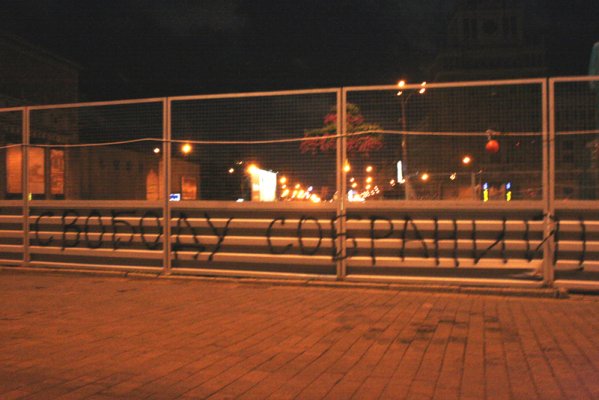
The OVD-Info publishes a transfer of a memo on the exercise of the right to freedom of assembly drawn up by the UN specialist on the issues of freedom of peaceful assemblies and associations.
Basic international standards International Pact on Civil and Political Rights , Article 21:
“The right to peaceful meetings is recognized. The use of this right is not subject to any restrictions, except for those that are imposed in accordance with the law and which are necessary in a democratic society in the interests of state or public security, public order, the protection of health and morality of the population or the protection of the rights and freedoms of other persons. ”
See also
- Universal Declaration of Human Rights , Article 20
- The International Convention on the Elimination of all forms of racial discrimination , Article 5 (IX) [The right to freedom of peaceful assembly and associations extends to all, without any differences in terms of race, color, national or ethnic origin under the conditions of equality of all before the law]
- The Convention on the Rights of the Child , Article 15 [The right to freedom of peaceful assembly is equally applies to children]
- Convention on the Rights of Disabled , Article 29 [Political rights are guaranteed along with others]
- The declaration of the right and obligation of individuals, groups and bodies of the company to encourage and protect universally recognized human rights and main freedoms , Article 5
- European Convention on Human Rights , Article 11
What is a meeting? The meeting is a deliberate and temporary joint presence in the private or public space with a particular purpose. This concept includes demonstrations, meetings in closed rooms, strikes, processions, rallies and even sitting strikes. Meetings play an actual role in the mobilization of the population, expressing discontent and requirements, holding festive events and, which is significantly, influencing state policy ( a report at the 20th session of the UN Human Rights , pp. 8–9, clause 24).
What types of meetings are protecting international legislation? The international legislation on human rights is protected only by peaceful meetings, that is, those that do not imply violence and whose participants have peaceful intentions. However, the peaceful nature of the meetings should be implied by the authorities ( report at the 20th session. , P. 9, paragraph 25).
Why is the right to freedom of peaceful assemblies so important? The right to freedom of peaceful meetings is one of the most important rights that a person has. This is one of the central rights - along with the freedom of associations - intended in order to provide people with the opportunity to unite and work for a public good. This is a means for the implementation of many other civil, cultural, economic, political and social rights ( report at the 20th session , p. 5, paragraph 12). The right to freedom of peaceful assemblies also plays a decisive role in the origin and existence of effective democratic systems, since they are an instrument that allows you to ensure dialogue, pluralism, tolerance and breadth of views, suggesting respect for the positions of the minority or views and beliefs that are different from the generally accepted ( report on the 20th session , p. 24, paragraph 84).
Do I need permission to hold a peaceful meeting?
NO
The right to freedom of peaceful meetings does not require issuing permission to hold it ( a report at the 68th session of the UN General Assembly , p. 12, paragraph 24). The most that the authorities may require is a notification of major meetings or meetings, during which we can expect a certain degree of disorganization ( a report at the 23rd session of the UN Human Rights , p. 18, paragraph 52). The organizers should be able to notify the established main body about holding a peaceful assembly, for example, by filling out a clear and short form available in the country's language (languages), preferably via the Internet in order to avoid ambiguities and possible delays when sending by mail ( report to the 23rd session , p. 53). This procedure should be free, and if the notification is submitted, the authorities should urgently provide confirmation that the notification was provided on time ( report at the 23rd session , p. 19, paragraphs 57–58).
Is the right to freedom of peaceful assemblies to me?
YES
It doesn't matter who you are. Article 21 of the International Covenant on Civil and Political Rights (MPGPP) recognizes the right to freedom of peaceful meetings for everyone, which is ensured by Article 2 of the Covenant and resolutions 15/21 , 21/16 , 24/5 of the UN Human Rights. In resolution 24/5, the Council reminded the states to respect their obligations and fully protect the rights of all people to gather peacefully and unite in associations freely, including on the Internet, in the conditions of elections, including persons who adhere to those who are not separated by the majority or excellent from generally accepted views or beliefs, human rights activists, members of trade unions and other people, including migrants who are striving to implement or to implement or to implement or to implement or to implement or to implement or to implement or to implement or to implement or to implement or to carry out or Encourage these rights ( report at the 26th session , p. 10, paragraph 22).
Does the state have the obligation to protect the rights to freedom of assembly?
YES
The state has clear obligations to promote peaceful meetings ( report at the 20th session , p. 9, paragraph 27). This includes the protection of participants in peaceful assemblies from people or groups of people, including provocateurs and demonstrators with opposite views who are aimed at disrupting such meetings or forcing their participants to disperse. These people include working in state bodies or in their interests ( report at the 20th session , p. 11, paragraph 33).
Is the right to freedom of peaceful assemblies on the Internet?
YES
States are obliged to respect and fully defend the rights both online and offline (resolution of 24/5 of the UN Human Rights Council). The Internet, in particular, social networks and other information and communication technologies are natural ways to promote peaceful assemblies in the real world. People also have the right to gather in a virtual space online to express their opinions (resolution 21/16 of the UN Human Rights Council). All states should ensure the possibility of constant Internet access, including during political unrest ( report at the 17th session , p. 26, paragraph 79). Any decision to block access to online content should be made by the competent authority of the judiciary or the body independent of any political, commercial or other unreasonable influence ( report at the 20th session , p. 11, paragraph 32).
The right to freedom of peaceful assemblies is limitless?
NO
The right to freedom of peaceful meetings is not an absolute right ( MPGPP , Article 4). It “can be subject to some restrictions that are provided for by law and are necessary in a democratic society in the interests of national and public security, to protect public order, morality or to protect the rights and freedoms of other persons” (Resolution 15/21 of the UN Human Rights, paragraph 4). But these restrictions are an exception, not a rule. No restrictions should reduce the value of law, they should be prescribed in the law, they must be proportionate and “necessary in a democratic society ( report at the 20th session , p. 6–7, paragraph 16). Certain restrictions, for example, a complete ban on holding meetings, are essentially disproportionate and discriminatory, and can only be used if they are strictly necessary and used equally in relation to all ( a report at the 68th session of the General Assembly , p. 12–13, paragraph 25). The ban should be the last remedy. In any case, the restrictions should assume that the demonstrations are held within the establishment of “visual and sound” control over what is happening and the target audience-and not replaced, for example, on the outskirts of the city or to any specific area where the effect of them will be insignificant ( a report at the 20th session of the Council of Human Rights , p. 13, clause 40).
Should the authorities assist observers and journalists during the meeting?
YES
Human rights activists, journalists and observers should allow you to act in the context of freedom of assembly-and encourage them in this-in order to ensure an impartial and objective report, including a factual description of the behavior of both participants and law enforcement forces ( report at the 20th session , p. 15, paragraph 48).
Are spontaneous meetings acceptable?
YES
Spontaneous meetings should be recognized by law and exempted from the need for a preliminary notification ( report to the 20th session , p. 10, paragraph 29). Concern about the free flow of transport - in the course of both planned and spontaneous meetings - should not by default have an advantage over the principle of freedom of peaceful assemblies. The state is obliged to develop operational plans and procedures to assist in ensuring the right to a meeting, including changing the routes of pedestrians and transport ( report at the 20th session , p. 13–14, clause 41).
Should the organizers of the meeting be responsible for the actions of others, can they demand a fee for assistance in holding a meeting?
NO
No financial obligations for the provision of public services (police security, medical service and other measures to ensure health and safety) during the meeting ( report at the 20th session , pp. 10–11, clause 31) should be imposed on the organizers. They also should not be responsible for the illegal behavior of others or for maintaining public order. Similarly, if the organizers could not notify the authorities of their event, it should not just be automatically canceled, and the organizers should not be persecuted in criminal or administrative order through fines or imprisonment ( report at the 20th session , p. 10, clause 29). The use of managers appointed by the organizers of the meeting, that is, people who provide assistance to them by informing and orienting people during the event, should be encouraged (although it is not required). The managers should be clearly distinguishable and properly prepared, and should not be responsible for the aggressive behavior of others ( report at the 20th session , pp. 10–11, paragraph 31).
Can common considerations regarding “public security”, justify the use of violence that can lead to deaths?
NO
Ensuring public security cannot be used as a preposition for violation of the right to life ( report at the 20th session , p. 12, paragraph 35). The only justification for the use of firearms, including during demonstrations, may be an inevitable threat of death or serious wound (in the same place, the 17th session of the UN Human Rights Council, a report of a special speaker on extrajudicial executions, executions without proper trial or arbitrary executions , paragraph 60) is quoted. The right to life (Article 3 of the Universal Declaration of Human Rights and Article 6 of the MPGPP ) and the right to freedom from torture, cruel, inhuman or humiliating the dignity of appeal or punishment (Article 5 of the declaration and Article 7 of the MPGPP ) must be prevailing principles when ensuring order at public meetings. Violence capable of leading to deaths can be applied only in cases when it is inevitable and when less extreme measures are insufficient to achieve the required goal of protecting life (see the basic principles of using force and firearms by officials to maintain law enforcement , Article 12–14).
Can individual cases of violence be considered a suitable basis for stopping a protest event?
NO
The peaceful nature of the meetings should be implied ( report at the 20th session , p. 9, paragraph 25). A person does not stop using the right to a peaceful meeting as a result of individual cases of violence or other actions that deserve punishment, if the intentions or behavior of this person remain peaceful ( report to the 20th session , p. 9, paragraph 25). Certain cases of violence do not make the entire meeting non -worldly.
Is the demonstration and the event of the opposite orientation allowed simultaneously?
YES
In the case when more than one meeting is planned in the same place and at the same time, all these meetings should be allowed, their protection and assistance should be provided in the conduct at any time ( report at the 20th session , p. 10, paragraph 30). This is important, in particular, in the context of the meetings that are aimed at expressing disagreement with the ideas of other meetings. It is necessary that such demonstrations take place, but they should not take the right to freedom of peaceful assemblies from the participants in other meetings.
Can the authorities limit the right to freedom of assembly during the election?
NO
The election period is a unique time in the life of the country, when democratic principles are confirmed and strengthened. During the elections, the state should make more efforts to assist and protect the right to freedom of assembly. It is impossible to achieve these elections if the right to freedom of peaceful meetings is cut ( a report at the 68th session of the UN General Assembly , p. 24, clause 58). States should never consider elections as an excuse for unjustified restrictions on the right to freedom of peaceful assembly. Given the importance of the right to freedom of peaceful assemblies in the context of the elections, the threshold for introducing certain restrictions, for example, a complete ban on holding meetings, should be higher than usual ( report at the 68th session , pp. 12–13, paragraph 25).
Is it supposed to me legal protection if my rights to freedom of assembly are violated?
YES
States are obliged to create available and effective mechanisms for considering complaints that independently, quickly and carefully investigate allegations of violation or abuse of human rights, including related rights to freedom of assembly ( report at the 20th session of the Council of Human Rights , p. 23, clause 77). If the restriction of the right to freedom of peaceful assembly is unjustified, the victim must have the right to seek a correction of the situation, as well as the right to fair and adequate compensation ( report at the 20th session , p. 23, paragraph 81). The law should also provide for criminal punishment and disciplinary sanctions against those who intervene or forcibly disperses public meetings ( report at the 20th session , p. 23, clause 78).
The UN special speaker on the issue of the rights to freedom of peaceful assembly and to freedom of associations of Main Kiai (November 2014)
https://www.facebook.com/mainakiai.sr
https://www.twitter.com/mainakiai_unsr
https://www.flickr.com/photos/mainakiai
Official website of the UN Human Rights Supreme Commissioner