
Translated material
Homeland and love
The recent Russian state project - a systematic increase in patriotism in accurate numbers and planned terms - provokes to quasi -iphilosophical thoughts. There are exact sciences - and very inaccurate human feelings. Strictly speaking, science can only be accurate. Science is what can be calculated, expressed in numbers. Even Kant, thinking about what a person can know, what the limits of his knowledge, what knowledge is in general, has established: only mathematical science can be called a reliable science. That is, any knowledge, any reliable fact can ultimately be expressed by the number. Everything that is not subjected to account can not be called knowledge in the strict sense of the word.
Actually, even strict numbers, numbers, can be very non -thorough. There are irrational numbers, like the notorious square root of the minus of one. There is a mysterious number π-the ratio of the diameter of the circumference to its value, which can not be expressed in any way as a whole, and all with some endless fractions. There is a mysterious quadrature of the circle: you can’t enter the polygon into the circle in any way, no matter how much increase the number of the sides of this polygon. That is, even in clearly and extremely understandable, one might say, the bright world of numbers is its dark.
What then to talk about objects of obviously vague, no account, measurement and weighing of non -subject? And there are such items. Actually, it is not entirely correct to call them and objects. These phenomena are non -unauthorized, that is, it is precisely, weightless, weightless and not even always, strictly speaking, sensually felt. This is something ethereal, as they would say in the old days. You, say, love a girl, heavenly creation, and of course, you can see her, hear her, if she will decide to sing a romance, and even smell (say, the spirits of “Red Moscow” smacks of an unearthly creation), but now it is not always possible to touch, strictly speaking, it is far from always possible.
How, say, to measure love for the homeland, even with a capital letter - for the homeland? The letter is large, but the subject, whatever you say, is not quite tangible
This is about one separate item. But not all objects of human feelings, both negative and positive, have weight and, as they said in the old days, a figure. There are objects of a purely speculative nature, which, of course, can be loved and generally experiencing the whole gamut of human feelings in relation to them, from favor to hatred. The existence of these objects (objects, ideal designs) is undoubtedly, as they are undoubtedly capable of causing a person to tangible, sometimes strong emotions. But the question is: on which scale to weigh these emotions, what measures to measure them? How, say, to measure love for the homeland, even with a capital letter - for the homeland? The letter is large, and the subject, whatever you say, is not quite tangible. What measures do you order here to operate? And one more thing: if such unbearable objects exist and can cause a variety of emotions, is it possible to control these emotions - towards their decrease, and even better increase? Is it possible, for example, to love the homeland today, in the 2015 reporting and financial year, more than in the previous 2014? And if more or, God forbid, less, then how many percent?
It seems that it is much more difficult to solve such a problem than to find out the number π up to nine hundred and ninety -ninth sign. Nevertheless, such tasks are set and, one must think, will be solved in the new program of Russian patriotic education , recently published. The revolutionary innovation of this program is precisely that it considers it possible to calculate the percentages of increasing patriotism - and draws up a schedule for such an increase on a five -year plan or for any necessary time: on the coordinate axis - the growth of patriotism, on the abscissa axis - budgetary amounts allocated for this case.
This, therefore, is not only about non -unauthorized feelings, but also about completely calculated amounts.
The amount, without any doubt, will master the balance. As for patriotism, on what scales to weigh it? What grams of molecules to calculate? Plato also said that the human soul is immortal, for it is not subject to division, but indivisible, that is, indecent, cannot die.
But approximately the same can be said about the Russian budget: no matter how it layers out, he will not die: some fractions of the number π will always remain. Here we will feed on them. Patriotism will not go anywhere: Russian people love their homeland without money, for so. And the money will be mastered by professionals who are always ready to solve any quadrature of the circle.
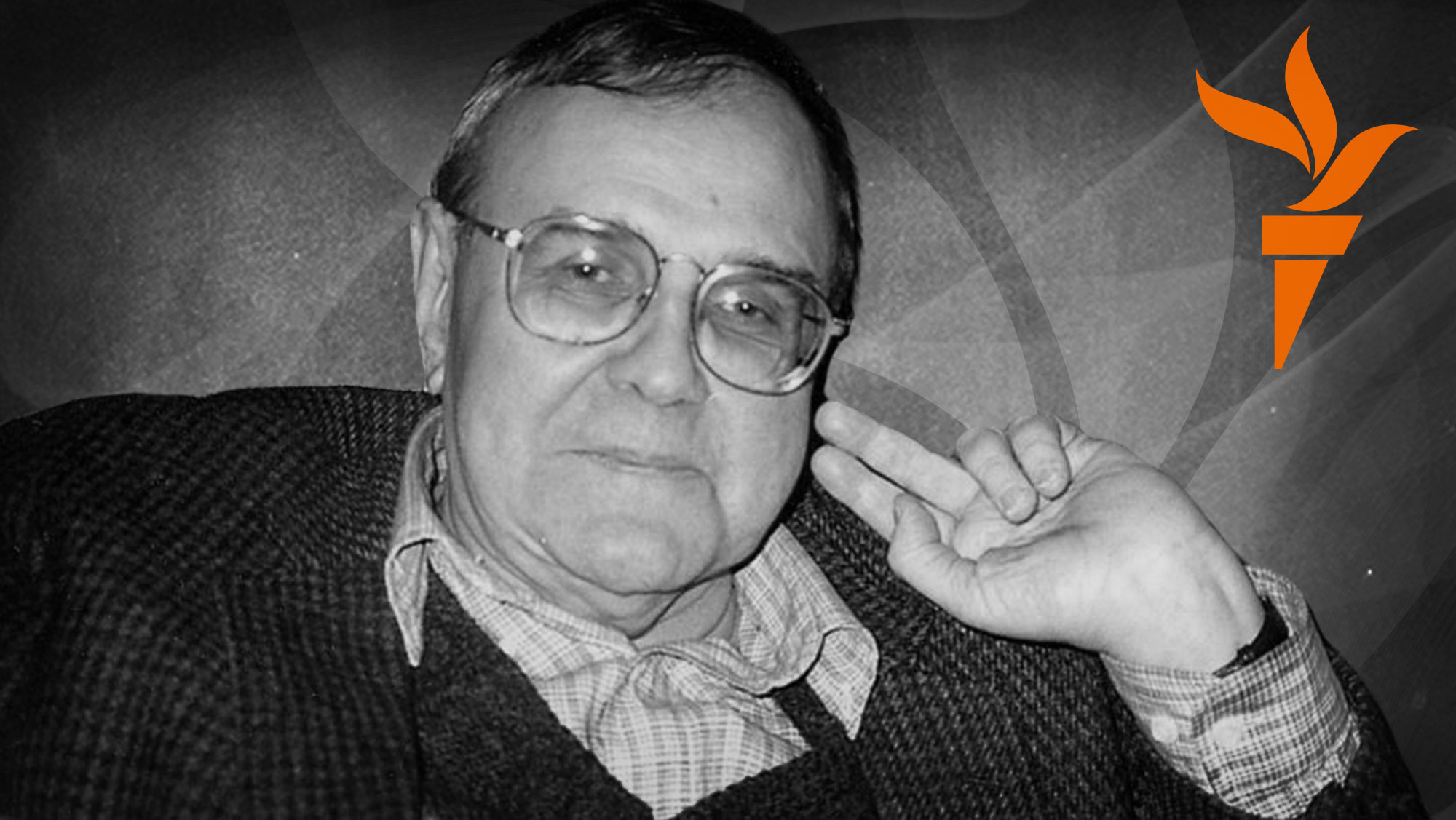
Boris Paramonov-New York writer and publicist
Opinions expressed under the heading "Law" may not reflect the point of view of the Radio Liberty editorial