
Translated material
The government proposes to ban referendums about the status of settlements
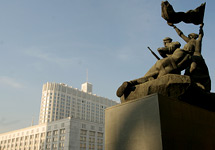
The government proposes to cancel the referenda procedure in resolving issues about changing the statuses of urban and rural settlements. The relevant amendments to the law on the general principles of local self -government are published in the basis of the legislative initiatives of the State Duma.
The reorganization of municipalities can be carried out in various ways - separation, unification, accession, change in the status of a urban settlement to rural and vice versa. In all cases, the consent of local residents is required.
It is proposed to replace the direct expression of the will of residents with the vote of the deputies of the local government. The only exception is to divide the settlement into two or more, since in this case new municipalities and their bodies are formed.
Such changes will allow regional and local authorities to make managerial decisions rather and save the expenses of local budgets for referenda, the explanatory note is noted.
Since 2014, the next reform of local self -government has been held. Then, on behalf of President Vladimir Putin, a group of amendments was prepared by a group of deputies of the State Duma and members of the Federation Council. It was adopted in May 2014. The reform additionally strengthened the regional authorities and weakened the locals. The regional authorities, in particular, received the right to cancel direct elections of mayors of large cities in their territories .
In December, the authorities of the Yaroslavl region took advantage of this right, abolishing direct elections in the mayors of the capital of the region and Rybinsk . On December 24, deputies of the Legislative Assembly of the Irkutsk Region adopted a law on the introduction of the position of the city manager in the capital of the region. Now the mayor of Irkutsk will be elected from among the deputies of the City Duma . Soon, direct elections were canceled in Krasnoyarsk and Omsk.
In the Tomsk region, direct elections were preserved in all municipalities. The governor of the Trans -Baikal Territory Konstantin Ilkovsky also proposed to leave a direct vote in most municipalities.
In December, the Constitutional Court ruled that Russian citizens do not have the right to conduct referenda who would determine the structure of local authorities. Such issues can only be resolved at the level of municipal deputies. The decision of the CS can have a “preventive value” as a “vaccination against the growing waves of initiatives in the regions related to the conduct of referenda for direct elections,” said political analyst Andrei Knyshev then ..
Currently, Russia is allowed to conduct local referendums on a limited circle of issues that have "local importance". For example, citizens can discuss the municipal budget, taxes and fees on the plebiscite, the organization of "electro-, heat, gas and water supply", and road activities.