
Translated material
The USA opposes the supply of Russian missiles to Iran
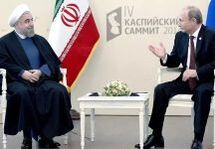
US Secretary of State John Kerry expressed his Russian colleague Sergei Lavrov regarding the cancellation of the ban on the supply of Russian anti-aircraft missile systems S-300 to Iran. This was told at a briefing by the representative of the White House Josh Ernest, reports Reuters.
"Unity and cooperation" with countries such as Russia are a key condition for achieving agreements with Iran, Ernest emphasized. At the same time, he did not report the details of the telephone conversation between Lavrov and Kerry.
Ernest also spoke about the agreements between Moscow and Tehran on the supply of goods in exchange for oil. This deal caused Washington concern about a possible violation of already imposed sanctions.
On Monday, the deputy head of the Russian Foreign Ministry, Sergei Ryabkov, said that the implementation of the Bart transaction with Iran "Oil in exchange for goods" has already begun, RIA Novosti reports . According to him, Russia in exchange for Iranian oil supplies grain, certain types of equipment and building materials. The deputy minister did not report how much the implementation of the transaction will last in terms of terms, and about its volume, but called it "significant."
"Barter is carried out in exchange for the supply of Iranian crude oil, and we supply certain types of products, nor the other in any way is regulated by the current sanctions regime, so we believe that this is a normal path and this is how Ryabkov said.
On Monday, Russian President Vladimir Putin signed a decree that will transfer to Iran the Russian anti-aircraft missile systems S-300 . In this regard, Lavrov said that the supply of Iran S-300 "would not jeopardize the security of any state of the region," including Israel, since this air defense system "is extremely defensive, it is not adapted for the purpose of the attack."
On April 3, at negotiations in Lausanne, six intermediaries, including five permanent members of the UN Security Council and Germany, entered into a framework agreement with Iran on the gradual relief of sanctions from this country in exchange for reducing the scale of its nuclear program. Thus, Russia got the opportunity to put Iran weapons.
The contract for the supply of Iranian air defense systems was signed at the end of 2007. Russia was supposed to put Iran five divisions of the S-300PMU1 anti-aircraft missile system in the amount of about $ 800 million. On September 22, 2010, Dmitry Medvedev, who then held the president’s post, signed a decree on measures to implement the fourth sanctions resolution of the UN Security Council regarding Iran. The decree provided for the ban on the transfer of Iran of the S-300 complexes , armored vehicles, combat aircraft, helicopters and ships.
In August 2011, it became known about Iran’s filed a lawsuit in the Geneva International Arbitration Court in connection with the disruption of deliveries. Then it was reported that Tehran estimated the amount of damage to almost four billion dollars.