
Translated material
"This is called lustration"
As the discovery of Ukrainian archives will affect Russia. Interview with historian Nikita Petrov
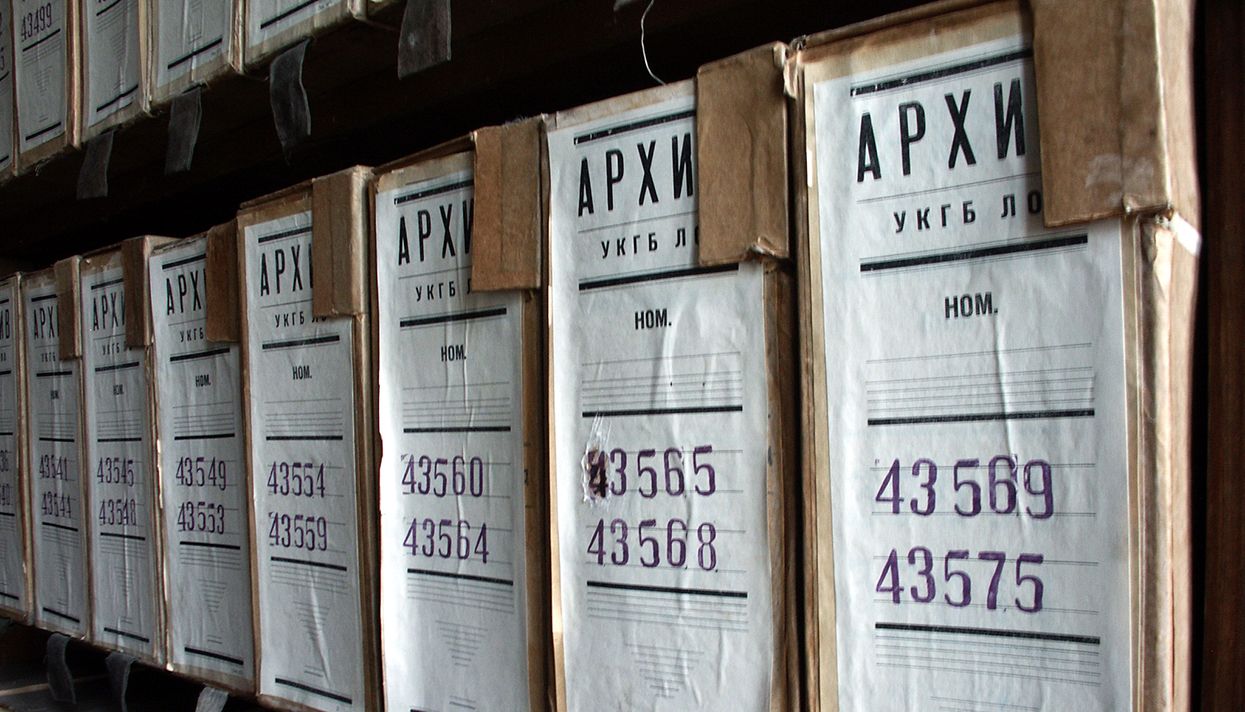
On April 9, the Verkhovna Rada of Ukraine adopted the law "On access to the archives of the repressive bodies of the communist totalitarian regime of 1917-1991." All documents related to repressions, violations of human rights and freedoms will be transferred to the State Archive of the Institute of National Memory of Ukraine. Everyone will receive the opportunity to study them, including Russian historians. Medusa journalist Alexander Borzenko learned from the specialist in Soviet repressions Nikita Petrov that the disclosure of Ukrainian archives means for residents of Russia - and why the Russian archives will not be declassified in the near future.
- The discovery of Ukrainian archives - how a large event is for historians?
- This, of course, is a very important and very large decision of the Verkhovna Rada - the opening of all materials, archives of state security bodies that operated in Ukraine. Much has been done under the President of [Ukraine Victor] Yushchenko, but now we are talking about the disclosure of all documents - including the cases of agents, materials of operational developments. The so -called “dossier” is revealed - information about objectionable citizens who gathered the Soviet intelligence services.
In history, all those who did evil deeds should be visible. This is important for scientific development and understanding of what the Soviet government was, what was the Soviet repressive regime in it even, I would say, moderate forms, as it was with Brezhnev and subsequent Secretary Generals. The more materials we have, the more clearly we can understand and evaluate the mechanisms of political power, decision -making and state suppression of everything that the state considered harmful, superfluous and unnecessary. Without the disclosure of the archives of special services, this understanding is impossible.
It is not enough to look only at party decisions, at the decisions of party bodies, many of which, by the way, are still secret in Russia - I’m not talking about state security archives that are practically inaccessible to independent researchers. Ukraine takes an important step forward, which many countries of the former socialist bloc have already taken.
-Are there any episodes in the Soviet period of the history of Ukraine, where there was especially lack of archival material?
- Archive material was not enough everywhere. Even if we are talking about events that are more or less known to us. The discovery of state security materials expands our knowledge about secret springs of repressive mechanisms. We know how, in general terms, this or that event took place, where it began and how it ended, but we do not know all the characters and their roles. Historians may not make global discoveries, having gained access to new materials, the idea of the nature of the Soviet system is unlikely to turn over, it has already been more or less formed. But the discovery of archives is important not only for historians - this is important for society, for moral purification after the period that we call Soviet and totalitarian. It is necessary to open archives in order to show the role of everyone and everyone.
- And what - now it may turn out that some people under the late USSR have cooperated with the KGB, and now they occupy important posts?
- No, most likely. Still, after the disappearance of the USSR, 25 years have passed, many high-ranking people are no longer alive at that time. It's not about the information of accounts, but in a certain, I would say, moral order in society. People who secretly collaborated with the Soviet regime or secretly did some evil deeds, after all, they, in fact, the internal themselves have already punished themselves a long time ago. After all, after 1991 they lived with a fear of constant exposure - this is worse than exposure.
- In such cases, they often talk about the danger of starting witch hunting. Maybe there are no perpetrators alive, but there are their relatives.
- “Witch Hunting” in this case is a demagogic and false message, this is a substitution of concepts. “Witch Hunting” is the persecution of innocent. Witches do not exist in nature, which means the fight against them is an obviously struggle with innocent simply on the basis of some suspicion. Now we are talking about the discovery of objective historical material, the witch has nothing to do with it. Witches were burned on fires, drowned in rivers, there it was about reprisal - there is no question of any reprisal. It just opens that they hid from people.
The relationship of citizens and state security in Soviet times is not a private business of citizens, because what was done with state money at the expense of the taxpayer, that is, on behalf of the state, on behalf of all of us. And if some state security officer received consent from someone to secret cooperation, he acted from our name with you, and we eventually have the right to know how this was done, if the same Soviet laws were violated (and often it turns out that they were violated that they were forced to secretly cooperate with state security bodies). And so that this is not repeated, such things, of course, need to be shown publicly; What is called lustration.
- The archive material is very complicated. After all, information must be brought to a wide circle somehow. Correctly I understand that the opening of archives in itself is only the first step?
- Of course. In all countries that opened the archives, the mechanisms of familiarizing people with materials were adopted-in some places it went successfully, in some places not very. Say, the mechanism of opening the Stasi archives in East Germany looks quite flawless. The Justice of the New Germany was in the position that the person who worked out state security was in the right to know this, including he has the right to know who poisoned his life.
-In Russia, the situation with the openness of the archives is somewhat different, but still documents testifying to the criminal nature of the Soviet regime, about mass repressions-enough. However, we do not observe any fracture of public consciousness and a coup in a look at the Soviet past.
-Well, firstly, I would not say that the situation in Russia lends itself to description with the words "somewhat different." She is radically different. In fact, Russian citizens do not have access to a huge number of archival documents that belong to the law enforcement agencies-the Ministry of Internal Affairs, the Ministry of Foreign Affairs, the Foreign Intelligence Service, the Ministry of Defense, the FSB, etc. In the departments we see an evil unwillingness to open documents, although this reluctance contradicts the laws-about the 30-year period laws that guarantee Russians access to archives. I’m not talking about the fact that the law on operational-search activity was adopted, which builds the work of agents to the rank of state secrets-but it should not apply to such information of the Soviet era. We have all legal grounds to open materials until 1991, but the Russian state does not want to.
-But some documents are still published now?
-Yes, many documents have published, something is published now, but the question is: why did this not become a factor in public consciousness? Many directive documents on the criminal decisions of the Soviet government have been published, but there is also a particular, there is the role of a particular character, there are materials related to a particular state security operation or a repressive company that are not completely open. After all, so many more documents, unfortunately, have retained the secrecy vulture that concerns the large terror of 1937-38. The Russian side still secrets some documents related to repressions against citizens of other countries-for example, a decree on the termination of Katyn case, where it was clearly and obviously produced by the main military prosecutor's office of the Kremlin’s wine and the wine of the Soviet Union; Nevertheless, it is considered secret only so that our people do not read it. So that there is no obvious evidence and evidence of Soviet guilt and Soviet criminal political practice.
The same relative to 1945 - those crimes that Smersh committed, for example, during the raid in the August forests, when 575 Polish citizens were secretly killed without trial, and so far Russia has not deigned to inform the place where, in fact, the bodies of these dead were buried. Is this a crime? Yes, but Russia covers such Stalinist crimes.
- Why, what was published, was no reason for a fracture of public consciousness?
- This is a question: why did so few people realize that the Soviet regime was built exclusively on repression, fear of repression, forced labor? People do not want to lose the pleasant illusions that they had: about a certain non -conflict past, that it was good. Stalin violated the laws of the country that was led, that is, he is a criminal, and the documents proving this is the sea. But have they become the basis for any judicial verdict in relation to the Soviet regime and its rulers? No, they didn’t. And in Ukraine, such decisions have already been made - in relation to the Holodomor, for example.
- What difficulties does a person meets who wants to see the case against his relatives in Russian archives?
- If we are talking about criminal prosecution, then, in case of rehabilitation of this relative, a person can receive and see the case. But even that-they give out such things, often closing some important pages, all the time trying to hide something than cause a normal citizen a reaction and indignation. Some people were not repressed, but persecuted - and in the archives there are materials of their operational development. For example, the writer Solzhenitsyn was simply expelled. Special services were developed by academician Sakharov, writer Voinovich and many others - so, they will not give anyone similar cases in the archives of state security. They will say: we do not have a law that would allow such documents to issue. At our state level, a citizen’s right is denied to know what secret actions the state security took against him and his family. The state and his secrets are set above the person - if you were told that you do not need to know all this, sit at home, and do not speak.
- And if the relative was not rehabilitated?
- If it was not rehabilitated, then, according to the Russian current legislation, after 75 years the case is available to anyone. And before the expiration of the 75-year period, relatives have every right to insist on familiarizing themselves with the case, for example, to prepare a protest for judicial rehabilitation. But, unfortunately, the current archives will do everything so as not to give out such a thing and not help a relative in his troubles in rehabilitation. Although, in fact, formally everyone has the right to come and send a lawyer to get acquainted with such a case, because it is “ongoing” from the point of view of the law, that is, the accusations remain in force, you can always return and revise them, and for this the case should also be issued. Each time, heroic efforts are needed to break through the bureaucratic wall.
There is a law that gives the right to get acquainted with business on repressed, and there is practice, not putting these laws in anything. One hundred reasons will be invented so that you do not give these matters. Of course, you can insist, but you will have to work hard to be given these things. Sometimes, even with the involvement of the judicial procedure, people have to act, more often they even lose these courts - we do not know so many cases when these courts won.
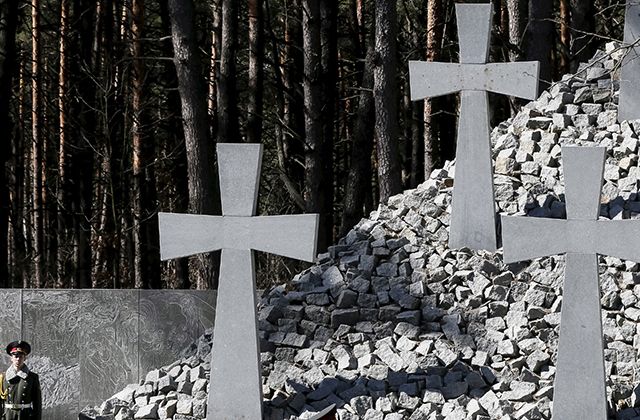
- Can the discovery of Ukrainian archives partially remove the problem with the classification of some Russian documents? Can historians hope that they will now receive any papers in the Ukrainian archives that could not open in Russia?
- They can. In Ukrainian archives, historians will be able to get acquainted with these documents. But in Russia, a secrecy vulture will not be removed from such papers under the pretext that they are already declassified somewhere. More recently, there was a case when a Russian historian and researcher Sergei Prudovsky wrote an application to the Central Archive of the FSB on the declassification of the so -called closed letter to the Harbin order of September 1937; Letters that justified repression and mass operations against citizens on suspicion of Japanese espionage. It was a mass operation of the NKVD, when many and many thousands of people suffered. So, he was refused declassified in Moscow. Meanwhile, this document in Kyiv was declassified back in 2009, and it can be found on the Internet. This did not affect the position of the Moscow Court, which refused to recognize illegal decision to extend the secrecy of the “closed letter about the Harbin residents” adopted by the FSB and the interagency commission for the protection of GOSTYNA. And the Supreme Court said absolutely calmly: but this document has nothing to do with repressions. Although if you analyze the “closed letter”, it becomes obvious that it completely falsifies the events, it has guilty in espionage on honest people. After all, the people who are listed in this order are rehabilitated - it means that the accusations against them are recognized as false. This means that this document is evidence of a repressive campaign, and according to our legislation, it should have been declassified. But our Russian courts spat on this.
- And what do archive departments and just departments usually refer to? Is this a personal secret or a threat to national security, what's the formal reason? Or no one explains anything?
-No, the personal secret just ends after a 75-year period. It would seem that there is nothing more to refer to the archives - they must be given. But they begin to invent all sorts of tricks such as by-laws, as the 2006 regulations on archival and investigative affairs in rehabilitated, which does not provide for the issuance of cases of non-rehabilitated ones. But in fact, this regulation does not concern non -enabilized at all, access to non -rehabilitated matters is simply regulated by the Law on the Archival Affairs of the Russian Federation of 2004. But the officials who sit in the archives include a bureaucratic misunderstanding: but here we are not written here, so we do not give. Of course, some particularly desperate are trying to discipline them with the help of ships - it will not always be possible, as I have already said.
- How much can the discovery of Ukrainian archives with the opening of the Stasi archives be compared? When they opened the Stasi archives, everyone ran to find out who came to you, was your neighbor, friend, brother to those who handed you over to the Stasi freelance employees. There, this institution of freelance employees was extremely common. How relevant is such interest now - to find out who conveyed to you?
-You know, if we talk about the Soviet era, after a 25-year period, this is already not a paramount motive-nevertheless, we note that the Stasi archives were opened in the immediate historical proximity of the crash of the GDR. And the archives of the Soviet state security that will be opened now in Ukraine or, as I would have dreamed of, in Russia, they, of course, do not represent such a burning of today's interest. This is more academic, historical interest, but this is still public interest, because we remember the events of the 1980s, and in Ukraine these repressions occurred, quite a few people were injured from the activities of the KGB. So this is not the main motive, but it is also important, it cannot be denied.
It turns out that all countries around us rethought the Soviet past, we do not want some, we hold on to it and find in it some kind of material for historical inspiration. This is what we have lingered in the past, and the Kremlin skillfully uses this nostalgia, trying to nourish it, on the one hand, fairy tales about Soviet greatness, and on the other hand, not wanting to open any additional archival collections. Russia does not dare to call Stalin a criminal, but flirts with a historical theme. This is a thoughtless glorification of 1945, when it is necessary to understand what sacrifices are in question, when it is necessary to understand what political regimes that the Soviet Union established in Eastern Europe are talking about. These were repressive regimes, no one can be grateful to us for this, and we are surprised: how is it - they free everyone, but they don’t say thanks to us? This is cognitive dissonance, we cannot control the understanding: what did it really look in the eyes of the rest of humanity - all that we did?
Logic and common sense are disturbed. The source of power in Russia is a people, it creates the state and delegates its powers. This is not us for the state, this is the state for us. But we are not the owners in our state - you see what things happen today in Russia. Did citizens in a referendum decide that the embargo was introduced against the products that came to us from the West? No, the government took and limited it-that’s all, and it doesn’t matter that someone was bad from this, no one asked citizens, you know? This is our current political practice.
-If the archives open, and historians will go there, and it will somehow be reasonably published, can it somehow affect public consciousness? Or is it already a completed stage?
- They will go and will. Научный туризм, конечно, будет процветать, потому что открытие архивов — это всегда праздник для людей, которые занимаются историей, это всегда замечательное событие — расширить свой кругозор и обогатить знания. В России сейчас наблюдается обратная тенденция: в России иностранцам просто чинят препятствия для работы в библиотеках и архивах, придираясь к тому, что у них, к примеру, туристическая виза.
Мне кажется, российское законодательство абсолютно извращает все то, что должно быть на самом деле. Если человек приехал по туристической визе, он имеет право ходить в музей. Тогда возникает вопрос: почему он не имеет права ходить в архив? Это то же самое получение знаний — что архив, что музей, что библиотека. Это его частное дело. деньги, наоборот, он их тратит на копии (а в наших архивах это дело дорогое). Ни в одной стране такого нет — вы можете в любую страну Европы приехать по туристической визе и заниматься в архиве, пополнять свои знания.
Alexander Borzenko
Riga