
Translated material
Human Rights Watch Human Rights Office accused Syria’s authority of using chemical weapons
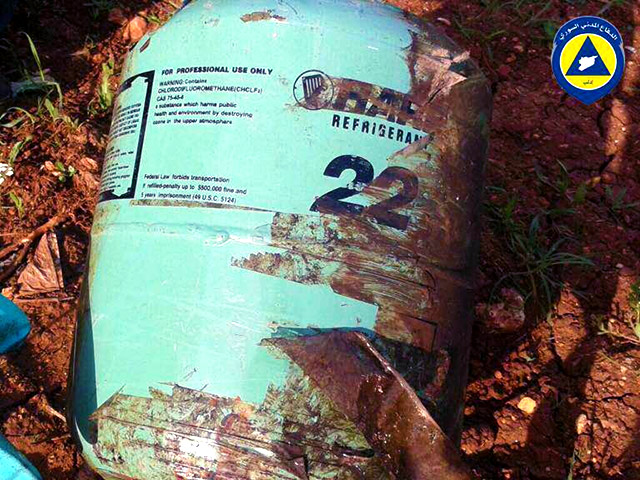
Human rights activists accused the Syria authorities of using chemical weapons against civilians. According to Human Rights Watch, there are serious grounds for making such accusations. According to human rights activists, in March 2015 this happened repeatedly. All attacks were recorded in the territory controlled by opposition groups during the struggle for control of the city of Idlib.
"Government troops used toxic substances during Idlib bombing from March 16 to 30," the HRW website reports. The press release says that the investigation of human rights activists concerned six attacks and in three cases it was possible to confirm that there was a use of chemical weapons. This, in particular, is indicated by the symptoms of the victims and evidence of eyewitnesses.
Human rights activists admit that they could not establish what kind of poisoning substance we are talking about, but they note that, according to local residents, it is chlorine gas. This chemical does not fall under the terms of the agreement on the liquidation of the chemical arsenal Bashar al -Assad. Eyewitnesses indicate that they felt a strong smell of chlorine in the places of incident, the same substance smelled of the clothes of the victims. The witnesses also indicated that they found containers usually used for refrigerants in refrigerators and air conditioners. Doctors who assisted the victims describe the symptoms: these are problems with breathing, watery eyes, a feeling of burning in the throat and cough.
According to Human Rights Watch, chemical weapons were in the so -called barrel bombs, which were dumped from helicopters. "Such attacks violate the Convention on the prohibition of chemical weapons and resolutions of the UN Security Council," the organization’s press release stated. Note, earlier of the use of chlorine gas accused the militants of the Islamic State .
According to the Syrian rescuers who refer to the organization, the attacks affected at least 206 people, including 20 civil defense workers. As a result of one of the chemical attacks, six civilians were killed, including three children. "The Syrian authorities again showed a complete neglect of human suffering, violating the ban on a chemical war," the human rights activists said in a statement. Experts called on to pay attention to these incidents of the state, which are members of the UN Security Council. Earlier, the UN has already charged the Syrian authorities.
In Syria, since March 2011, clashes between the troops of the ruling regime and the armed opposition have not stopped. On September 16, 2013, a report by the UN inspectors was presented, which confirmed that ammunition with poisoning gas Zarin was applied near Damascus. On the night of September 28, the organization for the prohibition of chemical weapons (OPCO) approved a plan for the destruction of chemical weapons in Syria. On October 6, it began under the supervision of a group of OPCW inspectors. On August 19, 2014, the recycling process was completed .