
Translated material
Endless collapse of empires: how to solve the problem of unrecognized states
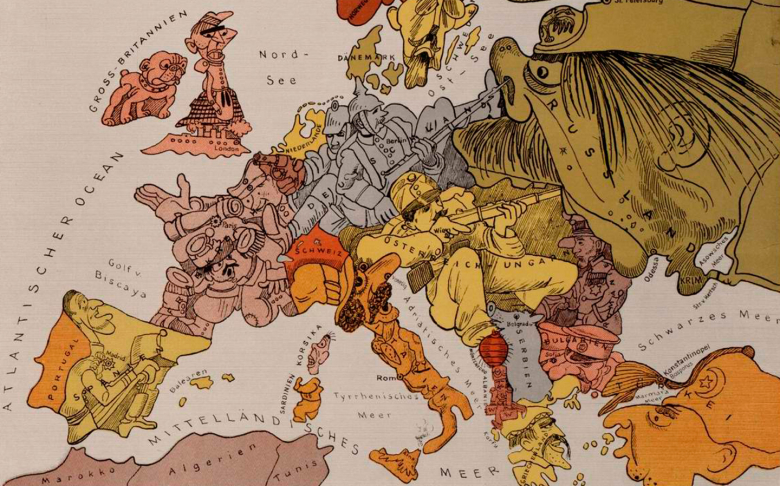
The collapse of the Soviet Union, for example, is considered to be a “bloodless revolution”, although much of what happened over the last quarter century does not allow us to agree with this assessment. Brutal conflicts arose on the lines of the split of the huge empire, and even if they seem to be silent today, no one can guarantee that the open confrontation will not resume in the near future.
The incident in the post -Soviet space is considered by most analysts as a completely special situation, although, in my opinion, it looks like part of a much larger and more comprehensive process. Much, it seems to me, will become clearer and clearer if you approach the history of post -Soviet countries as part of the history of post -colonial peoples, and to the Soviet Union itself as one of many colonial empires.
Shortly after World War II, Europeans lost their possessions in the global south, but the USSR and here turned out to be untouched
In this, I note, there is nothing unnatural. Russia is extremely similar to European countries in the historical dynamics of its development. Just as the British and French, since the 16th century, Russians began their expansion, turning Siberia into the world's largest settlement colony in almost the same extent and the same methods as Western Europeans settled and colonized North America. Since the 18th century, Russians, like Europeans, initiated expansion to the south - to the Caucasus and Central Asia; Europeans were busy at this time by a section of Africa and Indochina. In 1885, when the Western powers secured the boundaries of their African possessions at the Berlin Congress, the Russians and the British met in Gindukush.
Until 1991, Russia seemed an exception to the rules.
Subscribe to read the whole
Make a subscription Redefine.media to read Republic
Subscribe [you can pay for a Russian or foreign card. The subscription is extended automatically. You can unsubscribe at any time.]
Where are the money subscribers going