
Translated material
Time fold
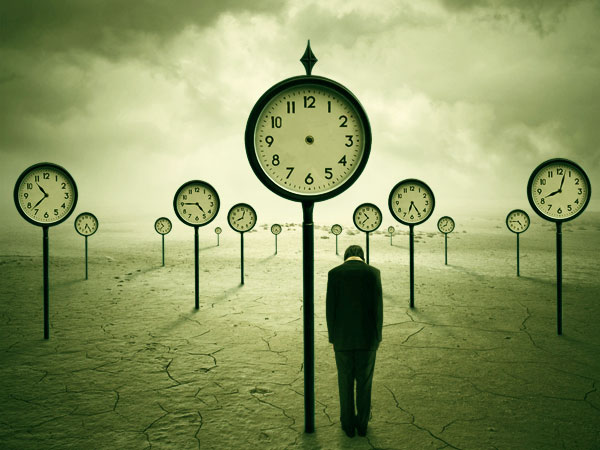
We continue to publish Andrei Kurpatov’s book “Folding Time”. This is a longrid about why our self -awareness, thinking and desire were at an impasse. And is there a way out of it ...
Two times
 Andrey Kurpatov
Let's think over again. “Lack of lack” is the inability to want, a certain paralysis of will, the existence of us in a “passive pledge” (when we do not act, but we act). By and large, this is a situation of the lack of goals: goals as desires, goals as meanings-what attracts, forces to move, to eager somewhere out of worthlessness, stiffness, meaninglessness of our existence. However, Ivan Petrovich Pavlov insists on the existence of a certain mental mechanism in us, a mechanism, which, in fact, forms our future for us.
But what future in this case are we talking about? About the future that can be imagined (even impossible, not to imagine), that is, about the future that is already present in a sense, is present in the present. But how much is such a future ? What if such a future, which I can easily imagine now, is only a modification of this very now , and not at all the future in the true sense of the word (in the sense that it is not there yet)? Indeed, what kind of future is it if it is cast out of my currently “dominant motivations” and the currently “atmospheric afferentations”? Yes, this is the future that does not yet exist (or maybe it will never exist) - that is, according to this criterion for the definition of the “future”, we seem to go through. But it is the future, in essence, now there is now - now there are these desires (motivation), now there is this certain environment (actual afferentation, stimuli) and right now they have already developed in my brain a certain “required future”. That is, it - this is the future - already (it has a place to be), and even if only a variation of the actually existing “now”, and even if only in my brain, but already . And from this point of view, if we (with such exactingness) understand the future , a complete failure is discovered - this is not the future, but the variations of the present, that, one way or another, is already present.
Is this not a fold? That if we, at some basic level, are an established motor for which there is only such a proposed future, that is, in fact, only a variation of the present (“now”). So, of course, works in us (in our brain) a wonderful “acceptor of the result of action”, and the “stimulus-reactive theory” also does not idle-what will you take from them? But at the level of consciousness, as we could see, some other, more complex mechanisms are triggered.
And again, this, foolish, design: “Who I know-I don’t want to, whom I want-I don’t know!”, But let's replace the sexual-erotic subtext of the epistemological in it. Here, for example, Ivan Petrovich Pavlov with his “organizing being” reflex of the goal ... Did his relevant state of physiological science arrange at the time he comprehended him, being in a student of St. Petersburg University? Apparently, no, since he went on. Of course, the comparison is bold, but when I take the next text, I take it for it only because something does not suit me in what they wrote about it before me (it would probably be somehow stupid and strange to act differently). No wonder John Arthur Passmore, one of the most striking historians of the 20th century philosophy, the founder of “problematic” philosophical historiography, believed that the good philosopher (and I would extend this rule to any good researcher) determine the three issues: “What problem the philosopher tried to solve?”, “How did this problem arise for him?” And, most importantly, "Why did he consider the existing solutions unsatisfactory?" [I] . That is, in other words, the fact that he felt “lack”.
In general, this is the same situation: what is is not interesting (does not excite, does not like, does not satisfy, does not please), and I want something else. But do I know this something else when I approach him? No. And this is the whole trick, because this “no” means the actual absence . We are talking about what is not yet in the full sense of the word, it is not even in my imagination (over and contrary to any “acceptor of the result of action”)! In this “no” is an actual future (taking into account our addiction in its definition) - unknown, bewitching, alluring - like that of my escape from the “Hassan”. Did I know then, running away from the pier that I would find, what would I see, how will this all this adventure end for me? No! But that's why this was a meeting with the future, and not with the tedious variation of the present - the eternal “groundhog Day” on “Hassan”. It was a meeting with the future , a distinctive feature of which was the inability to imagine it, with the future , which, as it should be, was not yet - neither in imagination, nor in a clear goal, nor in, sorry for the obsession, the acceptor of the result of the action.
And this is exactly what the real future - brought me out “on march”, and only it can be unknown, bewitching, alluring. If I find myself in the “fold”, I don’t have an unknown feeling, everything is predetermined in it, “everything is clear”, and even if “nothing is clear”, then “it is clear that nothing is clear” (that is, all the same, a dead end). In this state, I do not expect anything truly new, another , but if so, then, of course, it does not fascinate, and does not attract. I think about him: “It will be as it will,” there is no attractive, albeit partly frightening, the forces of the still unknown . There is no movement forward in it, time does not unfold in it.
Is it not time that it unfolds by me (through my mental apparatus), in the case of my (his-apparatus) mood for what I want simply because something is wrong with me (lack of)? With the dog from the experiment of Peter Kuzmich, “everything is so” - she is hungry, in front of her a labyrinth with a feeder at the end of the distance - everything is so, she will do everything now, and eats, thank God. Everything is fine, so the world is arranged-with motivations, afferentations, etc., etc. .. But here I am with Kant, Stravinsky and Schoenberg ...-I need something more, superior to my expectation, superior to what I suggest (and therefore in some sense there is). And that's why I’m already troubled, and that’s why I “itch” in one place that this lack of rest that gives me rest that does not give me a shortage, pushing me, pushing me “on march”, a strong-wishes, a woman-subject-wishes.
The St. Petersburg philosopher Vladimir Dmitrievich Plakhov, describing a similar state, formulates the law of an “epistemic deficit”, the essence, which “lies in the unintentionally, i.e. Never overcame, fundamentally unreasonable final and complete liquidation, a chronic lack of knowledge. ” Vladimir Dmitrievich justifies his “law” more than metaphysically, postulating the “instinctive” and even the “architipic” desire of a person for knowledge (he even calls him - this desire - “libido according to Plakhov”). Is it possible to say this phenomenon, and even more so that it is “libido”, it is difficult to say, but it’s difficult to say, but it’s hard to argue with the fact of the presence of a similar aspiration in us, which, according to Plakhov, “determines social being and, at the same time, behavior, activity and life” of both individuals and any public groups [II] .
It is difficult to imagine for yourself. But it is not this strangeness of the mental with conviction that Ivan Petrovich Pavlov also indicates in his famous report: “This suggests that it is necessary to separate the very act of aspiration from the meaning and value of the goal and that the essence lies in the desire (italics - A.K.)” [III] . Yes, it sounds both strange, and somehow very metaphysically (which, for example, I do not like strongly, and it is strange to expect from Pavlov completely). But it turns out that where everything is programmed, and therefore, as it were, it has already happened, there, by and large, there is no time . And if there is, then it is in the fold - nothing “new”, “other” does not happen, we simply wait, when the result is already programmed before, “known” in advance (already now) the result - “we always have it”. And if all those who believe are right (and it is difficult for me to disagree with this) that the past is that which is no longer there, and the future is what is not yet there, then to name this - predetermined - the future does not turn the future .
And here is the world of pre -graphics and Homer, on the one hand, and the world of Platonikov and Hesiod, on the other. In both worlds there is rock (fate), but this rock (this fate) has a destination: when the oracle pronounces his prophecy - this is not just a certain abstract hypothesis (they say, maybe .., there is an option ...). No, this is the very future, which will be like this: it is known now, and therefore, in a sense, it is already, that is, in fact, it is real, simply not yet implemented (Perseus will kill his grandfather, Oedipus-Father, this is inevitably). And Hesiod, starting with Socrates, is already quite distinctly, the imperative of personal responsibility sounds a nervous note, an imperative of choice - that intention, which will become the basis of the entire subsequent ethical, religious and cultural tradition of Western civilization. Not rock leads Socrates to execution, but his own decision to be executed. “God is innocent,” says Plato in the “state”. “It is not a genius that you get it by lot, but you choose it yourself” [617 De]. It’s like two readings of the same famous phrase - “Know yourself!”: Initially, it is known, it was drawn at the entrance to the Delphic oracle, and the call to realize its nullity in the face of the deity (they say, compare yourself to the deity and the fall of the NIC); However, much later, it sounds in the lips of Socrates as a proud call (or even a challenge?) To the personality [IV] .
These are two worlds, and two “time”: in the first, circular, there is no goal that should be achieved, but there is only a prescription (something already potentially existing), which should only be embodied (as if this is a simple formality, something already resolved); In the second-linear-fated time-the task is faced with a person, he anticipates a certain goal, which, and this, it seems, does not surprise anyone, in essence cannot be fulfilled. "Know yourself!" - It’s practically - “go there, I don’t know where, find it, I don’t know what!”: We don’t know what we will find out, and we don’t even know how to find out to us (is this trip that this journey ended today with a complete deconstruction?). However, the fact that we are just like that, in a blessing, read this phrase, in itself indicates that we have a lack-the desire to know who I am, who I am “actually”? And this shortage, if it really is, maybe, along with others, expand our time.
However, since we are talking here not just about “time”, but about and his, first of all, “fold”, it makes sense to make a reservation: the interpretation of the specified questioning - “Know yourself!” -It does not depend on the specific historical era, but on which time-“circular” or “linear-controlled”-discovers a specific human subject.
The uncompromising critic of modern society, the St. Petersburg philosopher Alexander Kurpanovich Sekatsky calls the “new unity” “Flat-Subject Continuum (PSK)”, the distinguishing features of which is “Mass culture (cultural industry), accessible to the masses of Truth (Positivism), a common impressive democracy” (political correctness) ” [v] . The subject, which is able to start in the spaces of PSK, is called the Sekatsky (following Jake Horsley) Humanon.
Presenting the world of Khumonon, Alexander Kupriyanovich writes: “The attitude to the personality as a thing is truly a successful horror story, causing snoby (subjects of the previous“ existential project ”,“ subjects of suspicion ” - A.K. ) horror for two centuries. Humaton understands a lot about things and aggregates, knows how to handle them properly. And if you say that Humaton applies to the one to another one as a special kind of thing, this will just mean that he treats a person well. This means that he will not “knock on the lid”, but will try to figure out the keyboard. If the permissible operations with the keyboard stubbornly do not correspond to the “picture”, it is possible that the unit simply failed. Then you should contact a specialist - psychoanalyst or an institution where the device can overload ” [VI] .
In this ironic view of “Humaton” (and contrasting it as a “snibik” dying in the PSK), the ambiguity of the ancient questioning is drawn with the maximum visibility - “Know yourself!”. Khumaton Sekatsky is in the “circular time” of a perfectly functioning “acceptor of the result of action”, determined by the needs that “see” the future with the accuracy that does not allow this “future” from the “present”, because “all the time”. Snabiki Sekatsky, on the contrary, resist PSK and are injured by the growing and drawing “folding time”. In Snubika, according to Alexander Kurpinovich, Hegelian negativity still lives, “supporting the continuous inner concern of the become a become spirit” [VII] . This Hegelian (but not the Kozhevskaya) “negativeness” (the ability of the subject to exceed all cash content as not corresponding to his self-use), in a sense, there is a “lack” that allows us to expand time-from a circle of time in the direction of an indefinite, and therefore the actual future.
One of the most striking, modern researchers of ancient philosophy - Marseille Conch - this is how his cultural book “Philosophical Orientation” begins: “I would like the cows to teach me their wisdom,” says the “voluntary beggar” in Zarathustra. The animal is wise and reasonable in the sense that it does not seek a different life than its own [...]. A person philosophizes, because he lacks something. What? The answer is simple: it lacks the point ” [VIII] . Further, the Conch invites us to think about two times -the time of the “cow” (in which everything is destined, predetermined) and the time of a person (who has a lack of something more, and therefore he stands in the face of the frightening and at the same time fascinating unknown-the actual future ). Is it strange that the “time of the cow” is the “time of the Delphic oracle”, and “the time of Homer”, “the time of pre -graphics”, and the time of the so -called “eternal expulsion” (this concept itself, “eternal obstruction” - arose precisely in pre -sneakers) [IX] ?
And is it strange that the modern creator of the theory of “eternal return”, who resurrected her from oblivion, who returned it, is precisely Friedrich Nietzsche, envious of the “wisdom of the cow”? Is it because, in connection with all this, Nietzsche’s relationship with the theory of “eternal return” one -on -one corresponds to Pavlov’s relationship with his unlucky “reflex of the goal”? And this is exactly the way: as Ivan Pavlov announces the “reflex of the goal” key to his science of man, and then never recalls him, Friedrich Nietzsche declares the idea of “eternal return” of the key to all his philosophy, and then it seems to forget about it (few recordings on this topic are contained in the diaries and letters of the philosopher, and only).
Like Pavlov, but, as it were, from a different angle, Nietzsche is in the face of an insoluble contradiction: his main book - “so said Zarathustra” - is dedicated to the “superman” (creating what was not yet ), that is, in fact, the exit from the circle of “eternal return”, but it - this book - was supposed to become the foundation of his “new” “new” theory Return ”:“ Now I will tell the story of Zarathustra. The main concept of this work, the idea of eternal return , is this highest form of statement, which can be achieved in general ... ” [X] . The foundation did not work out, because the very idea of the “eternal return” was questioned by the “grandiose building” of new meanings (“superman”), which Friedrich Nietzsche with such “brilliant courage and perseverance built his whole life,” and especially in “Zajor”. Of course, an irresistible contradiction arose: either in a circle (“eternal return”), or from a circle (“superman”)-AUT-AUT.
However, the very fact of the presence of this contradiction, as in the case of Ivan Petrovich, says, it seems, even more than any other “harmonious theory”: we have a genuine riddle of time-both Nietzsche and Pavlov speak of some kind of wearing of us (volume of the “act of desire”, in addition to his “meaning and value of the goal”), which extends (creates), or, which, probably, is more properly trying to extend more correctly (create) time. Otherwise, outside this force, we, as if under the influence of some other, opposite force, similar to the power of universal gravity, we get involved, fall into the oblivion of real estate-where “we have it all the time”, into a fold. In a fold, where everything is cyclically repeated, goes in a circle - from circus rhythms and sequence of change of seasons, from a state of physical order to complete dominance of entropy, and vice versa in a circle.
The very problem of the time that our heroes face (and Nietzsche and Pavlov is only an example), they are aware of this or not, it sounds as follows: either the time is already given to us - everything, immediately (“always like that”, “eternal return”), as in the physical world (what we will be about later), as in animals, like ourselves at the physiological (essentially, animal) level, or it is true. The very experienced state of lack (the feeling that something is not yet enough, something is missing, something does not develop yet), and therefore we still need something, and we are aiming to go there, we don’t know where, look for that, we don’t know what (something really is not ), and thereby creating time. We are either in the fold or on the march: either the Perseus disk, as well as destined, kills his grandfather-acriant, or the arrow (lack of) Ivan-Durak (although, rather, Ivan Petrovich) rushes into the unknown ...
The desire for the same?
So, thanks to Friedrich Nietzsche and Ivan Petrovich Pavlov, we faced an extremely, in my opinion, productive paradox, which could be called equal to the “paradox of the“ Reflex of the goal ”and the“ acceptor of the result of action ”” and the “paradox of the“ Nietzschean superhuman ”and“ eternal return ”.” Moreover, in both cases, we discover something like another-this time physical-the paradox of “quantum-wave dualism”.
This paradox, I remind you (extremely simplifying the theory), consists in the fact that we, people-human people, are not able to imagine a reality in which something at the same time shows the properties of a quantum (corpuscles) and waves, although all experiments and appropriate calculations show that such a reality has a place to be (that is, the problem is only in the limitations of our system of representations). To get out of this peculiar mental trap, the remarkable Niels Bor suggested a Solomonian solution - the “principle of complementarity”, which, in fact, invites us to simply not pay attention to the shameful fact that, with all the bottomlessness of our chomosapien intelligence, we cannot imagine the reality of the micromy subject to us (as well as a lot of other things invented by the same physicists and mathematicians - from - from some 17th spatial measurement or suprastruna, to a topological bagel, turned out by Grigory Perelman inside out). Such a “solution”, of course, simplifies the work of researchers, but it does not change the essence of the matter: the world that organizes us (the same micromy Poincare-Eninstein-Bor-Gizenberg-T-Cetera), we will not, by our consciousness, is different in its own principle. However, in this case, at least we are aware of this. How are things with our temporary paradox?
What if it is necessary to consider the “Nietzsche-Pavlov paradox” that we have brought now as an annoying logical misunderstanding-a formal contradiction between the concepts of “circular” and “linear” time, but as something very, very significant-as an indication of the actual reality that we, for one reason or another, cannot imagine? That if time (as we understand it in our everyday life) is something like a physical macromir with its objects and laws, determination and accessibility, while it is based on this time known to us (with sunny years, wristwells and milliseconds)-a fundamentally different (for our mental apparatus) is a reality, which, for this reason, is precisely the peculiarities of our device, and we cannot be perceived by us, we cannot be perceived. Opening to us only through such semantic faults - basic contradictions and paradoxes?
In other words (to speak very directly) that if we stumbled, finally, for a while as actual power ? Usually, and this must be recognized with all certainty, we use time simply as a means of describing the sequence of certain phases of a particular process. We do not see it, we cannot feel it, we cannot even measure it, but only calculate with the help of third -party devices. In the end, time, as we understand it, is simply a kind of virtual relationship between what is no longer there, and what is not there yet is a pure abstraction provided by the observer memory mechanisms. And here-through this very “paradox of Nietzsche-Pavlov”-a certain force opens in front of us (moreover, ours in us), trying to overcome the inevitable rolling into repeatability and, therefore, timelessness.
So, taking a closer look carefully, we will see that there is no “linear” time either in religious, nor in the humanitarian, nor, even, in a natural -residential worldview. In general, this is only a matter of scale: any “linear” time in these areas is always a “time limited in time”. And we should only expand its frames a little, as it immediately turns out to be “circular”: everything is simple with physicists of aggression-they all live in the world from a large explosion to a large explosion (no matter what it is, at least in a large cotton, as they say recently), humanities brilliantly, from antiquity to modern deconstructivism, reproduce the same time schemes [XI] , and any religious worldview is all the more, always “return”.
We find an internally controversial but very indicative analysis of this phenomenon in the book “Homo amphiboles: Archeology of Consciousness” by Sergey Berezin and Sofia Agrainovich: “If the time moved in a circle and the greatest good was its repeatability (such a culture can be called a culture of harmony), then a new culture, where the role of the absolute and meditative unit is performed by the subjective absolute. Where time stretched into the line, it can be called the culture of the goal. The time in which people live and die in the culture of the goal arises at the time of creation, as if stirring like a giant river, from the eternity in which God was. Time will stop his movement towards a great goal - the kingdom of heaven, that is, to the ideal eternity of harmony, at the moment that no subject on earth is given to know and which God will determine, who is in eternity and constantly controlling everything and everything in time. Thus, the linearity of the time here remains relative, because the Christian time, flowing out of eternity, will fall into it. This, of course, is not a circle, but a certain giant ellipse. Apparently, human consciousness is characterized by a constant desire for harmony in the form of a circular repeatability of time. The culture of the goal, apparently, is necessary for humanity with its provocativeness, its aspiration for something else, new. However, the goal of any culture of the goal is harmony ” [XII] . It is easy to notice that in the quotation the quote is not only time, but the authors themselves go in a circle.
The idea of “eternal return”, in fact (to think), which destroys the very idea of time (as a certain change, as a certain “arrows of time”) arose much earlier than it with a fatal way shocked the consciousness of Frederick Nietzsche in August 1881 “the mighty, pyramidally piled block of stones, not far from Surl”. The history of the concept of “eternal return” goes into the distant past, how far, even researchers of antiquity can not fully answer us the question of which of the ancient philosophers it, in reality, belongs. But the fact that it existed in antiquity is a fact. The wheel of “eternal return” is the wheel of our former culture, a culture of a pre -Posocratic, culture in which there was still no search by a person of himself, a culture in which we only comprehended the world around us.
It is possible that Nietzsche also discovers this theory, not without the influence of the Greeks so beloved by him, as well as Heidegger, who urged us to return to Parmenides with Heraclitus. All of them who wrote about the "eternal return", fans of the early, in some ways archaic antiquity. Antiquities, in which there were neither Platonic “ideas” nor the Aristotelian “forms”, where the objects of the world were not “objects”, given the “subject” for “analysis” and “synthesis”, and only pure phenomena of a large and non -factance world. It was the world of “incentives”, in which our smaller brothers continue to exist, regulated by the Anokhinsky “acceptor of the result of action” (and we ourselves are up to a certain age) - the world of “eternal return”, where the happy feeling of “the same one” rules. But we are not none (at least many of us) is no longer one of them.
We compare children's and adult collecting (since Ivan Petrovich has given this meaning to this phenomenon in his work about the “Reflex of the goal”: with external similarities, they differ as day and night - the child collects the same , something with the maximum degree of similarity (candy wrappers, soldiers, etc.), we collecting impressions, books with whole libraries, musical works of different epoch Genres - we collect different things , otherwise than we really do not have , otherwise, we quickly get tired, begin to miss and lose all interest.
So maybe time is something more, or maybe just something completely different than the notorious “arrow of time”. Time is not the desire of the same thing, but on the contrary-this is the desire of something else, "the power-wishes-to-so-no." But what if nothing is new, there is nothing else - not to see ZGI? What if, everything that we see in front of ourselves, causes a painful feeling of “already seen”, “already recognized”, “already former” ... I remember how in my youth I was shocked by Aphorism subtracted somewhere: “If you have come up with a smart thought, go to the library and get a lot to find someone who has already formulated it before you.” What does it mean to live in the Parmenido-Zenon world in which everything has already been ? As in that joke about the old man who caught a goldfish, he asked her: “Fish, fish, make me everything - and a big house, a beautiful wife, and a foreign car, and a lot of money, that's it!” "Filled!" - the fish answers him. The old man looks around - the same hibar, the same old woman, even a trough - and that, old, broken. "In terms of?" - He turns perplexed to the goldfish. “And so ...” she answers mysteriously. “Now you had everything.”
The lack of hope for a new one, for another - that is what a “fold of time” is. When you are “on the march”, you have the feeling that you may still have something that you still do not know, but what you already want, you want now. And you have this shortage . The desire of the unknown is a paradoxical, but possibly a true time mechanism.
[I] Historical and Philosophical Yearbook / Institute of Philosophy of the Russian Academy of Sciences. - M.: Nauka, 2009. S. 252
[II] Plakhov V.D. Homo Genialis Behind the line of normality: philosophical and anthropological discourse. - St. Petersburg: Publishing House "Petropolis", 2010. - 256 p.
[III] Pavlov I.P. Complete works, vol. III, book. I.-M.-L., 1951. P.310
[iv] Drusinsky D.L. The consciousness of the ancient sage. -M.: Agraf, 2003. P.18-21
[v] Sekatsky A.K. The last round of progress (from education to transparage). Study. - SPb., 2012. S. 15
[VI] Ibid. 69-70
[VII] Ibid. 78
[VIII] conch M. Philosophical orientation / Per. with French. V.Yu. Nastrova and A.V. Shestakova. - St. Petersburg: Publishing House "Russian World", 2012. P. 41
[IX] Vidal-Nake P. Black Hunter. Forms of thinking and the form of society in the Greek world / Per. with fr.; Edited by S. Karpyuk. -M.: Ladomir, 2001. S. 77-78
[x] Nietzsche F. Full works: in 13 volumes / Institute of Philosophy. - M.: Cultural Revolution, 2005. S. 251
[XI] Gaidenko P.P. Time. Duration. Eternity. The problem of time in European philosophy and science. -M.: Progress-Tradition, 2007.-464 p.
[XII] Agranovich S.Z., Berezin S.V. Homo amphiboles: Archeology of consciousness. -Samara: Bahar-M Publishing House, 2005. S. 139-140