
Translated material
Is progress possible in winemaking?
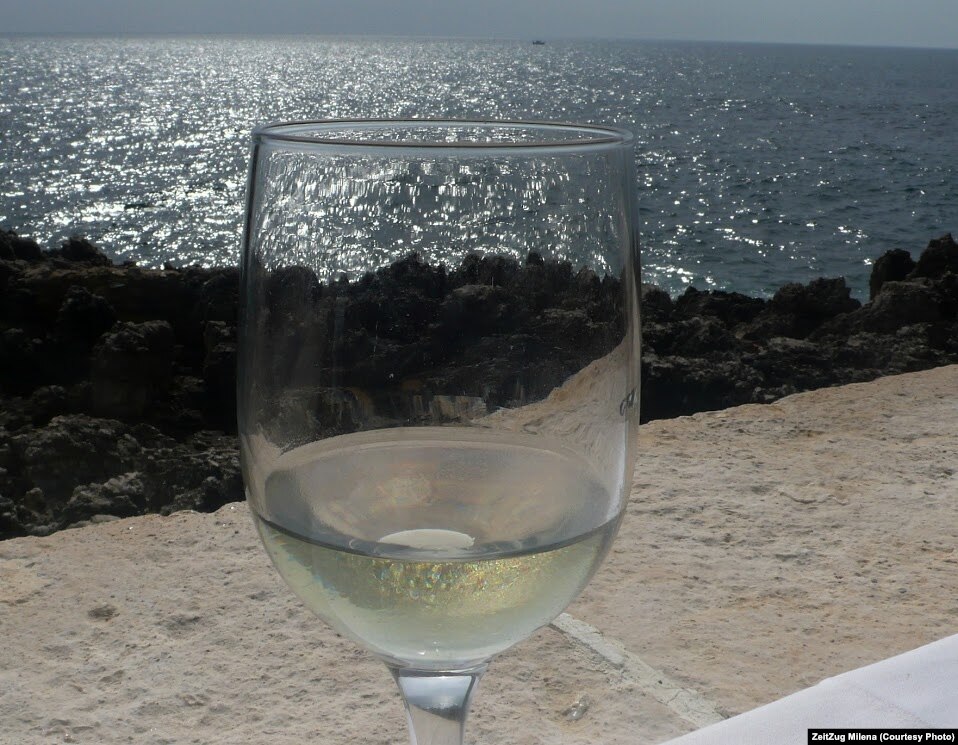
I’m afraid, a common phrase that the palate of Safo and Sophocles enjoyed the same wine as ours, far from the truth. There are as many truths as wines. And the wines are as much as vineyards. Let us pose a problem: is progress possible in winemaking?
One of the Games beloved by the Greeks was called "Cottab" (from the same metal vessel). For us, people of the 21st century, it is obvious that rubber and leather (balls), paper (playing cards), plastic, bone, wood (chess) have a direct tactile attitude to games. For the ancient world, the wine was the basis of life and leisure. The concept of "wine plays" had a literal meaning.
The Roman poet Tibull (I century BC) exclaimed: "Give the barrel now smeared with the ancient phaler, / knock out the bushes of the sooner tubs with the Chioskoy stream!" Here we are talking about completely different wines: Hios is a Greek island wine, and Falerine is Italian. What meant to Tibullah and his contemporaries "ancient"? By the then standards, the wine of the fifteen -year exposure was considered the best phaaler. Here you have ancient! But this, perhaps, is not about endurance, but about antiquity of the very grade of wine. Let's talk about ancient wines in more detail. The gods, pretty tormented Odyssey, never refused him fault. Naisykaya orders to bring food and wine into the Odyssey to the Odyssey (in the Russian translation it is modestly called the "drink"). But in what dungeon the Odysseus languishes at Calipso: "The Green Wall of the Deep Grotto Once the Green Once, / Grapes grew up, and heavy thunderstorms hung on the branches." Odyssey’s father, Laerte, is not inferior to his son and in his garden is baking about the "juicy grains of vines of vineyards." The then treatises, poems, statements of any wisdom give reason to believe that the culture of wine in the ancient world was at the highest level. Hesiod subtly notices that "filtering hooks the veins of guilt and fades the warmth ... It creates it." Plutarch gives an exquisite advice: drinking young wine after giving marshmallows, for this wind affects the wine more than others. As for the color, first of all, the Greeks appreciated the “fiery” of wine (cf. with N.V. Gogol: "Green flasks and cups on the tables of Shinkakikov turned into fiery"). To achieve the proper color, the Greeks sometimes tinted the wine with aloe juice, cinnamon, saffron. Here is another evidence of a sophisticated attitude to guilt: the rule "five cups - yes, three cups - yes, four - no" described by Plutarch. The following proportion of mixing of wine with water is approved: two cups of wine plus three cups of water; One cup of wine plus two cups of water. It is condemned: one cup of wine plus four cups of water.
And then it's time to say not about the exquisite attitude to guilt, but about the quality of wine. I will give the will to my "veins of the tongue" (expression of Plato). Okay, I will not evaluate young Greek wine, because it was sweet. God with him, more precisely, the gods with him. But here is another fact: the Greeks bred wine with warm (!) Water. Meanwhile, the temperature of the wine is no less touching than the temperature of the child. Next. Before transfusing a wort to the amphora, the bottom of the amphora was silent. Amphora was clogged and the neck was poured with lime. The amphora was stored in the cellar, rows to the wall, a neck up. When consuming, the wine was often boiled and thus brought to the state of the syrup, so that willy-nilly had to be diluted with water. (Sparta was an exception: the wine was not bred there.)
Well, what about Rome? In Rome, the Chashnikov called Procuratores Vinorum. Roman wine was cloudy. Before use, it was filtered, and then filtered through a tightly woven basket or canvas. During lunch, water was supplied at the request of the drinking. But for dinner, wine and water was mixed without fail for everyone. To cool the wine, the crater was put on the ice or threw an ice bag into it.
In the era of Claudius, wine began to drink on an empty stomach: so the Greek civilization, having suffered a defeat on the battlefield, took revenge in everyday life. Horace wrote: "Rome turned into a moral slave of defeated Greece." Why "moral" and not sensual? Pliny the eldest in his “natural history” impassively describes the Roman degenerators who, without throwing tunics, did not sit at the table, drained huge bowls of wine, immediately shook and repeated the whole procedure twice and three times. It is known that the Milan praetor Novellus Torkvatus, the favorite of the Emperor Tiberius, made a career due to the ability to gleam many times.
Strange, but the barbarians reacted to the vineyards of the south of Europe with respect and even contributed to their distribution. The Visigoths were severely punished by those who uprooted vineyards or abducted a bun. In the 9th century from R.Kh. The Gallic monk was supposed to be more than two liters of wine per day. But the dark era is dark wine.
In the foreseeable past, the most interesting is the relationship between wine and containers. Modern barrels in quality are incomparably higher than barrels of two thousand -year -old or two hundred years ago. This is important because the wine in the barrel is easy to overexpose. It fades, loses sharpness, freshness, coquetry. At least, it was two more hundred years ago. The then vines knew that the best wine is in the middle part of the barrel, at the bottom there is a sediment, and compote oxidized on top. Three centuries ago, a light bottle squeezed a weighty barrel, which at the very least served the guilt for several millennia. Let her give her tribute. Yes, they used the bottles in the era of barrels, but only in order to bring the wine to the table, and fill the bowls or cups from them. But one should not think that a modern bottle, remarkably storing wine, has always been the way we know it. In the XVIII century, she looked like our grandmothers: reliable wide hips, an inappropriate waist - not a bottle, but a flask. She was replaced by a broad -shouldered thick bottle. Little by little, she stretched out, slender. In the cellar, she was "raised": transferred from a vertical position to horizontal. But no need to lose sight of the main thing: the bottle with the help of a reliable traffic jam decided the conflict between wine and air.
Personally, I believe that the current wine is better than the ancient. I explain the progress in winemaking logically: as wine is tormented over time, so the whole wine culture is tormented with every millennium. Winemaking is not literature. Progress in it is possible. This toast is for progress!