
Translated material
Genocide chronicle
1894–1896. Trabzon (Trapezund) and other cities in the east of the Ottoman Empire covers a wave of Armenian pogroms. The score is killed for thousands.
1908. The coming to power in Ottoman Turkey of the Party of Turkish Nationalists "Unity and Progress" (Mladoturki)
1909. A wave of Armenian pogroms in the west of the Empire, in the former Greek province of Kilikia. About 20 thousand Armenians were killed.
1913. The “Special Organization” was founded (TE? KILAT-I MAHSUSA), later widely involved in the destruction of the Armenian community. At the end of 1914-early 1915, thousands of prisoners were released and included in the “special organization” of the empire.
1915
January. The defeat of the Turkish army by Russian troops near Sarykamysh. Military Minister Enver states that defeat is the result of Armenian treason and that it is time to deport Armenians from the eastern regions.
February 1915. The Central Committee of the Unity and Progress Party to solve the “technical issues” of the deportation and extermination of Armenians creates the “Executive Committee of the Three”, which includes Dr. Nazim, Behaeddin Shakir and Midhat Shukri. It is the “Committee of Three” that solves all “technical issues”. By order of Enver, several tens of thousands of soldier-Armenians of the Ottoman army were disarmed and transferred to working battalions. Following this, they are exterminated. The civilian Armenian population begins to confiscate weapons, allowed for wearing since 1908, as a result of the Mlado -Turkish revolution.
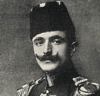 |
| Military Minister of Ottoman Turkey Enver |
Beginning of April. The expulsion of the Armenians of the cities of Zeytun and Durta. The Armenian population of Alexander and Adan is also deported. There are arrests of the leaders of the Armenian community in Sivas. Attacks on Armenians and robberies - in the Armenian quarters of Sivas, Beatlis and Erzerum. The massacre in the Armenian villages of Vansky Vilaieta. The Armenians of Van are refused the demand of the Turkish governor general to surrender weapons immediately. In response, Turkish troops and Kurdish detachments besiege the city, but meet fierce resistance. In May, the advanced detachments of Russian troops and Armenian volunteers, discarding the Turks, finally take off the siege of Van.
Night from 23 to 24 April. The Ottoman government arrests 250 representatives of the Armenian intelligentsia and the leaders of the capital of the capital - Istanbul (Constantinople). All of them are placed in two concentration centers near Ankara. Most of them were soon killed or died on the way to exile to the southeast of the empire. The arrests and killings of Armenian intellectuals and public figures throughout the country begin - these events are considered the official beginning of the genocide, which lasted until 1917-1918. Separate outbreaks of violence took place in the 1920s.
May 24. Application of the Entente states: “In view of the new crimes of Turkey against the humanity and civilization of the government of the Union states, they publicly declare a high port about the personal responsibility of all members of the Ottoman government, as well as those of their agents who are involved in the massacre.”
May 27. The Central Committee of the Unity and Progress Party holds a temporary law on deportation (Tehcir Law), which gives the Ottoman government and troops permission to deport "anyone who will be considered the threat of the national security of the country."
June 21. The Minister of Internal Affairs Talaat gives an order to send “all Armenians without exception” living in ten provinces of the Eastern region of the Ottoman Empire, with the exception of those who are recognized as “useful for the state”.
July 5. The borders of the deportation are expanded due to the Western provinces (Ankara, Eskishekhir), as well as the Euphrates valleys, etc.
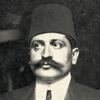 |
| Interior Minister Talaat |
July 13. Talaat states that the deportation was carried out for the purpose of the "final solution to the Armenian issue."
June-August. Despite all the attempts of the Turks to hide the scale and ultimate goal of the action, the consuls of foreign states and missionaries constantly send reports about the atrocities taking place in Turkey. This forces the youngsters to act more carefully. In August 1915, on the recommendation of German allies, the Turkish authorities ban the murder of Armenians in places where representatives of American diplomasses can see it. In January 1916, a circular is sent to the place, which prohibits photograph the bodies of the dead.
1916–1939
The beginning of 1916. Russian troops are moving deep into Western Armenia. In Erzerum (in the Russian press, he was called the "capital of Turkish Armenia") can be found only a few Armenians contained in harems. From the entire Armenian population of Trabzon, only a small group of orphans and women hidden by Greek families remained.
1917. The situation on the Caucasus Front is again formed in favor of the Turks.
February 1918. Turkish troops take Erzerum, Kars and reach Batum. The refugees who began to return to their homes again fall under the blow: the advancing Ottoman mercilessly exterminated all the Armenians coming in the path.
October 30, 1918. Turkey signs the Mudosk truce and surrender.
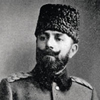 |
| Minister of Fleet Jemal |
February 1919. A military tribunal was established in Constantinople. He recognizes the facts of the mass destruction of the Armenians and condemns the Enver, Talaat and Jemal, as well as a number of their accomplices to the death penalty at the end of the war at the end of the war. Their acts are declared a crime against humanity.
1920. The new ruler of Turkey Kemal Ataturk ceases the activities of the Constantinople military tribunal. Three governors executed by the sentence of the tribunal are recognized as martyrs and heroes
Turkish people.
September 9, 1922. Turkish troops enter Izmir. 10 thousand Armenians and 100 thousand Greeks were destroyed, and the city itself was burned in three days.
September 1939. Adolf Hitler, before invading Poland, says the phrase: "Who, in the end, remembers the Armenians today?"
Based on materials
Museum-Institute of Armenian Genocide under the AN RA prepared by Ararat Mirzoyan, candidate
historical sciences