
Translated material
Understanding the territory
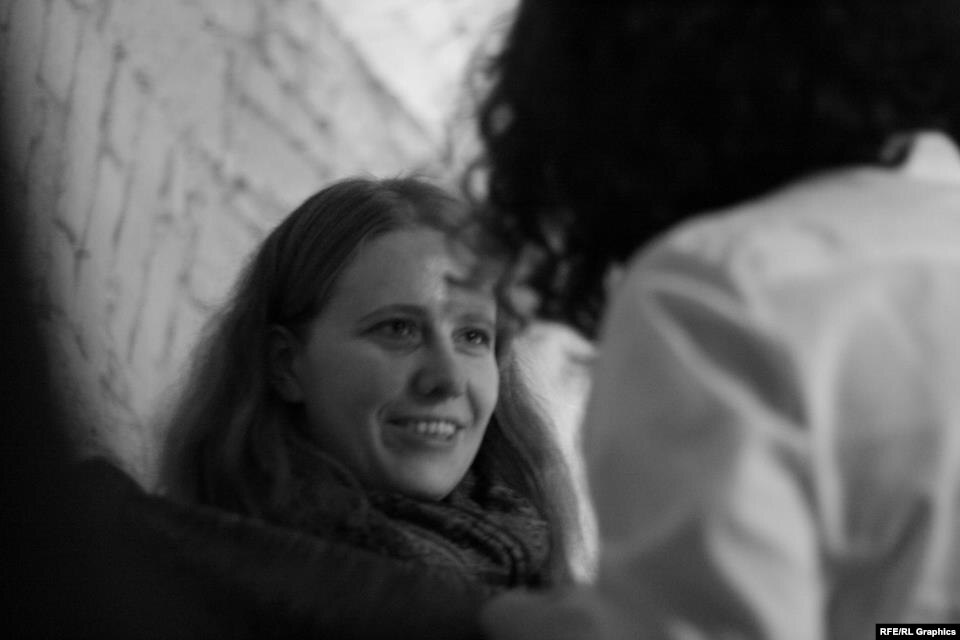
Alexandra Wagner - about Ukrainian identity
"A country with uncertain identity." With these words, one of the Czech television journalists, Joseph Pazerg, described Ukraine, having worked in this country several months after he did not extend the accreditation in Russia . The wording is quite understandable for a resident of the Czech Republic-a country whose independent history at the beginning of the 20th century began with the collapse of the empire, Austria-Hungary, continued by the expulsion of the German-speaking population after the Second World War and ended with a peaceful separation with the Slovaks. As a result, a society was formed with radically not diverging ideas about the rules of life in one state - at least, with regard to close ties with the European Union. A society that speaks one language-and after all a century ago, Prague was multilingual, here at the same time they wrote in German-Franz Kafka, in Cheshik-Karel Chapek, and Yiddish could be heard on the streets.
Thinking by analogy, as you know, can lead to a logical error, so we will not try on a chain of Czech historical events to Ukraine. Only one parallel can be drawn: before the “velvet” divorce, most Chekhs and Slovaks were against the disappearance of Czechoslovakia, only the third spoke in. Most Soviet citizens also did not want the collapse of the USSR, which they stated in a referendum in the spring of 1991, but the logic of historical events led to a completely different result. Today, Czechs and Slovaks, according to polls, are glad that it all ended in the appearance on the map of two independent republics - as they are glad to appear independent Ukraine and most Ukrainians. But with this thought, most Russians cannot come to terms, more than 50 percent of which continue to believe that Russians and Ukrainians are "this is one and the same."
For many of those who consider themselves Ukrainians, the Russian language is native. Maybe this is what confused the Czech journalist in Ukraine? Or maybe the point here is that the monuments Stepan Bandera and Nikolai Vatutin are in one country, albeit in different cities? Yes, monuments to Lenin in Ukraine continue to disappear , but not only because of the "red terror". Among other reasons is a simple circumstance that Lenin has never been to Ukraine. Nobody touched the Soviet General Vatutin, who released Kyiv and other Ukrainian cities from the Nazis, although rallies have been regularly held near the Verkhovna Rada, near this monument, near the Verkhovna Rada.
Identity does not necessarily consist of concepts such as love for certain symbols, nationality or language
Events in the Donbass many forced many to think that Ukraine can be torn to pieces - depending on where the monument to Lenin remains, and where it was demolished. However, we are talking about different faces of the history of one country, one territory in which people lived together for centuries: before the advent of independent Ukraine, in the Ukrainian SSR, which had quite certain boundaries. And this community of people is not as easy to disconnect as it seems at first glance. Therefore, the Poles continue to repeat that the heroization of the OUN-UPA warriors in Ukraine does not hurt them. Indeed, at the same time, a commission of historians of the two countries is working, who are trying to calmly and without emotions to figure out what happened in the first half of the 20th century and why.
Identity does not necessarily consist of concepts such as love for certain symbols, nationality or language. This is a broader concept, which, among other things, can also include the category of the place where a person was born and raised and which he is able to realize as his limited territory . Russia is perceived by most Ukrainians as a neighboring territory - adjacent, but not its own. In the end, from Kharkov to Kyiv - 470 kilometers, and to Moscow - 740, even Donetsk from Kyiv is 300 kilometers closer than Moscow.
Amazingly, this feeling of Ukrainians is not by blood, and neither the annexation of Crimea or the war in the Donbass did not erase around the territory. Even the most ardent opponents of the government in Kyiv, who use the words "junta" and "dill", are talking about Ukraine, and not about Russia. To do this, just read the separatist sites or talk to the Crimeans. In Crimea, people will scold Ukraine for the fact that, after the Maidan, they did not provide for the reaction of the Crimeans (opponents of the annexation), or for the fact that the previous power brought the people to the point that it was impossible to live like that (supporters). In the Donbass, Ukraine is scolded for economic blockade and non -payment of social benefits and pensions (supporters of the separatists) or for the fact that Ukraine could not defend its territory with armed route (supporters of unity). These people still do not ask to solve their problems of Aksenov, Zakharchenko, Plotnitsky.
Alexandra Wagner - Journalist Radio Liberty