
Translated material
Chernobyl smolders
Why is the construction of a safe sarcophagus over the Chernobyl nuclear power plant still not completed?
Why is the construction of a safe sarcophagus over the Chernobyl nuclear power plant still not completed?
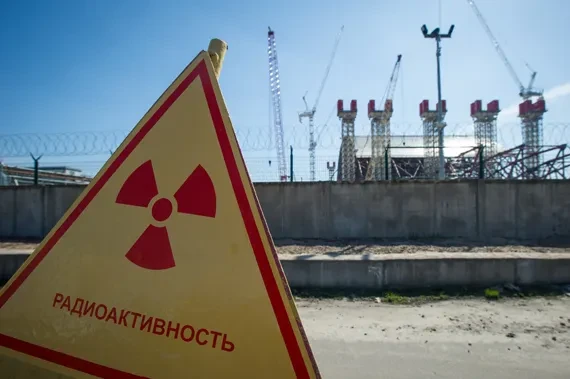
On December 14, on the day of honoring the liquidators of the accident at the Chernobyl nuclear power plant, among other tasks, Petro Poroshenko announced the need to take care of the completion of the construction of a new reliable shelter over the destroyed 4th power unit, calling it “a long-term in front of the heroes-Blackshells”. This statement is the complete dejavu: without exception, all the presidents of Ukraine from the first to the current, extreme, stated the need to build the so -called new safe confinement (NBK), and that it would soon be erected.
In April 2011, on the eve of the 25th anniversary of the Chernobyl accident, the author published a forecast that the NBK will not be built at that time again, and once again new contributions from countries-donors of the Chernobyl Fund (CHFU) to complete construction once again will not be enough. The author’s sad prediction, unfortunately, came true. Let's briefly recall how the events developed before and after the specified date.
Words
02.16.09 in Kyiv a grant agreement was signed with the European Bank for Reconstruction and Development (EBRD), according to which a grant in the amount of 135 million euros was to be used to support the construction of the NBK and to complete the second storage of the recovery of nuclear fuel (Hyryy-2) from the 1-3rd power units of the Chernobyl nuclear power plant. The development of project documentation for both projects was supposed to be completed in 2009, and the completion of construction work was scheduled for 2012. According to preliminary estimates at that time, the cost of building only the NBK was supposed to exceed 600 million euros, so the EBRD grant was considered as a certain catalyst, which was supposed to be an additional incentive for the efforts of the international donor community. The CHFU by that time had already received contributions in the amount of almost 800 million dollars, and the score of nuclear security in the amount of about 300 million euros.
04/26/10 President V. Yanukovych, at a meeting with the President of the EBRD T. The world, stated that there are not enough funds provided for the shelter object, about 400 million euros are needed.
09/23/10 at the Chernobyl nuclear power plant the then first deputy prime minister of the Ukrainian government A. Klyuyev said: “The initial cost of this facility was $ 505 million, now this project (construction), which was made by international organizations, is completed, and its final cost is 870 million euros.” At the moment, 550 million euros are not enough to implement the project. The increased cost of the construction of the NBK, according to A. Klyuyev, was caused by the fact that "the safety requirements of both Ukraine and the international community increased."
09/28/10 at the Assembly of donors by the Ukrainian side, an optimized total assessment of the cost of implementing all projects on the Chernobyl nuclear power plant was presented - about 1.55 billion euros. This required the donor countries additionally introduce 550-600 million euros to the CHFU. In addition, the shortage of funds for the construction of Hyath-2 was approximately 130-140 million euros.
02/26/11 The then chairman of the Verkhovna Rada V. Litvin said that it previously predicted that for the construction of a new reliable shelter and ensuring safe working conditions for people at the accident, about 1.2 billion euros are needed. Now, this requires an additional 740 million euros. V. Litvin expressed the hope that the problem of financing the construction of a new “shelter” in the near future will be able to solve.
03/29/11 the head of the State Agency of Ukraine for the management of the alienation zone V. Borosha said that about 500 million euros were mastered from the CHFU. In general, 1.54 billion euros are needed for the project. “Additionally, about 600 million euros are required. Another 140 million euros are not enough on the nuclear security account for the construction of Hyat-2 at the station. ” In turn, the Vice President of the EBRD H. Raichenbach confirmed that in general, a shortage of funds for the construction of NBK and Hyat-2 is estimated at 740 million euros.
03/31/11 V. Morosha in relation to the financial side of the NBK project repeated that the current value of all work is 1.54 billion euros, of which the price of NBK is approximately 990 million euros. "This is with a margin."
The next conference of donor countries was held in Kyiv on 04/19/11. The main result was summarized a day later by President V. Yanukovych: “In practice, we completed the task that stood before the donor conference ... The main amount was collected - about 550 million euros, and the rest of the necessary amount, I am convinced of this, will be collected in the near future. That is, in fact, we got the opportunity to build the “shelter” facility and the end of this construction until 2015. As for the control of the use of funds, both international organizations and the main organization, which is engaged in financing and monitoring the use of all funds, is the EBRD. ” Also on April 20, the then Prime Minister of Ukraine N. Azarov promised: “Each center will be used effectively and transparently. This is a matter of honor of our government. ”
04/25/11 then the Minister of Emergencies V. Baloga said: “I am more than convinced that for a year and a half for without international meetings, money has been pre -collected and there will already be a final figure of 740 million euros, and we will close this issue.” According to him, the funds raised during the Donor Conference are enough for Ukraine to complete the design and estimate document on the Chernobyl projects along with the EBRD and the donors and the construction of construction, which will end in 2015.
The collection of CHFU funds really continued, and 06/08/11. Prime Minister of Ukraine N. Azarov at a meeting with the General Director of the IAEA Yu. Amano said: "Ukraine has practically raised the necessary funds for the construction of the Chernobyl confinement."
07/27/11 The press service of the Ministry of Finance of Ukraine said: “Taking into account the results of the April Donor Conference in Kyiv, as well as in view of additional obligations taken by France, the USA, Russia, the EU and the EBRD, the need for funds for the implementation of Chernobyl projects in the amount of 740 million euros” was completely financed. ”
03/06/12, almost a year after the specified donor conference, the chairman of the State Agency of Ukraine for the Office of the Zone of the Exclamation of V. Morosha in relation to the cost of the NBK said: “The price is indicated in the contract, and there are risks regarding inflation processes or the cost of materials. The cost of the contract is 935 million euros. ”
Finally, on 04/26/12, the head of the nuclear security department of the EBRR Vincer Novak said: “The cost of building the NBK is more than 950 million euros”, and to the question of whether the option of increasing the cost of equipment and the performance of work on NBK projects (as well as hijah-2) is laid out and whether these amounts can be considered final: “There are risks of increasing prices related to the risk of currency oscillations ... according to the NBC, the NBCs are at the same time They lie on the general contractor in the person of the novarka concern, and since they carry these risks, naturally, they should be interested in ending this project within the allotted time and within the framework of the established budget. ”
Case
The first “bell” that there was not enough money again on 06/04/14: on this day, the press service of the Accounts Chamber of Ukraine reported that the fulfillment of the action plan at the “shelter” facility is not provided with the necessary means, since the estimate of its completion exceeds the volume of the financial resource, which is available in the CHUR ... The risks of the further transfer of the implementation of some, updated at the end of 2013 Infrastructure projects on the Chernobyl nuclear power plant will remain in the future, therefore, as a result, this will again lead to an increase in their value. ” A very interesting point should be noted here: money is allocated by donor countries, the manager of the funds raised is the EBRD, and announces their next shortage ... For some reason, the Ukrainian side.
Finally, on 10/24/14, the already mentioned head of the nuclear security department, EBRR Vincer Novak, for some reason in Tokyo, told the Japanese agency Kyodo Tsusin that the work on the construction of the NBK, which was supposed to be completed in 2015, will last another two years. The main reason for the delay in the construction time was called "a serious lack of funds." The new term for completion of work was scheduled for November 2017. According to V. Novak, now "615 million euros are not enough to implement this project."
A week later, on October 31, the EBRD press service confirmed that “the budget deficit of the Chernobyl project is 615 million euros. To cover this deficit, it is proposed to make an additional contribution by the EBRD of 350 million euros, the contribution by the “large seven” in the amount of 165 million euros, as well as the attraction of grant financing in the amount of about 100 million euros from other donor countries that are not included in the Seven. The completion of the construction of the NBK is now scheduled for the end of 2017, and the total final cost of the Chernobyl plan of measures is now estimated at 2.15 billion euros, of which the cost of only the construction of the NBK is about 1.5 billion euros. Literally a month later, December 2, the EBRD website reported that the Bank’s board of directors had already decided to allocate 350 million euros as additional funds for the construction of the NBK, and another 165 million euros are expected from G7 and the European Commission. In addition, the “Big Seven” for the future spring organizes a conference of donors to collect the missing 100 million. The EBRD report that the bank will independently cover the necessary difference if necessary.
The agility of the EBRR in the issue of allocating additional funds for these programs is extremely unusual in itself. And all this monetary grace occurs against the background of the next delay, no one will definitely say which one in a row, now for more than two years, the commissioning of the NBK.
"Sherche" who?
So, what is in our "dry residue" at the end of 2014? The commissioning of the NBK was transferred to November 2017. No other object, the construction of which on the Chernobyl nuclear power plant was provided for by a well -known plan (pom, SIP) has not been built to the end and not fully commissioned, while giant amounts were spent. The cost of only the NBK C with the 935–990 million euros declared in April 2011 in April 2011 increased to 1.5 billion euros over three years, thus increasing by more than 50%. Why? After all, everything except cement, concrete and individual metal structures is imported from Europe, and the designers of the NBK, and construction managers are also from there. Are they, proofans who are not able to calculate the project cost for several years to come? Or maybe inflation in Europe for three years “jumped” by 50%? Who benefits from endless delay, transfers, rise in price? Someone now recalls that in 2001 the cost of the construction of the NBK was estimated at ... 260 million, moreover, not euro, but dollars? In fact, there are answers to these questions for a long time, and in the Ukrainian media.
04/25/09 The Ukrainian “Mirror of the Week” published an article entitled “Chernobyl nuclear power plant”: a run in Ukrainian and a European Surpsy in place, written by the former CEO Chernobyl and the first director of the shelter object (OS) by V. Shcherbina. The material is five and a half years old, but its relevance seems to only increase. A few quotes:
“Everyone who is professionally interested in the imminent and high -quality solution of the Chernobyl and OU problem has increasingly increasing the alarm that these problems will not be resolved in the foreseeable future. And the reasons for this lie not so much in the complexity of the problems themselves, but in the mutual reluctance of the relevant leaders - both from Ukraine and from the EBRD - to solve them quickly and efficiently ...
One thing is indisputable: the EBRD as an manager of the CHFU funds is not aimed at the speedy construction of the NBK ...
It is worth paying attention to another major drawback of Ukraine’s policy regarding the Chernobyl problem - “shelter”. The fact is that many responsible workers in Ukraine, and at the Chernobyl nuclear power plant, has a conviction: since the West “imposed” the Chernobyl -Chernobyl nuclear power plant, it is he (specifically - EBRR) and must build “turnkey” and transfer all the objects listed in the Memorandum about the closure of the Chernobyl nuclear power plant. At the same time, the EBRD, on the contrary, believes that its task is only at the disposal of the CHFU and the account of nuclear security. That is, to ensure that these funds are used for its intended purpose and effectively, and all organizational and technological activities to solve the Chernobyl problem - “shelter” should be carried out by Ukraine, but according to Western standards. In order to adequately get out of this largely artificial (possibly consciously created corruption) impasse, both parties quite on a highly high -professional level to fulfill all clause of the CHFU grant, an agreement on the grant of the nuclear security account, the framework of Ukraine and the EBRD regarding the activities of the CHFU in Ukraine, which clearly prescribed the rights and obligations of each of the subjects. But instead, each of them tries to pull the financial blanket to their side, and completely transfer the responsibility for the result of the development of these tools to another. At the same time, it is necessary to state bitterly that in this matter, Western participants both professionally and corruption look much more prepared than Ukrainian. ”
Well, how do you like the assessments of people who know well, what they are talking about? Including in terms of better corruptionly trained Western officials?
In the spring of 2011, the same authors wrote another article entitled “Chernobyl nesting - shelter: the risks of developing a tragedy into a farce!” We do not know whether it was published somewhere, but it can be found in the public domain on the Internet. Just another quote: “All this bacchanalia with the timing of the commissioning of the Chernobyl objects objectively forces our Western partners, i.e. Detotors of the CHFU and the Donors of the Syab, to feel doubts about the sincerity of the desire of Ukraine as soon as possible to complete the construction of the facilities funded by them. The only thing that is still holding the process of filling the CHFU and SYAB is still on their swimming process is the remnants of the donors of these funds in whether constant breakdowns of the deadlines for the completion of the construction of the Chernobyl facilities are their high design risks or behind this is the conscious desire of the Ukrainian side as long as possible to “saw” these funds. ”
After such assessments, it is difficult to add something. But let's try. First about EBRR. It is clear that, by virtue of its affiliation, the bank is interested in the fact that the estimates of the donors proposed by it and approved by the Assembly are executed by European customers - almost all funds eventually remain in Europe, not to mention the profit itself, taxes are paid from them. And the more this money passes through the bank, the better. The paradox of the situation lies in the fact that from this point of view, the EBRD is not interested in reducing the costs of implementing an ACEC plan, including the construction of the NBK. Here, however, there is one scrupulous nuance - not only members of the European Union transferred money to the CHFU, but also other countries - from the USA and Japan to Australia and Saudi Arabia. And this money remains in the end only in Europe.
Not interested in reducing international expenses for the Chernobyl nuclear power plant and Ukraine - its contribution is mainly estimated by the volume of work performed. And the more expensive you designate them, the kind of more solid you begin to look in the eyes of those “who pays and orders music”.
There is one significant point in Ukraine. One gets the impression that it is not very interested in compliance with the next shifted deadlines for the completion of the construction of the same NBK and other infrastructure facilities at the Chernobyl nuclear power plant. Indeed, after this completion of the obligation of the world community to Ukraine will become exhausted. The indicated fund and score will cease to exist, and there will be nothing to “saw”. And then - only the maintenance of the “anti -frying cap”, as the president of the All -Ukrainian Public Organization of the Disabled “Union Chernobyl Ukraine” Yu. Andreev, in an efficient state, according to expert estimates, will require 50-80 million euros per year. If you do nothing else at all. The NBK itself does not solve any basic problems-under the new roof there will still be about 180 tons of ton of irrigated uranium fuel scattered by an explosion, dozens of tons of radioactive dust, thousands, if not tens of thousands, tons of radioactive water in the compares and a lot of other “pleasures”, including the level of radiation of 3.5 thousand x-rays per hour at some premises inside the 4th power unit (600 per hour-a deadly dose for humans).
The state program of transformation of the Chernobyl nuclear power plant into an environmentally friendly object provides for the dismantling of the OS, the removal of fuel-containing masses and others for several decades. It is unclear, however, with the help of what technical and technological tools and methods, and, most importantly, what means - for the full fulfillment of the declared goals, tens of billions of at least dollars, even euros, will be required. To begin such work without having the necessary forces and means - this will be madness at the state level.
Alexander Likhletov is an independent journalist, member of the Union of Journalists of Russia. Специализируется на вопросах атомной энергетики и ядерного нераспространения