
Translated material
Complex stories in simple packaging
How to facilitate the path to humanitarian knowledge is told by the creators of the Arzamas project
The educational project of Arzamas , which opened at the end of January, in a few months proved that the humanities can gain popular embodiment without losing its reliability and specificity.
By a strange coincidence, it was the sphere of humanitarian knowledge that was least of all presented on large educational resources. “Postnuka” and “theories and practice” , for example, were given to the topics of natural and technical topics. Perhaps this happened by virtue of the Soviet tradition, when many different magazines were published like “Model-designer”, “Technique-youth”, “Science and Life”, but there were almost no scientific publications of a humanitarian nature.
The mass reader would hardly have agreed to take up “questions of philosophy”, however, small studies at the end of the number published “thick” magazines, but they, as a rule, were limited to the near -literary circle of topics. It cannot be said that all humanitarian science was stunned, islands of scientific freedom were preserved in university and academic layers, but the trust of fellow citizens was lost, in any case, so far.
According to all the same “theories and practice” , quoting analysts of the Electronic Learning System “Universrium” , another trend appeared in online education-interest in studying art and the humanities. Therefore, the appearance of such a resource as Arzamas turned out to be more than timely. On the other hand, a decrease in free media space contributed to the fact that the project team included talented journalists with principles. And although the Arzamas website has been published near a dozen courses, today you can boldly talk about what this project makes attractive and unique.
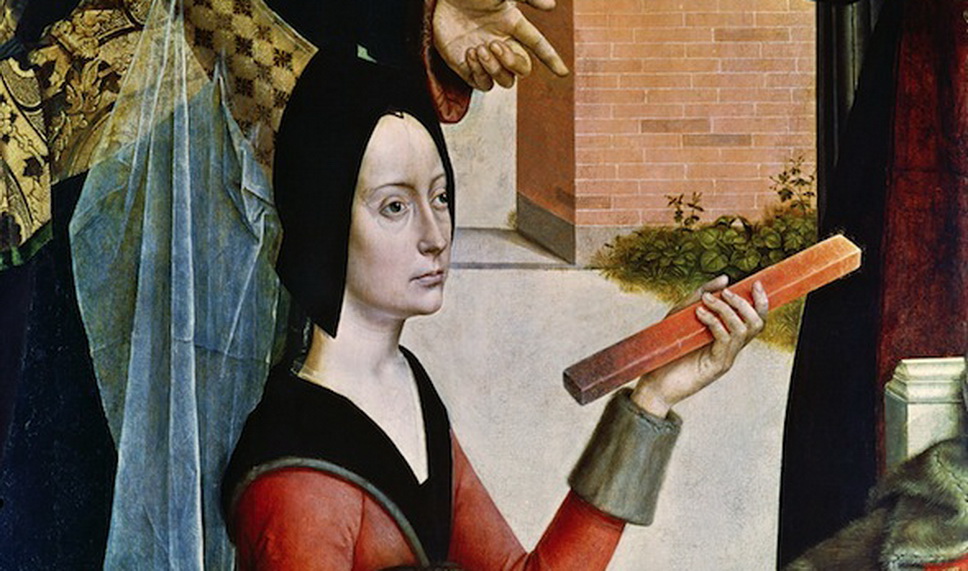
Firstly, as already mentioned, a distinct humanitarian orientation. It is clear that the choice of the topic and the choice of the lecturer are inseparable, although the search here is not as limited as it might seem at first glance. There are enough scientists in Russia, the main thing, as the chief editor Irina Kaliteevskaya said, to find a topic interesting to both the researcher himself and the ordinary audience-reader. In addition, since it is not necessary to wait for relaxed artistry, even with high-class operator work, most specialists do not have to, and even the optimal 15-minute lecture for such formats does not always keep attention, the creators of the project came up with a wonderful thing-related materials. But, instead of boring references to other scientific works and sources (which is not excluded if these materials are as expressive as “recognition of Jeannne Le Warrier in theft of the agraph, a silver cup, three Turkic pennies and a knife, as well as in three times the sin of copulation with animals”, the translation of which was published for the first time), and fragments of carriers from the forgotten books are used, and quotes from forgotten books, Interview with specialists, memories. In the course of “Crime and Punishment in the Middle Ages” there is even a test, having passed which, you can understand which of you the heretic would have turned out, you live during the Inquisition. The quality of illustrations and links that find themselves in the right places and in the correct format deserve separate praise.
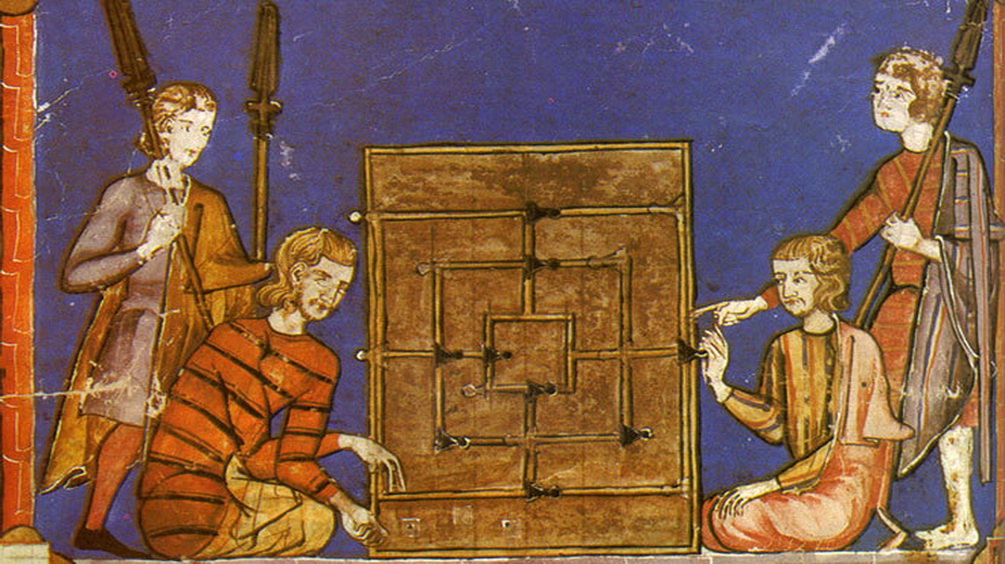
Despite the fact that Arzamas is positioning as an educational project, this is an excellent textbook for schoolchildren and help for teachers. This idea was fully implemented in the special project “Russian Classics. The beginning ” , in which the slobber teachers talk about their favorite works from the school curriculum. It is not yet clear how actively this teacher’s resource will use, but former students with great pleasure return to the “school” classics, literally opening it again.
How the exact humanitarian knowledge managed to translate to the modern multimedia language Radio Liberty was told by the creators of the Arzamas project, editor -in -chief Philip Dzyadko , director of the video department Alexander Urzhanov and chief editor Irina Kaliteevskaya .
Philip Dzyadko , editor -in -chief Arzamas:
- One of the main tasks of the project is to facilitate the path to humanitarian knowledge. Therefore, we immediately decided to treat our courses as a story that consists of two parts. These are video epizodes, that is, lectures recorded on a video camera, and a certain set of materials made in different formats - texts, photo galleries, all in the world that is related to the topic that our lecturer has chosen.
Because when you watch any lecture, no matter how detailed it is, you still have a huge number of questions. Either some incomprehensible words or circumstances arise, or you lack knowledge of a wider context. And in order to create just such a box of knowledge, we came up with a course - "1+1", materials and videos.
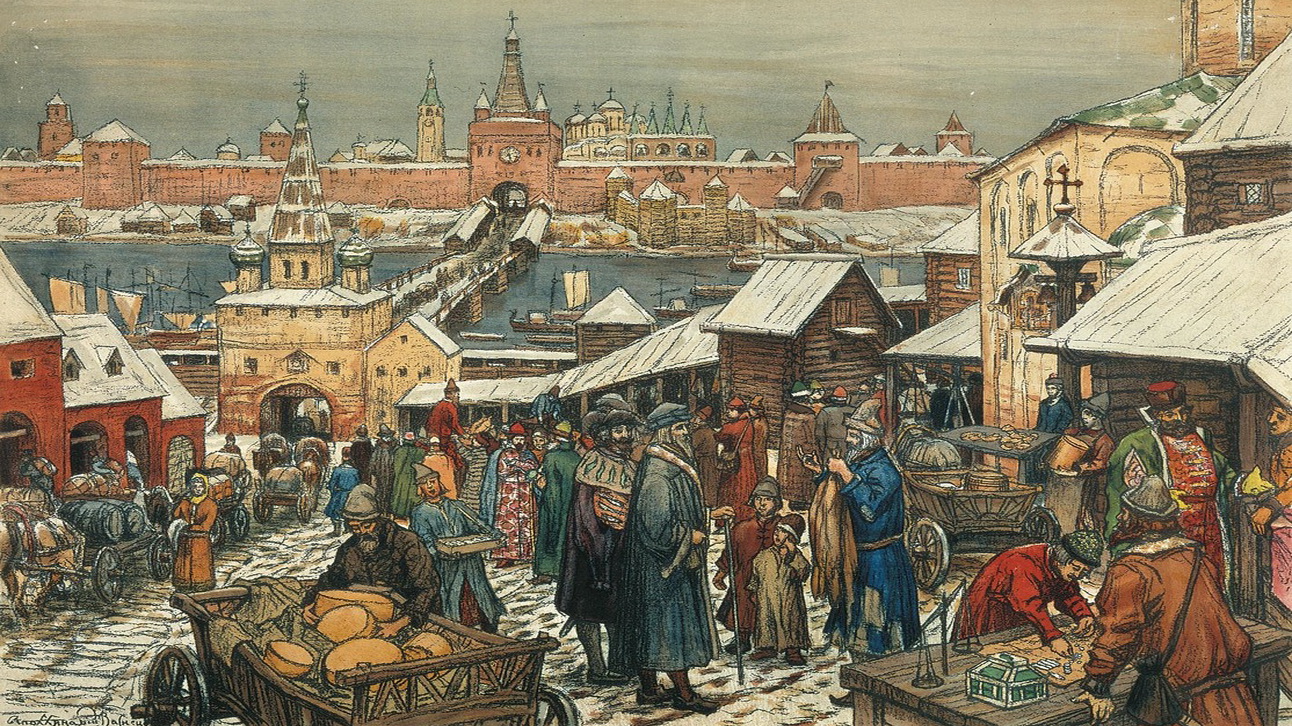
Recently, we had a course dedicated to the genealogy of Russian patriotism, all based on the materials of the history of Ancient Rus'. And we decided to tell what the story of Ancient Rus' is in general. They came up with, for example, a “guide for ancient Novgorod”, as if you and I decided to go to Novgorod of the 13-15th centuries tomorrow. And, taking such a simple media move, we processed a huge amount of historical literature, involved academic scientists, packed uses information and added a new meaning. This is our focus. The more diverse, more unusual and unexpected than the association to create such input tickets in knowledge, the more interesting.
We are used to the fact that knowledge is something so very serious, from a textbook. And in reality, this is infinitely interesting and exciting, ridiculous and scary, and is directly related to you. But all the same, all these materials are a concomitant story to our main product - to video courses.
knowledge is funny and scary, and is directly related to you
Initially, the idea of the project was to make a platform for philologists, historians, art historians, (we are now focused on humanitarian science), and then the appetites began to grow, and we realized that I would like to record not lectures, but courses, because the course is history, and began to think about TV shows. But in the series, a lot remains behind the brackets, and here this very wide context appeared. From the publication of a small letter of Tolstoy to his brother about beautiful gypsies to global material about the history of the Middle Ages in 90 cards. But we always ask the lecturer to start a story with a particular story, and then go to some general conversations. Because through the guidance of a magnifying glass to a specific plot, you get an understanding of a particular topic, era and so on.
Excerpt from the course "Historical fakes and originals"
Sergey Ivanov about vicious empresses, selfish philologists and who, how and why is trying to change the past

How to facilitate the path to humanitarian knowledge is told by the creators of the Arzamas project
The text of the copyWidth PX Height PX
The url has been copied to your clipboard
No Media Source Currently Available
0:00 0:03:21Irina Kaliteevskaya , Arzamas chief editor:
-First, we invite a lecturer who, being a scientist, reads sources, is engaged in some kind of plot, and after that we say to the viewer or reader: please, you can see this, read the interview, which at a deep theoretical level comprehends something to this plot, but you can choose the material on the same topic, but has nothing to do with science, or to polystyle any pictures. The point here is to show that it can all be interesting to different people.
At first you learn to pack simple stories in understandable forms, then - stories more complicated
There are several principles in collecting such materials. Either we read decryptions, watch the video, and we have some questions. Then we are all together and say: oh, it’s terrible to me is interesting, he mentioned this with one sentence, but it would be interesting to know in more detail. Someone suddenly offers absolutely fantastic ideas: can we find out what animals inhabited at that time the territory of Ancient Rus'? We don’t even know whether such research exist or not, but curiosity arises, and we find an answer or not. Another approach is to go to different scientists who are engaged in similar subjects, and they will tell you what they themselves are doing.
In fact, here the problem is what you ask a question, and how to find this question, which will be at the same time interesting to the general public, and will captivate the scientist, will make him speak human language, understandable. It seems to me that when you ask the specialist the exact question of what he really understands, for the most part, you get an exciting answer. Unless you try to get out of him something beyond his expert knowledge.
For example, a medieval court is a very specific topic, and Olga Igorevna Tomeva read the protocols of specific medieval ships: they brought such and such a Jean, accused him of theft and gloss ... And there is a picture not only about the medieval court, but also about how a medieval person works, what he thinks, what he is afraid of, how he makes decisions. Olga Tomeva told us in an interview with how she began to do this: her scientific adviser lay protocols, they were not translated, not published. And we published some for the first time.
I must say that for my personal biography, I perceive participation in this project as a very natural path. First you learn to pack simpler stories in understandable and affordable forms, then you learn to pack stories more complicated. And now we are trying to learn how to pack truly complicated in very simple, very beautiful, very understandable and attractive packaging.
From the course "Greek project of Catherine the Great"
Andrei Zorin about how ideology led Russians to Constantinople, and brought to Crimea
Alexander Urzhanov , Director of the Video Department:
- Arzamas is a popular science mainstream, and now it should look like that. We are just not used to this, because there are classic samples - the magazine "Science and Life", television documentary on federal channels or a purely scientific product that is quite difficult to transfer to a large audience.
Again, the question of the input ticket arises. There are a bunch of sites that do not speak Russian, which offer educational options, and some of them are monstrously designed, I mean a video product, if we approach this from the point of view of a wide viewer. But a narrower audience, which is precisely this topic is interesting, the same as it looks like. There are areas of interests that I will consume, even when it is recorded on the phone and look completely monstrous if the substantive side is curious to me.
a narrow audience, which is precisely this topic is interesting, the same as it looks like
The question is how many people can capture this or that product. And we want this to be seen at home from the phone, or you can show on the first channel so that this language is available and understandable to everyone. Simple things work here: a neat approach, beginning, middle and end, well or poorly told story, a good or poorly set speech, a good or poorly selected visual series. Actually, the same thing that works in television products, documentary cinema, and so on. This is a big illusion, if we look through the TV, the second we look through the computer, and we look through the third through the phone, there is absolutely no difference.
As for the quantity and quality, when we already had ten hours of filming and terrible terabytes of the video in our hands, it turned out when we tried to make a common picture in the disciplines that we have about half a percent in each of the areas, and we can go further for years and decades, until retirement and to death.