
Translated material
Peskov asked not to bring to absurdity the struggle with Nazi symbols
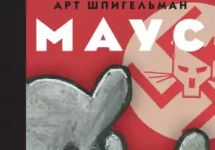
Presidential spokesman Dmitry Peskov did not comment on reports of removing from the shelves of books of Moscow, the anti-fascist graphic novel "Mouse" due to the image of the swastika on the cover, Interfax reports . However, he emphasized that in any actions it is necessary to have a sense of proportion.
“To clearly show the enemy, he needs to be shown,” Peskov said. He recalled that the Soviet caricaces during the war portrayed Hitler. At the same time, the presidential spokesman said that it is unacceptable to insult "our national memory and pride, our veterans."
Earlier, journalist Sergei Parkhomenko said that Muscovite Margarita Gornostaeva tried to buy Roman Mouse in the Moscow Book House.
“The seller, hiding your eyes, says - go after May 9. Why? No? No, they didn’t end, they are removed from the shelves due to the fact that on the cover of the swastika. I say - be a god, this is an anti -fascist book. In short, the guard under his jacket, they sold us one copy,” he quoted Barlamova’s story.
As the publisher Varvara Gornostaeva notes , the novel disappeared from the shelves and other Moscow stores. The Moscow store deleted the book even from his site. At the same time, the “Stalinist collection” remains on the shelves, emphasizes Gornostaev.
The world -famous graphic novel " Mouse " by the American artist Arts Poligelman talks about the Holocaust, while the Nazis are depicted in the form of cats, and Jews - mice. The novel is about the ghetto, Auschwitz and the "march of death" on Dachau. In 1992, Spiegelman received the Pulitzer Prize for this work.
On April 4, it became known that on the fact of the sale of busts and figures of soldiers and officers of Nazi Germany in the Central Children's store, the bourgeois interdistrict investigative department of the GSU of the IC of Russia started a criminal case under part 1 of Article 282 of the Criminal Code (arousal of hatred or enmity, as well as humiliation of human dignity). It was also reported that the general director of OJSC "Children's Mir" was confused on the inadmissibility of violation of the legislation on counteracting extremism.
On April 15, Rosconnadzor said that a demonstration of Nazi symbols without propaganda purposes should not be interpreted as a violation of the law on countering extremism. Roskomnadzor ordered a special legal-linguistic study of the terms used in the Federal Law "On Combating Extremist Activities". The Moscow Law Academy concluded that the public demonstration of Nazi paraphernalia or symbols without propaganda purposes in accordance with the text of the law is not considered a manifestation of extremism. As noted in the department, this position is confirmed by a number of decisions of the Constitutional Court.
On April 20, the head of the Department of Information Programs of the Department of Department of Moscow for anti -terrorism activities, Vyacheslav Popov, said that the capital’s authorities are planning to conduct raids to identify goods, souvenirs and leaflets with swastika and other extremist symbols before Victory Day .
“We send instructions to the executive authorities so that they enhance control over the spread of extremist materials. This is the swastika, emblems of prohibited organizations, souvenir products and a form with such symbols, propaganda materials, slogans, leaflets and other materials using a dodger that offends people by religious attitude or affects the national dignity of citizens,” said Popov. - Before the anniversary of victory, most likely, various provocative actions will intensify. "