
Translated material
Bank of the criminal world
The history of the Ukrainian emigrant who created the anonymous analogue of PayPal: The Atlantic
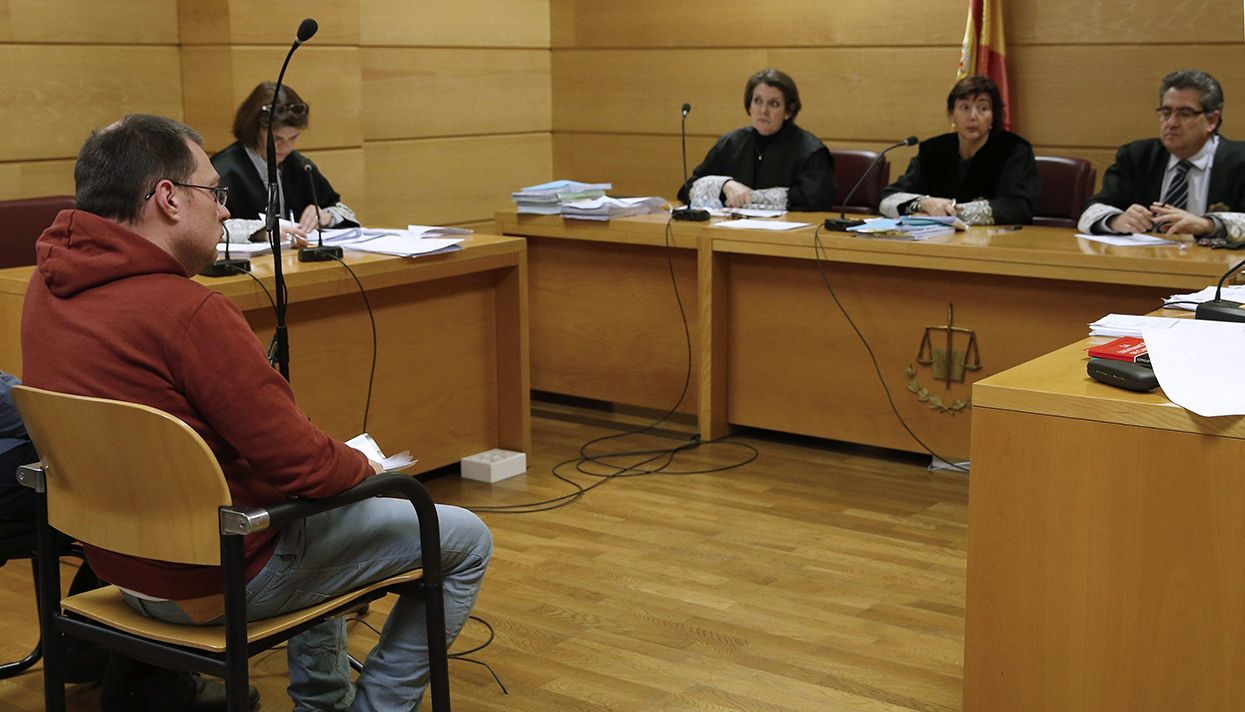
In 2013, the US authorities closed the anonymous Liberty Reserve payment system. The prosecutor’s office said that 6 billion dollars were washed through it - this is the largest case in the history of the United States. The creator of the system, a native of Ukraine Arthur Budovsky was detained in Spain, and then stolen by agents of the secret service. The Atlantic tells how the emigrant managed to create PayPal for the criminal world, simultaneously married a man and a woman.
Arthur Budovsky was born in Kyiv. In 1990, when he was 17 years old, his mother married a second time; The family emigrated to the United States and settled in New York-in the area where Orthodox Jews lived. The teenager could not understand why his neighbors were walking in black clothes, as if they were constantly mourning. Budovsky grew up very closed, he did not leave the house for months; So his parents bought him a computer - so that he had something to do. After sitting at home for about a year, Budovsky got a job as a computer consultant.
In New York, the Ukrainian met another emigrant Vladimir Katz, they were both fond of computers and made friends. In the early 2000s, when the electronic money was just born, Budovsky and Katz bought an exchanger company through which it was possible to sell dollars and buy the E-Gold currency. On the commission that each transaction was laid out, they managed to earn tens of millions of dollars.
The company worked until 2006-the authorities decided to close it due to the lack of a license, although there was no clear law on this subject. In the summer of 2006, special forces broke into the house of Arthur Budovsky. “They asked me where weapons and money? I replied that I had no weapon, but the money is in the wallet. They thought I was joking, although I was not joking. " Budovsky was found guilty of unlicensed activities to transfer money and gave five years conditionally.
All this did not stop the enterprising emigrant. He thought about creating a new system - an analogue of PayPal, but for those who do not have an account with a bank. Budovsky reasoned like this: two and a half billion people do not have a bank account, which means the system will be in demand. So Liberty Reserve appeared.
Its principle of work was like this:
1. To open an account, no information is needed except the email address.
2. To put money on the account, you need to buy a local currency through an exchanger on the Internet.
3. For the transfer of money from one account in Liberty Reserv, it receives one percent of the transaction amount to another system. For an additional 75 cents you can buy an anonymous translation - the service hid the number of the wallet from which the translation came.
Arthur Budovsky opened an office in Costa Rica. He claims that he chose this country because of a good climate. Costa Rica is famous as a refuge for money launderers. Only in 2006, when the Liberty Reserve office was opened there, 5.4 billion dollars washed in the country; In 2010-already 21.6 billion (this is almost half of the state GDP).
In Costa Rica, Budovsky married a local resident of Esenia Valeria Vargas, who sold pies near the immigration center. Budovsky assures that he married for love, and his wife (who already had three daughters) lived with him. According to Vargas, she has never been at home at her husband, but he helped her with money. According to Budovsky’s wife, he was very secretive. This is true: for example, the entrepreneur did not tell her that in the Netherlands he married a citizen of this country Glebe Pavlukhin.
Costa Rica almost never gives his citizens to foreign courts; The passport of this country Budovsky could be useful. In addition, in 2011, he abandoned his American citizenship, informing the authorities (as they assure themselves) that he is developing software, which can be recognized as illegal in the United States.
Meanwhile, the anonymity of payments in Liberty Reserve attracted carders (those who steal the data of credit cards), sellers of illegal data (such as email addresses with passwords), organizers of financial pyramids and other people who are not quite honest business. However, among the owners of accounts in Liberty Reservu were conscientious users. In total, about five million accounts were registered in the payment system.
The US authorities began an investigation into the activities of the payment system, at least in 2010: in the course of studying cybercriminals that have not been interconnected in any way, law enforcement officers noticed that attackers often use Liberty Reserve to transfer funds.
In 2011, the policeman visited the company that headed the payment system servers in the Netherlands. He explained that he came "on request from the USA." Then Budovsky hired a private detective to find out if the Americans really conduct some investigation. The detective assured that he was not able to find any evidence confirming this. As further events showed, the detective did not cope with the work.
When Budovsky began to suspect that agents from the USA were approaching his business, he began to transfer assets to Cyprus and Russia. The entrepreneur himself claims that he sold the company, and therefore transferred funds. In the company's accounts, at the request of the United States, $ 20 million were blocked in Costa Rica. Budovsky himself remained inaccessible to the American authorities. But, as one of the participants in the investigation noted, "everyone travels - especially those who have money."
And Budovsky traveled constantly. In May 2013, he was on vacation in Morocco. On the way back to Costa Rica, he had a transplant in Madrid. When the plane landed in the capital of Spain, Budovsky noticed agents. A few minutes later he was already interrogated.
The entrepreneur was arrested on May 24. On the same day, several more employees of the company were taken, including a longtime friend of Budovsky Vladimir Katz. Agents captured all servers with 52 data on data. The Liberty Reserve website has ceased to open. On the forums, people wondered what happened to the payment system. Maybe the company decided to simply steal all the money?
Three days later, the prosecutor's office made an official statement. According to Prosecutor Prut Bharara, through Liberty Reserve dubious operations were carried out for six billion dollars. He called this system the "Bank of the Crime World." Especially in the prosecutor’s office, they insisted that some of the money laundering operations were carried out in the United States - it was necessary to charge Liberty Reserv Extrication to Budovsky’s extradition.
After the arrest in May 2013, the entrepreneur spent a year and a half in the Madrid prison, trying to avoid transferring to the United States. According to him, in October he was released from prison and told him to be noted in a local police station. In the area of Budovsky, the secret service agents were waiting, who detained him - and sent by an ordinary plane to the United States. The lawyer found out that his client was detained when he was already in the air.
Arthur Budovsky was charged with participating in money laundering. He faces up to 30 years in prison. Now he is in prison and is waiting for the beginning of the court. It is expected that the consideration of the case will begin in the fall. Arthur Budovsky is sure that he did not violate the law, since he only created a system for transferring money, which was used not only by representatives of the criminal world. However, it will be difficult for him to prove it - some employees of the company have already pleaded guilty.