
Translated material
Shokase for your own
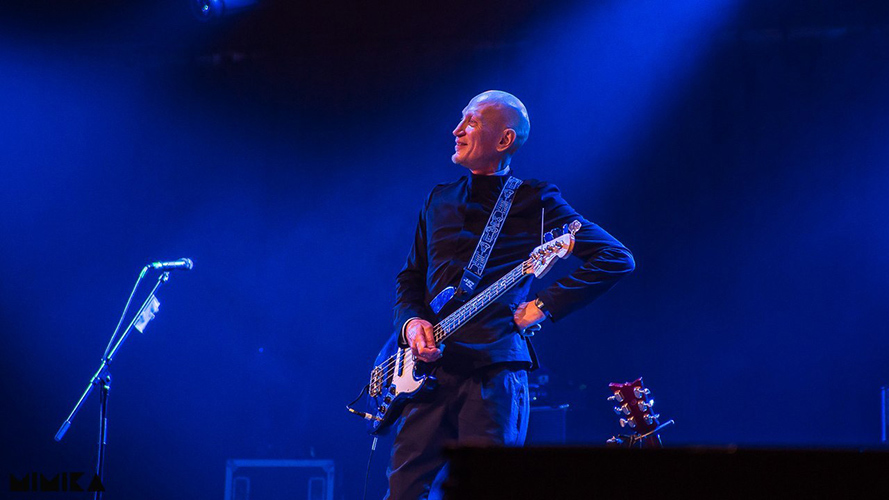
A week before last in St. Petersburg, the Colisium festival was held Music Week -An exhibition-fair with dozens of concerts, discussions, conferences and everything that is attached to such events in Europe. Nikolai Ovchinnikov looked at the show-shukeis festival from the point of view of a local resident and remained in mixed feelings.
Когда появилась информация о том, что в Петербурге пройдет «уникальный музыкальный праздник» Colisium Music Week , I wanted to say: "Well, finally." For several years in a row, Russian journalists traveled to Tallinn , Oslo , Luxembourg, complained about the lack of such an event with us, then they were surprised that the first festival-showkeis was held in Vladivostok , and not in Moscow, rejoiced in success and envied his ideologist Ilya Lagutenko . And here - the most European city of Russia, 50 concerts, 100 artists, hundreds of people from the industry, showcases of the main festivals, no bast.
***
Strictly speaking, Colisium is not a new festival. The first event under this brand promoter Vladimir Kravchenko held back in 2007. Everything was quite in the spirit of the times: there are a lot of alternative rock groups with bangs and piercing plus a small conference on the future of the industry. Such a branch from the Kapkan Records label, which published a Russian alternative, where Kravchenko used to work. According to him, then it was the time for independent channels, labels and radio stations - they made a convention for them.
Then the organizers of Colisium They began to pay more attention to conferences and discussions among professionals, went to Siberia, Moscow and Ukraine (about the trip to Kyiv, they separately note that it went well, despite the fact that it was just the beginning of the Maidan). A full -fledged “music week”, addressed not only by industry figures, but also ordinary citizens, Colisium became this year and so far only in St. Petersburg.
Actually, a concert program is a few dozen events throughout the city: from the tequilajazzz Reyunion to the showcase of the Jazz Manor with the Mana group Island and an informal electronics festival, from Shumov's lecture about the history of techno to the Neon group Lights , from Lamb performances to Stigmata . As in Europe, with one bracelet you can go everywhere. As in Europe, it is possible to physically master the sites of two or three. It is not possible to do without comparison with the Tallinn festival: if in the Estonian capital the musical program was not limited to indie rock and other youth directions, then there is neither classics nor relatively affordable avant-garde. As well as groups playing right in the middle of the supermarket.
Here it must be understood that I looked at what was happening from the inside-for the first time such a show-shukeis festival takes place right in my city. And therefore, the delight of a musical tourist, discovering a new world, did not experience. Perhaps this is from saturation, but the CMW concert program is similar to the usual schedule of events in St. Petersburg clubs, and there are very few something that is being broken out of the usual format-like exhibitions and lectures. At the same time, the organizers honestly admit that many concerts thought separately from the festival and received his support for the post -fact. This is one more important difference of Colisium From the nearest European analogues: not artists guess their performances to the festival, but vice versa.
***
The business part was more interesting than the Colisium concert program. For example, one of the conference sections was devoted to ticket technologies and how services such as Radario and Kassir . ru change the market. Or a big discussion about festivals, where Ilya Bortnyuk from the Stereolet talked about how, after the Crimean crisis, to him and the “picnic of the“ posters ”” began to refuse Western performers. And the electronic musician Anton Maskeliade explains how to get to Western festivals (in short - write letters for a very long time and understand how you are different from others).
Or, for example, a large and very nervous discussion of Mikhalkovsky’s “Internet tax”. On it, supporters of the RSP initiative for a long time talked about the fact that now all the content would be free, and the artists will earn more money, Sergey Mazaev complained for a long time about theft of listeners, and representatives of Raek methodically proved that the “global license” Mikhalkov is impossible either by law or from a technical point of view.
Or, for example, listening to demo-records of local groups, which was entrusted with experts from competitive festivals of the type of "rock-impuniture". Here you feel how your efforts to promote Westernate indie and topical Russian -language music are in vain. Most groups still live in 2007, copying it Temptation , then Snow Patrol , then nouvelle Vague , then the whole "nusradievsky" Russian rock at once, and it is not clear what to do with all this. The same sensations - and from the journalistic section, led by Boris Barabanov from Kommersant: all participants over 30, two -thirds are friends with the Internet, a quarter with social networks, and at the same time everyone discusses the future of the musical media. In this sense, the section about alternative sales channels was much more important, where in the end it became clear that Kudago , alas, would win anyway. But these at least they can.
The show-shuokeis festival is, first of all, a game of the external market: you show your scene to foreigners, they are slowly importing it to yourself.
Or, for example, the performances of Ukrainian promoters who say: no, the market for Russian artists is open, there are special cases, but these are exceptions. And at the same time - the organizers of the Krymfest festival, who say: no, foreigners are going to us anyway, "because rock is more important."
But all these are stories about the internal potential of the Russian (or, if you want, Russian -speaking) music. With how to promote it to the West, there are still difficulties. There were very few foreign guests this year. At the same time, those that are before colisium We arrived, for example, Andrew Campbell from the Berlin Gordeon Music - they say: yes, we are still open to Russian artists, let them come. Vladimir Kravchenko echoes him: “Those who do not promote. Those who do this do not go to such panels, but already perform on other showcases. ” But the problem is not even in reluctance, but in ignorance. Maskeliade was invited, including because he made himself for the Western market and knows how to do it. And the western promoters - so that they do not forget about the large and still profitable market. And all this is very important and right, but the problem is that those for whom this showcase really needs was most likely not heard and did not see these discussions.
***
The second organizer of the festival, Sergei Babich, claims that the festival has already caught up with Tallinsky in many ways, primarily by event saturation. But it is stipulated: this is still not Europe, collecting experts from abroad is much more difficult for us than the same Estonians or Lithuanians, who also have their own showcase.
This is one of the main problems of Colisium . The show-shuokeis festival is, first of all, a game of the external market: you show your scene to foreigners, they are slowly importing it to yourself. On Colisium , the number of foreign delegates was incomparably less than in the same Tallinn. That is, a demonstration of the main achievements of the local musical economy was, first of all, for their own, although they, as a rule, are also aware of what is happening.
Another problem by Colisium , in which the organizers, however, are not to blame, is the lack of serious support from the authorities. The festival V - Rox turned out to be so colorful and cosmopolitical thanks to the agreements of the team of the organizers with the leadership of Vladivostok. In St. Petersburg, the Culture Committee for a long time did not notice such an event at all. This time, the head of the department changed exactly on the eve of the CMW , and the organizers complained that, they say, they would have to agree again. Although, Vladimir Kravchenko is stipulated, they helped with advertising - there were really many posters throughout the city.
Finally, Colisium has an identity problem. It is clear that for the first time the organizers decided to show our entire scene and all our industry figures at once and in a drop. But all this is not a single picture. Here is Petersburg from a musical point of view - what is he talking about? And the Russian scene - what is the main thing in it? Discussion of private professional problems is, of course, important and necessary. But the fundamental thing is lost behind them: in fact, the face of our music. Yes, Vladimir Kravchenko says that the Russian scene is praised, that there are separate examples of success. But how it looks from the outside and how it will be manifested subsequently - it is not very clear.
Therefore, Colisium was in the same paradoxical situation that the Neon group Lights at the Tallinn festival . Big Convention, European level - but, first of all, about itself and for their own. The result was another window in Europe. However, this is a lot.
***
CMW , of course, is needed. Yes, there are almost no Western professionals here and there is no jerk on the European market. But, it turns out, Russian industry figures are not yet familiar with each other, and they themselves need to understand who they are and why. Yes, from concerts and discussions, lectures and conferences, a single mosaic is not yet added up. But look at the Luxembourg Sonic Visions -there, too, it all started with such scattered events and only then began to turn into something integral. Yes, the state does not care about what is happening at his side. But, firstly, in the present time it is even for the better. And secondly, the same Tallinn Music Week began with a private initiative of several local promoters led by Helen Silde, and only three years later he noticed local authorities.
Yes, Petersburg is not even Tallinn yet. But Tallinn five years ago was also just a good city at sea with a glorious history and incomprehensible prospects from the point of view of the musical industry and the massaculture. We will have to try, but we ourselves are to blame for the long time we pulled.