
Translated material
War and children
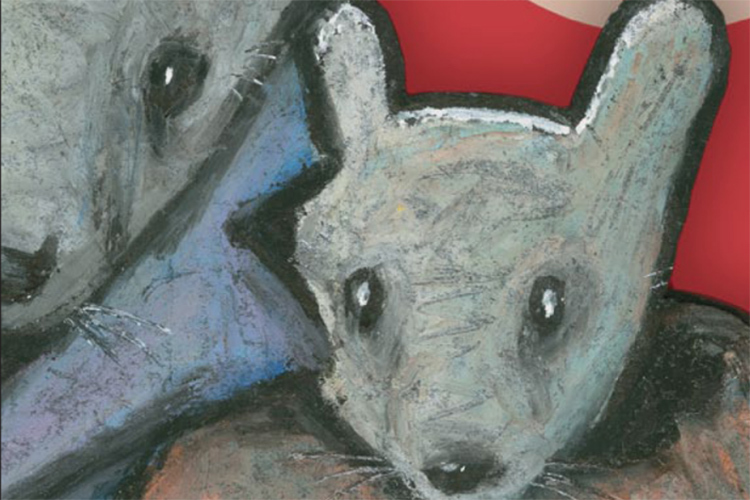
The scandal developed rapidly. On the morning of Monday, Facebook ran about the fact that Mouse, a great comic book about Nazi-cats and Jews-mouse, quickly remove from the booksters. At one in the afternoon, Varvara Gornostaeva from Corpus commented on our heading like this: “There is almost nothing to tell. We are from afar “Maus”, because in any civilized country this book should be published, and it should be read by adults and children. Children especially. This is one of the strongest anti -fascist books and anti -fascist statements. ” The tantrum was caused by the cover-the “caricature image of the swastika, in the center of which the Hitler-Kot is depicted,” commented on Gornostaeva: “And our bookstores, not all, of course, but the central accurately, are afraid like the fire of any reason for the dissatisfaction of the authorities. So that, God forbid, no one clung to them. This is fear. " Nevertheless, not all stores were scared, and the very next day, Mouse took off the sales leaders. Readers voted with a ruble. It was not a civil call, but an instinct that threw Soviet buyers in the queue for Italian boots: to grab it quickly, so far it is still possible. At the same time, I would like to look at the faces of the directors of those stores that Maus hid: Fear, probably, effectively fought on them with greed. "Mouse" won. But the topic is open: modern children's books about the Second World War in Russia are especially vulnerable today.
There are few of them. They are almost not written.
Irina Balakhonova, “Scooter”: “There are very few manuscripts on this subject - units in more than ten years, but since we consider this topic extremely important, we re -report a military“ lieutenant ”prose in the series“ How it was ”, supplementing it with historical certificates, which the series editor Ilya Bernstein specially orders to military historians.”
Maria Soboleva from the “scooter” adds: “Despite the fact that five or seven manuscripts come to us a day, this is a completely depressing figure.”
 © "Komapasgid"
The figure is amazing - especially when you consider what place the second world occupies in Russian history and culture. And this figure says more about universal confusion: how to write about the Second World War for children, now in Russia it is completely incomprehensible.
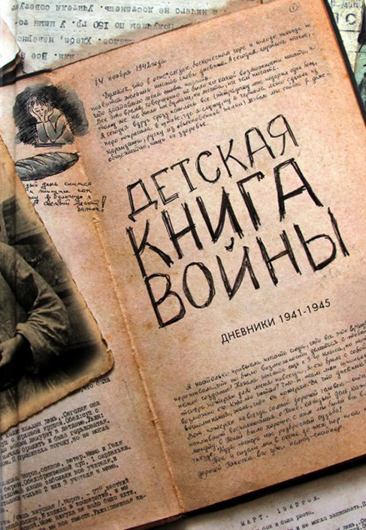
This is probably why the most important project of this year is not a children's book, but a book about children in war, and in the non-fiction genre. The publishing house “Arguments and Facts” has released amazing volumes of rare or nowhere yet to publish children's military diaries - “Children's Book of War”: life in the blockade, life in the ghetto and - most important taboos of Soviet publishers - life in occupation and slavery in Germany.
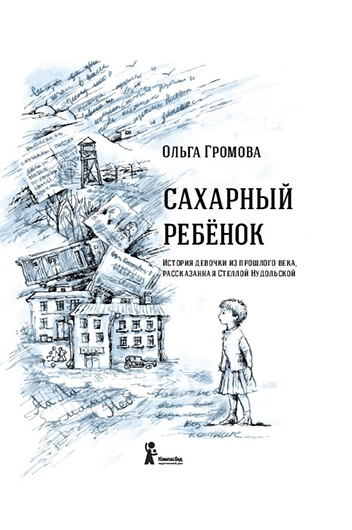
It is strange that no one guessed to do the same as Komapasgid did last year with the theme of the Stalin camps - he organized the book: Olga Gromova found Stella Nudolskaya, who survived the steppe camps in her childhood, and recorded her story. “The documentary story“ Sugar Child ”, one of the most important children's books over the past few years. Olga Gromova made almost impossible: she picked up those same words that were understandable to the child to tell him about our general - terrible and unfair - past, Stalinist repressions and innocent people who were injured then. In this book, everything is true, and it is amazing. Stella Nudolskaya, or the girl of Elya, the heroine of the story, lived some incredible life, which just had to be recorded so that children and adults learn about her today, ”says Vitaliy Zyuko, the director of Komapasgida.
At the same time, military memoirs and diaries create such an emotional-humble context that is very difficult to withstand fiction.
 © "Arguments and Facts"
Here are the three best translated books about the war: “The Child of Fields of Glory” by Remco Raying (publishing house Meshcheryakov), which is more related to the fact that Russian publishers call “youthful literature”, and the western ones are Young Adults , “Winter, when I grew up” by Peter Van Gestel and Tetralogy of Anniki Jews about two priests who found the shelter in the shelter. Sweden (both published by the "Self -Skat"). These books talk about growing up, first of all. The war in them is shown through the absence, as a giant sucking emptiness. The hero of the magnificent documentary “Field of Glory” fills it with: first sees the nameless Soviet graves in his hometown of a prosperous city, then searches for names, then biographies, and then relatives of the dead - the intense and voluntary expedition to hell, at the exit of which, already among the living, the hero meets love. In the tetralogy of Anniki Thor, the sisters live on the Swedish island, quarrel with girlfriends, take offense at boys and at each other, go to school, find the first job, and only the absence of the parents left behind the sea, in the Europe covered by the war, gaping behind these teenage cares - like a black hole from which it constantly pulls with grave cold. The action of “Winter” takes place in Amsterdam after the war: there are also more about girls and boys, and also about their city, where for some reason there are suddenly many people and for some reason, all of them are Jews, and for some reason other people live in their old apartments.
Against the background of these books, it is especially clear that it will not be possible to write about the Russian war and Russia - the war here was too open, too universal. How - it is incomprehensible too. And then the Soviet literary tradition hangs: either take it into account, or argue.
Irina Balakhonova, “Scooter”: “It is strange, but understandable: this is not a fairy tale about the pink hare, working with such text requires knowledge, accuracy, ability to work with archives, position - professionalism, in a word. Which is generally a rarity in the texts coming by gravity. The publishing process is a race for the best, not a single text has been approved: there was always something better, better. ”
It is publishers and bookstores by definition that should stand in positions of common sense and protect their reader from obscurantism and censorship. But they, as we see, pass these bastions almost the first.
Naturally, the easiest way in this case is to neatly reproduce the famous Soviet military novels that, in fact, they made, for example, Rosman and Clover in the current anniversary year (Clover was also noted in a colorful espionage non-fiction in the pictures “Bomb. As the most destructive weapon in history was created and stolen”: this is also worth reading).
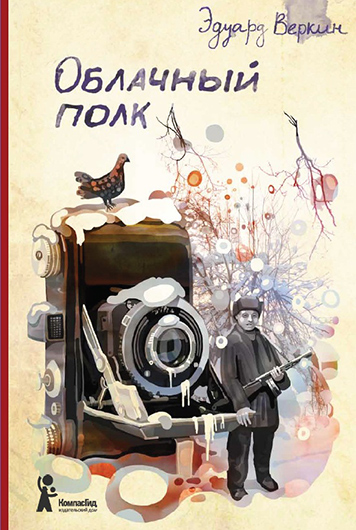
The most striking the single success of Komapasgida: the “cloud regiment” of Eduard Verkin is the best that you can now find for children about the Second World War in Russian and written by a modern writer. Before the “cloud regiment”, Verkin wrote a huge stack of fantasy for “Eksmo”: where is staring, where it is more cheeky, where it is more cheerful, where it is a little more tired, but commercially always very successful. It was not by chance that the “cloud regiment” retreated to “compassgid”: artistic ambitions were immediately obvious here - and they were completely justified.
Irina Vaag, Komapasgid: “Vitaly (Zyuko, the director of the publishing house. - Ed. ) Could not fall asleep until he read the“ cloud regiment ”. He was completely delighted, in the morning he called Verkin and agreed that he published this book in Komapapapasgid. "
The Cloud Regiment was not a dark horse: the manuscript won the popular “Book” contest. Of course, if every year in Russia there were a dozen children's books about the war of such a level as the “cloud regiment”, one could have been prompted by the author to compares like “hussars in cuirasses” (either hussars or cuirasses) or to complain that some chapters can be reduced. But so far this is the only such book, it can only be admired by it. Verkin writes about boys in a partisan detachment. They rave through the forests and swamps, sometimes go to the houses, at the end fall under fire. At the same time, just living people become inanimate. In Verkin’s book, nothing is covered with glaze, it doesn’t go down anywhere to play soldiers, all the more it does not break into the pathos: war is dead and torn hands, and Verkin, if a torn hand, is crushed, with dark nails. But this is not a gignol. Because Verkin does not lose his artistic focus anywhere and does not lose sight of the main horror of the war: this hand just belonged to a living person, your friend.
 © "Komapasgid"
Today, “Cloud Regiment”, “Mouse”, Tetralogy Thor, “The Child of Fields of Glory”, “Sugar Baby” are single partisans on book shelves.
Varvara Gornostaeva, Corpus :
“It is publishers and bookstores by definition who should stand in positions of common sense and protect their reader from obscurantism and censorship. But they, as we see, pass these bastions almost the first. This is a completely unworthy and cowardly position. At the same time, I want to pay special attention to products (this language does not turn to name this), which they readily and without any doubt put on their regiments - a complete collection of the apologists of Stalinism, obviously anti -Semitic books and other treasures of Russian thought. In short, all products of the Yauz-Press and Algorithm publishing houses. And dozens of millions of deaths and crippled destinies in which Stalin and Stalinism is guilty is not embarrassed. It is impossible to get used to the idea that in the 21st century all these monstrous substitutions occur before our eyes. These are alphabetical truths familiar to any child from a normal family. Any child who read fairy tales in childhood, how good wins evil. He knows how to distinguish them. And adults completely lost not only this ability, but also a desire to take part in this struggle on the side of good. They voluntarily go over to the side of evil. ”
So far, this is so. But it is not surprising, however, if ten years later, standing up and leaning, the “cloud regiment” will quietly enter the school curriculum.