
Translated material
The Central Bank reduces the key rate to 12.5% per annum
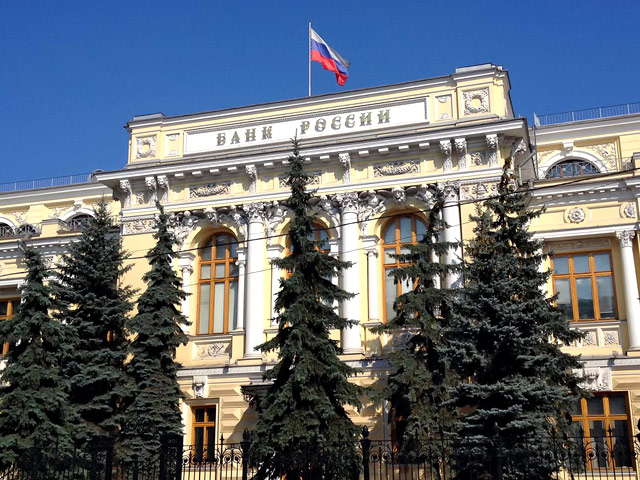
On April 30, the Bank of Russia, following a meeting of the board of directors, decided to reduce the key rate from May 5 by 1.5 percentage points - to 12.5% per annum, the regulator’s press release said.
"The Board of Directors of the Bank of Russia on April 30, 2015 decided to reduce the key rate from 14% to 12.5% per annum, taking into account the weakening of inflationary risks while maintaining the risks of significant cooling of the economy. In the conditions of the ruble, which was observed in February-April 2015 and a significant reduction in consumer demand, the monthly growth rates of consumer prices are reduced, signs of stabilization of the annual annualization of the annual annual Inflation, ”the report said.
The decision of the regulator coincided with the forecast of analysts, who believed that the gradual weakening of inflationary risks and lered by the devaluation from inflation with the simultaneous slowdown of the economy create favorable conditions for further reducing the key rate.
From the beginning of April, the annual growth rate of Russian inflation has decreased slightly - from 16.9 to 16.8 percent. In July 2015, prices are expected to increase in Russia due to increasing tariffs of natural monopolies. Thus, only in August, when the effect of strengthening the ruble in the first quarter will fully show itself, the prices of food will decrease due to the seasonal effect, and inflation and the key rate will accelerate its reduction.
By the end of 2015, the rate may decrease to 10%, and inflation - to 11-12%. According to the first deputy chairman of the Central Bank Dmitry Tulina, it is not necessary that the rate exceed inflation.
Taking into account the amendments in the 2015 budget, the next indexation of wages of civil servants and social benefits is not provided, Rossiyskaya Gazeta recalls. The federal budget deficit will be 2.675 trillion rubles in 2015 and will be covered at the expense of the stabilization fund. If Russia would not have a “airbag”, the budget deficit would have to be covered with a significant weakening of the ruble exchange rate.
The softening of monetary policy in the Russian Federation will probably weaken the Russian currency up to about 52.5 rubles per US dollar and up to 57.5 rubles per euro. Since mid-March, the national currency has thoroughly strengthened: the dollar from the mark of 60.96 rubles (the official rate on March 13) has fallen to 50.25 rubles (as of April 25), and now continues to bargain near the levels of 51-52.5 rubles. The ruble exchange rate to the dollar since the last meeting has grown by 17.5%, TASS reports.
According to the chief analyst of Sberbank Mikhail Matovnikov, such a powerful strengthening of the ruble is a problem: “Our course cannot fall, it remains quite strong. The Central Bank believes that it should be in the region of 55 rubles per dollar. And when it is at the level of 50-52, this is bad for both the budget and for manufacturers. He.
In the second quarter of 2015, lending rates for the real sector of the Russian economy can decrease to 18-19%. Russian exporters will win the winnings who will be able to receive more rubles from the sale of raw materials, as well as the budget of the Russian Federation due to the greater receipt of funds from personal income tax and excise taxes in it.
According to the government’s economic bloc, Russia took the peak of an economic recession in the first quarter of 2015, and the ruble exchange rate reached its fundamental levels (just above 50 rubles per US dollar).