
Translated material
Murakami, Akunin and Perezherte
New bestsellers or not: a review of Galina Yuzefovich
A weekly literary critic Galina Yuzefovich tells at Medusa about the main book novelties issued by domestic publishers. The new review includes detectives (or almost) of three incredibly popular writers in Russia in the early 2000s: “The colorless Tskura Tadzaki and the years of his wanderings” Haruki Murakami, “Planet Water” by Boris Akunin and “Patient Sniper” Arturo Peres-Reverte.
Murakami, Akunin, Perevo-Revert-today such a combination of names looks nostalgic greetings from the beginning of the zero, when any book of any of these authors automatically fell on the lists of bestsellers and became the topic for intellectual conversations in a decent society. Over the past years, the genre of secular conversation about books outlined himself, the status of all three writers clearly decreased (from the premium category, they quietly crawled into the category of “economy”), but their texts can still apply for a position in book charts-especially before a long weekend. In the current review, we will talk about whether they can claim something besides that.
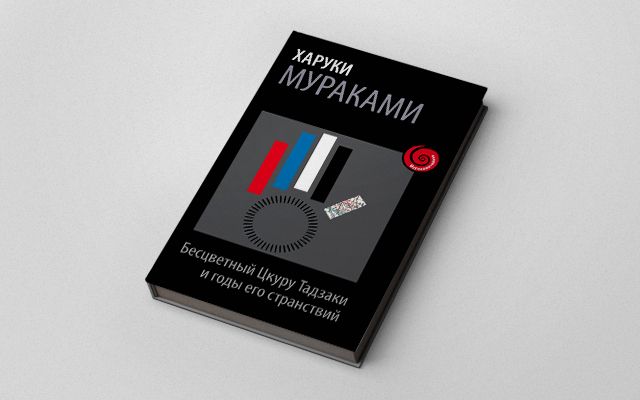
Haruki Murakami. The colorless Tskura Tadzaki and the years of his wanderings. M.: Exmo, 2015
Having described a long arc, Murakami returned approximately the same, where he started and what at one time made him famous. Therefore, if once “hunting for sheep” and “Dance, Dance, Dance” made an indelible impression on you, then the “colorless Tskura Tazaki” will also most likely go with a bang. Melancholy emotional overflows with a conditional detective intrigue as a supporting structure (and even mandatory for the Russian reader, Dmitry Kovalenin’s transfer of translation) convincingly show that sometimes the effect of deja vu can be damn pleasant.
Sixteen years ago, an event occurred in the life of engineer Tskur Tazaki, which changed everything for him. Returning after the second year to his hometown on the holidays, he learned that the four best friends no longer want to see him. Just like that, for no reason, four people (two guys and two girls), with whom they were inseparable for many years, threw him out of their lives, and Tskura was left completely alone - as if falling overboard and ended up in black icy water, while the ship shining with fires went further without noticing the loss. Deep depression and daily thoughts about death led to the fact that TsKURU became a different person. Having closed in his detachment and colorlessness (the only one of the five - the surname has nothing to do with the color, which seems to him with a fatal stigma and a bad omen), he survived, but the invisible wall has grown between him and the world. Once the wall gives a crack: a woman appears in his life - beautiful, smart, bright, ready to love and accept it. However, before building relationships with TsKUR, she sets the condition: he must figure out his past and finally understand what happened sixteen years ago. The hero obediently takes a vacation at work, goes in search of former friends and, of course, finds not the answers that he was looking for.
If you read at least one novel by Murakami, then you will not be surprised to learn that the investigation will turn into a mirage upon closer examination. The plot lines, which seemed important and meaningful, will break off and hang in the air, and the main intrigue (one of the very friends of the youth of the TsKURO was raped, and then brutally killed) will simply go into the sand without a hint of unraveling. However, all this, as it were, is inconsistent: woven from halftones, shades, moods, musical topics (the main one is the “years of wanderings” of the sheet, the beloved composition of the hero), dreams, fog and crossing the Tokyo electric trains, the novel affects some special receptors-perhaps not necessary for nothing, and certainly not necessary for detectors to fans. Consciously violating the canons of the genre (it would seem, it would seem to be called the killer), making riddles-and without offering the answers to them, the writer does not at all deceive his reader, but, on the contrary, fully justifies his expectations.
If you were worried about the Muraki, then it is not worth it: he is still in great shape and can still do those strange and partly magical things for which he had once loved. I am not a target audience (receptors are not formed in time, but now it’s too late), but yes, yes, the AT HIS Best Murakami, as English-language reviewers write, and never lie.
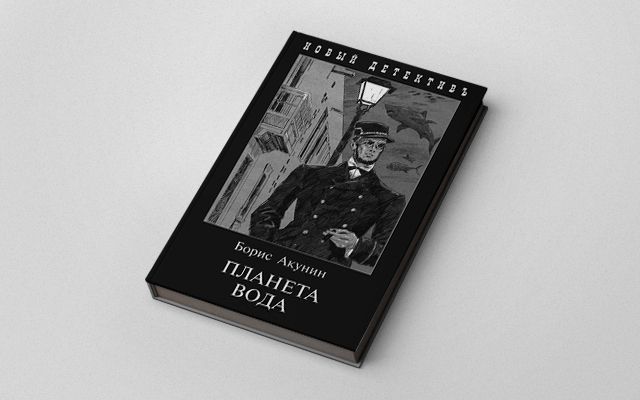
Boris Akunin. Planet Water. M.: Zakharov, 2015
I don’t know how you are, but it hurts me to see what is happening today with Fandorin. If Murakami with his sheep at one time did not affect any important strings of my soul, then Erast Petrovich I loved hotly and sincerely. The only truly outstanding character from all the Akunin’s host of faceless entities, he remained alive (charming, imperfect, touching, heroic-whatever) amazingly long, but starting somewhere with “jade races” began to dry out and bony, merging with his meaningless descendants.
The current collection (it included two novels and one story, at the names level united by the “water” theme - “planet Water”, “Sailing Sail” and “Where can we swim?”) Is an almost final stage of corporative ossification: from a familiar to everyone, Erast Petrovich remains a stiff dead doll, ideal in his inhuman boring, “noble husband” without color, without color, without color, without color, without color, “noble husband” without color, without color. taste and character. In the first story, he investigates the atrocities of a certain Herbert Wells (or rather, Alexander-Believsky) secret society, which turned a whole island into his citadel in the Atlantic Ocean, and simultaneously catches a maniac-a killer of little consumption of girls. In the second (and the most successful plot from the point of view of the plot) the story Fandorin is investigating the martyrdom of his former lover-the same Angelina from the story “Decorator”, who loved Erast Petrovich very much, but loved God more, which was due to which she went to a remote monastery. The third story is an investigation of an unprecedented skillful and bloody robbery of the train.
Heroes pronounce monologues about the fate of the Motherland, practice slow breathing, storm the impregnable Volga cliffs, concentrate Ki energy, embrace the beauties and crumble whole enemy armies into cabbage (especially the Masa, which finally rose to the role of a full -fledged doctor of Watson) - in a word, try as they can. However, all the driving motion cannot drown out a dreary mechanical grinding with which the novel structure rides forward. A simple machinery (even the best books about fandorin were always distinguished by some noble mechanism), in the old days skillfully draped and impeccably working, brazenly climbs out, tearing the glossy shell with rusty springs. Moreover, even those details that Akunin used to work out without fail today look abandoned and unmasive. In two texts of three, a detective plot (that’s what the writer has no problems with!) Schematic and unconvincing. And when the same technique - the notorious Deus Ex Machina - is used by Akunin for the second time in a row, there is an awkward feeling that the author was tired of inventing and he does not see the reason to hide it.
However, there is no thin one without good. The current collection of Fandorin is the penultimate one in the cycle, so when the author will kill his hero in the next book (and he probably wants to do this), it will not be a pity. What to regret - he died for a long time.

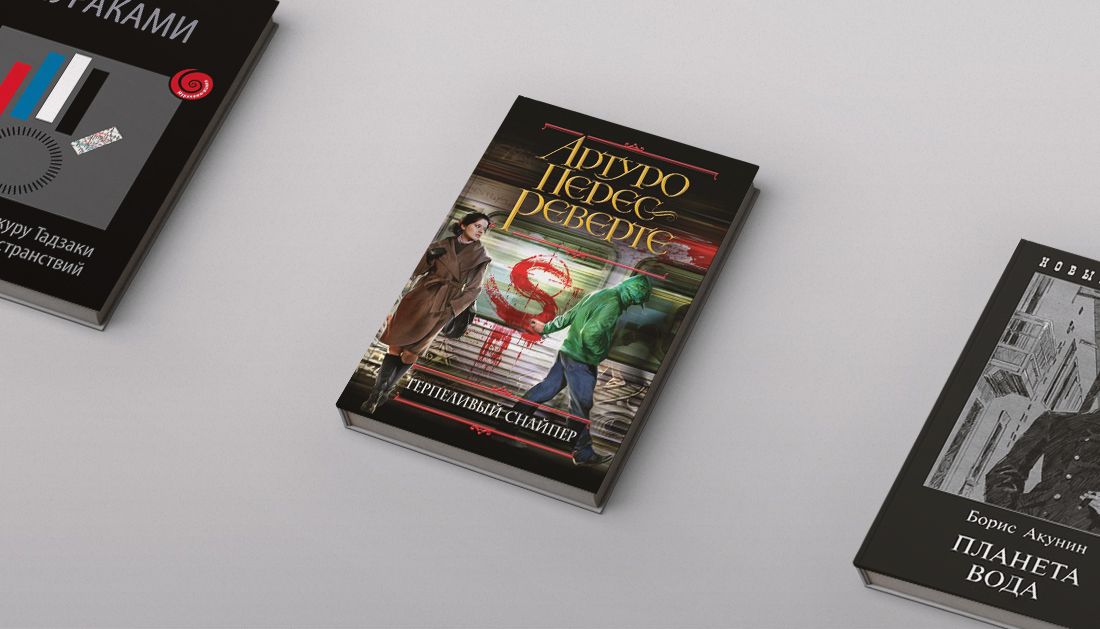
Arturo Perevo-Reverte. Patient sniper. M.: Exmo, 2015
Today it is difficult to believe, but there was a moment when the Spaniard Perez-Reverte was compared with Umberto Eco and seriously read him a great future. Today, his place is more than modest, somewhere next to Dan Brown, but without the giant circulations of the latter (though without his catastrophic bad cord). The new Roman Revers (by the way, so small that the publisher had to put a 60-page bonus-track under the same cover-a fragment of the next novel about Captain Alatrist) This state of affairs reliably fixes: a strong middle peasant without surprises.
The intrigue of the novel is extremely uncomplicated, although it is quite well tailored. Art Critic and professional scout (as in the world of contemporary art they call a person who is engaged in the search for potential stars for owners of fashionable galleries) Alejandra Barela-for friends, just Lex-receives a proposal to collect material for the great Street Artist of our time, mysterious and elusive sniper. The graffiti created by him is beautiful in themselves, but mainly the sniper is known as the author of the so -called “interventions”. Periodically, among his followers-adolescents painting walls, garages and wagons around the world-a new call is spreading: the sniper offers to paint some particularly dangerous piece of the wall. Risking their lives, they climb into skyscrapers, go down into the metro tunnels, storm the supports of bridges, perform exploits - and, of course, die like flies. Pretty soon the reader understands that for Lex the Sniper hunting is associated with some of his own interests, far beyond the professional frames, and then a new character is also connected to the search-an extravagant millionaire, who lost a 17-year-old son during such an intervention ...
In order to tell such a simple story, a lot of space is not required, so about half the novel is occupied by fragments from the series “What the author learned about street art and graffiti, having read one book and two articles on Wikipedia.” Cognitively, in general, but somehow a little redundant.
Galina Yuzefovich
Moscow